


A limited-edition rug is an intentionally small-run or one-off designer piece, typically numbered, signed, or formally documented, produced with controlled scarcity, clear author attribution, and traceable provenance. Think of it as a fine-art print translated into wool and silk: the edition size is declared, the maker is named, and each piece carries paperwork that anchors it to a specific creative act. Sotheby’s coverage of Andy Warhol tapestry rug editions shows exactly how museum and publisher collaborations produced numbered textile editions that sit beautifully between art object and interior furnishing.
One nuance worth holding onto from the start: edition size alone does not determine collector value. A rug numbered 1/5 with no provenance documentation, no maker attribution, and inconsistent craftsmanship will almost always trail a well-documented 1/25 piece from a respected studio like Kevin Francis Design in both desirability and resale strength. Provenance, craftsmanship, and designer reputation are the real levers.
Table of Contents
- What qualifies a rug as “limited edition”?
- Legal aspects of limited-edition rugs
- Key Takeaways
- Why documentation matters more than the number
- Kevin Francis Design’s limited-edition rug services
- Useful sources
- FAQ
What qualifies a rug as “limited edition”?
The phrase gets used loosely in the market, so knowing the formal structures helps you separate genuine scarcity from marketing language. Designer rug collections fall into several distinct edition types, each with different implications for collectability.
- Artist proofs (AP) — produced alongside the main edition as process or evaluation pieces. Sotheby’s explains that APs are scarce but not automatically more valuable than numbered examples. Their significance lies in their role in the creative process, not in automatic price premium.
Labeling cues to look for: a handwritten or embossed edition number, the designer’s signature (on the rug face, back, or certificate), a publisher or atelier stamp, and production notes specifying material, technique, and country of origin. A vendor like Naturug’s Old Town Road limited edition demonstrates clear labeling: edition size of 10 per size, knot technique, and palette are all stated upfront.
Pro Tip: Before purchasing, ask the seller or studio for the authorization history: who commissioned the run, who signed off on the design, and whether the designer or atelier holds the original documentation. A missing authorization trail is one of the earliest red flags.
Legal aspects of limited-edition rugs
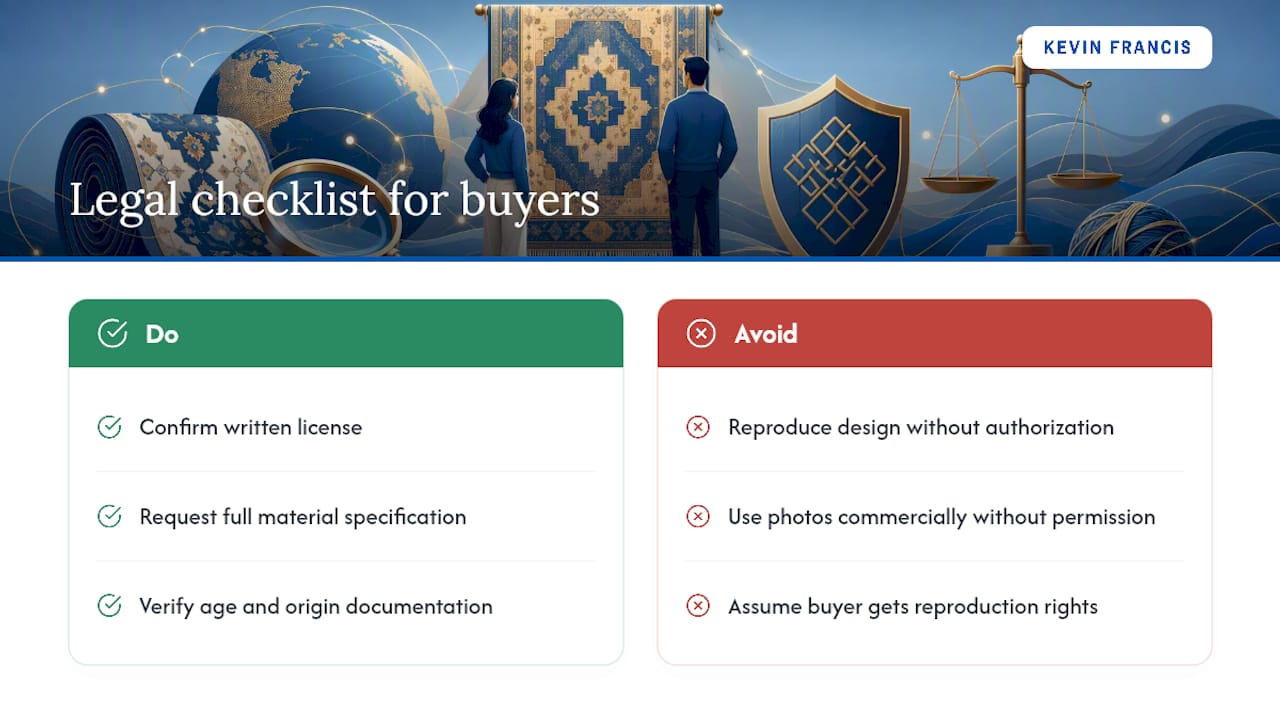
Copyright in a limited-edition rug typically belongs to the designer or studio that created the original pattern, not to the buyer of a numbered piece. Purchasing a rug, even a one-off, transfers ownership of the physical object but not reproduction rights. Reproducing the design, photographing it for commercial use, or commissioning copies without authorization infringes the designer’s copyright under U.S. copyright law.
For rugs based on fine-art imagery, such as the Warhol tapestry editions documented by Sotheby’s, the publisher or estate holds the reproduction license. Buyers should confirm in writing that the edition was produced under a valid license, particularly for artist-estate collaborations.
Import and export of rugs can involve additional legal considerations. Antique rugs (generally over 100 years old) may qualify for duty-free entry into the United States under the Harmonized Tariff Schedule, but documentation of age and origin is required. Rugs containing materials from protected species, such as certain natural dyes derived from regulated plants or animal fibers, may face restrictions under the Convention on International Trade in Endangered Species (CITES). Always request a full material specification from the maker before importing a piece from outside the U.S.
This section provides general information, not legal advice. Confirm current import regulations and copyright rules with a qualified attorney or the relevant U.S. government agency.
Key Takeaways
A limited-edition rug’s value rests on provenance, craftsmanship, and designer authorization far more than on edition size alone.
| Point | Details |
|---|---|
| Definition and documentation | A limited-edition rug is a numbered or one-off designer piece with formal provenance, maker attribution, and a certificate of authenticity. |
| Value drivers beyond scarcity | Designer reputation, authorization history, craftsmanship metrics (KPSI, materials, technique), and condition outweigh raw edition size. |
| Buying checklist priority | Verify edition documentation and maker information before inspecting the physical piece; missing paperwork cannot be reconstructed after purchase. |
| Conservation protects value | Avoid UV exposure, maintain 45–55% relative humidity, rotate every 12–18 months, and store all original certificates in acid-free sleeves. |
| Kevin Francis Design | Offers hand-knotted limited runs with Pantone-matched sampling, edition numbering, and full client documentation delivered at handoff. |
Why documentation matters more than the number
The most persistent misconception about limited-edition rugs is that a lower edition number automatically means a more valuable piece. It does not. What it means is that fewer physical examples exist, which is one condition for scarcity but not a guarantee of desirability or price. A rug numbered 1/3 with no certificate, no maker attribution, and no provenance trail is, in practical terms, harder to sell and harder to insure than a well-documented 1/25 piece from a studio with a clear design history.
What I find most interesting about this category is how it rewards the collector who asks questions. The buyer who requests a sample sign-off document, a written KPSI count, and a Pantone color reference at the briefing stage is not being difficult. They are building the provenance record that will matter in ten or twenty years. The rug itself is the art; the documentation is the argument for its value.

There is also something genuinely moving about a rug that carries its making with it. When you know the wool came from a specific highland source, that the color was matched to a precise reference, and that the weaver’s work was overseen from yarn to selvage, the piece stops being a floor covering and becomes something closer to a collaboration across continents and crafts. That is what a well-made limited-edition rug actually offers, and it is why the paperwork is not a formality. It is the story.
Kevin Francis Design’s limited-edition rug services
For collectors and designers who want the full experience of a studio-limited rug, Kevin Francis Design offers custom limited runs with the complete documentation chain: consultation, Pantone-matched sampling, artisan hand-knotted production, edition numbering, and a client documentation packet delivered at handoff. You know exactly what you are receiving, and you have the paperwork to prove it.
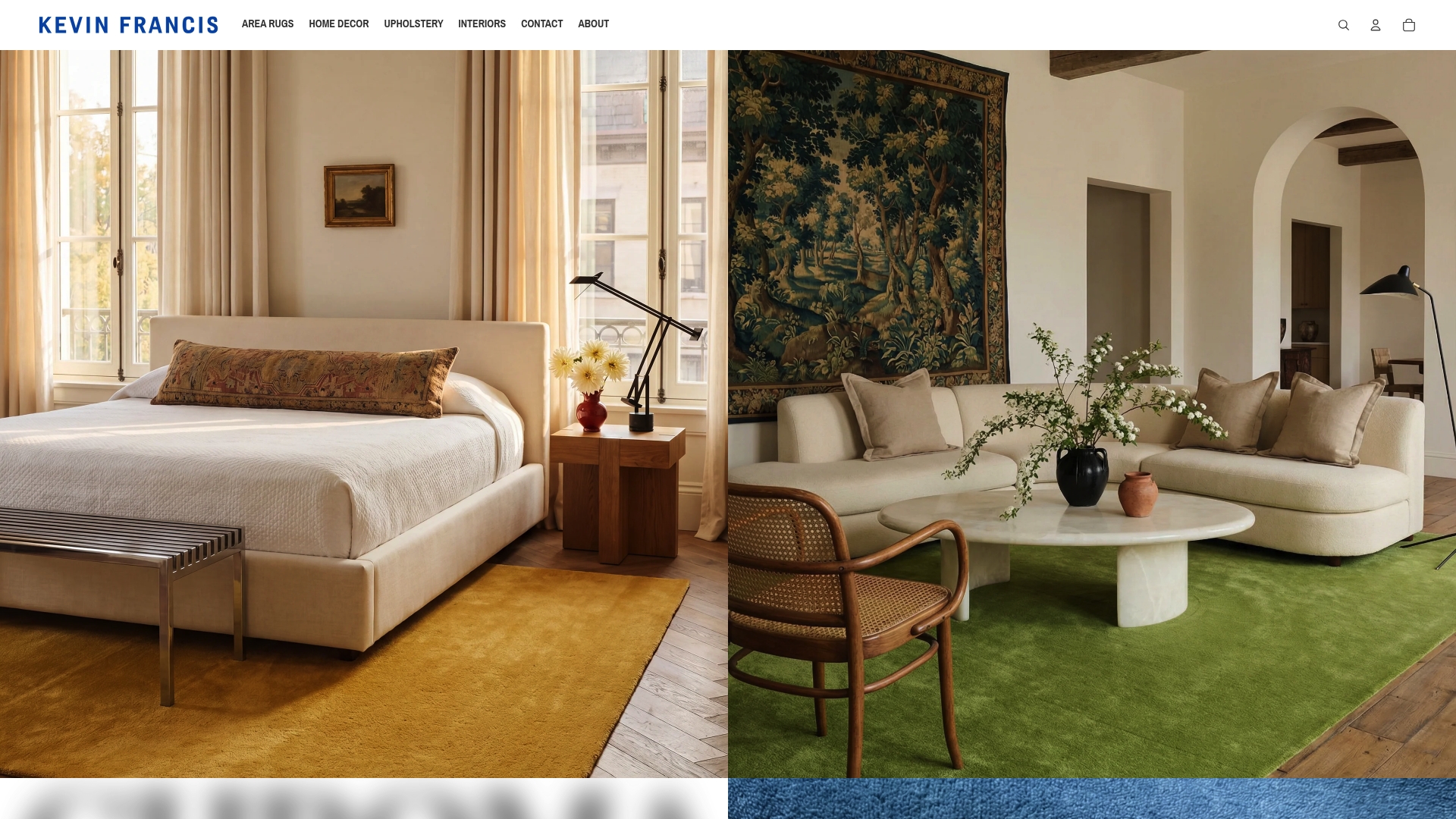
The process begins with a design consultation where edition parameters, size, palette, and technique are agreed upon. From there, a physical sample packet is produced for your approval before any full production begins. Final pieces, such as the Selendi Hand-Knotted Wool Area Rug, arrive with their certificates, production photographs, and care documentation. Browse the current collection or reach out to discuss a commission at Kevin Francis Design.
Useful sources
- Andy Warhol Tapestry Rug Editions and the Evolution of Contemporary Collecting | Contemporary Art | Sotheby’s
- How to Read an Art Edition: Signatures, Numbers, Artist Proofs, and More | Contemporary Art | Sotheby’s
- Old Town Road (Limited) — naturug
- Inside the Atelier, The Making of a Limited Edition Rug
- A Story Woven in Threads — Limited Edition Rugs
- Types of Exclusive Designer Rug Collections Explained – Kevin Francis Design
- Luxury Rug Buying Guide Checklist for Homeowners – Kevin Francis Design
- Statement Rug Styles for Luxury Interiors: 2026 Guide – Kevin Francis Design
- Lotto Hand-Knotted Wool Area Rug
FAQ
What does “limited edition rug” mean?
A limited-edition rug is a designer piece produced in a declared, controlled quantity, typically numbered and accompanied by a certificate of authenticity and maker documentation. The term distinguishes it from open-edition or mass-produced rugs.
Does a lower edition number make a rug more valuable?
Not automatically. Sotheby’s advises that edition size is one factor among several; designer reputation, authorization history, craftsmanship quality, and provenance documentation carry equal or greater weight in determining collector value.
What is an artist proof (AP) in a rug edition?
An artist proof is a piece produced alongside the main numbered edition, originally as a process or evaluation example. APs are scarce but not inherently more valuable than numbered pieces from the same run.
What documentation should I receive when buying a limited-edition rug?
You should receive a certificate of authenticity, the edition number, maker and atelier information, material and technique specifications, and ideally production photographs. Kevin Francis Design delivers a full client documentation packet at handoff.
Can I reproduce or copy a limited-edition rug design I own?
Owning a limited-edition rug transfers ownership of the physical piece, not the design’s copyright. Reproducing the pattern without the designer’s authorization infringes U.S. copyright law; always confirm reproduction rights in writing before any commercial use.


