


A designer rug collection concept is a curated lineup of rugs that expresses a distinct creative identity through cohesive sizing, color stories, construction methods, and price points. In the design world, this is often called a curated rug collection, and it functions as far more than a product range. It is a tangible statement of artistic vision, one that shapes how a room feels, flows, and speaks. Kevin Francis Design builds collections this way, weaving together handmade craftsmanship, original pattern work, and a clear aesthetic narrative that homeowners can feel the moment they walk into a room.
What is the designer rug collection concept?
A designer rug collection is defined as a deliberately assembled group of rugs that share a unifying creative vision, expressed through consistent color palettes, complementary scales, and a coherent design language. The word “collection” here carries real weight. It signals intention. Each piece relates to the others, the way paintings in a gallery speak to one another across the room.
Effective rug collections balance sizing, color stories, and tiered price points to create a cohesive brand identity and retail readiness. That structure gives homeowners a clear path from entry-level pieces to investment-grade statement rugs, all within the same visual world.
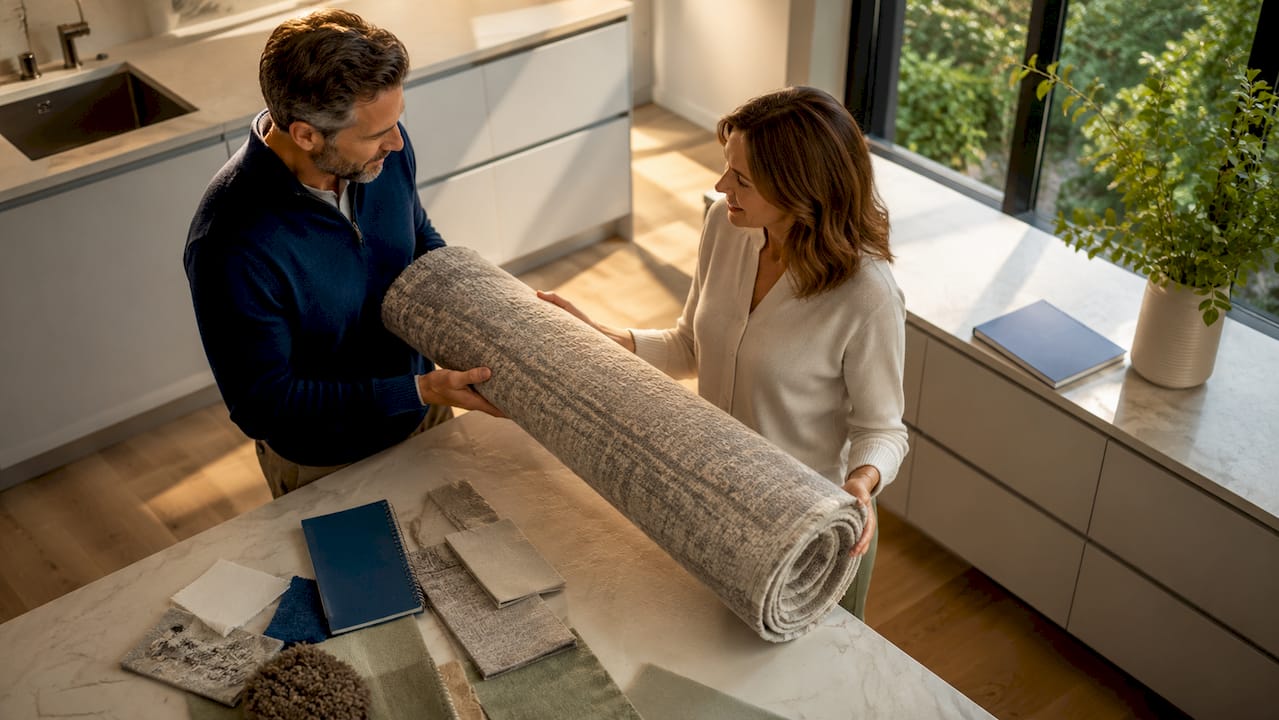
The concept matters because a single rug chosen in isolation rarely achieves what a collection can. When rugs are designed to work together, they give you the freedom to layer, mix room sizes, and build a home that feels considered rather than assembled. That is the quiet power behind the curated approach.
What are the key components that define a designer rug collection?
Three structural pillars hold any strong collection together: sizing strategy, color coordination, and price tiering.
Sizing strategy follows what designers call the sizing pyramid. A collection typically anchors around a signature large-format rug, then scales down through medium and accent sizes. This gives every room in a home a fitting option without breaking the visual thread.
Color stories are the emotional core of a collection. Industry experts recommend 3–5 color palettes per collection to meet varied customer preferences while maintaining coherence. Each palette tells its own story, warm terracottas and aged linens for one mood, cool slate and ivory for another, yet all feel like they belong to the same creative family.
Price tiering follows a “good-better-best” model. A tiered pricing approach captures a wide range of buyers, from those making a first design investment to those seeking a singular, heirloom-quality piece. This structure also supports brand loyalty, because a homeowner who begins with an accent rug often returns for the statement piece.
Construction methods add the fourth dimension. A collection gains depth when it mixes hand-knotting, hand-tufting, and handweaving. Each technique produces a different surface quality and tactile weight, giving rooms a layered, collected-over-time feeling.
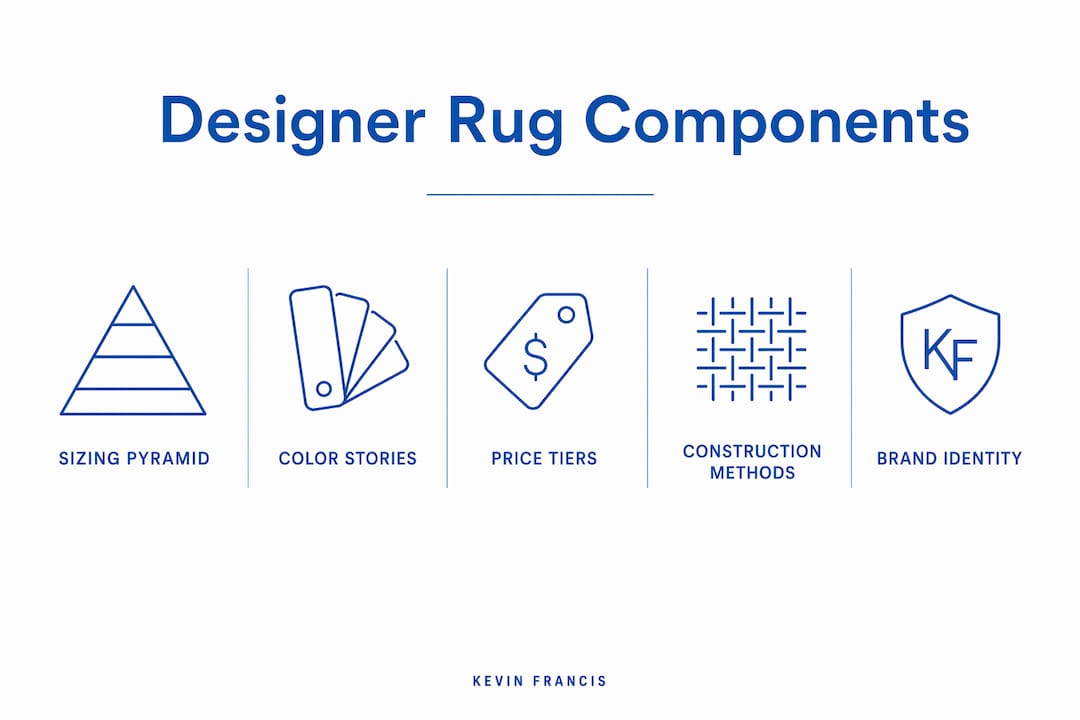
| Component | Role in the collection |
|---|---|
| Sizing pyramid | Ensures every room scale is served |
| Color stories (3–5 palettes) | Creates emotional range within one visual identity |
| Good-better-best pricing | Broadens market reach without diluting prestige |
| Construction variation | Adds tactile depth and material interest |
Pro Tip: When building your own collection at home, choose one anchor rug first, then select accent pieces from the same color story. This keeps the space feeling curated rather than crowded.
How do designer rug collections function as branding and architectural elements?
Designer collections act as physical branding assets that embody a designer’s identity independent of any single client project. A well-built collection shows a designer’s aesthetic vision more powerfully than a portfolio alone. It is “show, not tell” at its most persuasive.
For homeowners, this translates into something equally meaningful. When you choose a rug from a thoughtfully built collection, you are not just buying a floor covering. You are bringing a piece of someone’s creative world into your home. That emotional transaction is what separates a designer rug from a commodity product.
Rugs also function as what designers call quiet architecture. They define zones, absorb sound, and give a room its gravitational center. Collections like the Cruda series by Greg Natale use hand-knotted wool techniques to evoke textures inspired by brutalist architecture, enriching interiors far beyond pure ornamentation. The rug becomes a structural layer, not a decorative afterthought.
Texture and material irregularity deepen this effect. Handwoven combinations of wool, linen, and jute, as seen in Norm Architects’ Woven Matter collection, establish calm and grounding in spaces inspired by Scandinavian-Japanese design principles. The material itself carries mood.
- Pile height variation creates shadow and visual rhythm across a floor
- Natural fiber combinations add warmth and acoustic softness
- Pattern scale influences how large or intimate a room feels
- Artisanal irregularity gives a space a sense of history and authenticity
What technical and creative challenges shape designer rug collections?
Building a collection from concept to finished product is a demanding translation process. A designer begins with sketches and mood boards, then must convert every visual decision into a technical specification a manufacturer can execute.
-
Knot density and pile height determine how a pattern reads at scale. A motif that looks crisp in a sketch can blur or flatten if the knot count is too low. Designers must work closely with manufacturers to maintain design intent through every production stage.
-
Fiber selection shapes both appearance and longevity. Natural fibers like wool hold dye richly and ensure durability that synthetic alternatives rarely match over time. Wool also responds to light differently across the day, giving a rug a living quality that photographs cannot fully capture.
-
Fractional collections manage risk while preserving exclusivity. Small-batch production allows designers to test a new colorway or motif without committing to a full run. Off-the-shelf rugs are declining as bespoke, project-specific carpets define premium interiors. This shift rewards designers who build with intention and restraint.
-
Maintaining design integrity through manufacturing is perhaps the hardest challenge. Color shifts between digital rendering and dyed fiber, pile direction affects how a color reads in a room, and hand production introduces natural variation. Skilled designers treat that variation as a feature, not a flaw.
Pro Tip: If you are commissioning a custom rug design, request a physical sample in your actual room lighting before approving the full production run. Fiber color reads very differently under warm incandescent light versus cool daylight.
How can homeowners use designer rug collections to elevate their interiors?
Selecting a rug from a curated collection is simpler than it looks when you follow a clear framework. Start with the room, not the rug.
- Room scale first. A rug that is too small makes furniture float and a room feel unanchored. In a living room, the front legs of all major seating pieces should rest on the rug. In a dining room, the rug should extend at least 24 inches beyond the table on all sides.
- Match or contrast the color story. If your walls and upholstery are neutral, a rug from a warm terracotta palette creates a focal point without overwhelming the space. If your room already has strong color, choose a rug from a quieter palette within the same collection to anchor rather than compete.
- Consider fiber for your lifestyle. Wool suits living rooms and bedrooms beautifully. For high-traffic residential areas, choose tightly knotted or flat-woven constructions that resist crushing and clean easily.
- Layer entry-level and investment pieces. A collection’s sizing pyramid makes this natural. Place a smaller, more affordable accent rug in a hallway or study, and reserve the hand-knotted statement piece for your main living space. The two pieces share a visual language, so the home feels cohesive.
- Use rugs to define flow. In open-plan spaces, distinct rugs from the same collection signal different zones, dining, sitting, reading, without walls or hard dividers. The shared palette keeps the eye moving smoothly through the space.
Luxury lighting complements a designer rug beautifully, and the two elements work together to shape a room’s mood. A warm pendant light above a hand-knotted wool rug draws out the depth of the fiber and makes the pattern glow in a way that overhead lighting never achieves.
Limited editions and fractional collections help homeowners own truly unique pieces that add a sense of narrative to a home. Knowing that only a handful of a particular rug exist in the world changes how you experience it every day.
Key Takeaways
A designer rug collection concept is the most direct way to bring cohesive artistic identity, architectural depth, and lasting material quality into a home interior.
| Point | Details |
|---|---|
| Collections express creative identity | Curated rugs share color stories, scale, and construction to form a unified visual world. |
| Sizing pyramid serves every room | Tiered sizes from accent to statement ensure every space in a home is addressed. |
| Fiber choice determines longevity | Wool outperforms synthetic fibers in durability, dye richness, and long-term appearance. |
| Rugs function as quiet architecture | Texture, pile height, and material weight shape spatial mood beyond surface decoration. |
| Limited editions add narrative value | Small-batch pieces give homeowners a sense of ownership over something genuinely rare. |
What I have learned from years of working with curated collections
People often ask me whether a single great rug is enough. My honest answer is that one extraordinary rug can anchor a room, but a collection transforms a home. The difference is felt, not just seen.
The most common mistake I see homeowners make is choosing a rug in isolation, in a showroom under fluorescent light, without a swatch of their wall color or a photo of their furniture. A rug is not a painting you hang in a neutral white gallery. It lives in relationship with everything around it. That relationship is exactly what a well-built collection anticipates.
I also think the design world underestimates how much longevity matters. A hand-knotted wool rug, properly cared for, outlasts the furniture around it. It becomes part of the home’s memory. That is why I believe investing in a piece from a bespoke rug collection is one of the most enduring decisions a homeowner can make.
The technical side of collection development, the knot counts, the fiber sourcing, the color calibration between screen and dyed wool, is genuinely complex. But the homeowner does not need to master it. They need to trust the designer who has. That trust is built through transparency about materials, process, and creative intent. When a designer can tell you exactly why a rug was made the way it was, you are in good hands.
— Kevin O’Gara
Artisan designer rugs from Kevin Francis Design
Kevin Francis Design brings the full depth of the curated collection concept to life through handmade, artisan-crafted rugs that carry a clear creative identity from first sketch to finished fiber.
Each piece in the Kevin Francis Design range is built on the principles explored here: intentional color stories, Tibetan knotting and hand-tufting techniques, and a commitment to natural materials that age beautifully. The Lotto hand-knotted wool rug is a strong example of this philosophy in practice, a statement piece with the craftsmanship and material quality to anchor a room for decades. If you are ready to bring a genuinely curated piece into your home, the Kevin Francis Design collection is a natural place to begin.
FAQ
What is a designer rug collection concept?
A designer rug collection concept is a curated group of rugs unified by a shared creative vision, expressed through consistent color palettes, complementary sizes, and cohesive construction methods. It functions as both a branding asset for the designer and an architectural tool for the homeowner.
What are designer rugs made from?
Designer rugs are most commonly made from natural fibers like wool, linen, and jute, which offer superior durability, rich color depth, and tactile warmth. Wool is the preferred choice for investment-grade pieces because it holds its appearance and structure far longer than synthetic alternatives.
How do I choose the right designer rug for my room?
Start with room scale, ensuring the rug is large enough to anchor the furniture grouping, then match or contrast the rug’s color story with your existing decor. Choosing from a curated collection simplifies this process because the pieces are already designed to work together.
Why are limited-edition designer rugs worth the investment?
Small-batch and limited-edition rugs offer exclusivity, stronger artisan collaboration, and a level of creative precision that mass-produced rugs cannot replicate. Owning a piece from a fractional collection means your home holds something genuinely rare.
How does Tibetan knotting differ from other rug construction methods?
Tibetan knotting produces a dense, sculptural pile with exceptional durability and a surface that holds intricate patterns with great clarity. It is one of the most labor-intensive construction methods, which is why pieces built with this technique carry both higher price points and longer lifespans.


