


A narrative-driven home textile collection is a curated assortment of fabrics, rugs, or soft furnishings unified by a single guiding story expressed through shared motifs, palette, material choices, and construction technique. Rather than grouping products by colorway alone, these collections ask every piece to carry a fragment of a larger idea, so that a rug, a throw pillow, and a length of drapery feel like chapters from the same book. Industry coverage from 2026 confirms narrative-driven design is now a recognized macro-trend alongside expressive color and traditional resurgence.
The archetypes you will encounter most often across the market:
- Botanical-storybook: pressed-flora motifs, soft botanical illustration, layered greens and blush
- Folkloric/folk-motif: heritage symbols, regional craft references, earthy hand-dyed palettes
- Theatrical/playful: bold characters, circus or stage-inspired scale plays, high-contrast drama
- Material-integrity/minimal-heritage: the fiber itself as the story, natural texture, restrained palette
- Modernist/graphic: geometric abstraction, high-contrast tessellations, architectural rhythm
- Needlework-revival: counted cross-stitch grids, sampler arrangements, visible process marks
Kevin Francis Design’s Lotto Hand-Knotted Wool Area Rug is a tangible in-market example of the modernist/graphic archetype, where a bold geometric pattern hand-knotted in premium wool becomes the hero piece of a complete narrative interior.
Table of Contents
- What makes a textile collection truly narrative-driven?
- Six visual archetypes designers can adapt right now
- Which materials and techniques carry a narrative most convincingly?
- From concept word to finished assortment: a studio workflow
- Kevin Francis Design: how narrative becomes hand-knotted craft
- How to specify narrative textiles in real projects
- Key Takeaways
- Why narrative is the only luxury that lasts
- Kevin Francis Design: artisan narrative textiles made to order
- Useful sources
- FAQ
What makes a textile collection truly narrative-driven?
Seven building blocks separate a story-driven assortment from a loosely coordinated one. Named in order of influence: motif, scale, repeat structure, palette, material integrity, construction technique, and curated assortment logic. Each element must answer to the same guiding concept, or the collection reads as a mood board rather than a statement.
Motif is the visual protagonist. It carries the symbolic weight of the story and should be drawn from the concept rather than borrowed from trend reports. Scale determines emotional register: a large-scale motif reads theatrical and confident; a small-scale repeat feels intimate and layered. Repeat structure controls rhythm, the visual equivalent of sentence length in prose. A half-drop repeat creates gentle movement; a brick repeat grounds the eye; a tossed layout suggests spontaneity.
Palette functions as what designer Nishtha Bansal calls “mute narration,” communicating mood without a single word. A controlled palette of several tones, extracted from natural samples rather than Pantone books, tends to hold its emotional coherence across multiple product categories. Material integrity means the fiber and construction method are chosen because they reinforce the story, not because they are convenient. A folkloric collection printed on polyester loses its authenticity the moment a buyer touches it. Construction technique adds the final layer: handweaving, Tibetan knotting, matelassé, or embroidery each carry their own cultural and tactile resonance. Finally, assortment logic ensures the pieces are designed to layer across categories, from rugs to pillows to upholstery, so the story unfolds room by room.
Pro Tip: Before sketching a single motif, write five concept words that capture the emotional core of the collection. Practitioner guidance from Ronnie Kovacs recommends choosing an evocative, non-literal name — something like “The Green Hours” rather than “Botanical Study” — before finalizing the hero swatch. The name shapes copy, merchandising, and client messaging from the start.
Six visual archetypes designers can adapt right now
These six archetypes are repeatable frameworks that generate narrative clarity across an assortment, regardless of the specific story a designer chooses to tell. Each one has a proven track record in the market and maps cleanly onto residential and boutique commercial briefs.
1. Botanical-storybook
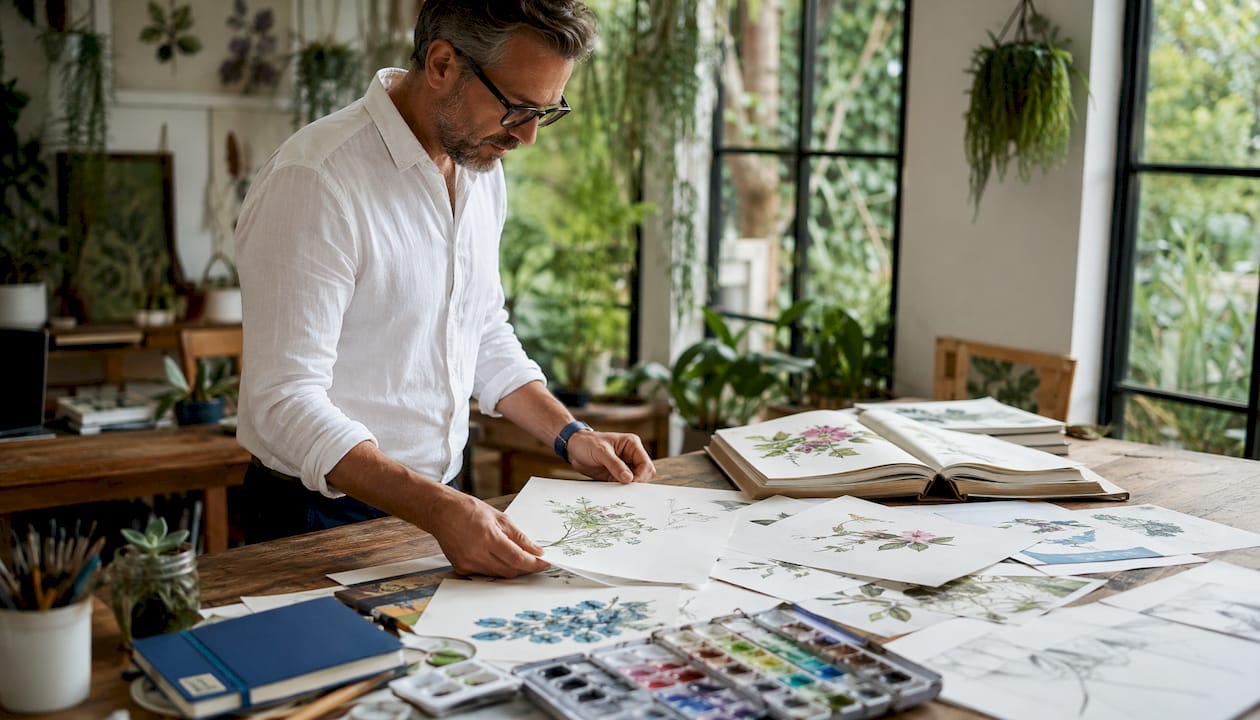
Rooted in the tradition of pressed-flower illustration and natural history prints, this archetype layers botanical motifs at varying scales: a large painterly bloom anchors the hero piece, while smaller sprig repeats carry the story into supporting fabrics. Palettes lean toward soft sage, blush, warm ivory, and deep botanical green. Sarita Handa’s Spring Fables collection is a strong market reference, using floral storytelling to create a cohesive seasonal narrative across embroidered cushions and bed linens. In interiors, this archetype works beautifully as drapery and accent pillows in reading rooms, primary bedrooms, and garden-facing sitting areas.
2. Folkloric/folk-motif
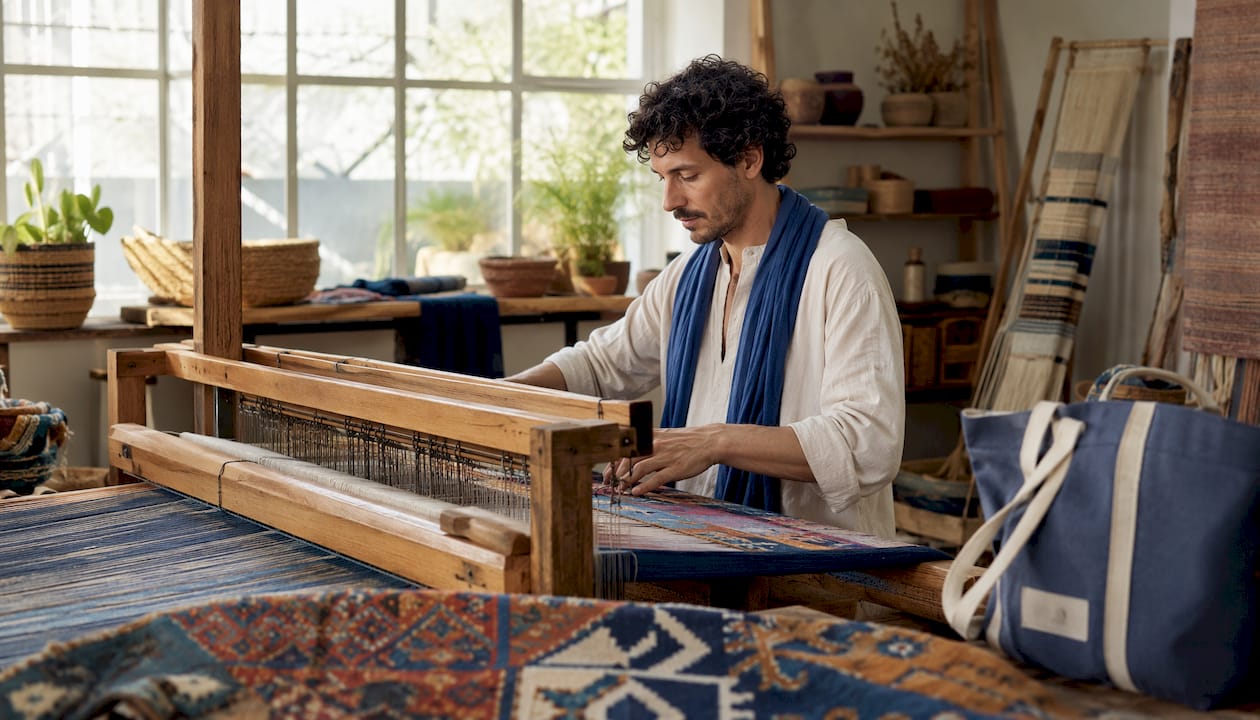
Heritage symbols drawn from regional craft traditions, whether Scandinavian rosemaling, Central Asian ikat, or American quilting geometry, give this archetype its emotional depth. The story is one of cultural continuity: each motif carries a lineage. Anna Maria Parry’s Allegory collection exemplifies the approach, pairing folkloric forms and vintage book illustration with written allegories printed directly into the fabric. Earthy, hand-dyed palettes in terracotta, indigo, and ochre reinforce the handmade provenance. This archetype translates well to area rugs, upholstery on statement chairs, and layered pillow arrangements.
3. Theatrical/playful
Scale is the primary storytelling device here. Oversized characters, bold circus motifs, or dramatic architectural forms are placed at a scale that commands attention, then balanced by quieter supporting repeats. Pallas Textiles’ Cirque collection demonstrates this precisely: matelassé construction and dramatic colorways translate the energy of theatrical performance into upholstery fabric with genuine physical presence. High-contrast palettes, unexpected color pairings, and a sense of controlled exuberance define the mood. Best deployed as statement upholstery, large-format rugs, or feature drapery in hospitality and playroom settings.
4. Material-integrity/minimal-heritage
Here the fiber is the narrative. Undyed or naturally dyed wool, raw linen, and organic cotton carry the story of their own making: the slight irregularity of a handspun yarn, the soft luster of a stone-washed weave, the warmth of a vegetable-dyed ground. Palettes are deliberately restrained, often a single family of neutrals with one warm accent. The Cord handwoven wool rug collection featured in Architectural Record captures this sensibility: four organic colorways, natural wool, and a range of formats that let the material speak without ornamentation. This archetype suits minimalist residential interiors, Japandi-influenced spaces, and any project where the client’s brief centers on sustainability.
5. Modernist/graphic
Geometric abstraction, high-contrast tessellations, and architectural rhythm define this archetype. The narrative is one of ideas rather than images: the story of a Bauhaus grid, a De Stijl color block, or a mid-century pattern study. 2026 trend coverage identifies “midimalism,” one strong motif with generous breathing room, as a dominant direction, alongside checkerboard and tessellation patterns. Kevin Francis Design’s Lotto Hand-Knotted Wool Area Rug belongs squarely in this archetype, its bold geometric structure hand-knotted in wool to create a piece that reads as both floor covering and wall-worthy art. Ideal for living rooms, hotel lobbies, and any space where the textile is meant to anchor the entire design scheme.
6. Needlework-revival
Counted cross-stitch grids, sampler arrangements, and visible process marks are the visual language of this archetype, and Pattern Observer’s 2026 trend documentation confirms their resonance across multiple product categories. The narrative is one of patient craft: the story of a hand that moved deliberately across a grid, stitch by stitch. Palettes tend toward the warm and slightly faded, as if the piece has been loved for decades. This archetype works particularly well for accent pillows, bed coverlets, and framed textile art, and it pairs naturally with the folkloric archetype in layered interiors.
Archetype quick-reference
| Archetype | Scale | Mood | Best placement |
|---|---|---|---|
| Botanical-storybook | Medium to large | Romantic, calm | Drapery, accent pillows, bedding |
| Folkloric/folk-motif | Small to medium | Warm, cultural | Rugs, upholstery, pillow arrangements |
| Theatrical/playful | Large, oversized | Bold, dramatic | Statement upholstery, feature drapery, large rugs |
| Material-integrity | Texture-led | Serene, minimal | Rugs, throws, natural-fiber upholstery |
| Modernist/graphic | Large, architectural | Confident, graphic | Anchor rugs, lobby textiles, living rooms |
| Needlework-revival | Small to medium | Nostalgic, handcrafted | Accent pillows, coverlets, textile art |
Which materials and techniques carry a narrative most convincingly?
Natural fibers and handcraft methods are the most reliable vehicles for authentic storytelling in home textiles. Wool, linen, organic cotton, and silk each age in ways that deepen rather than diminish the narrative, developing patina, softening in texture, and holding color with a warmth that synthetic fibers cannot replicate.
Industry trend analysis confirms that buyers in 2026 are showing a clear preference for natural fibers and tactile surfaces that age well, choosing them over fast-fashion prints precisely because they signal authenticity and longevity. Handwoven ikats, block printing, and artisanal embroidery are moving from niche markets into mainstream specification, reinforced by sophisticated palettes and restrained layouts. Domestic mills, including North Carolina weavers highlighted in Home Textiles Today, are developing innovative yarns that deliver both texture and performance without sacrificing narrative integrity.
2026 material direction: Collections built on natural fibers and craft techniques command longer shelf life and stronger rapport with premium buyers, according to industry commentary tracking the shift away from fast-fashion print cycles.
| Fiber | Key attributes | Recommended application | Narrative strength |
|---|---|---|---|
| Hand-knotted wool | Durable, rich pile, ages with luster | Area rugs, statement floor pieces | Very high: carries motif depth and tactile warmth |
| Linen | Breathable, slight irregularity, ages softly | Drapery, upholstery, bed linens | High: communicates provenance and restraint |
| Organic cotton | Soft hand, takes dye evenly, versatile | Quilting, accent pillows, coverlets | Medium-high: strong for botanical and folkloric archetypes |
| Handspun/natural wool | Irregular texture, warm, sustainable | Throws, woven wall textiles | Very high: fiber irregularity is itself a narrative |
| Silk | Luminous, color-depth, delicate | Accent pillows, embroidered details | High: adds jewel-box richness to theatrical archetypes |
One honest tradeoff: handcraft methods add lead time and cost. A hand-knotted wool rug at artisan quality typically requires weeks to months of production time, depending on size and knot density. Where performance is a priority, such as in high-traffic hospitality corridors, a performance linen or solution-dyed fiber with a hand-finished surface treatment can preserve the visual narrative while meeting durability requirements. The key is to apply performance treatments at the finish stage rather than substituting the base fiber, so the tactile story remains intact. For more on balancing aesthetics with durability, the tradeoffs are worth mapping against each project’s traffic and maintenance expectations before specifying.
From concept word to finished assortment: a studio workflow
The most cohesive narrative collections begin with language, not sketches. A five-to-seven-step process moves from a single evocative memory or concept word through palette extraction, motif development, scale mapping, prototype sampling, and final assortment planning.
- Write five concept words. Choose words that capture the emotional core of the collection, not its visual surface. “Dusk,” “ceremony,” “worn stone,” “first frost,” “amber” are more generative than “blue,” “floral,” or “geometric.” Practitioner guidance consistently shows this step produces more cohesive results than starting from trend reports.
- Name the collection before the first swatch. An evocative, non-literal name sets the tone for every downstream decision: copy, merchandising, client presentations, and pricing. The name should feel like a door into the world of the collection.
- Extract a small, coherent color palette from natural samples. Pull swatches from physical objects, photographs, or found materials that embody the concept words. Arrange them by value and temperature, then edit to the six to eight tones that hold together under natural light. For guidance on pulling a color story that holds across categories, this step rewards careful attention.
- Sketch a set of motifs with scale studies. Draw each motif at three scales: hero (large-format anchor), supporting repeat (medium, fills the field), and ground or texture (small, recedes). This scale map determines how pieces will layer in a room.
- Select a few hero patterns for sampling. Produce physical samples of the three strongest motifs at their intended scale and in the chosen fiber. Test them together on a flat surface and under the lighting conditions of the intended installation space.
- Run lightbox and natural-light checks. Palette shifts dramatically between artificial and natural light. A warm ivory that reads as cream under incandescent light can appear almost white in north-facing daylight. Resolve these discrepancies at the swatch stage, not after production.
- Build the assortment plan. Map each pattern to a product category: which motif anchors the rug, which carries the pillow, which becomes the drapery ground. The assortment should feel like an ensemble, with each piece holding its own and the whole telling a richer story than any single item.
Pro Tip: When running swatch tests, drape samples vertically as well as horizontally. A motif that reads beautifully flat on a table can lose legibility when hung as drapery, or gain unexpected drama when seen at a low angle on a floor. Test under the actual conditions of the final installation whenever possible.
Kevin Francis Design: how narrative becomes hand-knotted craft
The most direct way to understand how a narrative translates into a finished textile is to follow one piece from concept to completion. Kevin Francis Design’s approach to the Lotto Hand-Knotted Wool Area Rug illustrates the process with clarity.
The collection concept begins with a geometric idea rooted in modernist art history: the interplay of bold form, negative space, and optical rhythm. Rather than illustrating this idea with a printed surface, the studio translates it into structure. The Lotto rug’s pattern is not applied to the wool; it is built from it, knot by knot, using Tibetan hand-knotting techniques that allow for precise color placement and a pile depth that gives the geometric forms a subtle three-dimensional presence. The result is a piece that reads differently at standing height than it does when viewed from across a room, a quality no flat-printed textile can replicate.
Specification notes for designers: the Lotto rug is produced in premium wool, with a hand-knotted construction that delivers both durability and the kind of tactile warmth that anchors a room. Custom sizing is available, and colorway discussions can be initiated through the studio. Lead times for hand-knotted pieces at this quality level are realistic rather than rushed; plan for production time that reflects the craft involved, and communicate this to clients as a feature rather than a constraint.
The craft decision that shapes everything in a hand-knotted rug is the relationship between knot density and pile height. A denser knot count sharpens motif edges and allows finer detail; a slightly lower density with a higher pile creates a softer, more impressionistic reading of the same pattern. For the Lotto rug, the balance was chosen to preserve the crispness of the geometric forms while retaining the warmth and depth that only wool at a generous pile height can deliver.
Images to include with this piece: a full overhead shot showing the complete geometric pattern; a close-up of the pile surface at an angle to reveal texture and knot structure; a room-set image showing the rug anchoring a modernist living space with clean-lined furniture and a restrained palette.
How to specify narrative textiles in real projects
The core specification rule for narrative textiles is straightforward: lead with the hero piece, then build the supporting assortment around it. Scale the hero to the room’s primary function, and let the supporting pieces carry the story into secondary zones.
A practical checklist for your spec sheet:
- Concept words (3–5): the emotional core of the collection, agreed with the client before any product is selected
- Dominant motif: named and described, with a reference image attached
- Scale map: hero placement (rug, statement upholstery, or feature drapery), supporting repeat (accent pillows, secondary upholstery), ground texture (throws, bed linens)
- Fiber choice and finish: specify the base fiber, construction method, and any performance treatment, noting where and why each was chosen
- Care and maintenance notes: particularly for natural fibers in high-traffic or hospitality settings
- Lead time: confirmed with the supplier before presenting to the client
On cost and lead time: artisan-produced pieces, hand-knotted rugs, hand-embroidered linens, and block-printed fabrics carry premium pricing and longer production windows. This is not a disadvantage to manage; it is a story to tell. Clients who understand that a piece took skilled hands weeks to produce tend to value it differently than one pulled from a warehouse. Off-the-shelf digital prints offer faster turnaround and lower entry cost, but they rarely carry the tactile depth that makes a narrative collection feel resolved. The craft heritage embedded in handwoven rugs is itself part of the specification argument for premium residential and boutique hospitality projects.
When narrative textiles are part of a broader interior scheme, consider how they interact with architectural elements. Interior door finishes and hardware increasingly follow the same material-integrity logic as textiles, with natural wood tones and matte finishes that complement rather than compete with handcrafted soft furnishings.
Key Takeaways
Narrative-driven home textile collections succeed when every design decision, from motif to fiber to assortment logic, answers to a single guiding concept rather than a trend checklist.
| Point | Details |
|---|---|
| Start with concept words | Write five evocative words before sketching; they guide palette, motif, and naming decisions. |
| Material integrity is the story | Natural fibers like wool and linen age in ways that deepen narrative; synthetic substitutes undercut it. |
| Design for the ensemble | Each piece should hold its own and contribute to a richer whole across rugs, pillows, and drapery. |
| Plan lead time as a feature | Artisan production takes time; communicate this to clients as evidence of craft, not a delay. |
| Kevin Francis Design example | The Lotto Hand-Knotted Wool Area Rug demonstrates the modernist/graphic archetype executed in hand-knotted wool with custom sizing available. |
Why narrative is the only luxury that lasts
The conversation about narrative in luxury interiors tends to get abstract quickly, which is exactly where it loses its usefulness. What I have found, working with the materials and techniques that define Kevin Francis Design’s approach, is that narrative is not a concept layered onto a finished object. It is a series of decisions made before the first thread is placed: the choice of a concept word over a trend reference, the selection of wool over a faster fiber, the commitment to hand-knotting when a printed surface would have been easier. Those decisions accumulate into something a client can feel the moment they walk into a room, even if they cannot articulate why.
The studio’s strength is in translating a design idea into a physical object that carries that idea in its structure, not just its surface. If you are working on a project where the textile needs to do more than fill a floor or cover a cushion, we would welcome the conversation.
Kevin Francis Design: artisan narrative textiles made to order
For designers who want a narrative textile that is genuinely built around a concept rather than adapted from a catalog, Kevin Francis Design offers custom-sized, hand-knotted wool rugs and coordinating home textiles produced to your brief.
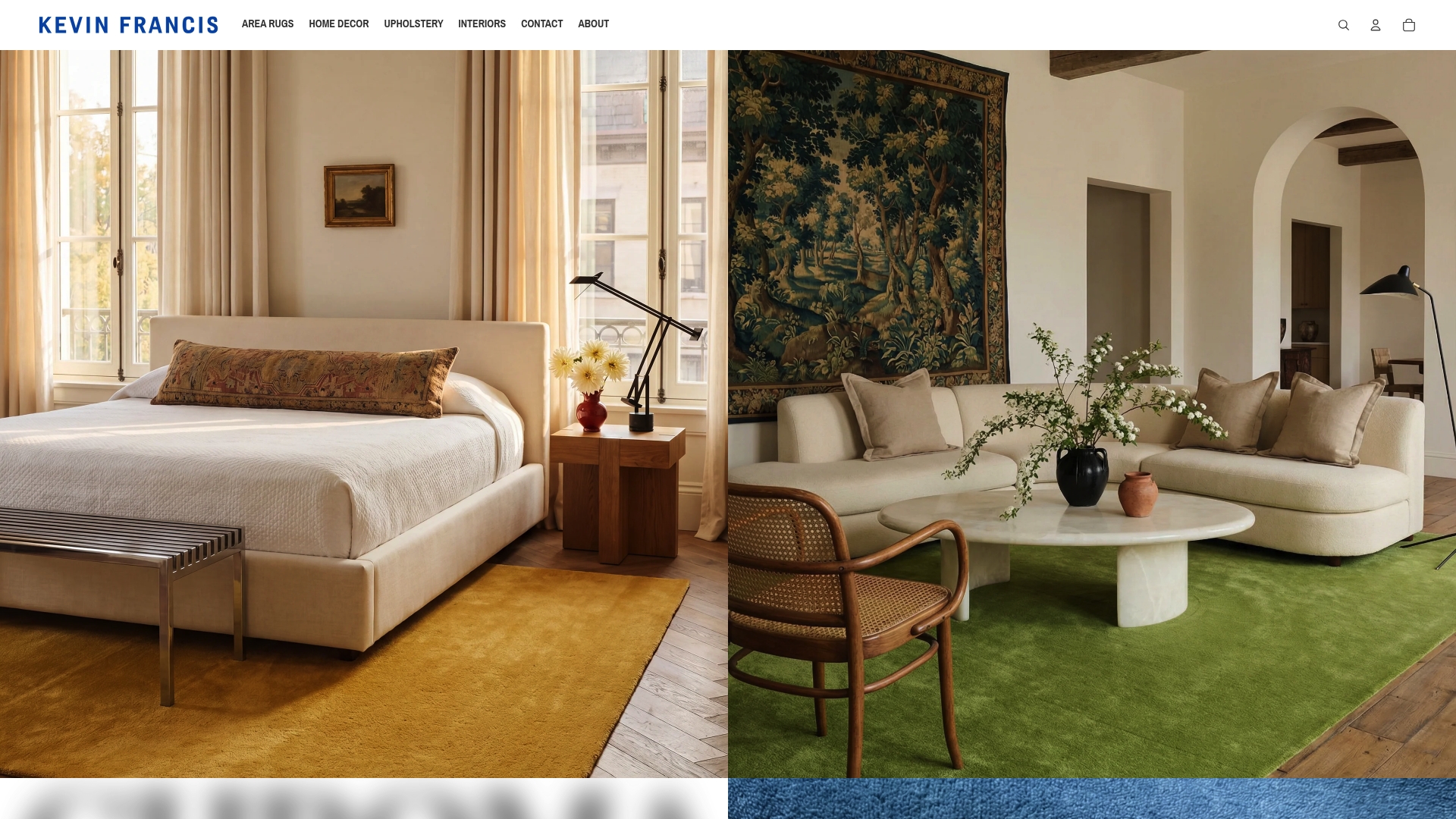
The studio works with clients on made-to-order rugs in custom colorways and dimensions, with production timelines that reflect the craft involved. The Lotto Hand-Knotted Wool Area Rug is available to view as a starting point for custom commissions, and the studio welcomes inquiries about bespoke colorways, scale adjustments, and project-specific design briefs. To begin a conversation about your project, visit the product page or reach out directly through the studio.
Useful sources
- Home Textiles Today: Inside Interwoven — Industry leaders discuss spring 2026 fabric directions, including narrative-driven design as a macro-trend; supports the materials and archetype sections.
- Pattern Observer: July 2026 Textile Design Trends — Documents midimalism, needlework revival, and high-contrast geometry as active 2026 pattern directions; supports the archetype and process sections.
- Ronnie Kovacs: How to Design a Pattern Collection — Practitioner workflow for concept-word extraction, palette building, and collection naming; supports the design process section.
- Pallas Textiles: Behind the Design of the Cirque Collection — Designer notes on how motif, scale, and construction choices convey a theatrical narrative; supports the theatrical archetype profile.
- ELLE DECOR India: Spring Fables by Sarita Handa — Editorial coverage of a botanical-storybook narrative collection; supports the botanical archetype example.
- The French Seam: Allegory by Anna Maria Parry — Product and editorial description of a folkloric, story-driven fabric collection; supports the folkloric archetype profile.
- iLEF Textile: Top Home Textile Trends — Industry trend commentary on natural fibers, craft techniques, and authenticity signals; supports the materials section.
- Architectural Record: New Textiles and Wallcoverings for Summer 2026 — Curated product coverage including natural wool rug collections; supports the material-integrity archetype and specification guidance.
FAQ
What are narrative-driven home textile collections?
Narrative-driven home textile collections are curated assortments where every piece, from rugs to pillows to drapery, shares a guiding concept expressed through consistent motifs, palette, fiber choice, and construction technique. The goal is for the whole assortment to tell a richer story than any single item could alone.
What are the home textile trends shaping collections in 2026?
2026 industry coverage identifies narrative-driven design, natural fiber preference, needlework revival, and high-contrast geometric patterns as the dominant directions, with buyers favoring tactile surfaces and craft authenticity over fast-fashion prints.
What are common examples of household textiles used in narrative collections?
Area rugs, accent pillows, drapery, upholstery fabric, bed linens, and throws are the primary categories; in a well-designed narrative collection, each category carries a different scale or register of the same motif and palette, so the story builds as you move through a space.
Which fibers work best for storytelling textile designs?
Hand-knotted wool, linen, organic cotton, and handspun natural fibers are the strongest choices because they age with character and carry tactile depth that reinforces the narrative. Kevin Francis Design’s Lotto Hand-Knotted Wool Area Rug demonstrates how wool at a generous pile height communicates both motif precision and warmth.
How do designers communicate a textile narrative to clients?
Start with three to five concept words agreed before any product is selected, then present the hero piece first and build the supporting assortment around it, showing clients how each piece carries a fragment of the same story across different scales and product categories.
Recommended
- How Designer Rugs Tell Creative Stories at Home – Kevin Francis Design
- How Rug Craftsmanship Reflects Cultural Heritage – Kevin Francis Design
- Creating a Home That’s as Unique as You Are: Tips for a Personalized S – Kevin Francis Design
- Why Handwoven Rugs Develop Unique Character Over Time – Kevin Francis Design


