


Handwoven rugs develop unique character because every knot, fiber, and dye batch carries the unmistakable imprint of a human hand. Unlike machine-made textiles, which replicate patterns with mechanical precision, a handwoven rug is shaped by the artisan’s tension, rhythm, and creative instinct. Natural wool and silk fibers absorb light and age in ways synthetic materials simply cannot. The result is a living object that grows richer, warmer, and more personal with every passing year. Understanding why handwoven rugs develop unique character is the first step toward choosing a piece that will genuinely reward you for decades.
Why handwoven rugs develop unique character through artisan knotting
Hand knotting is the foundation of a handwoven rug’s individuality. Each knot is tied by hand onto warp threads stretched across a loom, and slight variations in knot size and tension produce organic, non-uniform patterns that no two rugs share. That irregularity is not a flaw. It is the signature of a living craft.
Machine-made rugs work in repetitive grids, producing perfect symmetry without deviation. The result is technically flawless but visually flat. A handwoven rug, by contrast, carries small shifts in border alignment, subtle density changes across the field, and gentle asymmetries in motifs that give the eye something genuine to rest on.
The loom setup itself contributes to this individuality. Warp tension changes as the weaver progresses from the base of the rug to the top, so the pile density at one end may differ slightly from the other. These variations accumulate across thousands of knots, producing a surface that feels alive rather than printed.
Key handwoven rug characteristics shaped by the knotting process include:
- Knot density variation: Tighter sections catch light differently from looser ones, creating a subtle play of sheen across the surface.
- Border irregularities: Handdrawn borders rarely close with machine precision, giving the rug a painterly, freehand quality.
- Pattern drift: Geometric motifs may shift by a knot or two across rows, producing a gentle rhythm rather than rigid repetition.
- Pile direction changes: Artisans occasionally alter pile direction to add depth, a technique machines cannot replicate.
Pro Tip: When examining a handwoven rug, turn it face down and inspect the back. A hand-knotted rug shows individual knots clearly visible in an organic, slightly irregular grid. A machine-made rug has a uniform, printed-looking reverse with no visible knot structure.
Understanding the difference between construction methods is worth your time. The guide to rug construction from Kevin Francis Design walks through hand-knotted versus hand-tufted techniques with clarity and depth.
How natural fibers and traditional dyeing create depth and warmth
The materials woven into a handwoven rug determine how it ages, how it feels underfoot, and how its color evolves over years of use. Wool, silk, and cotton each bring distinct properties that synthetic fibers cannot replicate.
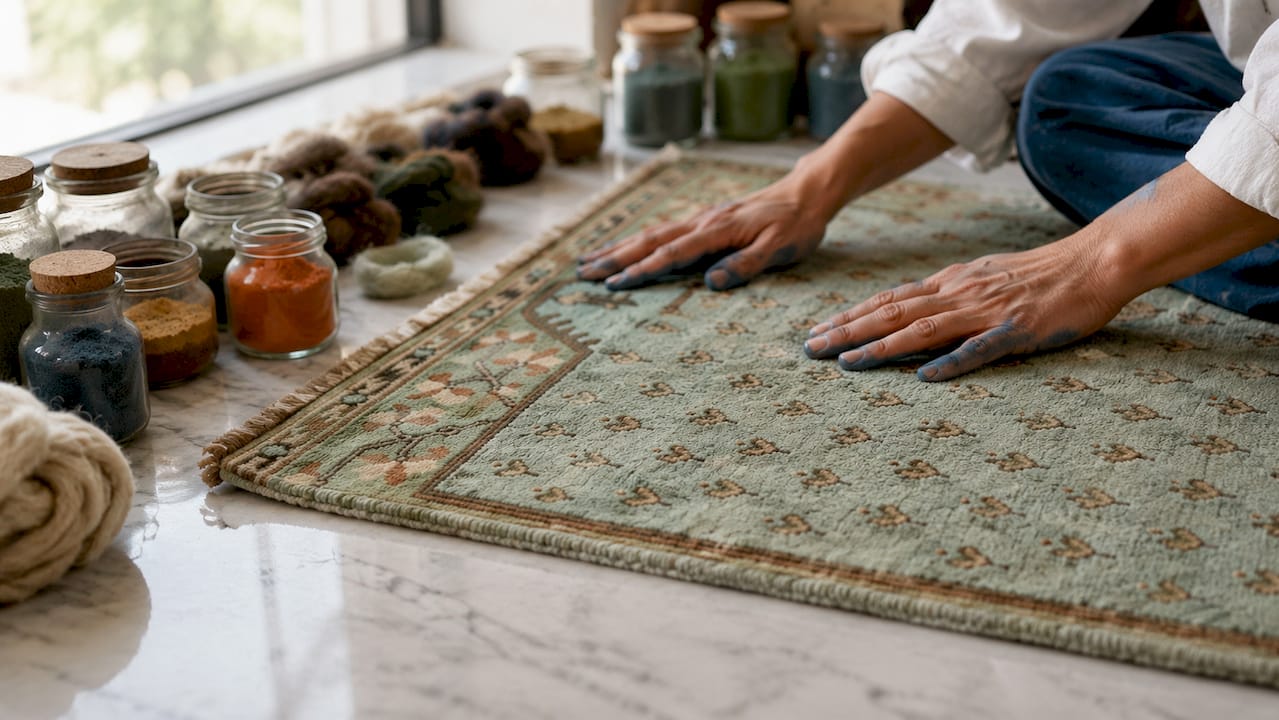
Wool is the most widely used fiber in traditional hand-knotted rugs, and for good reason. It contains lanolin, a natural wax that keeps fibers supple and resistant to crushing. Silk adds a luminous sheen and allows for finer knot counts, producing intricate detail that catches light like a wash of color across water. Cotton, used primarily in warp and weft threads, provides structural stability without adding visual weight.
The dyeing process is where much of a rug’s visual character originates. Plant-based natural dyes, derived from sources like pomegranate rind, indigo, and madder root, produce subtle color variations called abrash. Abrash appears as gentle horizontal shifts in tone across a field of color, the result of dye batches that never match exactly. Rather than a defect, abrash is a mark of authenticity. It gives the rug visual warmth and depth that a flat, synthetic color simply cannot achieve.
Natural versus synthetic fibers differ in several critical ways:
- Aging: Natural fibers soften and develop patina over time. Synthetic fibers flatten, pill, or lose their luster.
- Color evolution: Plant-based dyes mellow into richer, warmer tones with sunlight exposure. Synthetic dyes fade unevenly or bleach out.
- Texture: Wool and silk respond to foot traffic by compacting gracefully. Synthetic pile tends to mat and lose its structure.
- Sustainability: Natural fibers are biodegradable and often sourced from traditional farming communities, supporting both the environment and artisan livelihoods.
Sunlight exposure adds another layer of individuality. A rug placed near a south-facing window will develop a slightly different color story than the same design placed in a dim hallway. That responsiveness to environment is part of what makes rugs special as living objects in a home.
How aging and use enhance the beauty of handwoven rugs
A handwoven rug does not peak on the day it leaves the loom. Its finest expression comes years, sometimes decades, later. This is one of the most compelling features of handwoven rugs and one of the least understood.
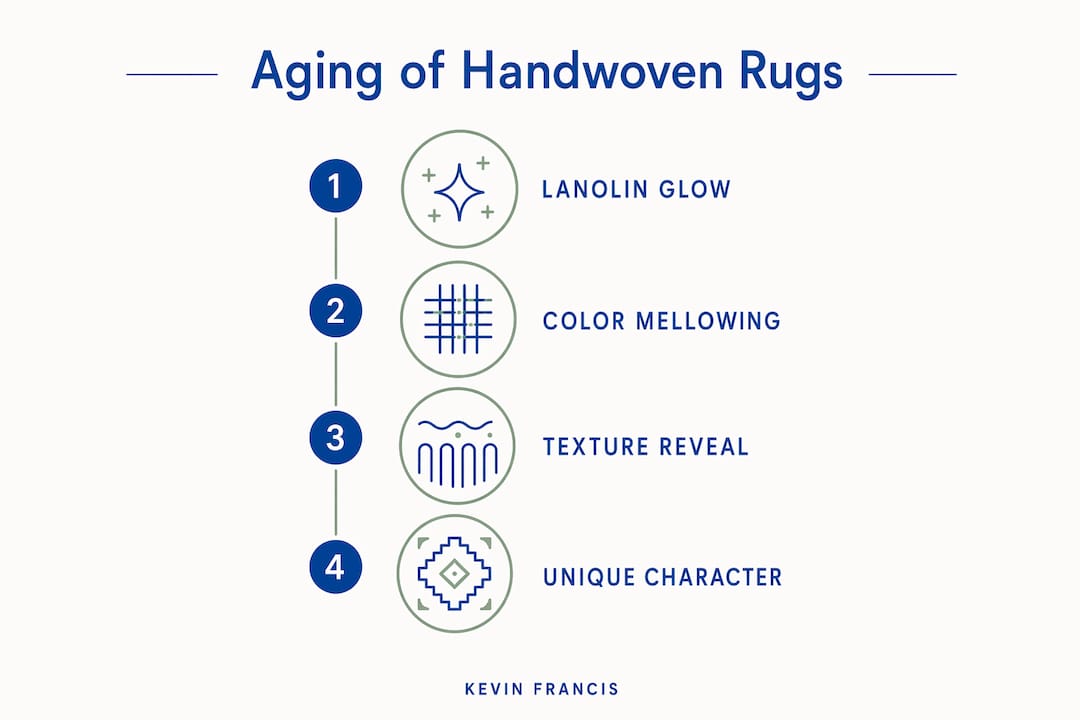
Lanolin in wool fibers plays a central role in this process. As foot traffic works the pile, lanolin migrates toward the surface, producing a natural sheen that enhances with use. The rug literally brightens under your feet. A well-used hand-knotted wool rug in a living room develops a glow that a brand-new synthetic rug cannot fake.
Foot traffic compacts the pile of a hand-knotted rug in ways that reveal rather than damage its texture. High-traffic areas develop a slightly lower pile, creating a subtle topographic quality across the surface. This is not wear. It is depth.
Color mellowing is equally beautiful. The bold reds and deep indigos of a new rug soften over years into tones that feel warmer and more integrated with a room’s palette. Antique rugs are prized precisely because their colors have reached this mellow, jewel-like quality that no dye formula can produce on demand.
How aging benefits handwoven rugs:
- Sheen development: Lanolin rises to the surface with use, adding luminosity.
- Pile compaction: Traffic creates subtle texture variation across the field.
- Color mellowing: Dyes warm and deepen rather than fade harshly.
- Structural integrity: Hand-knotted construction holds together for generations with proper care.
Pro Tip: Rotate your handwoven rug every one to two years to distribute foot traffic and sunlight exposure evenly. This encourages consistent aging across the entire surface rather than concentrated wear in one area.
Proper care preserves these qualities over time. Kevin Francis Design offers detailed rug care guidance for owners of handmade luxury pieces.
What cultural storytelling adds to the uniqueness of woven rugs
Every handwoven rug carries a story that predates the room it sits in. Rug motifs reflect cultural heritage and serve as symbolic storytelling tools tied to artisan traditions stretching back centuries. A geometric medallion, an animal motif, or a repeating border pattern is not merely decorative. It is a visual language passed from one generation of weavers to the next.
The individual artisan leaves a personal imprint on every piece. Weaving style, pattern interpretation, and color selection all vary by maker, region, and tradition. Two weavers working from the same cartoon, the paper design used as a guide, will produce rugs that differ in subtle but meaningful ways. That human variability is irreplaceable.
Contemporary designers working within traditional frameworks add another dimension. At Kevin Francis Design, the creative vision of Kevin Francis O’Gara layers modernist influences onto ancient weaving techniques, producing pieces that honor craft history while speaking to contemporary interiors. The Lotto Hand-Knotted Wool Area Rug draws on Ottoman geometric traditions reinterpreted through a refined, modern eye.
Handwoven rugs are prized as heirlooms for reasons that go beyond durability. They carry the memory of the hands that made them, the culture those hands belonged to, and the rooms they have graced across generations. Each handwoven rug supports artisan communities and preserves cultural heritage that would otherwise disappear under the pressure of industrial production. Buying one is an act of cultural stewardship as much as an interior design decision.
The Selendi Hand-Knotted Wool Area Rug and the Cairene Hand-Knotted Wool Area Rug from Kevin Francis Design each embody this tradition, carrying pattern languages rooted in centuries of weaving history while fitting beautifully into sophisticated contemporary rooms.
Key Takeaways
Handwoven rugs develop unique character through artisan knotting, natural fibers, traditional dyeing, and a living aging process that no machine-made rug can replicate.
| Point | Details |
|---|---|
| Artisan knotting creates individuality | Slight variations in knot tension and size produce organic, non-uniform patterns unique to each rug. |
| Natural fibers age beautifully | Wool and silk soften, develop patina, and gain sheen over time, unlike synthetic materials that degrade. |
| Abrash adds visual warmth | Natural dye batch variations create subtle color tone shifts that deepen a rug’s visual character. |
| Aging enhances rather than diminishes | Foot traffic and sunlight mellow colors and develop sheen, making older handwoven rugs more beautiful. |
| Cultural storytelling deepens value | Motifs and weaving traditions embed cultural heritage into every rug, giving it meaning beyond decoration. |
What I’ve learned from years of working with handwoven rugs
People often ask me how to tell a genuinely special rug from one that merely looks the part. My honest answer is this: look for the imperfections first. A rug with perfectly uniform borders and absolutely consistent color across the field was almost certainly made by a machine, regardless of what the label says. The slight wobble in a hand-drawn border, the gentle abrash across a field of blue, the way the pile catches light differently from different angles — these are the marks of a rug worth owning.
I have also learned that asking about construction method matters more than most buyers realize. The term “hand-woven” is broad enough to cover everything from true hand-knotted pieces to hand-tufted rugs made with a tufting gun. They are not the same thing in terms of longevity, character development, or value. Always ask whether a rug is hand-knotted, hand-tufted, or flat-woven before committing. Kevin Francis Design’s collector’s guide to handmade rugs is the clearest resource I know for making that distinction confidently.
The long-term value of a natural fiber rug is something I feel strongly about. A well-chosen hand-knotted wool rug does not depreciate the way furniture does. It appreciates, in both monetary and aesthetic terms, as it ages. That is a rare quality in any object you bring into your home.
— Kevin O’Gara
Timeless craftsmanship worth investing in
The rugs at Kevin Francis Design are made the way rugs have always been made at their finest: by skilled artisans, knot by knot, using natural wool and time-honored techniques. Each piece is designed to develop the kind of character this article describes, growing more beautiful with every year it spends in your home.
The collection includes hand-knotted wool pieces that draw on centuries of weaving tradition while fitting naturally into modern interiors. Whether you are drawn to bold geometric patterns or quieter, more refined designs, you will find pieces built to last and to improve with age. Explore the full collection at Kevin Francis Design and find a rug that will become one of the most enduring and rewarding objects in your home.
FAQ
Why do handwoven rugs look different from machine-made rugs?
Handwoven rugs show subtle irregularities in pattern, border, and color because human hands vary in tension and rhythm with every knot. Machine-made rugs produce perfect symmetry that lacks the organic warmth of handcrafted work.
What is abrash in a handwoven rug?
Abrash is the gentle horizontal shift in color tone that appears across a rug’s field, caused by natural dye batches that never match exactly. It is a mark of authenticity and adds visual depth to the rug’s character.
Do handwoven rugs get better with age?
Yes. Natural wool fibers develop a sheen as lanolin rises to the surface with use, colors mellow into warmer tones, and the pile compacts in ways that reveal texture depth. Synthetic rugs degrade under the same conditions.
How can I tell if a rug is truly hand-knotted?
Turn the rug over and examine the back. A hand-knotted rug shows individual knots in a slightly irregular grid. Ask the seller specifically whether the rug is hand-knotted, hand-tufted, or flat-woven, since “hand-woven” can describe all three.
Why are handwoven rugs considered heirlooms?
Handwoven rugs are built from natural fibers using construction methods that hold together for generations. Their cultural motifs, artisan craftsmanship, and improving beauty with age make them objects of lasting personal and monetary value.
Recommended
- Handmade Rugs vs Machine-Made: Benefits Worth Knowing – Kevin Francis Design
- What Makes a Rug Truly Handmade: A Collector’s Guide – Kevin Francis Design
- Hand-Knotted vs Hand-Tufted Rugs: A Maker’s Comparison – Kevin Francis Design
- Why Custom Rugs Suit Unique Spaces in Your Home – Kevin Francis Design


