


Handmade rugs are defined as textiles crafted knot by knot or loop by loop entirely by skilled artisans, using natural fibers such as wool or silk and traditional techniques including hand-knotting, hand-tufting, and Tibetan knotting. The benefits of handmade rugs over machine-made options are substantial: superior durability, authentic design character, long-term investment value, and a far smaller environmental footprint. Industry professionals recognize hand-knotted rugs as heirlooms, not commodities. Understanding the difference between the two categories helps you make a purchase you will still feel good about decades from now.
1. How do craftsmanship and materials set handmade rugs apart?
Hand-knotting is the oldest and most demanding construction method in textile history. Each knot is tied individually around the warp threads by an artisan, a process that can take months or even years for a single large piece. Power-loom weaving, by contrast, replicates a pattern mechanically in hours. The result is a product that looks similar at first glance but feels and performs very differently underfoot.
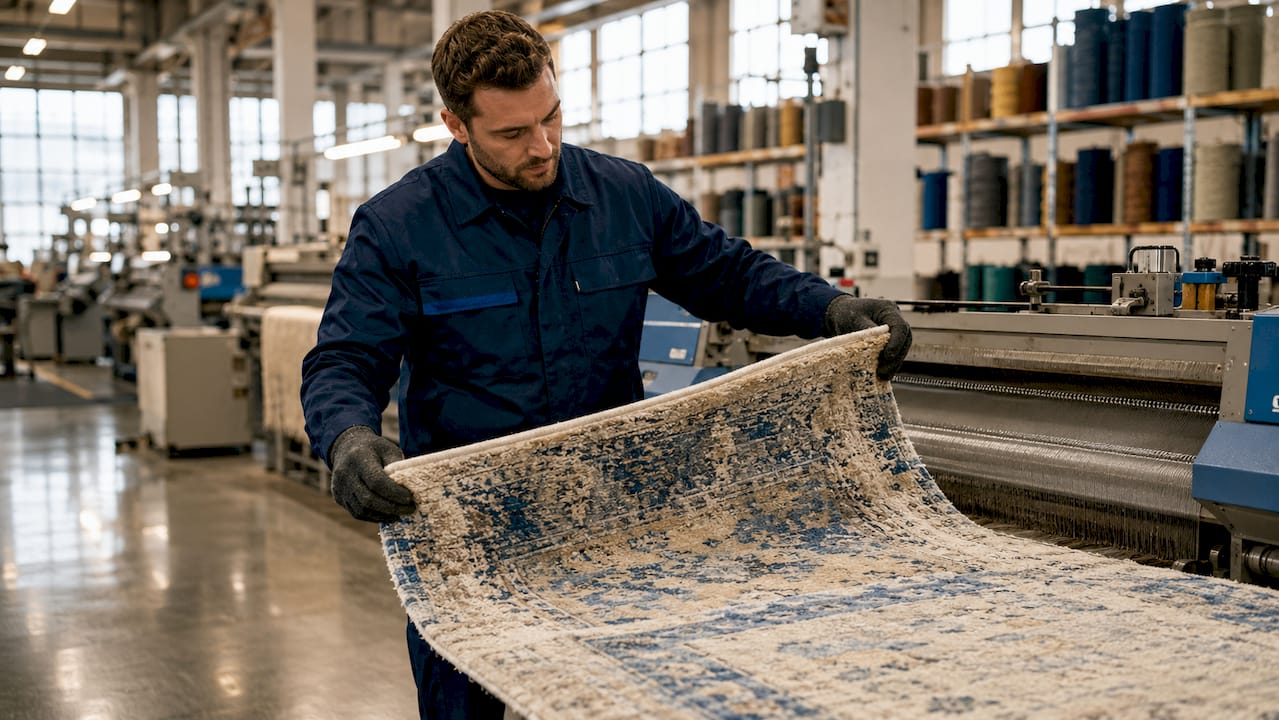
Material choice is where the gap widens most visibly. Natural fibers like wool and silk age beautifully and develop a natural sheen that deepens with time. Machine-made rugs rely heavily on synthetic fibers such as polypropylene, which flatten quickly and shed microplastics into your home environment. Natural wool also has a built-in resilience: its crimped fiber structure springs back under foot traffic in a way that polypropylene simply cannot.
Dyes tell another part of the story. Traditional vegetable and mineral dyes used in artisan rugs fade gradually and evenly, producing a warm, painterly patina. Synthetic dyes in mass-produced rugs tend to fade unevenly or bleed, leaving the pattern looking tired rather than seasoned.
- Construction: Hand-knotted, hand-tufted, or hand-woven versus power-loom automated weaving
- Fibers: Wool, silk, and cotton versus polypropylene, nylon, and polyester
- Dyes: Natural or traditional dyes with gradual tonal shifts versus uniform synthetic dyes
- Backing: Irregular knot pattern on the back visible to the eye versus flat, glued or latex-coated machine backing
- Density: Higher knot counts per square inch create finer detail and greater structural strength
Pro Tip: Flip any rug you are considering purchasing and examine the back. A handmade rug shows a clear, pixelated knot pattern. A machine-made rug has a uniform, fabric-like or rubberized backing. This single test is the most reliable way to verify authenticity before you buy.
2. Why handmade rugs last so much longer
Longevity is the most compelling practical argument for choosing an artisan rug. Hand-knotted rugs made with quality wool and dye can actually be in better condition after fifty years than the day they were purchased. That is not marketing language. It reflects the structural reality of dense natural fiber construction that compresses and recovers rather than breaking down.
Machine-made rugs tell a different story. They typically last 5–15 years depending on material quality and foot traffic, and they hold no resale value. When a machine-made rug wears out, it goes to the landfill. A handmade rug, by contrast, can be professionally repaired, rewoven, and restored.
A well-made hand-knotted rug does not simply endure. It improves. The wool fibers soften and develop a luminous sheen called “abrash,” and the colors settle into a depth that no new rug can replicate. You are not buying a floor covering. You are starting a relationship with an object that will outlast your furniture, your renovation, and possibly your home.
The cost-per-year calculation favors handmade rugs decisively. A quality artisan rug purchased for $2,000 and used for 50 years costs $40 per year. A machine-made rug at $400 replaced every ten years costs the same $40 per year, but delivers none of the beauty, none of the resale value, and none of the emotional satisfaction. Rare handmade pieces appreciate in value over time and can become collectibles, making them a genuine asset rather than a depreciating expense.
3. Aesthetic qualities that machines cannot replicate
The visual character of a handmade rug comes directly from the human hand behind it. Subtle variations in color transitions and knot tension give each piece personality and warmth that no algorithm can program. These slight irregularities are not flaws. They are the fingerprints of the maker, and they are precisely what collectors and serious decorators seek.
Machine-made rugs produce perfectly uniform, repeating patterns. That consistency reads as flat and lifeless in a room. A handmade rug, by contrast, catches light differently across its surface, creating a wash of depth and movement that changes with the time of day. For homeowners who want a room to feel curated rather than assembled, this distinction matters enormously.
Artisan rugs also carry cultural weight. Motifs woven into a Turkish kilim, a Persian carpet, or a Tibetan hand-knotted piece carry centuries of symbolic meaning. That meaning cannot be printed onto a polypropylene backing. For decorators working with culturally resonant living spaces, a handmade rug is one of the most powerful tools available.
- Tonal depth: Natural dye variations create a three-dimensional color field rather than a flat printed surface
- Tactile texture: Higher pile density and natural fiber crimp produce a richness underfoot that synthetic rugs cannot match
- Unique character: No two handmade rugs are identical, even within the same pattern and colorway
- Cultural authenticity: Traditional motifs are woven with intention, not reproduced mechanically
Pro Tip: When styling a room around a handmade rug, treat it as the art piece it is. Build your color palette from the rug outward rather than selecting a rug to match existing furniture. The rug’s tonal complexity will carry the room.
4. Environmental sustainability and the case for natural fibers
Handmade rugs carry a lighter environmental load than their machine-made counterparts. Traditional dyeing and weaving methods produce biodegradable products without petrochemical inputs. Wool and silk decompose naturally at end of life. Polypropylene does not.
The microplastic issue with synthetic rugs is real and growing. Synthetic fibers shed microplastics with every vacuum pass and foot step, releasing particles into household air and eventually into waterways. A wool rug sheds lanolin-coated fibers that break down harmlessly.
Durability is itself a sustainability argument. A rug that lasts 50 years requires no replacement manufacturing, no shipping, and no disposal. The artisan production model also supports small workshops and traditional craft communities rather than large industrial facilities running continuous energy-intensive machinery.
- Choose rugs made with certified natural fibers (wool, silk, or cotton) for full biodegradability
- Ask about dye sources: vegetable and mineral dyes have a smaller ecological impact than synthetic alternatives
- Prioritize longevity over price: a rug you replace once in a lifetime generates far less waste than one you replace every decade
- Support artisan producers who practice traditional methods, as their workshops consume far less energy than industrial looms
5. When a machine-made rug is the right choice
Honest guidance means acknowledging that machine-made rugs are appropriate choices for specific situations. They are not inferior products in every context. They are simply different tools for different jobs.
A rental property, a mudroom, a child’s playroom, or a temporary apartment setup all represent cases where a lower-cost, easily replaceable rug makes practical sense. You would not commission a hand-knotted piece for a space you expect to repaint and re-carpet in two years. Budget constraints are also real, and a well-chosen machine-made rug in a transitional space is far better than no rug at all.
The key is avoiding misrepresentation. Some retailers sell machine-made rugs with descriptions that imply handmade quality. Always examine the back of the rug before purchasing, and ask directly about construction method and fiber content. A reputable seller will answer both questions without hesitation.
- Appropriate uses for machine-made rugs: Rental properties, mudrooms, children’s rooms, short-term setups, and very high-traffic commercial spaces where replacement is budgeted
- Where handmade rugs are the clear choice: Living rooms, dining rooms, master bedrooms, and any space where the rug is a design focal point
- Red flags when shopping: Vague descriptions like “artisan-inspired” or “handcrafted look” without specifying construction method
- What to ask: Fiber content, construction method, country of origin, and whether the piece can be repaired if damaged
For spaces that genuinely need a durable, long-term floor covering, rugs for high-traffic residential areas require careful selection regardless of construction method.
Key Takeaways
Handmade rugs outperform machine-made rugs in durability, design authenticity, environmental impact, and long-term value, making them the superior investment for any permanent living space.
| Point | Details |
|---|---|
| Durability advantage | Hand-knotted rugs can last 50+ years and improve with age; machine-made rugs last 5–15 years. |
| Material quality | Natural wool and silk fibers outperform synthetic polypropylene in texture, longevity, and sustainability. |
| Design authenticity | Tonal variations and knot irregularities give handmade rugs a depth and character machines cannot reproduce. |
| Investment value | Handmade rugs hold and gain value over time; machine-made rugs depreciate to zero with no resale potential. |
| Right tool for the job | Machine-made rugs are honest, practical choices for rentals and temporary spaces where replacement is expected. |
Why I still believe the handmade rug is the most undervalued object in a home
I have spent years working with handmade textiles, and the thing that still surprises me is how few people understand what they are actually looking at when they stand on a hand-knotted rug. They see a floor covering. I see months of a single artisan’s working life compressed into something you walk across every morning.
The sensory experience changes over time in a way that nothing machine-made can match. A quality wool rug softens under foot traffic. The colors settle. The pile develops that luminous quality that rug dealers call a “sheen,” and it makes the whole room feel warmer and more alive. I have never once felt that way about a polypropylene rug, no matter how well it photographed in the catalog.
My practical advice: buy the best handmade rug you can afford for the rooms where you actually live. Treat it as you would a piece of art. Rotate it every year or two to even the wear. Have it professionally cleaned every few years. And learn what makes a rug truly handmade before you shop, because the market is full of pieces that look handmade and are not.
The cultural dimension matters too. When you buy a handmade rug, you are participating in a tradition that stretches back thousands of years. You are supporting a craftsperson whose skill took decades to develop. That is not sentiment. That is a genuine reason to choose differently.
— Kevin O’Gara
Handmade rugs at Kevin Francis Design
Kevin Francis Design brings together the craftsmanship of traditional artisan rug-making with original, art-inspired design. Every piece in the collection reflects the qualities this article describes: natural fibers, authentic construction, and design depth that rewards years of living with it.
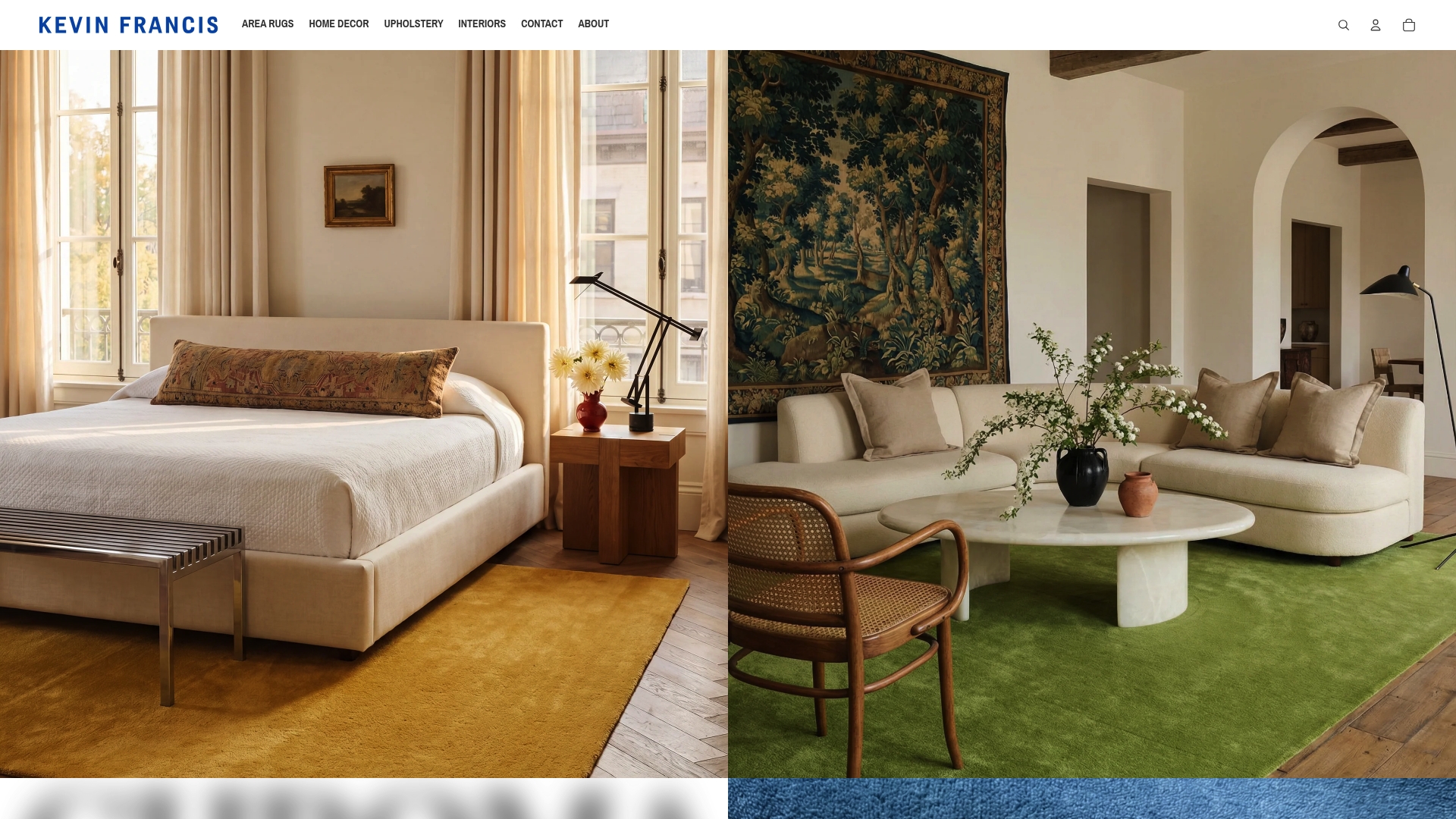
The Lotto Hand-Knotted Wool Area Rug is a standout example of what hand-knotting achieves at its finest. Crafted from luxury wool using traditional Turkish knotting techniques, it delivers the tonal richness and structural integrity that define a true heirloom piece. For decorators working with a more flexible budget, the Anatolia Hand-Tufted Maze Rug offers handmade quality in a hand-tufted format. Both collections reflect Kevin Francis Design’s commitment to investing in designer area rugs that earn their place in a room for decades.
FAQ
What is the main benefit of a handmade rug over a machine-made one?
The primary advantage is longevity combined with improving beauty. Hand-knotted rugs made with quality wool can remain in better condition after 50 years than on the day of purchase, while machine-made rugs typically last 5–15 years before requiring replacement.
How can I tell if a rug is genuinely handmade?
Flip the rug and examine the back. A handmade rug shows a clear, irregular knot pattern on the reverse side. A machine-made rug has a flat, uniform, or rubberized backing with no visible knot structure.
Are handmade rugs worth the higher price?
Yes, for permanent living spaces. The cost per year of ownership is comparable to machine-made alternatives, but handmade rugs hold resale value, can be repaired, and often appreciate over time, making them assets rather than consumables.
Do handmade rugs have environmental advantages?
Natural fibers like wool and silk are fully biodegradable and do not shed microplastics. Traditional dyeing methods also produce far less petrochemical waste than the industrial processes used to manufacture synthetic rugs.
What is the difference between hand-knotted and hand-tufted rugs?
Hand-knotted rugs are tied knot by knot around warp threads, making them the most durable and labor-intensive option. Hand-tufted rugs are made by punching yarn through a canvas backing with a tufting tool, which is faster and less costly while still qualifying as handmade.


