


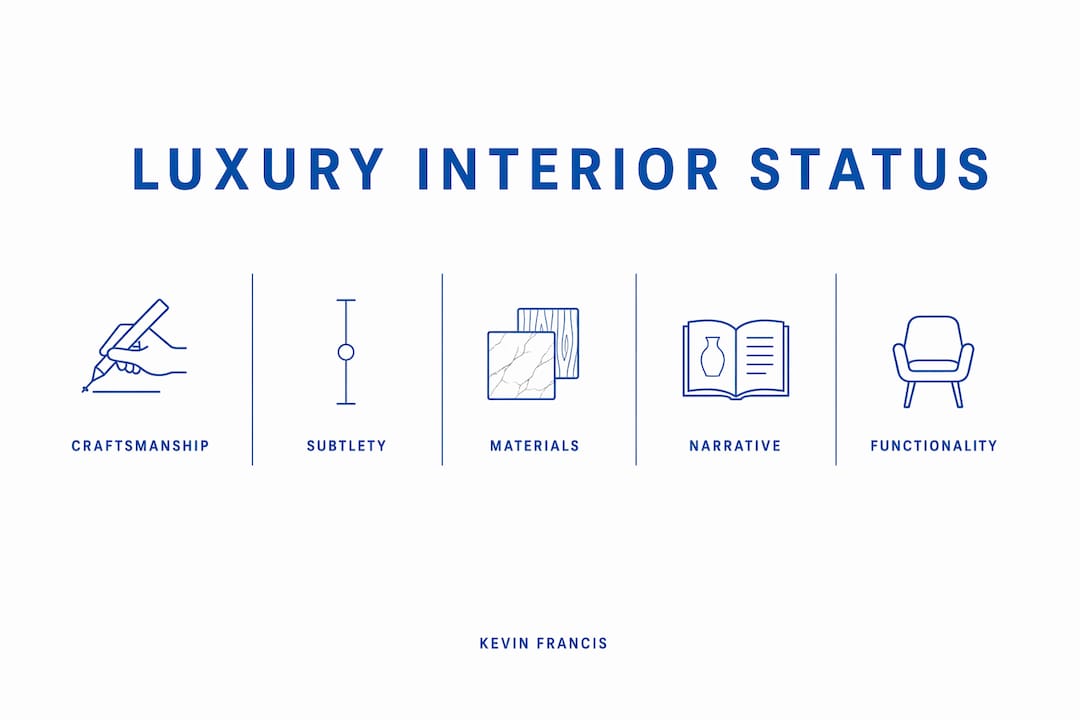
Luxury interiors communicate social status through a layered conversation of material quality, spatial arrangement, and symbolic storytelling, one that speaks volumes before a single word is exchanged. The most telling signs of opulent interiors are rarely the loudest ones. A hand-knotted wool rug anchoring a sitting room, a bespoke piece of furniture with a provenance worth knowing, warm lighting that pools rather than floods: these are the quiet declarations of a life lived with intention. Understanding how decor reflects wealth means reading a room the way you would read a person, attending to what is chosen, what is left out, and what the whole composition says about who lives there.
- Material quality: Natural stone, hand-knotted textiles, and solid hardwoods signal investment and discernment.
- Spatial restraint: Generous proportions and deliberate negative space communicate confidence, not scarcity.
- Curated objects: Art, antiques, and artisan pieces chosen for story rather than price tag project genuine taste.
- Sensory ambiance: Lighting temperature, acoustic softness, and scent create an atmosphere that registers emotionally before it registers intellectually.
- Craftsmanship details: Joinery, hand-stitching, and Tibetan knotting techniques reward close inspection in ways that mass production never can.
Table of Contents
- How luxury interiors communicate social status through American history
- What does status anxiety look like inside a home?
- Contemporary trends that signal status through design and identity
- How Kevin Francis Design approaches status through craftsmanship
- The ethics and criticism of luxury interiors as status symbols
- Where artisan craftsmanship meets your interior story
- Key Takeaways
- FAQ
How luxury interiors communicate social status through American history
American luxury has always preferred the whisper to the shout. The American Country House style that emerged from the Depression era and was perfected in the drawing rooms of the Astors and Kennedys was never about display. It was about the quiet confidence of generational wealth, rooms that looked inherited rather than purchased, comfort that felt earned rather than bought.
Designer Sister Parish, who began her career in 1933, understood this instinctively. Her genius was assembling spaces that felt permanent and accumulated, even when they had been composed last Tuesday. A priceless Aubusson rug beside a scrappy folk art basket, a Chippendale mirror paired with cheerful gingham pillows: the message was unmistakable. We are so secure in our position that we have nothing to prove.
Dr. Eleanor Whitmore has written that aristocratic interiors were deliberately structured to assert social order and provide psychological defense, functioning as a living script of power written in gilt, velvet, and light. That tradition crossed the Atlantic and was translated into something distinctly American: less theatrical, more personal, but no less intentional. Post-World War II prosperity deepened this sensibility. Ostentatious display felt un-American, even unpatriotic, and the rooms that carried the most social weight were those that looked as though they had simply always been that way.
Cultural variations within American society have always shaped these interpretations. Southern interiors historically leaned toward formality and ancestral portraiture. West Coast wealth favored indoor-outdoor flow and natural materials. Northeastern old money preferred faded grandeur over fresh renovation. Each regional code carries its own grammar of status, but the underlying logic remains consistent: luxury should whisper, not shout.
What does status anxiety look like inside a home?
Status anxiety drives some of the most recognizable, and least comfortable, interior choices. When we fear our worth will be measured by appearances, we begin curating our homes as proof rather than as shelter. The result is a particular kind of room: beautiful, quiet, and slightly self-conscious.
Psychologists who study impression management note that we lean on obvious signals when we are unsure our subtler ones will be seen. Logo pillows, gallery pieces bought for the signature rather than the story, high-performance technology that becomes the room’s entire personality: these are the tells of a space optimized for optics over experience.
The tension between authentic expression and curated status signaling shows up in specific, recognizable ways:
- Over-branded surfaces: Visible logos on every soft furnishing read as credential, not character.
- Museum-tidy rooms: Spaces too perfect to inhabit signal that being seen matters more than being comfortable.
- Unused “trophy” objects: A decanter that never decants, gadgets still in their original arrangement, point to self-presentation anxiety rather than genuine lifestyle.
- Oversized rooms for rare occasions: Spaces designed around hypothetical parties make daily life feel like a rehearsal.
Genuine luxury design, by contrast, boosts self-esteem through subtle cues: a room that feels right without announcing why, where personal objects carry the emotional charge and the architecture simply holds them beautifully.
Contemporary trends that signal status through design and identity
The shift in how luxury interiors communicate social status over the past two decades has been profound. Research into branded residential interiors shows that contemporary luxury has moved from Veblen’s “conspicuous consumption” of physical objects toward what theorist Jean Baudrillard called “simulacra,” spaces constructed through images, codes, and brand identity rather than material display alone. Interior designers are no longer simply space organizers; they are identity producers.
Postmodern consumers now blend styles eclectically, mixing periods, cultures, and references to express a unique identity that no rigid class code could contain. This “stylistic promiscuity” is itself a status signal: it implies the cultural fluency to borrow from anywhere and the confidence to make it cohere. You can explore this sensibility further in Kevin Francis Design’s guide to mixing modern and vintage.
Key contemporary features that signal prestige without ostentation include:
- Biophilic elements: Living walls, natural stone, and organic textures connect wealth to wellness and environmental awareness.
- Smart home integration: Discreet technology, from automated lighting to climate control, signals modern sophistication without visible gadgetry.
- Sustainability credentials: Eco-certified materials and artisan provenance carry growing social weight among discerning buyers.
- Narrative-driven objects: Pieces with a story, a hand-woven textile from a specific atelier, a sculpture with documented provenance, communicate cultural capital more effectively than price alone.
- Warm, layered lighting: Designer lighting that creates atmosphere rather than illumination is one of the most underestimated status signals in a room.
At the highest levels of wealth, interior design functions as infrastructure: a toolkit for hosting, influence, privacy, and negotiation, where every element from the walk from entrance to living area to the acoustic insulation of a study serves a social purpose beyond aesthetics.
How Kevin Francis Design approaches status through craftsmanship
Kevin Francis Design, founded by designer Kevin Francis O’Gara, operates from a conviction that the most powerful status signals in a room are the ones that reward attention rather than demand it. The brand’s handwoven, hand-tufted, and Tibetan knotting techniques produce rugs that carry the kind of quiet authority that mass production simply cannot replicate. Each piece is a record of human skill, and that record is legible to anyone who pauses to look.
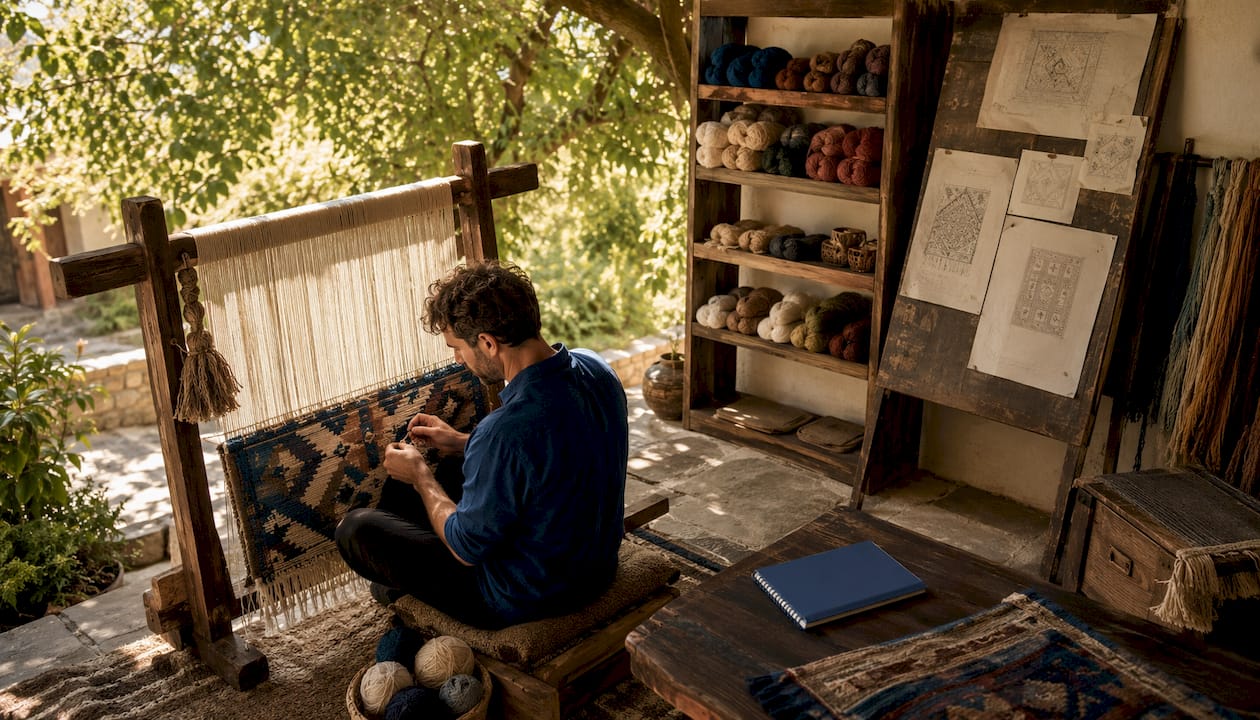
The Lotto Hand-Knotted Wool Area Rug exemplifies this philosophy. Its geometric precision and wool depth speak to a tradition of artisan craftsmanship that connects the contemporary American interior to centuries of textile heritage, without a single word of explanation needed. A rug of this quality anchors a room the way a great painting anchors a wall: it gives everything else in the space something to answer to.
Kevin Francis Design’s signature approaches to communicating status through interiors include:
- Artisan provenance: Every piece carries a traceable making process, from fiber selection to final knotting.
- Pattern as narrative: Designs inspired by art movements and architectural history give a room intellectual depth alongside visual beauty.
- Material restraint: Wool, natural fibers, and sustainably sourced textiles prioritize sensory quality over surface flash.
- Scale and proportion: Rugs sized to anchor rather than fill a room demonstrate spatial confidence, one of the subtlest and most effective signs of a high-end interior.
Pro Tip: Place an artisan rug so that all major seating legs rest on it. This single decision communicates spatial intention more clearly than almost any other arrangement choice.
The ethics and criticism of luxury interiors as status symbols
The use of interior design to signal social standing carries real ethical weight, and it deserves honest examination. When status anxiety, rather than genuine taste, drives decorating choices, the result is often a home that exhausts its occupants and impresses no one for long. Psychologists note that status signaling through design operates covertly within consumer culture, camouflaged within narratives of taste and curation, which makes it harder to recognize and easier to rationalize.
The environmental cost of luxury consumption is a growing concern. Rare materials, frequent renovation cycles, and the pursuit of novelty generate waste that sits uneasily alongside the wellness and sustainability values that contemporary luxury increasingly claims to embody. A rug replaced because it no longer signals the right affiliation, rather than because it has worn out, represents a particular kind of extravagance that even affluent buyers are beginning to question.
There is also the matter of access. Luxury interior design as a social language is, by definition, exclusionary. The codes that signal belonging to one group signal exclusion to another, and those codes shift constantly, requiring ongoing investment to maintain legibility. For interior designers building their own visibility in this space, understanding these social dynamics is as important as mastering the aesthetic ones. The most thoughtful practitioners in the field are increasingly asking not just “does this communicate status?” but “does this serve the people who live here?”
Where artisan craftsmanship meets your interior story
Kevin Francis Design offers something distinct from the broader luxury market: pieces made with genuine hand skill, rooted in artistic tradition, and designed to grow more meaningful with time rather than less. For readers who have followed this article’s argument about subtlety, provenance, and narrative, the brand’s collection of hand-knotted and hand-tufted rugs represents a direct path from understanding to practice.
The Lotto Hand-Knotted Wool Area Rug is a strong starting point: a piece that communicates craftsmanship, cultural depth, and spatial confidence without a single ostentatious gesture. Browse the full collection and find the piece that begins your room’s story at Kevin Francis Design.
Key Takeaways
Luxury interiors communicate social status most effectively through craftsmanship, restraint, and narrative depth rather than visible expense or branded display.
| Point | Details |
|---|---|
| Subtlety outperforms display | American luxury has historically favored inherited-looking rooms over conspicuous consumption. |
| Status anxiety leaves visible tells | Over-branded objects, museum-tidy rooms, and trophy items signal insecurity more than success. |
| Contemporary status is identity-driven | Modern luxury interiors function as brand identity stages, not just material showcases. |
| Craftsmanship carries social weight | Hand-knotted textiles and artisan provenance communicate status in ways mass production cannot. |
| Kevin Francis Design | Offers hand-knotted, hand-tufted rugs that signal status through artisan skill and design narrative. |
FAQ
How do luxury interiors signal social status without being obvious?
The most effective status signals in luxury interiors are subtle: hand-knotted textiles, bespoke furniture with traceable provenance, and spatial restraint that communicates confidence. Rooms that look inherited rather than purchased consistently read as higher status than those that announce their cost.
What is status anxiety in home decor?
Status anxiety in decor occurs when decorating choices are driven by fear of judgment rather than personal taste, resulting in over-curated, logo-heavy, or museum-tidy spaces that prioritize appearance over comfort.
Does material quality really communicate wealth through interiors?
Natural stone, hand-knotted wool rugs like the Lotto Hand-Knotted Wool Area Rug from Kevin Francis Design, and solid hardwoods signal investment and discernment in ways that synthetic or mass-produced alternatives cannot replicate.
How has luxury interior design changed in recent decades?
Contemporary luxury has shifted from displaying physical objects to projecting brand identity and lifestyle narratives, with sustainability, wellness design, and smart home technology emerging as new markers of prestige alongside traditional craftsmanship.
Are there ethical concerns with using interiors to signal status?
Status-driven decorating can encourage wasteful consumption cycles and reinforce social exclusion. The most considered approach prioritizes pieces of lasting quality and genuine personal meaning over objects chosen purely for their social signal.
Recommended
- How to Wow Your Guests with Luxurious Living Room Details – Kevin Francis Design
- What Does Ultra-Luxury Interior Mean in 2026? – Kevin Francis Design
- 7 Interior Design Secrets to Make Your Home Feel High-End & Luxurious – Kevin Francis Design
- How to Upgrade Your Home to Luxurious Style and Comfort – Kevin Francis Design


