


Designer lighting for luxury homes is defined by four distinct layers: ambient, task, accent, and decorative. Each layer serves a specific purpose, and the most refined interiors use all four in concert. The industry term for this approach is layered lighting, and it is the standard framework professional lighting designers apply to high-end residential projects. Whether you are planning a grand foyer, a chef’s kitchen, or a serene primary suite, understanding the types of designer lighting available gives you the foundation to create spaces that feel both purposeful and breathtaking.
1. Types of designer lighting for luxury homes: the layered framework
Layered lighting is the organizing principle behind every successful luxury lighting scheme. Rather than relying on a single overhead source, designers build illumination from the ground up using ambient, task, accent, and decorative fixtures working together. This approach addresses multiple visual needs at once: comfort, clarity, architectural shaping, and visual anchoring.
A practical classification used by many lighting professionals divides fixtures into three working categories. Task, character, and statement lighting each occupy a distinct role, from functional downlights to timeless secondary fixtures to sculptural focal points. Understanding this framework before selecting any single fixture saves costly mistakes and ensures the finished room feels intentional rather than assembled.
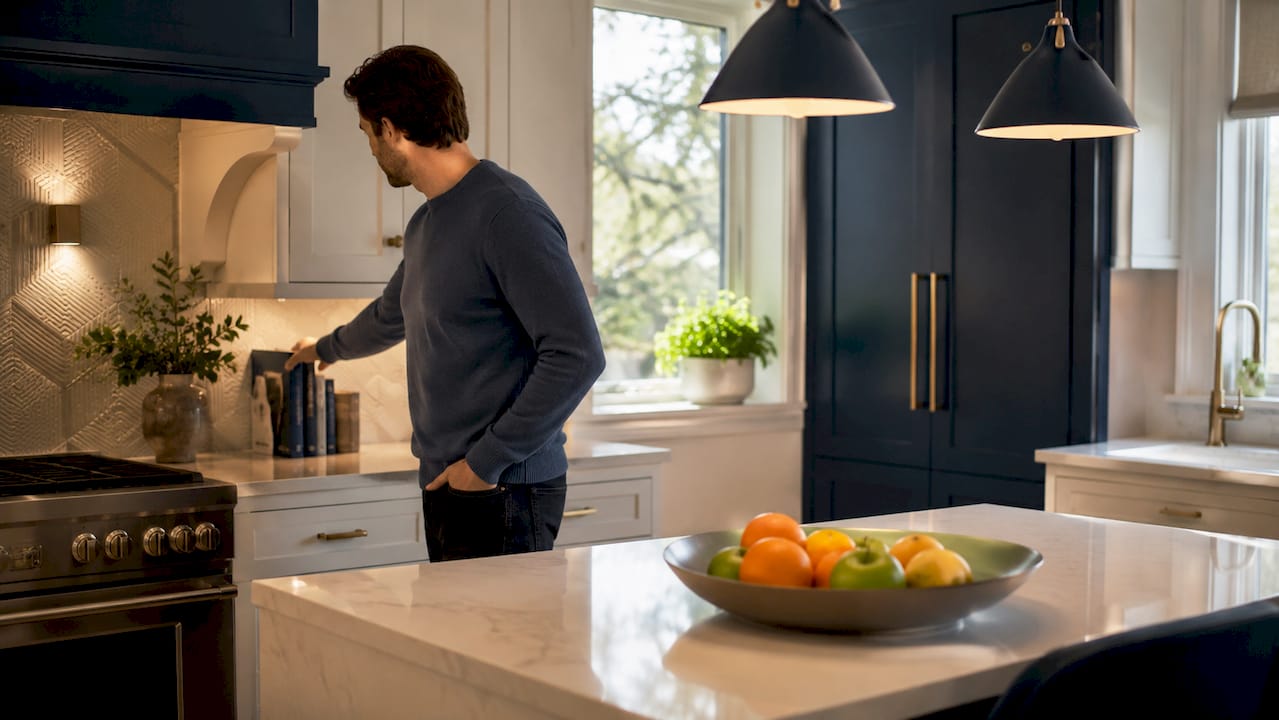
Named luxury lighting brands such as Apparatus Studio, Roll & Hill, and Lindsey Adelman have built their reputations on fixtures that serve one or more of these layers with exceptional craft. Knowing which layer a fixture belongs to helps you specify it correctly and light it well.
2. Ambient lighting: the foundation of every luxury room
Ambient lighting provides the general, soft illumination that makes a room livable and comfortable. It is the base layer of any scheme, setting the overall mood before task or accent fixtures are introduced. Recessed, cove, and indirect systems are the standard architectural tools for delivering this layer in luxury residences.
Common ambient fixture types used in high-end homes include:
- Recessed downlights placed on a grid for even, shadow-free coverage
- Cove lighting built into ceiling coffers or crown molding for a soft, diffused glow
- Indirect LED strips concealed behind architectural elements to wash ceilings or walls
- Flush mounts and semi-flush pendants in rooms with lower ceiling heights, such as bedrooms and hallways
The mood-setting power of ambient lighting becomes most apparent in the evening, when natural light fades and the room must carry its own warmth. Foyers, living rooms, and open-plan kitchens benefit most from a well-calibrated ambient layer that transitions gracefully from afternoon brightness to intimate evening atmosphere.
Pro Tip: Specify dimmable LED drivers for every ambient circuit from the start. Modern residential lighting codes increasingly require dimmable or vacancy-controlled luminaires for energy compliance, and dimming also gives you the flexibility to shift the room’s mood without changing a single fixture.
3. Task lighting: functional beauty in luxury spaces
Task lighting is targeted, bright illumination designed to support specific activities. In a luxury home, it must perform with precision while looking as considered as any decorative piece. The best task fixtures are what the industry calls character lighting: timeless, versatile, and quietly elegant.
Key task fixture types for high-end residences include:
- Under-cabinet LED strips in kitchens, providing shadow-free prep surface illumination
- Adjustable pendant lights over kitchen islands, combining focused downlight with visual presence
- Swing-arm and articulating wall sconces in home offices and reading nooks
- Lighted vanity mirrors and vertical bath sconces in dressing areas and primary bathrooms
The kitchen is where task lighting earns its keep most visibly. A well-illuminated kitchen separates a functional luxury space from a merely beautiful one. Pendant lights over an island, for example, serve double duty: they deliver the focused light a cook needs while acting as a design statement visible from the adjacent living area.
Pro Tip: Integrate task lighting circuits into your smart control system from the outset. Pairing adjustable pendants or sconces with scene-based dimmers lets a home office transition from bright working light to soft ambient mode with a single tap.
4. Accent lighting: sculpting space with directed light
Accent lighting is directional light used to highlight specific objects, surfaces, or architectural features. Its purpose is to draw the eye, create depth, and give a room its sense of drama. Without accent lighting, even the most beautifully furnished room can feel flat.
Fixture types used for accent lighting in luxury interiors include:
- Adjustable spotlights and MR16 downlights aimed at artwork or sculpture
- Track lighting systems that allow repositioning as collections change
- Wall grazing fixtures placed close to textured stone, plaster, or paneling to reveal surface depth
- Uplighters positioned at the base of columns, trees, or architectural features
The technique of wall grazing deserves particular attention. Placing a narrow-beam fixture just a few inches from a textured wall sends light raking across the surface, turning a limestone panel or hand-applied plaster finish into a living, tactile element. This is the kind of detail that separates a professionally lit luxury home from one that simply has expensive fixtures.
Balancing accent with ambient light is critical. Accent fixtures typically deliver three to five times the intensity of the ambient layer at the point of focus. When that ratio is respected, the highlighted object glows without the surrounding room falling into shadow.
5. Decorative lighting: statement fixtures as art
Decorative lighting is the category that most people picture when they think of luxury. These are the sculptural, focal fixtures that define a room’s character and announce the owner’s aesthetic sensibility. They are, in the truest sense, functional art.
The most iconic example in this category is the grand chandelier. The Élysée Grand Impériale, crafted from 24K gold-plated copper with 113 individual lights, is designed for ballrooms and grand foyers where scale and opulence are the point. It illustrates how decorative lighting can anchor an entire architectural composition.
| Fixture type | Best placement | Design character |
|---|---|---|
| Grand chandelier | Foyers, ballrooms, dining rooms | Monumental, formal, prestige-defining |
| Crystal LED pendant | Living rooms, dining areas | Sparkling, adjustable, contemporary glamour |
| Sculptural floor lamp | Living rooms, reading corners | Intimate, artistic, conversation-starting |
| Art-inspired table lamp | Consoles, bedside tables | Refined, collectible, detail-forward |
Crystal LED pendant chandeliers combine the visual sparkle of traditional crystal with adjustable color temperatures and dimming capability. This means you get the jewel-box effect of a classic chandelier alongside the practical flexibility of modern lighting technology.
Pro Tip: Scale is the most common mistake with statement fixtures. Measure the room’s length and width in feet, add those numbers together, and use that sum as the chandelier’s diameter in inches. A 20-by-18-foot dining room calls for a fixture roughly 38 inches wide.
When selecting a statement piece, consider the fixture’s material quality and craftsmanship as carefully as its visual impact. Hand-blown glass, forged metal, and hand-cut crystal age beautifully and hold their presence over decades. Mass-produced alternatives rarely survive the scrutiny of a well-designed room.
6. Layering all four types for adaptable luxury illumination
The real sophistication of luxury lighting lies not in any single fixture but in how the four layers work together. Layered lighting addresses comfort, clarity, architectural shaping, and visual anchoring simultaneously, and each layer must be independently controllable to serve the room across different times of day and occasions.
A practical layering sequence for a luxury dining room might look like this:
- Set the ambient layer with cove lighting or a dimmed flush mount for overall visibility
- Add a statement chandelier on its own dimmer circuit as the visual anchor
- Introduce wall sconces or picture lights as accent fixtures for artwork flanking the room
- Include a credenza lamp or buffet pendants as character lighting for warmth and texture
Smart control systems from brands like Lutron and Savant allow these circuits to be grouped into scenes. A “dinner party” scene might dim the ambient layer to 20%, bring the chandelier to 60%, and hold the accent fixtures at 40%. A “morning coffee” scene might reverse those ratios entirely.
LED quality matters as much as fixture selection. Specifying luminaires with TM-30 color rendering data rather than relying on CRI alone gives you a far more accurate picture of how light will interact with fabrics, artwork, and finishes. For longevity, confirm that fixtures carry LM-80 testing documentation rather than accepting marketing claims about lifespan.
Final on-site commissioning is the step most homeowners overlook. Adjusting beam angles, dimmer curves, and scene levels in the actual finished space, with real finishes and furnishings in place, is what transforms a good lighting plan into a great one.
Key takeaways
Luxury lighting succeeds when ambient, task, accent, and decorative layers are each specified with care and controlled independently to serve every mood and occasion.
| Point | Details |
|---|---|
| Layer all four types | Ambient, task, accent, and decorative lighting each serve a distinct role and must work together. |
| Specify LED quality carefully | Use TM-30 color rendering data and LM-80 longevity testing rather than marketing specifications. |
| Control every circuit independently | Smart systems like Lutron allow scene-based dimming that transforms a room across different uses. |
| Scale statement fixtures correctly | Add room length and width in feet; use that sum as the chandelier diameter in inches. |
| Commission on-site after installation | Final beam and dimmer adjustments in the finished space are what complete a luxury lighting scheme. |
What I’ve learned about luxury lighting after years of designing interiors
The most persistent mistake I see in luxury lighting projects is treating the decorative fixture as the whole scheme. A breathtaking chandelier hung in a room with no ambient layer, no accent lighting, and a single dimmer switch is a beautiful object in an otherwise flat space. The chandelier earns its grandeur when the layers around it are doing their quiet work.
I have also come to believe that color rendering is the most undervalued specification in residential lighting. Rooms filled with hand-knotted rugs, hand-applied plaster, and carefully chosen art deserve light that renders those materials honestly. The shift from CRI to TM-30 metrics is not a technical nicety. It is the difference between a room that photographs beautifully and one that actually feels beautiful to live in.
My strongest recommendation is to budget for an on-site commissioning session after installation. Site-specific adjustments to beam angles and scene levels routinely transform a competent lighting installation into something genuinely memorable. Finishes, furniture, and ambient conditions all interact with light in ways no plan fully anticipates. That final tuning session is where the magic actually happens.
Sculptural and customizable designer lighting is also moving in a direction I find genuinely exciting. Designers like Apparatus Studio and Roll & Hill are creating fixtures that function as collectible objects, pieces with the same narrative weight as a great painting or a bespoke rug. When lighting is chosen with that level of intention, the whole interior lifts.
— Kevin O’Gara
How Kevin Francis Design rugs complete a luxury lighting scheme
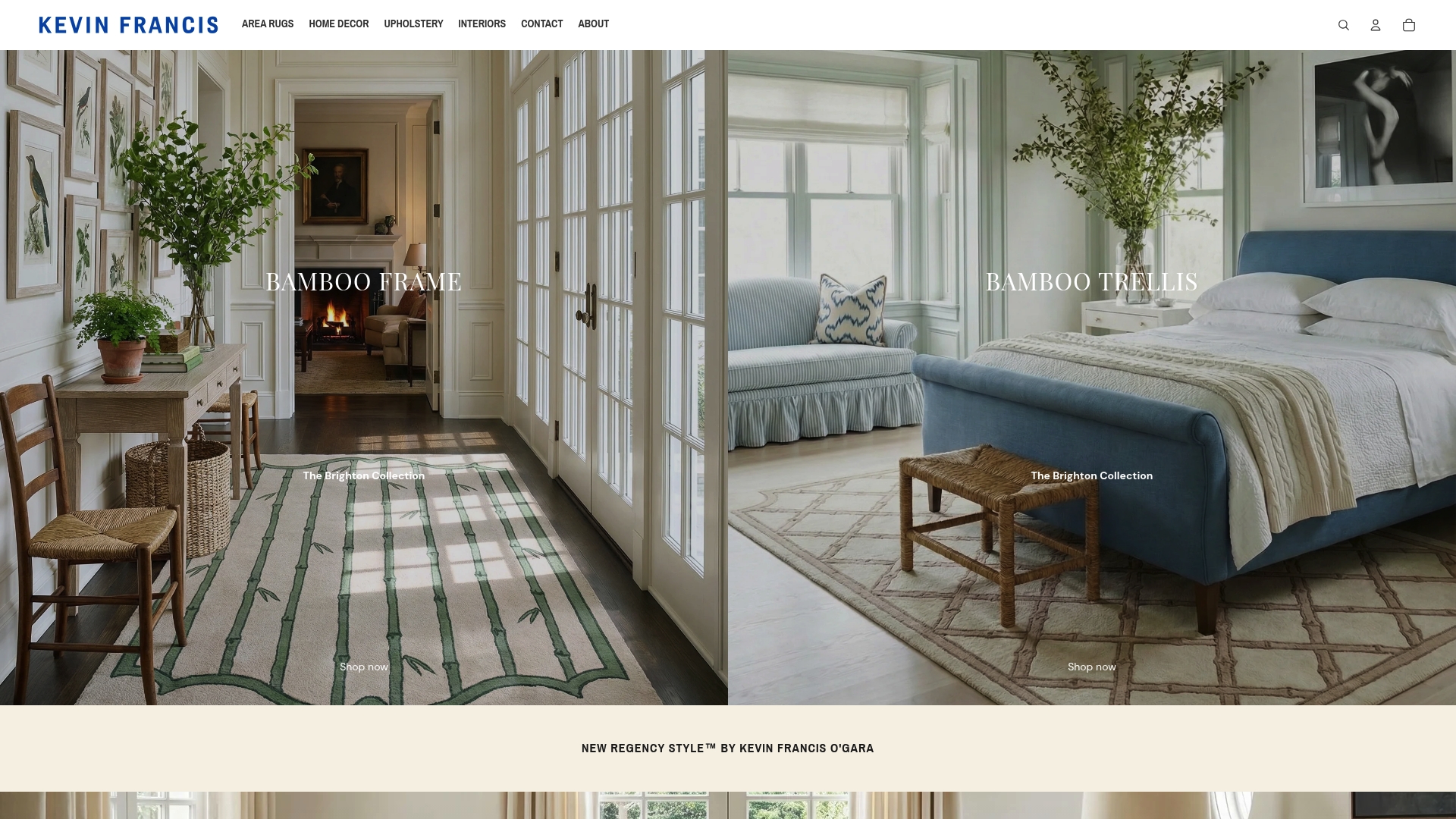
A beautifully layered lighting scheme deserves an equally considered floor. At Kevin Francis Design, our handmade luxury rugs are crafted to hold their own beneath grand chandeliers and beside sculptural floor lamps. Handwoven and hand-tufted in patterns inspired by art and architecture, each piece responds to light in the way only natural fibers and artisan construction can: with depth, warmth, and a quiet luminosity of its own. Our exclusive designer collections are designed to anchor the spaces that your lighting defines. We invite you to explore them and find the piece that completes your room.
FAQ
What are the four main types of designer lighting for luxury homes?
The four types are ambient, task, accent, and decorative lighting. Each serves a distinct function, and luxury interiors use all four layers together for a balanced, adaptable scheme.
Which designer lighting fixtures work best as statement pieces?
Grand chandeliers, crystal LED pendants, and sculptural floor lamps are the most impactful statement fixtures. The Élysée Grand Impériale, for example, is a 113-light, 24K gold-plated chandelier designed specifically for large, prestige spaces.
How do I choose the right chandelier size for a luxury dining room?
Add the room’s length and width in feet, then use that sum as the chandelier’s diameter in inches. A 20-by-18-foot room calls for a fixture approximately 38 inches wide.
Why does LED color rendering matter in luxury interiors?
Light quality directly affects how materials, art, and textiles appear. Specifying fixtures with TM-30 color data gives a more accurate picture of color fidelity than CRI alone, which is critical in rooms with fine finishes and artwork.
What is the best way to control multiple lighting layers in a luxury home?
Smart control systems from brands like Lutron and Savant group individual circuits into scenes, allowing ambient, accent, and decorative layers to be adjusted together with a single command for any occasion.
Recommended
- Types of Luxury Area Rug Fibers: A Decorator’s Guide – Kevin Francis Design
- Tibetan Knot Rug Interior Applications: Designer Guide – Kevin Francis Design
- Types of Exclusive Designer Rug Collections Explained – Kevin Francis Design
- What Bespoke Wallpaper Design Involves: A Full Guide – Kevin Francis Design


