


Luxury area rug fibers are defined by their capacity to deliver exceptional softness, visual depth, and lasting structural integrity, with wool, silk, and wool-silk blends standing as the three premier choices in high-end rug construction. The fiber beneath your feet is not a secondary consideration. It determines how a rug ages, how it responds to light, how it feels on bare skin, and ultimately how much it is worth a decade from now. Understanding the types of luxury area rug fibers available, from hand-spun New Zealand wool to pure Persian silk, gives you the knowledge to invest with confidence rather than guesswork.
1. Types of luxury area rug fibers: why wool leads the field
Wool is the benchmark fiber for luxury area rugs, prized above all others for its natural resilience, tactile warmth, and extraordinary longevity. No synthetic or plant-based fiber has matched its combination of structural performance and sensory richness across centuries of rug-making tradition.
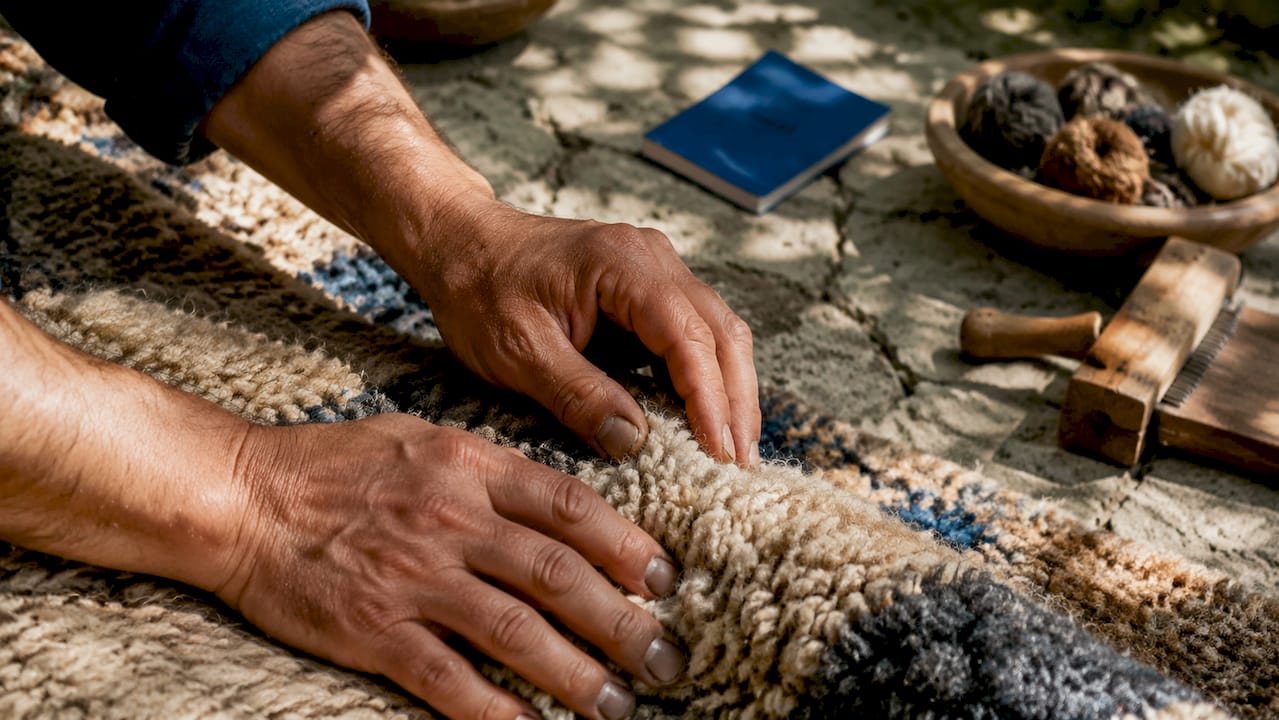
What makes wool so well-suited to luxury construction is its physical architecture. Each wool fiber is crimped and coated in lanolin, a natural wax that repels moisture and resists staining without chemical treatment. High-grade sources, particularly New Zealand wool and Afghan highland wool, yield fibers with a finer crimp and greater elasticity, which translates directly into a rug that springs back underfoot and holds its pile height over years of use. Wool’s compressible structure makes it the most resilient natural fiber for long-term rug investment, outperforming shedding-prone alternatives like viscose.
Wool also accepts natural dyes with exceptional depth and permanence. Persian, Indian, and Turkish hand-knotted rugs have relied on wool pile for this reason for over five hundred years. The fiber holds color without fading under indirect light, which matters enormously in a living room or formal dining space where a rug is meant to anchor the room’s palette for decades.
- Naturally water-repellent due to lanolin content, reducing staining without chemical treatment
- Recovers from compression, maintaining pile height in high-traffic areas
- Accepts natural and synthetic dyes with rich, lasting color saturation
- Compatible with high knot densities, supporting intricate pattern work in Persian and Tibetan styles
- Ages gracefully, developing a soft patina rather than degrading in appearance
Pro Tip: When evaluating wool quality in a luxury rug, press your palm firmly into the pile and release. High-grade wool recovers within seconds. Inferior wool or blended-down pile stays compressed, which is a reliable indicator of lower fiber quality.
2. Silk fibers: unmatched luster with serious care requirements
Silk is the most visually spectacular of all high-end rug fabrics, producing a luminous sheen that shifts from ivory to gold depending on the angle of light. That optical quality comes directly from silk’s triangular fiber cross-section, which refracts light in a way no other natural fiber replicates.
The structural fineness of silk enables very high knot densities, with pure silk Persian rugs exceeding 1,000 knots per square inch. This allows weavers to render extraordinarily detailed patterns, from fine floral medallions to portrait-level figurative work, that simply cannot be achieved in wool at the same scale. The result is a rug that functions as much as a textile artwork as a floor covering.
That beauty comes with real constraints. Silk is structurally delicate and highly sensitive to moisture. Improper cleaning or prolonged exposure to humidity can cause irreversible fiber damage, including crushing, color bleeding, and pile distortion. Silk requires professional cleaning every 18 to 24 months to preserve its appearance and value. This is not optional maintenance. It is the minimum standard for protecting a significant investment.
Here is what proper silk rug care looks like in practice:
- Vacuum gently using a suction-only attachment, never a beater bar, to avoid crushing the pile
- Blot spills immediately with a dry white cloth, working from the outside inward
- Avoid steam cleaning entirely, as heat and moisture damage silk fibers at the structural level
- Schedule professional cleaning with a specialist experienced in low-moisture silk protocols every 18 to 24 months
- Rotate the rug every six months to distribute light exposure and foot traffic evenly
Silk rugs belong in formal sitting rooms, studies, and display spaces where foot traffic is light and the rug can be appreciated as the work of art it truly is. Placing a pure silk rug in a hallway or family room is the single fastest way to destroy a piece that may have taken a master weaver months to complete.
3. Wool-silk blends: where durability meets elegance
Wool-silk blends provide visual depth through silk highlights woven into a wool foundation, combining the structural strength of wool with the luminous shimmer of silk. This pairing is not a compromise. It is a deliberate design strategy that produces some of the most collectible rugs in the world.
In a blended rug, silk typically appears in the pattern highlights, floral details, or border accents, while wool forms the ground and structural pile. The contrast between the matte warmth of wool and the reflective quality of silk creates a three-dimensional visual effect, almost like light playing across a painting. Persian Isfahan and Tabriz rugs are among the most celebrated examples of this technique, with silk used selectively to make specific motifs appear to glow against the wool field.
- Silk highlights catch light and create visual contrast against the wool ground
- Wool foundation provides structural resilience and resistance to compression
- Blended rugs tolerate moderate foot traffic better than pure silk alternatives
- Care requirements fall between pure wool and pure silk, requiring periodic professional attention
- Ideal for formal living rooms, master bedrooms, and dining rooms where both beauty and function matter
Pro Tip: When shopping for a wool-silk blend, ask the seller for the fiber ratio. A rug described as a blend could contain anywhere from 10% to 40% silk. Higher silk content means more luster but also more delicacy. A 20% to 30% silk content typically offers the best balance of visual impact and practical durability.
4. Natural fiber alternatives: cotton, jute, sisal, and seagrass
Beyond wool and silk, a range of natural fibers appears in luxury-adjacent and layering contexts, each with distinct properties that suit specific design applications. Understanding where these materials fit prevents costly mismatches between fiber choice and room function.
Cotton is the softest of the plant-based options and the most washable, making it a practical choice for casual spaces and children’s rooms. However, cotton is less durable than wool and compresses more readily under sustained foot traffic. It works beautifully as a layering rug placed over a larger natural fiber base, adding softness and pattern without bearing the full burden of daily wear.
Jute, sisal, and seagrass occupy a different design register entirely. These fibers deliver an organic, textural quality that reads as sophisticated in the right context, particularly in coastal, Scandinavian, or transitional interiors. Their limitation is moisture sensitivity. Jute absorbs water readily and can mildew in humid environments, while sisal stains permanently from liquid spills. Neither is appropriate as a standalone luxury floor covering in high-use areas, but both work well as layering bases beneath smaller, finer rugs.
| Fiber | Durability | Softness | Stain resistance | Best use |
|---|---|---|---|---|
| Wool | Excellent | High | Good (natural lanolin) | All rooms, high traffic |
| Silk | Low | Exceptional | Poor | Low-traffic, display areas |
| Wool-silk blend | Good | Very high | Moderate | Formal rooms, moderate traffic |
| Cotton | Moderate | High | Moderate | Casual rooms, layering |
| Jute/Sisal | Moderate | Low | Poor | Layering base, dry spaces |
| Synthetic (nylon, polypropylene) | Excellent | Moderate | Excellent | High-traffic, outdoor, budget |
Synthetic fibers like nylon and polypropylene offer excellent stain resistance and affordability, but they lack the tactile warmth and visual depth of natural fibers. For a luxury interior, synthetics serve best in secondary spaces or as practical solutions in rooms where a premium natural fiber rug would face unreasonable wear.
5. Choosing the right fiber for your room and lifestyle
The right luxury carpet fiber is determined first by how a room is used, then by how it looks. Fiber selection based purely on aesthetics, without accounting for traffic and maintenance capacity, leads to beautiful rugs that deteriorate prematurely.
- High-traffic rooms (entryways, family rooms, dining rooms): Choose wool. Its compressible and recoverable structure handles daily foot traffic without permanent pile damage, and its natural stain resistance reduces maintenance burden.
- Formal, low-traffic spaces (sitting rooms, studies, master bedrooms): Silk or a high-silk-content blend rewards the investment here. These spaces allow the fiber’s visual qualities to shine without exposing it to conditions it cannot withstand.
- Transitional or open-plan spaces: A wool-silk blend at 20% to 30% silk content offers the visual sophistication of silk with enough structural resilience to handle moderate use.
- Layering applications: Cotton or jute as a base layer beneath a finer wool or silk rug adds texture and protects the premium piece from direct floor contact and abrasion.
- Households with children or pets: Wool remains the most practical luxury choice. Silk and bamboo-silk require delicate care that is difficult to maintain in active households, while wool’s natural properties absorb impact and resist soiling.
Pro Tip: Before committing to a fiber, request a sample swatch and place it in the intended room for 48 hours. Observe how it reads under your specific lighting conditions, both natural and artificial. Silk in particular transforms dramatically between daylight and warm evening light, and that shift should inform your decision.
Key takeaways
The best luxury area rug fiber is wool for durability, silk for visual splendor, and a wool-silk blend when you need both qualities in one piece.
| Point | Details |
|---|---|
| Wool is the durability standard | Wool’s lanolin and compressible structure make it the most resilient choice for long-term rug investment. |
| Silk demands professional care | Silk rugs require specialist cleaning every 18 to 24 months and belong only in low-traffic spaces. |
| Blends balance beauty and function | Wool-silk blends at 20 to 30% silk content deliver luster and structural strength for formal rooms. |
| Match fiber to room function | Traffic level and maintenance capacity should guide fiber selection before aesthetic preferences. |
| Synthetics serve specific roles | Nylon and polypropylene suit high-traffic or budget contexts but cannot replicate the warmth of natural fibers. |
What I’ve learned about fiber choice after years of designing luxury rugs
Working with natural fibers at the level Kevin Francis Design operates, you develop a deep respect for what wool can do that no other material replicates. I have seen clients fall in love with a pure silk rug, place it in a dining room, and return two years later with a piece that looks a decade older than it should. The fiber was not wrong. The placement was.
My honest position is that wool is the indispensable foundation of any serious rug collection. It ages with grace, absorbs the life of a home without surrendering its beauty, and rewards the investment over time in a way that synthetic alternatives simply cannot. Silk is extraordinary, but it belongs in a room that treats it as the artwork it is.
What excites me most right now is the renewed interest in wool-silk blends among collectors and interior designers who want the shimmer of silk without the anxiety of owning something too fragile to live with. A well-executed blend, with silk used selectively in the pattern highlights rather than throughout the pile, gives you a rug that photographs like a painting and holds up like a proper floor covering. That balance is where the most interesting work in luxury rug design is happening today.
If I could offer one piece of guidance to anyone selecting a luxury rug fiber, it would be this: prioritize fiber quality over pattern complexity. A simple design executed in exceptional wool or a fine wool-silk blend will outlast and outperform an intricate pattern woven in inferior materials. The fiber is the investment. Everything else is expression.
— Kevin O’Gara
Discover handmade luxury rugs crafted from premium natural fibers
At Kevin Francis Design, every rug begins with a deliberate fiber choice. We work with hand-spun wool, pure silk, and carefully proportioned wool-silk blends to create pieces that perform as beautifully as they look. Our handmade collection, crafted through handweaving, hand-tufting, and Tibetan knotting techniques, reflects a commitment to materials that age with dignity and reward long-term ownership.
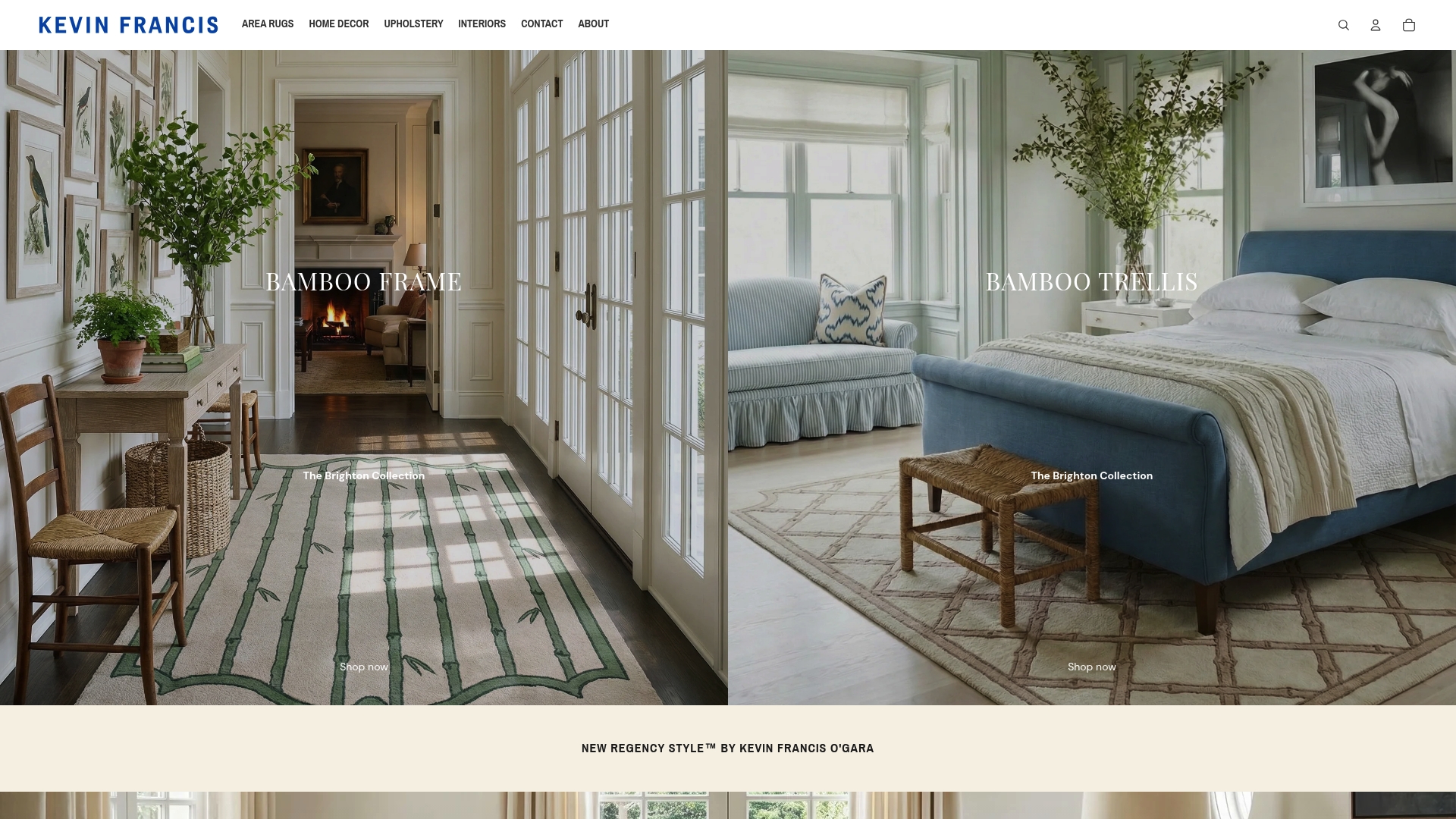
Whether you are furnishing a formal sitting room with a silk-highlighted statement piece or anchoring an open-plan living space with a durable wool foundation rug, our custom luxury rugs are designed to meet both your aesthetic vision and your practical needs. We invite you to explore the collection and experience what genuine fiber expertise looks like in a finished piece.
FAQ
What are the most common luxury rug fiber types?
The most common types of luxury area rug fibers are hand-spun wool, pure silk, and wool-silk blends, each offering distinct qualities in texture, durability, and visual refinement. Cotton and natural plant fibers like jute appear in luxury-adjacent contexts but are generally used for layering rather than as primary pile materials.
Is wool or silk better for a high-traffic room?
Wool is the superior choice for high-traffic rooms because its natural resilience and lanolin content allow it to recover from compression and resist staining. Silk is too structurally delicate for sustained foot traffic and belongs in low-use, formal spaces.
How often do silk rugs need professional cleaning?
Silk rugs require professional cleaning every 18 to 24 months using low-moisture, gentle agitation methods. Steam cleaning and harsh chemicals cause irreversible fiber damage, so specialist care is not optional for preserving a silk rug’s value and appearance.
What is a wool-silk blend rug?
A wool-silk blend rug combines a wool pile foundation with silk woven into the pattern highlights, creating visual depth and shimmer while retaining the structural durability of wool. Persian Isfahan and Tabriz rugs are among the most celebrated examples of this construction technique.
Are synthetic fibers ever used in luxury rugs?
Synthetic fibers like nylon and polypropylene offer excellent stain resistance and affordability but lack the tactile warmth and visual depth of natural fibers. In luxury interiors, synthetics are best reserved for secondary spaces or practical applications where a premium natural fiber rug would face excessive wear.


