


Exclusive designer rug collections are defined by limited availability, singular artistic vision, and specialized crafting techniques that set them apart from anything mass-produced. The industry term for this category is “limited-production artisan rugs,” though collectors and interior designers commonly refer to them as exclusive or high-end rug types. Whether you are furnishing a sophisticated residence, sourcing statement pieces for a client, or building a serious collection, understanding the distinct types of exclusive designer rug collections helps you invest with clarity and confidence. Designers like Kengo Kuma, Annysa LaMantia, and Giacomo Giannini, alongside houses such as Seletti and Jaipur Rugs, are currently setting the standard for what exclusivity means on the floor.
1. Types of exclusive designer rug collections: numbered limited editions
Numbered limited editions are the most recognizable form of exclusivity in the rug world. Each piece carries a unique serial number, a defined edition size, and documented provenance, making it verifiable as both art and investment. Collectors rely on limited-edition numbering as proof of authenticity and rarity, which directly supports long-term value. The smaller the edition, the more fiercely a piece is sought after.
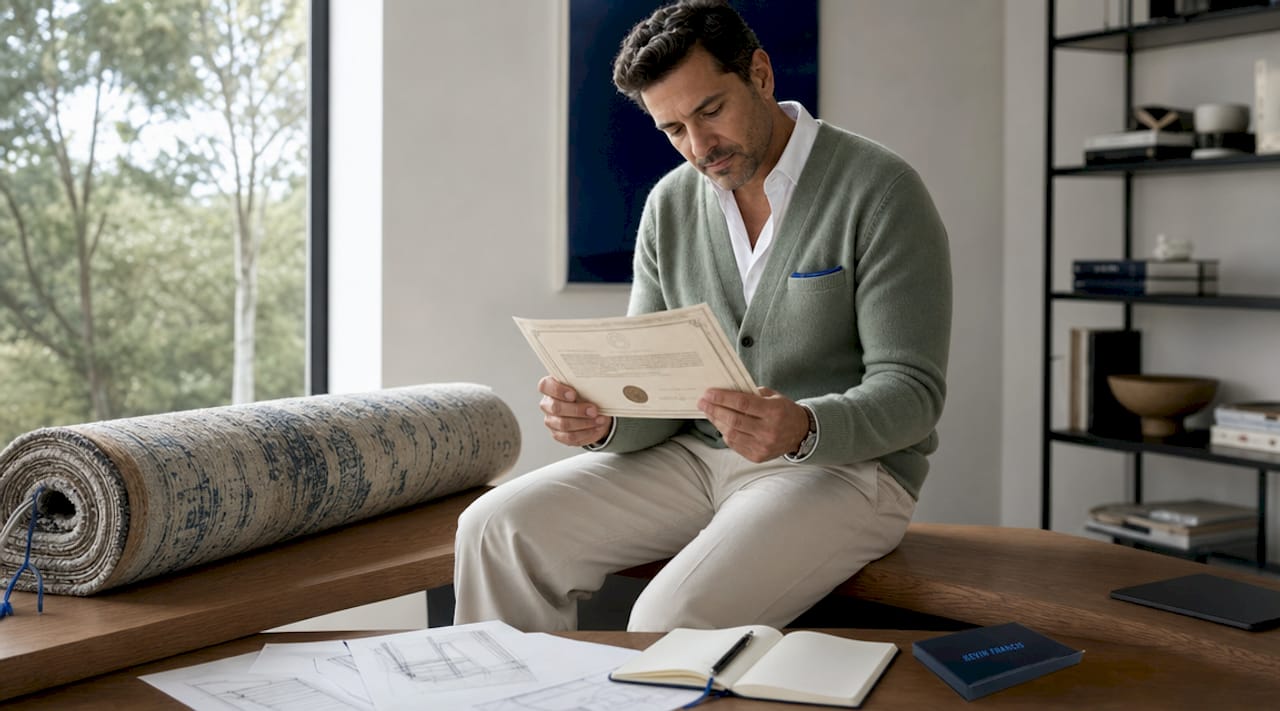
A compelling recent example is Seletti’s collaboration with photographer Giacomo Giannini, which produced a series of 30 numbered pieces measuring 280cm x 200cm, premiered at the Turin photography exhibition “The Phair” in May 2026. Each rug in that series is both a functional floor covering and a cataloged artwork. The numbering is not decorative. It is the mechanism through which scarcity is formalized and value is protected.
Key features that define numbered limited editions:
- Edition size: Typically between 10 and 50 pieces, with smaller runs commanding higher collector premiums
- Serial documentation: Each rug ships with a certificate of authenticity bearing its unique number
- Dimensions as specification: Exact measurements are part of the edition record, preventing unauthorized reproductions
- Exhibition provenance: Many numbered editions debut at art fairs or design weeks, adding cultural context and market visibility
Pro Tip: When purchasing a numbered limited edition, always request the full certificate of authenticity and confirm the edition size in writing. A rug numbered 3/30 carries a different market story than one numbered 28/30, even within the same series.
2. Capsule collections and atelier collaborations
Capsule collections represent a focused, intentional release: a small group of designs developed around a single concept, material exploration, or creative partnership. They differ from numbered editions in that the emphasis falls on the cohesion of the collection as a whole rather than on individual serial scarcity. Atelier collaborations take this further by pairing a designer or artist with a specialized craft studio, producing work that neither party could achieve alone.
Annysa LaMantia’s Continuum Collection, developed with Atelier Bowy C.D., exemplifies this approach. The collection features three handmade rug designs released as limited editions, with the entire process built around advanced hand-knotting techniques and deliberate material research. The result is not simply a rug. It is a record of a creative conversation between a designer’s vision and an artisan’s technical mastery.
What makes capsule and atelier collaborations distinct:
- Conceptual unity: Every piece in the capsule shares a visual or material language, making the collection more powerful than any single rug
- Craft innovation: Atelier partnerships often push hand-knotting, hand-tufting, or Tibetan knotting into new territory, experimenting with fiber blends and pile heights that standard production cannot accommodate
- Material research: Designers working with ateliers frequently source unusual fibers, from hand-spun Himalayan wool to recycled silk, as part of the collection’s identity
- Limited release windows: Capsule collections are often available for a defined period or until the run sells out, creating urgency without artificial scarcity
Pro Tip: If you are an interior designer sourcing for a client, capsule collections offer a practical advantage: the cohesive design language makes it easier to specify multiple rugs across a project while maintaining a singular aesthetic thread.
The artisan rug collection approach at Kevin Francis Design reflects this same philosophy, pairing original design concepts with handweaving and hand-tufting expertise to produce pieces that carry genuine creative depth.
3. Architecture-inspired designer rug collections
Architecture-inspired collections translate the visual and tactile language of built structures into woven form. This is one of the most intellectually demanding types of exclusive area rugs to produce, because fidelity to the source material requires solving real engineering problems: how do you render the shadow of a stone facade in wool? How does light raking across a concrete surface become a gradient in viscose?
Kengo Kuma and Jaipur Rugs answered those questions with their FACES collection, which consists of 16 rugs inspired by architectural facades, using wool and viscose to translate texture and light effects. The collection debuted at Milan Design Week 2026 and demonstrates how art-and-architecture collaborations focus on translating source objects into textile engineering constraints with fidelity to materials, color palette, and knotting techniques.
Characteristics of architecture-inspired exclusive collections:
- Restrained palettes: Architectural rugs tend toward stone, sand, ash, and mineral tones, reflecting the materials of their source buildings
- Three-dimensional surface effects: Varying pile heights create shadow and relief, mimicking the depth of carved or textured facades
- Wool and viscose combinations: Wool provides structure and warmth; viscose catches light and introduces a subtle luminosity that reads as architectural reflection
- Cultural synthesis: Kuma’s FACES collection draws on both Japanese spatial philosophy and Indian weaving traditions, producing a genuinely cross-cultural object
| Feature | Architecture-inspired rugs |
|---|---|
| Primary materials | Wool, viscose, occasionally silk |
| Design source | Facades, surfaces, structural forms |
| Palette | Restrained, mineral, tonal |
| Craft technique | Hand-knotting with variable pile height |
| Edition character | Design-led, often larger runs than numbered editions |
4. Fine art and photography collaborations
When a photographer or fine artist enters the rug design process, the result is a category of unique rug designs that functions as much as a gallery piece as a floor covering. The challenge is translation: a photographic image must survive the conversion from pixel to fiber without losing its emotional charge.
Seletti’s work with Giacomo Giannini demonstrates how abstracted photographic urban landscapes become painterly rug designs that carry narrative and artistic meaning. The digital images were transformed into rugs evoking memory, identity, and human interaction with space. What arrives on the floor is not a photograph printed on fabric. It is a reinterpretation, where the weave structure itself becomes part of the visual language, softening edges and introducing a wash of color and texture that no print could replicate.
“The rug becomes a kind of slow photograph, where the image is built knot by knot rather than pixel by pixel, and the result carries a warmth that digital reproduction simply cannot achieve.”
Fine art collaborations in this category share several defining traits. The artist retains creative control over the image source, while the rug studio controls the translation process. The limited edition structure, as seen in the Seletti x Giannini series, protects the work’s status as collectible art. And the scale, often generous at 280cm x 200cm or larger, allows the image to breathe and command a room the way a large-format photograph would on a wall.
5. Tribal and cultural heritage collections
Tribal and cultural heritage collections draw exclusivity from a different source: the irreproducible knowledge of specific artisan communities. Beni M’rirt Moroccan rugs, for example, are hand-knotted by tribal artisans using wool sourced from local animals, with geometric designs that reflect nomadic heritage accumulated over generations. No two pieces are identical, because the weaver’s hand and the natural variation in the wool guarantee it.
This type of exclusive area rug carries a provenance that numbered editions cannot replicate. The exclusivity is not manufactured through edition size. It is inherent in the process. Each rug is a record of a specific weaver’s skill, a specific flock’s wool, and a specific cultural tradition. For collectors who value authenticity over brand cachet, this category often represents the most honest form of exclusivity available. The luxury rug fibers used in these traditions, particularly hand-spun natural wool, contribute directly to the tactile richness that makes these pieces so enduring.
6. Modernist art movement collections
Some of the most refined designer carpet styles draw their visual grammar from modernist art movements: Bauhaus geometry, De Stijl color theory, or the organic abstraction of mid-century Scandinavian design. Stickley, for instance, offers designer rugs inspired by movements such as Arts and Crafts and designers like Frank Lloyd Wright, using Himalayan wool and wool-silk blends with quality hand-knotting to honor those traditions.
At Kevin Francis Design, this approach manifests in collections where labyrinth patterns and animal motifs are filtered through a modernist sensibility, producing pieces that feel simultaneously timeless and contemporary. The exclusivity here comes not from edition size but from the depth of design research and the precision of the craft execution. A rug that correctly interprets the spatial logic of a Bauhaus grid requires a designer who understands that movement’s principles, not simply its aesthetics.
Key takeaways
Exclusive designer rugs earn their status through a combination of limited production, specialized craft, and authentic artistic vision rather than price alone.
| Point | Details |
|---|---|
| Numbered editions verify scarcity | Always request a certificate of authenticity with the edition number and total run size. |
| Capsule collections offer design cohesion | Atelier collaborations like Annysa LaMantia’s Continuum Collection push craft technique and material research simultaneously. |
| Architecture-inspired rugs solve real design problems | Kengo Kuma’s FACES collection uses wool and viscose to render light, shadow, and texture from built structures. |
| Fine art collaborations reinterpret rather than reproduce | Photography-based rugs like the Seletti x Giannini series translate images into woven narratives with emotional depth. |
| Tribal heritage rugs carry inherent exclusivity | Hand-knotted cultural pieces are unique by nature, not by edition number, making provenance their primary value. |
Why I think most buyers approach exclusive rugs in the wrong order
Most people shopping for a high-end rug start with aesthetics: they find an image they love, then try to understand what they are buying. I think that sequence produces regret more often than satisfaction. After years of working with handmade textiles and developing collections at Kevin Francis Design, I have found that the most satisfied collectors start with the question of type. What kind of exclusive collection does this piece belong to? Is it a numbered edition with documented provenance? A capsule collaboration built around a specific craft innovation? An architecture-inspired design where the exclusivity lives in the translation process itself?
That question changes everything about how you evaluate a piece. A tribal heritage rug should not be judged by the same criteria as a fine art collaboration. A numbered limited edition carries obligations around documentation that a modernist-inspired collection does not. Understanding the artisan craftsmanship behind a piece before you fall in love with its surface is the single habit that separates collectors who build meaningful collections from those who accumulate expensive floor coverings.
My other strong conviction is that exclusivity and livability are not in tension. The most beautiful numbered edition I have ever seen was also the most walked-on rug in the house. Craft that cannot survive daily life is decoration, not design. When you are evaluating any exclusive piece, ask how it was made, what fibers were used, and whether the construction method was chosen for the design or simply for cost efficiency. The answer tells you everything about whether the exclusivity is genuine.
— Kevin O’Gara
Discover handcrafted exclusive rugs from Kevin Francis Design
At Kevin Francis Design, every rug begins with an original design concept and ends with a piece made entirely by hand, whether through handweaving, hand-tufting, or Tibetan knotting. The collections reflect the same principles explored throughout this article: limited production, genuine craft innovation, and artistic narratives that give each piece a life beyond its dimensions.
If you are ready to bring that level of intention to your interior, explore the full range of handcrafted luxury rugs at Kevin Francis Design. Custom commissions are also available for homeowners and designers seeking a piece built entirely around a specific space, palette, or creative vision.
FAQ
What makes a designer rug collection exclusive?
Exclusive designer rug collections are defined by limited production runs, specialized craft techniques such as hand-knotting or Tibetan knotting, and documented artistic provenance. Exclusivity combines craftsmanship with innovative design to differentiate these pieces from mass-produced alternatives.
How do numbered limited edition rugs work?
Each rug in a numbered limited edition carries a unique serial number and a certificate of authenticity confirming its place within the total run. The Seletti x Giacomo Giannini series, for example, is numbered 1 to 30, with each piece measuring 280cm x 200cm.
What is the difference between a capsule collection and a numbered edition?
A capsule collection emphasizes conceptual unity across a small group of designs, often developed through an atelier collaboration, while a numbered edition focuses on the verifiable scarcity of individual pieces. Both are forms of high-end rug types, but they serve different collector priorities.
Are architecture-inspired rugs a distinct category?
Architecture-inspired collections like Kengo Kuma and Jaipur Rugs’ FACES are a recognized category of exclusive area rugs, distinguished by their use of materials such as wool and viscose to translate architectural texture, light, and form into woven surfaces.
How should collectors document exclusive rug purchases?
Collectors should retain the certificate of authenticity, the edition number, any exhibition documentation, and the original purchase receipt. For tribal heritage pieces, provenance documentation from the artisan community or sourcing studio adds significant long-term value.


