


A curated artisan rug collection is defined as a deliberate grouping of handcrafted textile pieces chosen for their craftsmanship, material quality, and visual harmony within a specific interior. Building an artisan rug collection at home is not about filling floor space. It is about selecting pieces that carry genuine artistry, whether hand-knotted in Afghanistan, hand-tufted with Tibetan knotting techniques, or flatwoven from natural wool and jute. Brands like Armadillo and designers such as Kevin Francis O’Gara at Kevinfrancisdesign have demonstrated that a well-considered collection transforms a room from furnished to deeply personal. The process rewards patience, tactile experience, and a clear design vision.
What types of artisan rugs are ideal for building a home collection?
Artisan rugs fall into three primary construction categories, and each one produces a distinct aesthetic and functional result. Understanding these categories is the foundation of any serious home rug collection.
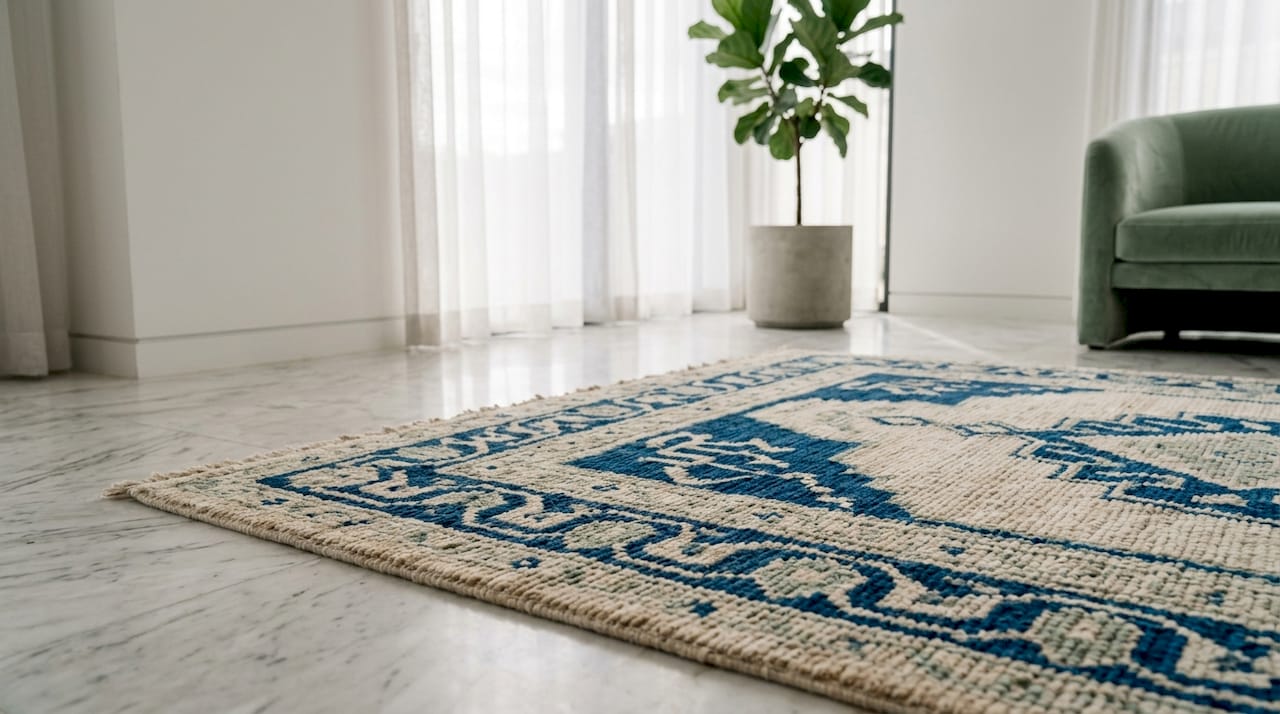
Hand-knotted rugs are the most labor-intensive and historically prestigious. Each knot is tied individually around the warp threads, producing a dense, reversible pile that can last generations. Hand-tufted rugs use a tufting gun to push yarn through a canvas backing, then a secondary backing is applied. Some hand-tufted artisan pieces take 50 to 60 days to produce, which reflects the depth of texture and precision involved. That timeline matters because it signals genuine craft investment rather than mass production. Flatweave rugs, including kilims and dhurries, have no pile at all. They are woven on a loom and tend to be lighter, more reversible, and ideal as base layers in a stacked composition.
Material choice shapes both the look and the longevity of each piece:
- Wool is warm, naturally resilient, and forgiving of everyday wear. It holds dye beautifully, producing rich, saturated color.
- Silk adds luminosity and fine detail but requires careful placement away from heavy foot traffic.
- Jute and sisal bring organic texture and neutral tone, making them ideal grounding layers beneath more decorative pieces.
- Linen offers a refined, slightly cool hand and works well in minimalist or Scandinavian-influenced interiors.
Quality markers to assess before purchasing include knot density (measured in knots per square inch), weave precision along the edges, evenness of pile height, and the integrity of the fringe or edge finishing. Artisan rug manufacturing often involves iterative refinements to gradients and edge finishing rather than a single production pass. That level of detail is visible when you examine a rug closely.
| Construction type | Typical production time | Best use in a collection |
|---|---|---|
| Hand-knotted | Months to years | Statement centerpiece, heirloom investment |
| Hand-tufted | 50 to 60 days | Textured accent or layering piece |
| Flatweave | Days to weeks | Neutral base layer, high-traffic zones |
Pro Tip: Request a physical sample swatch before committing to a full-size piece. Color perception shifts significantly between a screen, a swatch in daylight, and a swatch under warm evening light.
How to layer and combine artisan rugs effectively
Layering is the design strategy that separates a thoughtful collection from a simple floor covering. Interior designers consistently describe rug layering as the “secret sauce” for adding texture, visual depth, and spatial definition to a room. The technique works because it introduces scale contrast and material contrast simultaneously.
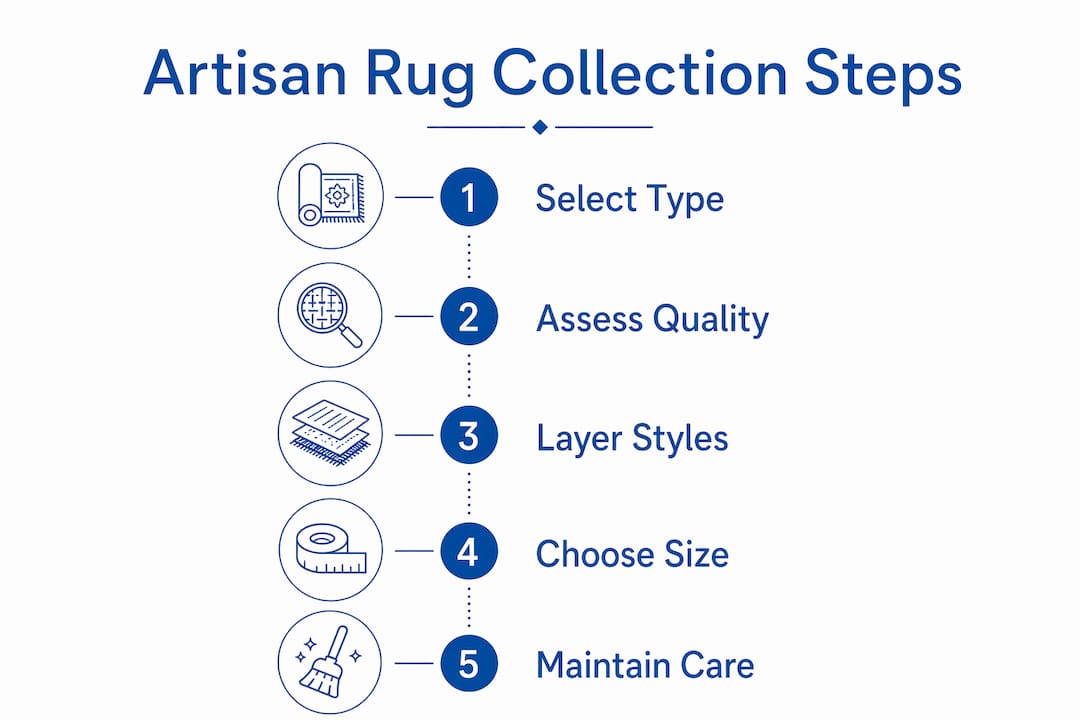
The most reliable layering formula starts with a large flatweave neutral rug as the base. A natural jute or sisal piece in an 8x10 or 9x12 size grounds the space without competing for attention. Over that, a smaller hand-knotted or hand-tufted rug with pattern and color becomes the focal point. The base rug frames the statement piece the way a mat frames a painting.
Follow these steps to layer with confidence:
- Choose your base rug first. It should be the largest piece and the most neutral in color and pattern.
- Select your statement rug second. This piece carries the visual weight of the composition and reflects your personal aesthetic most directly.
- Confirm the two rugs share at least one color from the same palette. Even a single connecting tone creates cohesion.
- Offset the top rug slightly from center to create an organic, lived-in quality rather than a rigid, symmetrical arrangement.
- Test the combination in place for several days before committing. Natural light changes throughout the day, and color perception in layered rugs shifts with nuanced tones that are not visible in online photographs.
Mixing patterns across multiple rugs is achievable when you follow one clear rule: bold patterns pair with natural neutrals. A geometric hand-knotted rug over a plain jute base creates harmony. Two competing geometric patterns at the same scale create visual noise. The fear of mixing rugs is common, but color palette cohesion resolves most conflicts before they arise.
“Grounding a bold, patterned rug with a natural fiber base is not a compromise. It is the technique that makes the bold rug look intentional rather than accidental.”
In open-plan layouts, layered rugs also define zones without walls. A layered composition beneath a dining table reads as a distinct room within a room, which is particularly valuable in loft-style or studio spaces.
Pro Tip: In open-plan spaces, use layering to anchor each functional zone separately. A layered reading corner and a layered seating area in the same room can share a color family without using identical rugs.
How do you choose the right rug sizes and shapes for each room?
Sizing is where many collectors make their most costly mistakes. A rug that is too small floats in the center of a room and makes the furniture arrangement feel unmoored. A rug that is too large eliminates the breathing room that defines a well-proportioned space.
Premium artisan rugs are typically offered in standard dimensions including 8x10, 9x12, 10x14, and 12x15 feet, with custom dimensions available for specific architectural needs. Custom sizing is particularly relevant for hallways, stair runners, and rooms with non-standard proportions.
Use these placement guidelines as your starting framework:
- Living room: All front legs of the sofa and chairs should rest on the rug. An 8x10 works for most standard living rooms; a 9x12 suits larger, open arrangements.
- Dining room: The rug should extend at least 24 inches beyond each side of the table so chairs remain on the rug when pulled out.
- Bedroom: A 9x12 or 10x14 rug placed under the lower two-thirds of a king bed creates a soft landing on both sides without disappearing beneath the frame.
- Entryway: A runner or small accent rug in a durable flatweave material sets the tone for the collection without sacrificing practicality.
Shape is equally expressive. Rectangular rugs suit most rooms by default, but oval and round rugs soften angular furniture arrangements and work beautifully beneath round dining tables. Custom shapes, including the organic and architectural forms offered by designers like Kevin Francis O’Gara, allow a rug to become a sculptural element rather than simply a floor covering.
| Room | Recommended size | Shape consideration |
|---|---|---|
| Living room | 8x10 or 9x12 | Rectangular; all front legs on rug |
| Dining room | 9x12 or 10x14 | Rectangular; 24 inches beyond table edge |
| Bedroom (king) | 10x14 | Rectangular; under lower two-thirds of bed |
| Entryway | Runner or 3x5 | Rectangular or custom; durable flatweave |
Pro Tip: Use painter’s tape on the floor to mark the exact footprint of a rug before purchasing. Living with the taped outline for a few days reveals whether the size feels right in real life, not just on paper.
Essential care and maintenance for artisan rugs
Proper care is what separates a rug that ages beautifully from one that deteriorates within a decade. Artisan rugs are investments, and their longevity depends on a few consistent habits rather than elaborate cleaning routines.
Vacuuming is the most frequent care task, and technique matters. Suction-only vacuuming without rotating brush heads is recommended for handwoven rugs because the mechanical agitation of a beater bar pulls and damages individual fibers over time. Vacuum in the direction of the pile, not against it.
For spills, wool’s natural fiber structure works in your favor. Liquids on wool rugs tend to sit on the surface initially rather than absorbing immediately, which gives you time to blot. Use a clean white cloth, work from the outside of the spill inward, and avoid rubbing. Harsh chemical detergents strip the natural lanolin from wool fibers and cause color fading. A small amount of mild dish soap diluted in cold water handles most stains safely.
Beyond daily care, these habits protect long-term quality:
- Rotate rugs every six to twelve months to distribute foot traffic and sun exposure evenly across the surface.
- Use a quality rug pad beneath every piece. A pad prevents slipping, reduces wear from friction against hard floors, and adds a layer of cushioning that makes the rug feel more luxurious underfoot.
- Keep artisan rugs away from prolonged direct sunlight. UV exposure fades natural dyes over time, particularly in silk and vegetable-dyed wool pieces.
- For deep cleaning, consult a professional rug cleaner who specializes in handmade textiles rather than using a standard carpet cleaning service.
Pro Tip: When storing an artisan rug, roll it with the pile facing inward and wrap it in breathable cotton muslin. Never fold a hand-knotted rug, as folding creates permanent crease lines in the foundation.
Key takeaways
A well-built artisan rug collection requires intentional selection by construction type, thoughtful layering by scale and color, precise sizing by room function, and consistent care to protect the investment over time.
| Point | Details |
|---|---|
| Know your construction types | Hand-knotted, hand-tufted, and flatweave each serve different roles in a layered collection. |
| Layer with a neutral base | Start with a large flatweave in jute or sisal, then add a patterned statement rug on top. |
| Size for furniture, not just the room | All front legs on the rug in a living room; 24 inches beyond the table in a dining room. |
| Care by material | Wool tolerates spills with quick blotting; suction-only vacuuming protects all handwoven fibers. |
| Buy intentionally, not impulsively | Viewing each rug as a lifelong investment leads to a more cohesive and satisfying collection. |
What I have learned from building artisan rug collections
The most common mistake I see is treating a rug purchase as a finishing touch rather than a foundational decision. When you start with the rug and build the room around it, the result has a coherence that is almost impossible to achieve the other way around.
I have also found that consulting with artisan rug specialists changes the outcome dramatically. Some of the best conversations I have had with clients lasted close to 90 minutes and covered not just one room but an entire home. That kind of consultation reveals connections between spaces that a quick online purchase never would. The rug you choose for your entry hall should speak to the one in your living room, even if they are not identical.
Patience is the quality that separates a beautiful collection from a merely adequate one. I always encourage people to live with a sample in their space for at least a week before committing. The rug you love on a Tuesday morning in bright light may feel entirely different on a gray afternoon. That shift in perception is real, and it is worth discovering before the purchase rather than after.
For households with children or pets, I would never suggest sacrificing beauty for practicality. Wool is genuinely resilient. A well-made flatweave in a durable construction handles real life without apology. The goal is to find pieces that work for your actual home, not an idealized version of it.
— Kevin
Discover handmade rugs designed for your collection
At Kevinfrancisdesign, we design and produce handmade artisan rugs that are built for exactly this kind of intentional collecting. Each piece in our collection reflects Kevin Francis O’Gara’s creative vision, drawing on modernist art movements, architectural forms, and original pattern work including animal motifs and geometric compositions. We offer custom sizing and bespoke consultations to help you find pieces that fit your specific rooms, your existing palette, and your long-term design goals.
Whether you are beginning your first collection or adding a statement piece to a space you have been refining for years, our team is here to guide you through the process with the same care we put into every rug we make. Explore our collection and find the piece that anchors your next room.
FAQ
What is the difference between hand-knotted and hand-tufted rugs?
Hand-knotted rugs are made by tying individual knots around warp threads, producing a dense, reversible pile that can last generations. Hand-tufted rugs use a tufting gun to push yarn through a canvas backing and are typically faster to produce, though quality pieces still require significant craft time.
How do I know what size rug to buy for my living room?
The standard guideline is to choose a rug large enough for all front legs of your sofa and chairs to rest on it. An 8x10 rug suits most standard living rooms, while a 9x12 works better for larger, open-plan arrangements.
Can you mix different artisan rugs in the same room?
Mixing rugs works well when the pieces share a cohesive color palette. Pairing a bold patterned rug with a neutral natural fiber base in jute or sisal is a designer-approved method that creates visual interest without conflict.
How often should I rotate my artisan rugs?
Rotating artisan rugs every six to twelve months distributes foot traffic and sun exposure evenly, which prevents uneven wear and color fading over time.
Are artisan rugs worth the investment compared to machine-made rugs?
Artisan rugs are built from higher-quality materials with construction methods that produce greater durability and visual depth. With proper care, a hand-knotted or hand-tufted rug retains its beauty and structural integrity for decades, making it a long-term home investment rather than a replaceable commodity.


