


Tibetan knot rugs are handcrafted textiles defined by a distinctive looping technique where yarn is wrapped around a rod before knotting, producing a thick, resilient pile unlike any other weaving tradition. Known in the industry as Tibetan-knotted or hand-knotted Tibetan rugs, these pieces carry centuries of artisan knowledge into every square inch of fiber. For homeowners and interior designers seeking something beyond the decorative ordinary, Tibetan knot rug interior applications offer a rare convergence of cultural depth, tactile richness, and lasting structural quality. The result is a floor covering that functions as both a grounding element and a quiet work of art.
Which Tibetan knot rug styles best suit different interior spaces?
Tibetan knot rugs arrive in a range of styles that speak to both tradition and contemporary sensibility. Selecting the right size and style depends on room dimensions, furniture layout, and the focal point you want to establish, making thoughtful selection as important as the rug itself.
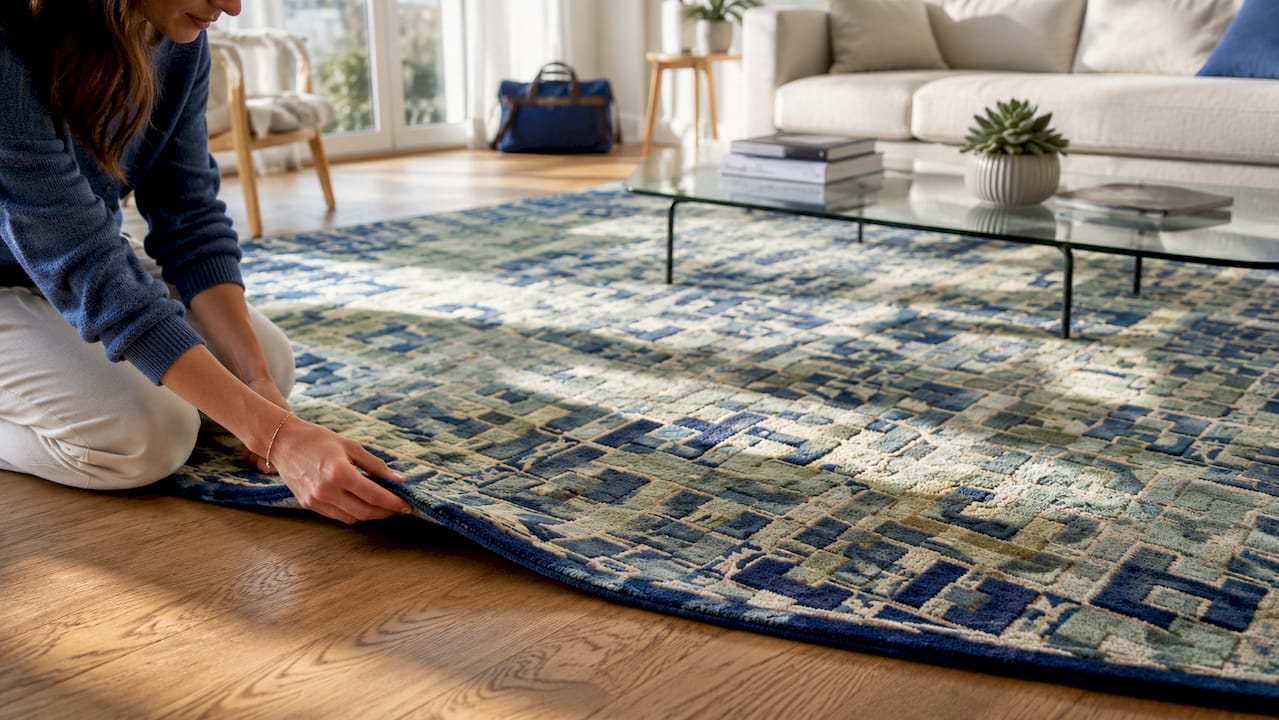
Traditional motifs include the endless knot, the dragon, the lotus, and geometric medallions. The endless knot motif symbolizes interconnectedness and positive energy, lending rooms a sense of intention that purely decorative patterns cannot replicate. These symbolic layers are part of what draws discerning designers to Tibetan pieces over machine-made alternatives.
Matching style to space is where the real artistry begins:
- Living rooms respond beautifully to large-format medallion or dragon motifs in warm ivory, slate blue, or terracotta. The rug anchors seating arrangements and becomes the room’s visual center.
- Bedrooms suit softer geometric or floral patterns in muted tones. A Tibetan knot rug placed under the lower two-thirds of a bed creates warmth underfoot without competing with bedding.
- Hallways and entryways call for runner formats in tighter geometric patterns. The dense pile handles foot traffic gracefully, and a bold border design frames the passage with intention.
- Dining areas work well with solid-field Tibetan rugs in neutral tones, allowing the furniture to lead while the rug provides acoustic softness and tactile contrast.
Color selection deserves its own consideration. Tibetan rugs in natural wool tones, deep indigo, or sage green integrate with both warm and cool palettes. In modern interiors with clean architectural lines, a single Tibetan rug in a muted, complex colorway acts like a wash of color and movement against an otherwise restrained backdrop.
Pro Tip: When pairing a traditional Tibetan motif with a contemporary interior, choose a rug where the ground color matches your wall tone. The pattern reads as texture rather than contrast, and the room feels cohesive rather than eclectic.
What are the practical considerations for installing Tibetan knot rugs indoors?
Tibetan knot rugs have a dense pile approximately 1/4 inch high, which makes them well suited for living rooms, executive offices, and hallways where comfort and durability are both priorities. That same density, however, requires thoughtful installation to perform at its best over time.
The pile height affects how the rug interacts with furniture legs. Heavier pieces like sofas and dining tables compress the pile over time, so rotating the rug every six months distributes wear evenly and prevents permanent indentations. On hardwood or stone floors, a quality rug pad is non-negotiable. A felt-and-rubber pad grips the floor, protects the rug’s backing, and adds a layer of cushioning that makes the already-plush pile feel even more generous underfoot.
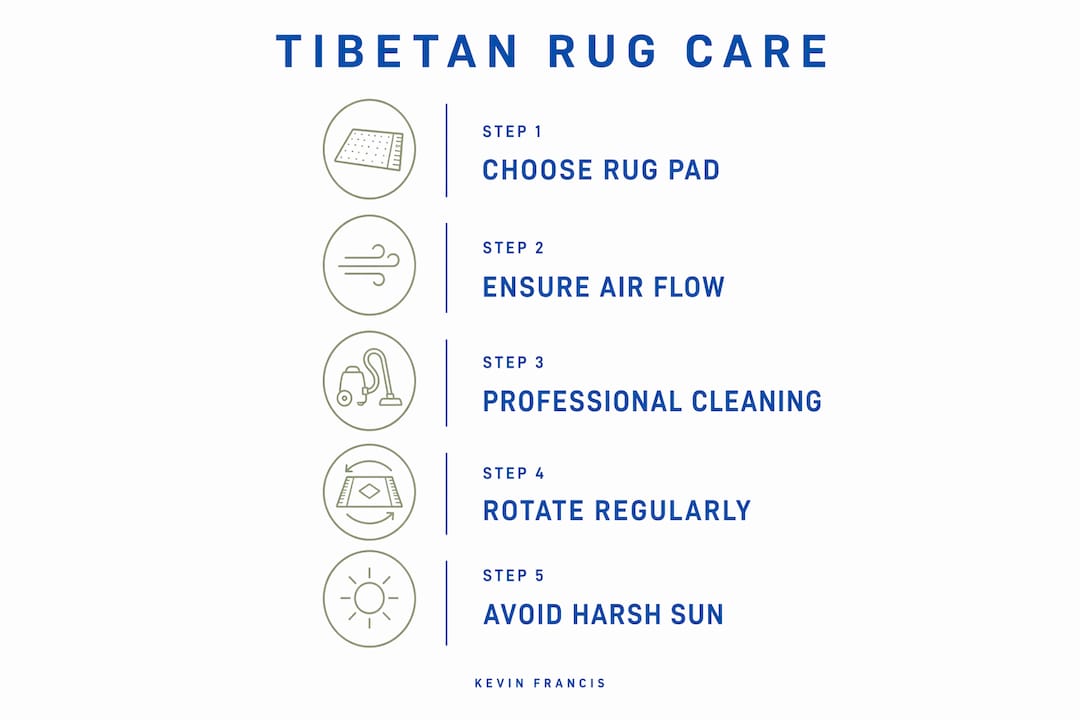
Proper air circulation is critical when using Tibetan knot rugs indoors because the dense pile holds moisture. In rooms with underfloor heating or high humidity, lifting the rug periodically and allowing the floor beneath to breathe prevents moisture buildup that can damage both the rug and the flooring below.
| Setting | Suitability | Key consideration |
|---|---|---|
| Living room | Excellent | Use a thick rug pad; rotate every 6 months |
| Bedroom | Excellent | Place away from direct sunlight to prevent fading |
| Hallway | Good | Choose tighter pile patterns; check backing regularly |
| Dining room | Moderate | Spills require prompt attention; avoid silk-heavy blends |
| Bathroom or kitchen | Not recommended | Moisture exposure damages dense wool pile |
Pro Tip: On radiant-heated floors, choose a rug pad rated for thermal use. Standard rubber pads can off-gas or degrade with consistent heat, which shortens both the pad’s and the rug’s lifespan.
How to style Tibetan knot rugs to elevate home interiors?
Interior designers value Tibetan knot rugs for their tactile qualities, thickness, and artisanal character, qualities that contrast sharply with the flat uniformity of machine-made alternatives. Styling these rugs well means treating them as architectural elements rather than afterthoughts.
Layering is one of the most effective techniques in a designer’s toolkit. Place a large, neutral Tibetan rug as the base layer, then add a smaller flat-weave or kilim on top for visual complexity. The contrast in pile height and pattern creates depth without clutter, a jewel-box effect that rewards close attention.
Tibetan rugs also serve beautifully as wall hangings and accent pieces, a practice with deep roots in Tibetan culture. Mounted on a wooden dowel and hung behind a bed or sofa, a hand-knotted piece transforms a flat wall into a textured focal point. This application works particularly well in rooms where upscale residential interiors favor art-forward arrangements over conventional framed prints.
Consider these styling principles when working with Tibetan knot rugs:
- In minimalist spaces, let the rug carry the room’s only pattern. A single Tibetan piece against bare walls and unadorned furniture creates a focused, meditative atmosphere.
- In maximalist rooms, use the rug as the palette anchor. Pull two or three colors from the rug’s design and repeat them in cushions, throws, and ceramics to unify an otherwise layered scheme.
- Wool and silk blends deserve particular attention in lighting design. Silk fibers enhance light reflection, so positioning a silk-blend Tibetan rug near a floor lamp or beneath a chandelier draws out its subtle sheen and shifts the room’s mood from day to evening.
- For home offices, a Tibetan rug grounds the workspace with warmth and absorbs sound, reducing the acoustic harshness common in rooms with hard surfaces. Explore art for office environments to build a cohesive scheme around your rug choice.
Understanding luxury rug fiber types is the foundation of confident styling. Wool holds color deeply and ages with character. Silk adds luminosity. The blend ratio shapes how a rug reads in different light conditions and how it wears over years of use.
How to maintain and care for Tibetan knot rugs to preserve their beauty?
High-quality Tibetan rugs maintain their appearance for decades with proper care, making maintenance a genuine investment in the piece’s longevity rather than a chore. The dense hand-knotting that gives these rugs their character also makes them forgiving, provided you follow a consistent routine.
- Vacuum weekly on low suction. Use a suction-only attachment without a beater bar. The rotating brush on standard vacuum heads can pull and fray the hand-knotted pile over time, especially on silk-blend rugs.
- Rotate the rug every six months. Routine rotation prevents uneven wear and fading, particularly in rooms with directional sunlight. Even a quarter-turn makes a measurable difference over years.
- Address spills immediately. Blot, never rub. Use a clean white cloth and work from the outside of the spill inward to prevent spreading. For wool rugs, cold water and a small amount of mild dish soap handle most organic stains without damaging the fiber.
- Schedule professional cleaning every two to three years. Hand-knotted Tibetan rugs require hand-washing by a specialist, not machine cleaning or steam treatment. Steam can shrink wool fibers and loosen the knots that give the rug its structure.
- Protect from prolonged direct sunlight. UV exposure fades natural dyes over time. In sun-heavy rooms, use UV-filtering window film or rotate the rug more frequently to distribute any fading evenly across the surface.
Key takeaways
Tibetan knot rugs are the most versatile and durable handcrafted floor covering available for sophisticated residential interiors, provided they are selected, installed, and maintained with care.
| Point | Details |
|---|---|
| Match style to the room | Choose motifs and colorways based on room scale, furniture layout, and desired focal point. |
| Install with a quality rug pad | A felt-and-rubber pad protects the rug’s backing, prevents slipping, and extends pile life. |
| Manage moisture carefully | Dense pile holds humidity, so air circulation and prompt spill response are non-negotiable. |
| Style as art, not just flooring | Tibetan rugs work as wall hangings, layering pieces, and acoustic elements in any room. |
| Maintain consistently | Weekly vacuuming, biannual rotation, and professional cleaning every two to three years preserve decades of beauty. |
Why I believe Tibetan knot rugs are the most underused design tool in luxury interiors
I have worked with handmade textiles for years, and the pattern I keep observing is this: clients who invest in a Tibetan knot rug rarely regret it, but they almost always wish they had placed it more boldly. There is a tendency to treat these pieces as background elements, tucking them under furniture and letting the pile disappear beneath a coffee table. That instinct undersells what a hand-knotted Tibetan rug actually is.
What strikes me most about these rugs is the cultural weight they carry without announcing it. The artisan communities behind each piece are preserving a craft that predates most of the furniture we place on top of their work. That matters to me, not as a marketing point, but as a design philosophy. When a room contains something genuinely made by human hands, with symbolic meaning woven into its structure, the atmosphere shifts in a way that no wallpaper or lighting fixture can replicate.
My honest observation on trends: the move toward maximalism in 2025 and 2026 has created the perfect moment for Tibetan rugs in modern interiors. Designers are layering textures, mixing periods, and embracing pattern in ways that would have felt excessive a decade ago. A Tibetan knot rug is not a period piece in that context. It is the anchor that makes the rest of the room feel intentional rather than chaotic.
The one thing I would push back on is the assumption that these rugs only belong in traditional or globally inspired schemes. Some of the most striking rooms I have seen pair a geometric Tibetan rug in charcoal and cream with mid-century modern furniture and raw concrete walls. The contrast is extraordinary. Do not let the rug’s heritage limit your imagination.
— Kevin O’Gara
Discover handcrafted Tibetan knot rugs at Kevin Francis Design
At Kevin Francis Design, every rug begins with a creative vision and ends with a piece built to last generations. Our collection of handmade luxury rugs includes hand-knotted Tibetan pieces crafted from premium wool and silk blends, each designed to anchor a sophisticated residential space with both beauty and purpose.
Whether you are furnishing a single room or building a curated collection across an entire home, we offer custom design services and direct guidance from Kevin Francis O’Gara’s studio. From bold animal motifs to refined geometric patterns inspired by modernist art, every piece is made to order and built around your space. Explore the collection and discover what a truly handcrafted rug can do for your interior.
FAQ
What makes Tibetan knot rugs different from Persian rugs?
Tibetan knotting wraps yarn around a rod before knotting, creating a thicker, bulkier pile than the Persian or Turkish knot methods. This produces a denser texture and a distinctly sculptural surface quality.
Are Tibetan knot rugs suitable for high-traffic areas?
Yes. The dense pile and quality wool used in hand-knotted Tibetan rugs make them well suited for living rooms, hallways, and offices, provided a quality rug pad is used and the rug is rotated regularly.
Can Tibetan knot rugs be used as wall hangings?
Tibetan rugs are traditionally used as both floor coverings and wall hangings. Mounting one on a wooden dowel behind a sofa or bed adds texture, cultural depth, and a striking focal point to any room.
How often should a Tibetan knot rug be professionally cleaned?
Professional hand-washing every two to three years is the standard recommendation. Machine cleaning and steam treatment can damage the wool fibers and loosen the hand-tied knots that give the rug its structure.
Do silk-blend Tibetan rugs require different care than pure wool?
Silk-blend rugs are more delicate and should be vacuumed on the lowest suction setting without a beater bar. They are best placed in lower-traffic areas and kept away from direct sunlight to preserve the fiber’s natural sheen.


