


A statement rug is the single most powerful design element that defines a room’s character from the floor up. In luxury interiors, the right rug does more than cover a surface. It anchors furniture, adds warmth, and sets the entire aesthetic tone of a space. Designers like Lauren Saab and Paris Blanchfield consistently treat the rug as the starting point, not an afterthought. Kevin Francis Design takes the same approach, building collections around the idea that a great rug is the foundation of every considered interior. Whether you are drawn to hand-knotted artisan pieces or bold modern geometrics, understanding statement rug styles for luxury interiors is the first step toward a room that truly resonates.
1. Top 10 statement rug styles for luxury interiors
The industry term for what most decorators call a “statement rug” is a focal point area rug. It is a piece sized and patterned to command attention and organize a room’s visual hierarchy. These ten styles represent the full range of what luxury floor coverings can achieve.
Traditional and Oriental rugs
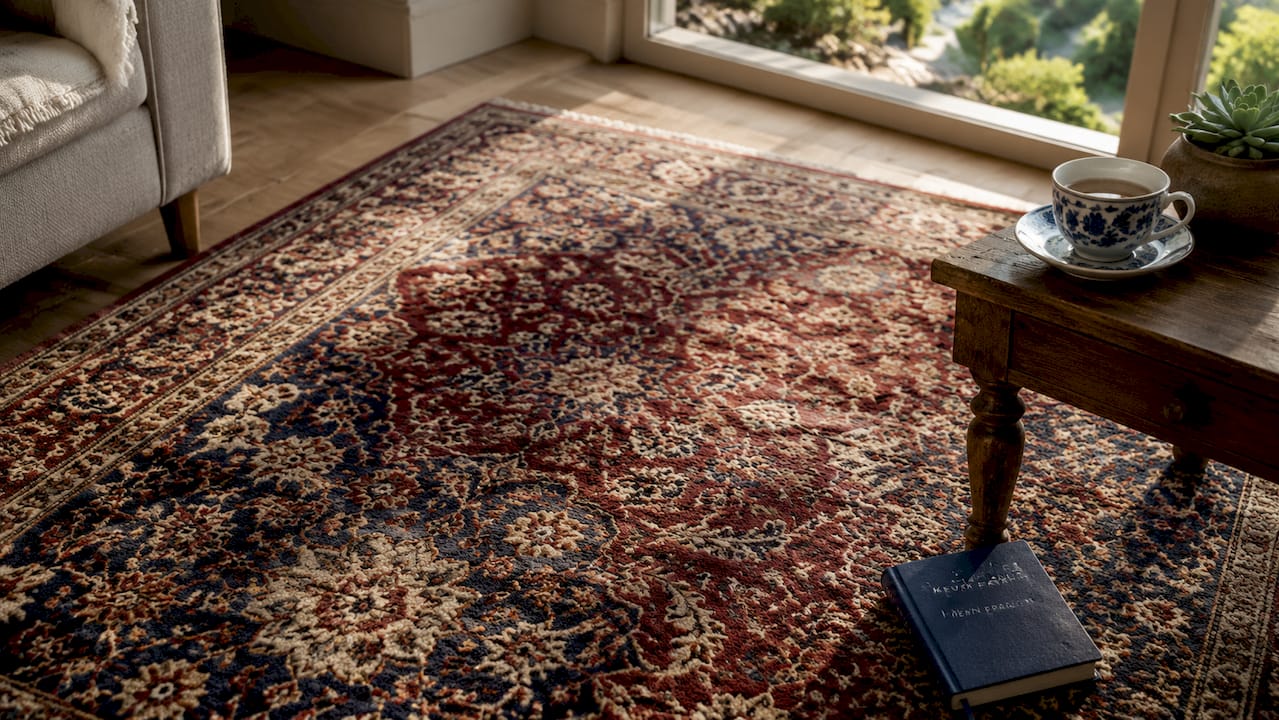
Traditional and Oriental rugs are defined by intricate medallion patterns, jewel-toned palettes, and centuries of craft heritage. Persian, Turkish, and Moroccan examples carry deep reds, sapphire blues, and burnished golds that bring warmth and gravitas to formal living rooms and libraries. Their complexity means they pair beautifully with restrained, solid-colored furniture. The rug becomes the painting; the room becomes the frame.
Modern and contemporary rugs
Modern statement rugs favor bold geometrics, abstract compositions, and graphic color blocking. They suit open-plan spaces where a strong visual anchor is needed without the formality of traditional patterns. Kevin Francis Design’s collections draw on modernist art movements, translating the energy of mid-century abstraction into woven form. A single oversized geometric rug can make a minimalist room feel complete.
Tribal and Kilim rugs
Tribal and Kilim rugs use flat-weave construction and graphic, angular motifs rooted in nomadic weaving traditions. Their lower pile makes them ideal for layering, and their earthy ochres, terracottas, and indigos add depth without visual weight. They work equally well in bohemian interiors and as a textural counterpoint in otherwise sleek, contemporary spaces.
Vintage and distressed rugs
Distressed and vintage rugs add a relaxed, layered look with muted colors and faded patterns that soften interiors and bring character through natural wear. A gently worn antique Oushak, for example, introduces a sense of history that no new rug can replicate. These pieces work particularly well in rooms that mix antique and contemporary furniture, creating the impression of a space assembled over time rather than styled in a single afternoon.
Luxury wool rugs
Wool is the workhorse of luxury rug fibers. It is naturally stain-resistant, resilient underfoot, and develops a beautiful luster with age. A high-quality wool rug in a neutral or earthy palette offers the kind of longevity that justifies a serious investment. Kevin Francis Design’s hand-knotted wool pieces, including the Lotto and Selendi collections, demonstrate how wool can carry both intricate pattern and rich texture without sacrificing durability.
Silk rugs
Silk rugs are luxurious and soft with detailed designs, but they require low-traffic areas because of their cleaning challenges. A silk rug belongs in a formal sitting room, a master bedroom, or a study where foot traffic is light and the rug’s reflective sheen can be fully appreciated. The way silk catches light gives these rugs an almost painterly quality, shifting in tone as the day moves.
Hand-knotted artisan rugs
Hand-knotted rugs represent a pinnacle of luxury with superior durability and intricate craftsmanship often passed down through generations. Each knot is tied individually, meaning a single rug can take months or years to complete. That investment of human skill translates directly into a piece that improves with age rather than deteriorating. For decorators sourcing artisan rug collections, hand-knotted pieces are the gold standard.
Oversized statement rugs
An oversized rug, typically 10 by 14 feet or larger, transforms the scale of a grand room. It prevents furniture from floating and creates a sense of intentional design. In double-height living rooms or open-plan entertaining spaces, an undersized rug reads as a mistake regardless of its quality. Scale is everything in luxury interiors.
Layered rugs
Layering a smaller, bold statement rug over a larger neutral base is one of the most practical techniques in high-end decorating. Layering smaller statement rugs over large neutral jute or sisal rugs maintains proper scale and style flexibility without compromising luxury aesthetics. It also allows you to introduce seasonal color or pattern updates without replacing the foundational piece.
Bold color versus neutral earth tones
The choice between a jewel-toned rug and a neutral one is fundamentally a question of design longevity. Bold color creates drama and personality. Neutral earth tones offer flexibility and age gracefully as furniture and accessories change around them. Both approaches work in luxury interiors when the scale, material, and craftsmanship are right.
Pro Tip: Choose your rug before selecting paint colors and upholstery. It is far easier to match fabric and wall color to a rug than to find a rug that works with everything already in place.
2. What size and placement considerations optimize statement rugs?
Proper sizing is the single most important technical decision in rug placement. The most common mistake is undersizing; professional designers advise that all furniture legs rest on the rug to create cohesion and a sense of considered scale.
The standard professional guidelines are worth knowing precisely:
- Living rooms: Leave 12–18 inches of bare floor visible around the rug’s edges. A 9-by-12 or 10-by-14 foot rug suits most living rooms.
- Dining rooms: The rug should extend 24–30 inches beyond the table on all sides so chairs remain on the rug when pulled out.
- Hallways and runners: A runner typically measures 2.5 feet wide, leaving equal margins of bare floor on each side.
- Bedrooms: Place the rug so it extends at least 18–24 inches beyond the sides and foot of the bed, creating a soft landing when you step out in the morning.
- Custom sizing: Custom-sized rugs create a feeling of bespoke, considered design by allowing equal margins and a perfect fit in every room.
Ceiling height also affects rug scale perception. Rooms with ceilings above 10 feet can carry larger, bolder rugs without feeling crowded. In a room with standard 8-foot ceilings, an oversized rug with a very busy pattern can feel oppressive. When in doubt, go larger rather than smaller. A rug that is slightly too big reads as generous; one that is too small reads as an error.
Pro Tip: Tape out the rug’s dimensions on your floor with painter’s tape before ordering. Living with the footprint for a day or two reveals whether the scale feels right in the actual light and space.
3. How to style statement rugs with furniture and decor
A statement rug should anchor the room before you decorate around it. Neutral and earthy palettes allow flexible furniture updates and avoid the trap of overly trendy bold patterns that date quickly.
The most reliable styling strategy follows a clear sequence:
- Start with the rug. Choose your statement piece first, then build the room’s palette from its colors. A rug with deep teal, warm amber, and ivory gives you three distinct directions for upholstery and wall color.
- Layer lighter furniture over bold rugs. Building a layered room starting with a jewel-toned rug base, then adding furniture in creamy, natural tones achieves cohesion and prevents visual overwhelm. The rug carries the drama; the furniture provides calm.
- Vary texture, not just color. A flat-weave Kilim beneath a velvet sofa creates tactile contrast that reads as sophisticated. A high-pile wool rug under a linen sectional achieves the same effect through different means.
- Coordinate with lighting. The way a rug reads changes dramatically under warm incandescent light versus cool daylight. Luxury lighting complements area rugs by drawing out the depth of color and the texture of the weave.
- Avoid overly trendy patterns. Designers recommend avoiding overly trendy rugs to ensure the investment lasts and furniture can be updated without clashing.
The jewel-box effect, where a room feels richly layered and complete from every angle, almost always begins with a rug that was chosen with intention and given room to breathe.
Pro Tip: If you love a bold pattern but worry about longevity, choose it in a slightly muted or antique colorway. The pattern delivers personality; the softened palette ensures it ages gracefully.
4. Comparison of popular statement rug fibers and materials
Choosing the right fiber is as important as choosing the right pattern. Materials like silk, wool, cotton, and synthetics have distinct performance characteristics affecting their suitability for different rooms in luxury homes. The types of luxury area rug fibers available today span a wide range of performance and aesthetic profiles.
| Fiber | Key strengths | Best room | Maintenance |
|---|---|---|---|
| Wool | Durable, stain-resistant, rich texture | Living rooms, dining rooms | Vacuum regularly; professional clean annually |
| Silk | Soft, lustrous, highly detailed patterns | Formal sitting rooms, bedrooms | Dry clean only; avoid moisture |
| Cotton | Lightweight, washable, affordable | Casual spaces, layering base | Machine or hand wash |
| Jute and sisal | Natural texture, earthy look, eco-friendly | Layering base, casual rooms | Spot clean; avoid saturation |
| Synthetic blends | Stain-resistant, colorfast, budget-friendly | High-traffic areas, family rooms | Easy spot clean; durable |
Wool remains the most versatile luxury fiber because it balances beauty with practicality. Silk is the choice when visual impact and tactile refinement matter more than durability. For high-traffic residential areas, a wool and synthetic blend or a flat-weave cotton offers the best combination of elegance and resilience. Vintage rugs, regardless of original fiber, often develop a patina that no new rug can replicate, making age itself a quality marker in luxury collecting.
Key takeaways
The most effective approach to statement rug styles in luxury interiors is to choose quality craftsmanship and correct sizing first, then build the room’s palette and furniture around the rug.
| Point | Details |
|---|---|
| Choose the rug first | Select your statement rug before finalizing paint, upholstery, or furniture to build a cohesive palette. |
| Size generously | Leave 12–18 inches of bare floor in living rooms; undersizing is the most common and costly decorating mistake. |
| Prioritize timeless patterns | Avoid overly trendy designs to ensure the rug remains relevant as furniture and accessories change. |
| Match fiber to room function | Use wool for high-traffic rooms, silk for formal low-traffic spaces, and jute or sisal as layering bases. |
| Layer for scale and flexibility | Place a bold statement rug over a larger neutral base to achieve proper scale without a full replacement. |
Why I always tell clients to buy the rug before the sofa
People ask me all the time how to choose rugs, and my honest answer surprises them. Buy the rug first. Always. The sofa can be reupholstered. The paint can be changed in a weekend. A great rug, especially a hand-knotted piece with real craftsmanship behind it, is the one thing in a room that is genuinely difficult to replace once you have committed to a space.
The mistake I see most often is not undersizing, though that is rampant. It is buying a rug last, after every other decision has been made, and then wondering why the room feels disconnected. The rug is not a finishing touch. It is the foundation.
I am also skeptical of the current trend toward very large, very plain rugs in neutral tones. They are safe, and safety in design is rarely memorable. The rooms that stay with you, the ones you photograph and return to in your memory, almost always have a rug with genuine character. A Tibetan-knotted piece with an animal motif, a worn antique Oushak with a century of stories in its pile, a bold geometric that references a Bauhaus print. These are the pieces that make a room feel like it belongs to someone.
My advice is to invest in one extraordinary rug rather than three adequate ones. Live with it. Let it age. Let the room grow around it. That is how luxury interiors are actually built.
— Kevin O’Gara
Artisan luxury rugs from Kevin Francis Design
Kevin Francis Design creates hand-knotted area rugs that are built to be the focal point of a considered interior.
The Lotto hand-knotted wool rug and the Selendi hand-knotted wool rug are two of the collection’s most celebrated pieces, each drawing on centuries of Turkish weaving tradition while carrying Kevin Francis O’Gara’s distinctly contemporary design sensibility. Both are available in custom sizes, so the margin and scale are always exactly right for your room. Custom sizing transforms a beautiful rug into a bespoke design decision. Visit Kevin Francis Design to browse the full collection of artisan luxury rugs and find the piece that anchors your next interior.
FAQ
What is a statement rug in luxury interior design?
A statement rug is a focal point area rug chosen for its size, pattern, or material to anchor a room and define its aesthetic. It functions as the design foundation from which furniture, color, and accessories are built.
How do I choose the right rug size for a living room?
A 9-by-12 or 10-by-14 foot rug suits most living rooms, with 12–18 inches of bare floor visible around the edges. All major furniture legs should rest on the rug to create visual cohesion.
Which rug fiber is best for a luxury interior?
Wool is the most versatile luxury fiber, offering durability, stain resistance, and rich texture for living and dining rooms. Silk delivers unmatched softness and luster but belongs only in low-traffic formal spaces.
Should I choose a bold or neutral statement rug?
Neutral and earthy palettes offer long-term design flexibility, allowing furniture and accessories to change without clashing. Bold jewel-toned rugs create drama but work best when the surrounding furniture is kept calm and restrained.
What makes a hand-knotted rug worth the investment?
Hand-knotted rugs are tied knot by knot, often taking months to complete, which produces superior durability and intricate detail. They improve with age and hold their value in a way that machine-made rugs cannot match.


