


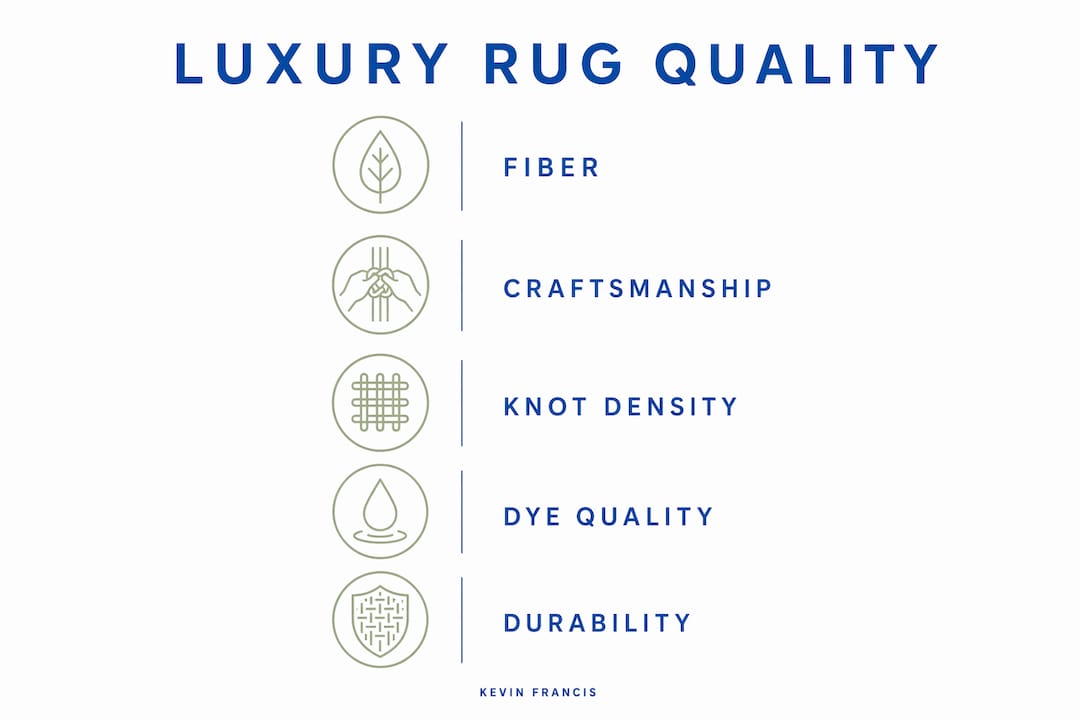
A quality luxury rug is defined by its use of premium natural fibers, expert hand-knotting, high knot density, and lasting colorfastness. These four qualities separate a generational heirloom from a decorative commodity. Knowing how to identify a quality luxury rug before you invest protects both your home and your budget. Whether you are furnishing a formal living room or curating a layered interior, the characteristics of quality rugs are readable once you know what to look for. At Kevin Francis Design, we believe the right rug is not just a floor covering. It is the quiet foundation of a beautifully composed room.
How to identify a quality luxury rug by its materials
The fiber a rug is made from is the single most reliable indicator of its quality. Natural fibers like wool and silk set the standard for luxury rugs, and for good reason. Hand-spun Ghazni wool, sourced from sheep raised at high altitude in Afghanistan, carries a natural lanolin content that repels moisture, resists soiling, and allows the pile to recover its shape after compression. Silk, the strongest natural fiber available for rug weaving, adds a luminous sheen and allows weavers to achieve extraordinarily fine detail in the pattern.
The lifespan difference between fiber types is striking. Natural fiber rugs like hand-spun wool and silk can last 50 to 100 or more years, while machine-made synthetic rugs typically last 10–20 years. That gap represents not just durability but long-term value. A well-chosen wool rug often appreciates over time, much like a fine painting.
Synthetic fibers such as polypropylene and polyester are engineered to mimic the look of natural pile, but they lack the structural resilience and sensory depth of wool or silk. They also tend to flatten under foot traffic and fade more quickly in sunlight. When you are evaluating a rug in person, dense fibers and heavier weight signal better durability and resilience against flattening. Lift a corner of the rug. A quality piece feels substantial, not papery or hollow.
Dye quality matters as much as fiber quality. Well-defined, consistent dye colors from natural vegetable dyes or advanced synthetic dyes maintain their vibrancy over decades. Cheap synthetic dyes fade unevenly and bleed when wet, which is a clear sign of compromised quality.
Pro Tip: Rub a damp white cloth firmly across the pile. If color transfers, the dye is unstable. Quality rugs hold their color under this test.
How does craftsmanship and construction affect rug quality?
Construction method is where the true cost of a luxury rug is earned. The three primary methods are hand-knotting, hand-tufting, and machine-making, and they produce very different results in terms of durability, artistry, and longevity.
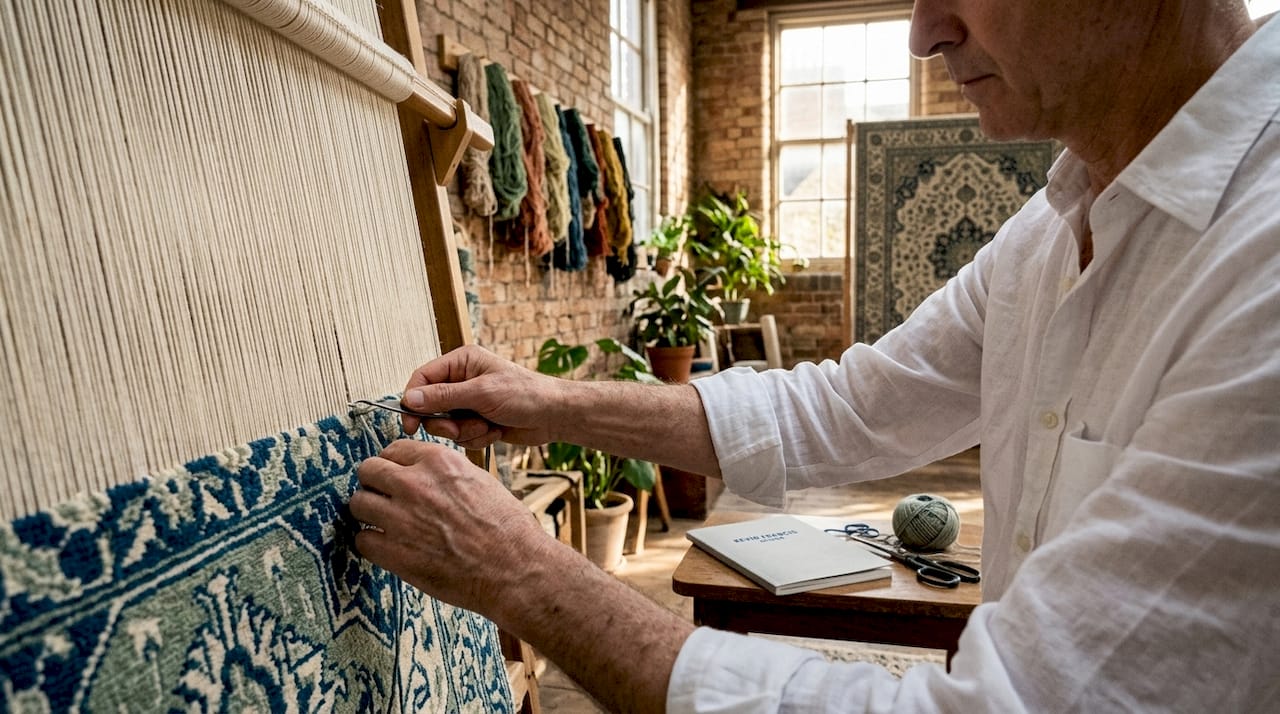
Hand-knotted rugs have visible, irregular knots on the back, structural fringes that are woven into the rug itself, and a natural drape when folded. This is the gold standard of rug construction, practiced for centuries in Persia, Turkey, Tibet, and Morocco. Each knot is tied by hand around the warp threads, meaning a single square foot of fine carpet can represent hours of skilled labor. The result is a textile with genuine structural integrity, not just surface beauty.
Hand-tufted rugs are made by punching yarn through a canvas backing with a tufting gun, then securing the pile with a layer of latex. Hand-tufted rugs often have glued or sewn fringes and a stiff latex backing, which is a clear distinction from the flexible backing of a hand-knotted piece. The latex can degrade over time, causing the rug to shed and the backing to crack. Hand-tufted rugs occupy a middle ground: more affordable than hand-knotted, more artisanal than machine-made, but not built for a century of use.
The flip test is one of the most reliable ways to identify quality handmade rug craftsmanship. Turn the rug over and examine the back. Hand-knotted rugs show the same pattern on the reverse, with visible individual knots. Machine-made rugs show a uniform, grid-like backing with no variation.
| Construction Type | Back Appearance | Fringe Origin | Typical Lifespan |
|---|---|---|---|
| Hand-knotted | Irregular knots, pattern visible | Structural, woven in | 50–100+ years |
| Hand-tufted | Latex or canvas backing | Glued or sewn on | 15–25 years |
| Machine-made | Uniform grid pattern | Attached separately | 10–20 years |
Knot density, measured in knots per square inch (KPSI), is another key marker. Higher knot density usually correlates with more intricate designs and greater structural integrity, though it must be considered alongside material and design complexity. A fine Persian rug may have 300 or more KPSI. A coarser tribal weave may have 40–80 KPSI but still be a quality piece because of its fiber and dye quality.
Pro Tip: Count the knots along one inch of the rug’s back edge, then multiply by the count along the perpendicular inch. This gives you a reliable KPSI estimate without any special tools.
What design elements and sizing signal a quality luxury rug?
Design clarity is a direct reflection of craftsmanship. In a quality luxury rug, pattern edges are crisp, color transitions are smooth, and motifs repeat with precision. Blurry outlines, uneven spacing, or color bleeding all indicate rushed production or inferior materials. The most celebrated rug traditions, from Isfahan medallion carpets to Tibetan geometric weaves, are defined by their exactness. That precision is not accidental. It is the product of skilled hands working from a detailed cartoon, or design template, over weeks or months.
Sizing is where many otherwise thoughtful decorators make costly mistakes. A rug that is too small creates a disjointed island effect and disrupts room harmony. The rug appears to float, disconnected from the furniture around it, which fragments the visual flow of the space. The instinct to size down for budget reasons almost always produces a less satisfying result.
Here are the sizing principles that experienced designers follow:
- In living rooms, the rug should extend at least 6–12 inches beyond the front legs of all seating pieces, anchoring the furniture into a unified grouping.
- In dining rooms, the rug should extend 24 inches beyond the table edge on all sides, allowing chairs to remain on the rug even when pulled out.
- In bedrooms, a rug placed under the lower two-thirds of the bed, extending 18–24 inches on each side, creates a grounded, luxurious feel underfoot.
- In rooms with high ceilings, a larger rug scale reinforces the proportions of the space and prevents the floor from feeling sparse.
Pro Tip: Use painter’s tape to mark the rug’s footprint on the floor before purchasing. Living with the outline for a day or two reveals whether the scale feels right in your actual light and space.
How to evaluate durability and maintenance when choosing a luxury rug
Durability is not just about how long a rug lasts. It is about how gracefully it ages. A quality luxury rug should hold up to daily wear, maintain its color and texture, and resist excessive shedding over years of use. These qualities are built in at the material and construction stage, not added afterward.
Wool is the most forgiving luxury fiber for active households. Its lanolin content provides natural durability and patina development over decades, and it resists dry soil because the fiber’s natural oils prevent particles from bonding deeply to the pile. Wool rugs can be professionally cleaned and will often look better after cleaning than before. Silk rugs, by contrast, are best suited to low-traffic areas like formal sitting rooms or bedrooms. Silk is sensitive to moisture and abrasion, and foot traffic over time can crush the pile permanently.
The table below summarizes expected lifespans and care needs by material type:
| Material | Expected Lifespan | Traffic Suitability | Care Level |
|---|---|---|---|
| Hand-spun wool | 50–100+ years | High | Moderate |
| Silk | 30–75 years | Low | High |
| Wool and silk blend | 40–80 years | Medium | Moderate to high |
| Machine-made synthetic | 10–20 years | Medium | Low |
Signs of low quality reveal themselves quickly in daily use. Excessive shedding beyond the first few weeks, edges that curl upward, pile that flattens and does not recover, and colors that fade unevenly are all red flags. A quality rug may shed lightly in its first weeks as loose fibers work free, but that shedding stops. Persistent shedding signals poor fiber quality or inadequate construction.
For homeowners investing in luxury stone or hardwood floors alongside their rugs, pairing a quality rug with proper underlayment also protects the floor surface beneath. Luxury home care, including marble floor protection, is a natural companion consideration when placing high-value textiles in refined interiors.
Pro Tip: Press your palm firmly into the pile and release. Quality wool pile springs back within seconds. Pile that stays compressed is either low-density or made from inferior fiber.
Key takeaways
A quality luxury rug is identified by its natural fiber composition, hand-knotted construction, high knot density, stable dyes, and correct sizing for the room it anchors.
| Point | Details |
|---|---|
| Fiber type determines longevity | Natural wool and silk rugs last 50–100+ years; synthetic rugs last 10–20 years. |
| Construction method reveals true quality | Hand-knotted rugs show irregular knots on the back and structural fringes woven into the pile. |
| Knot density signals design and strength | Higher KPSI produces finer patterns and greater structural integrity in the finished rug. |
| Correct sizing unifies the room | Rugs sized too small create a disjointed effect; extend at least 6–12 inches beyond seating. |
| Dye stability protects long-term beauty | Rub a damp cloth on the pile to test colorfastness before committing to a purchase. |
What i have learned after years of designing luxury rugs
The question I hear most often from clients is some version of: “How do I know if it is worth the price?” My honest answer is that the price of a quality hand-knotted rug is almost never the problem. The problem is buying the wrong rug at any price.
I have seen beautifully furnished rooms undermined by a rug that was two sizes too small, sitting like a postage stamp in the center of the floor. I have also seen modest rooms transformed by a single generous, well-crafted wool rug that pulled every piece of furniture into a coherent whole. Scale is the variable most people underestimate, and it costs nothing to get right if you measure carefully before you buy.
On the question of materials, I will always advocate for hand-spun natural wool as the foundation of a serious rug collection. Wool is honest. It tells you exactly how it was made and how it has been used. A wool rug that has developed a soft patina over thirty years of family life is more beautiful than the day it arrived. No synthetic fiber does that.
My other strong conviction is about provenance and process. Buy from makers and dealers who can tell you where the rug was woven, by whom, and with what materials. That transparency is not just reassuring. It is the clearest signal that the rug is genuinely what it claims to be. At Kevin Francis Design, every piece in our collection comes with that story attached, because the story is part of what you are bringing into your home.
— Kevin O’Gara
Discover kevin francis design’s hand-knotted luxury rugs
Every quality standard discussed in this guide, from hand-spun natural wool to precise hand-knotting and rich, stable color, comes together in the Kevin Francis Design collection. Our rugs are not produced in volume. They are made with intention, by skilled artisans whose craft is measured in knots, not minutes.
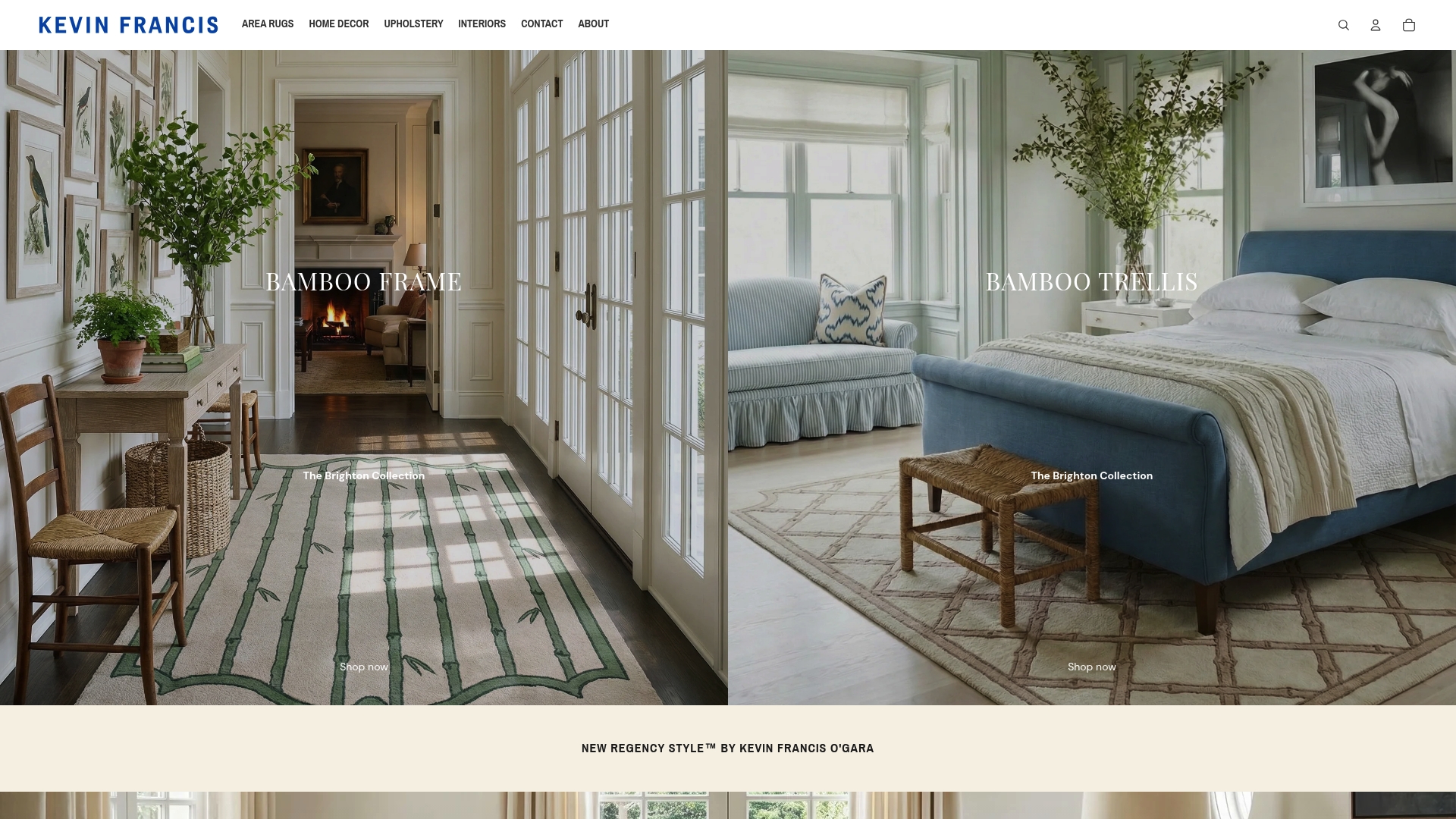
The Lotto Hand-Knotted Wool Area Rug is a compelling example of what genuine craftsmanship looks like in a finished piece. Woven from premium wool using traditional hand-knotting techniques, it carries the structural integrity and visual depth that define a rug built to last generations. If you are ready to invest in a piece that will anchor your interior with lasting beauty, explore the full Kevin Francis Design collection and find the rug that belongs in your home.
FAQ
What makes a rug high quality?
A high-quality rug is defined by natural fiber content, hand-knotted construction, high knot density, and stable dyes. Wool and silk rugs with structural fringes and flexible backing are the clearest markers of genuine luxury craftsmanship.
How do i check if a rug is hand-knotted?
Flip the rug over and examine the back. Hand-knotted rugs show the same pattern on the reverse with visible, irregular individual knots, while machine-made and hand-tufted rugs show a uniform grid or latex backing.
What are the best materials for a luxury rug?
Hand-spun wool and silk are the gold standard materials for luxury rugs. Wool offers durability and natural stain resistance through its lanolin content, while silk provides luminous sheen and allows for extremely fine pattern detail.
How do i choose the right size luxury rug?
In living rooms, the rug should extend at least 6–12 inches beyond the front legs of all seating. In dining rooms, allow 24 inches beyond the table edge on all sides so chairs remain on the rug when pulled out.
How long does a quality luxury rug last?
Hand-knotted natural fiber rugs made from wool or silk can last 50 to 100 or more years with proper care. Machine-made synthetic rugs typically last only 10–20 years before showing significant wear.
Recommended
- Types of Luxury Area Rug Fibers: A Decorator’s Guide – Kevin Francis Design
- Identifying Quality Handmade Rug Craftsmanship – Kevin Francis Design
- Professional Rug Appraisal for Luxury Pieces: A Collector’s Guide – Kevin Francis Design
- Building an Artisan Rug Collection for Your Home – Kevin Francis Design


