


Luxury lighting complements area rugs by using targeted techniques that reveal texture, sharpen color fidelity, and shape the emotional atmosphere of a room. The right light source transforms a handwoven wool rug from a floor covering into a visual statement, as vivid and intentional as a painting on the wall. Understanding how luxury lighting complements area rugs means mastering color temperature, layering strategy, grazing angles, and scene control. These are the principles that separate a thoughtfully designed interior from one that simply has furniture in it.
How luxury lighting complements area rug colors and materials
The relationship between light and rug color is governed by two measurable qualities: color temperature and Color Rendering Index, or CRI. Color temperature is measured in Kelvin and describes whether light reads as warm or cool. CRI measures how faithfully a light source renders the true colors of a surface, on a scale from 0 to 100.
Warm LED bulbs between 2700K and 3000K enhance reds, oranges, and yellows in rugs, wrapping a room in a cozy, amber glow that feels genuinely inviting. Cooler bulbs in the 3500K–4000K range bring out blues, greens, and purples without muddying the tones. Choosing the wrong temperature for your rug’s palette is one of the most common and invisible mistakes in residential design.
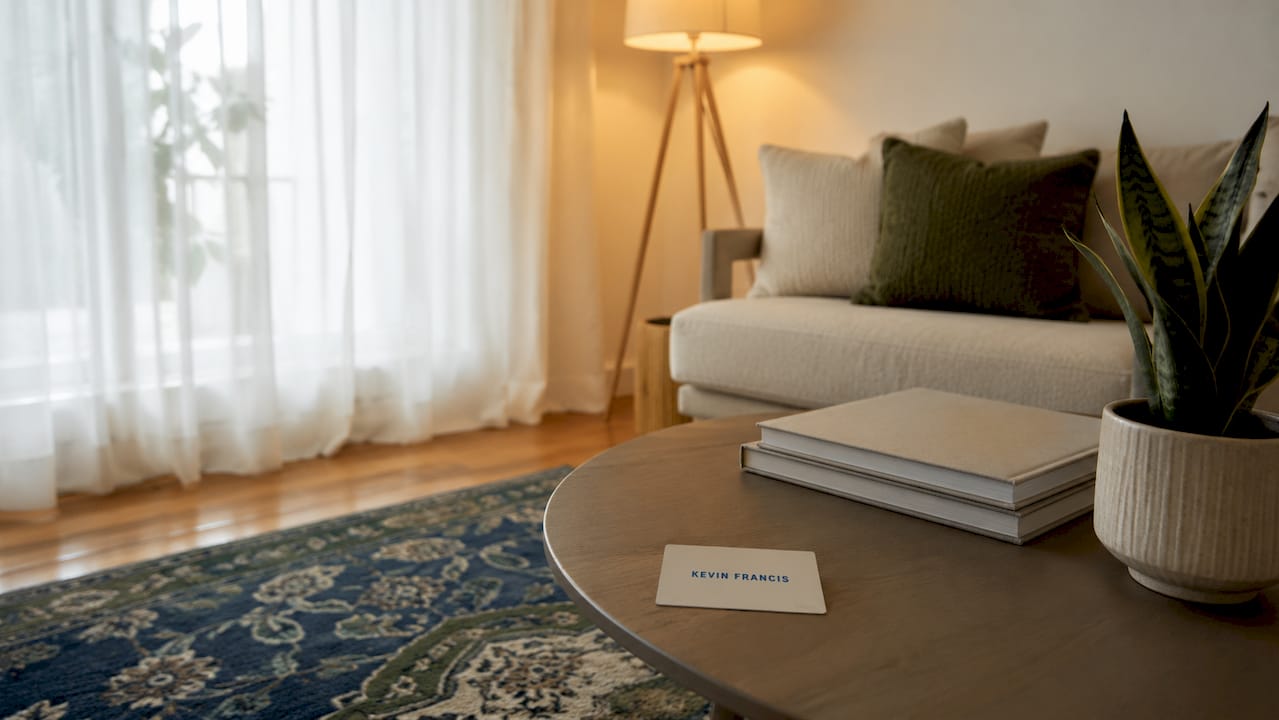
CRI ratings of 90 or above are the standard for luxury interiors because they preserve the subtle undertones woven into high-quality fibers. A rug with hand-dyed wool in dusty rose and sage will look flat and lifeless under a 70 CRI bulb. Under a 95 CRI source, those same colors bloom with depth and dimension. The interplay between Kelvin temperature and CRI is critical. Warm Kelvin values alone do not guarantee richness unless matched with a high CRI source that faithfully renders fabric colors.
Fiber type also matters. Silk and viscose fibers reflect light directionally, creating a lustrous sheen that shifts as you move through the room. Wool and cotton absorb light more evenly, producing a matte, painterly surface that rewards warm, diffused illumination. Understanding your rug’s fiber composition is the first step toward choosing the best lighting for area rugs in your home.
| Rug Tone | Ideal Color Temperature | CRI Minimum | Effect |
|---|---|---|---|
| Warm (reds, oranges, yellows) | 2700K–3000K | 90+ | Cozy, rich, amber warmth |
| Cool (blues, greens, purples) | 3500K–4000K | 90+ | Crisp, vibrant, clear tones |
| Neutral (ivory, gray, taupe) | 2700K–3500K | 90+ | Balanced, natural rendering |
| Multi-color or jewel tones | 3000K–3500K | 95+ | Full-spectrum color fidelity |
Pro Tip: Always test a bulb’s CRI rating before committing to a fixture. Many retailers list only wattage and Kelvin. A 90+ CRI label on the packaging is the detail worth searching for.
How does layered luxury lighting create depth for area rugs?
Luxury interiors rarely rely on a single ceiling light. A single overhead source flattens every surface it touches, erasing the very texture and dimension that make a handmade rug worth owning. Layered lighting, the practice of combining ambient, task, and accent sources, is the professional method for making rugs appear intentional and alive.
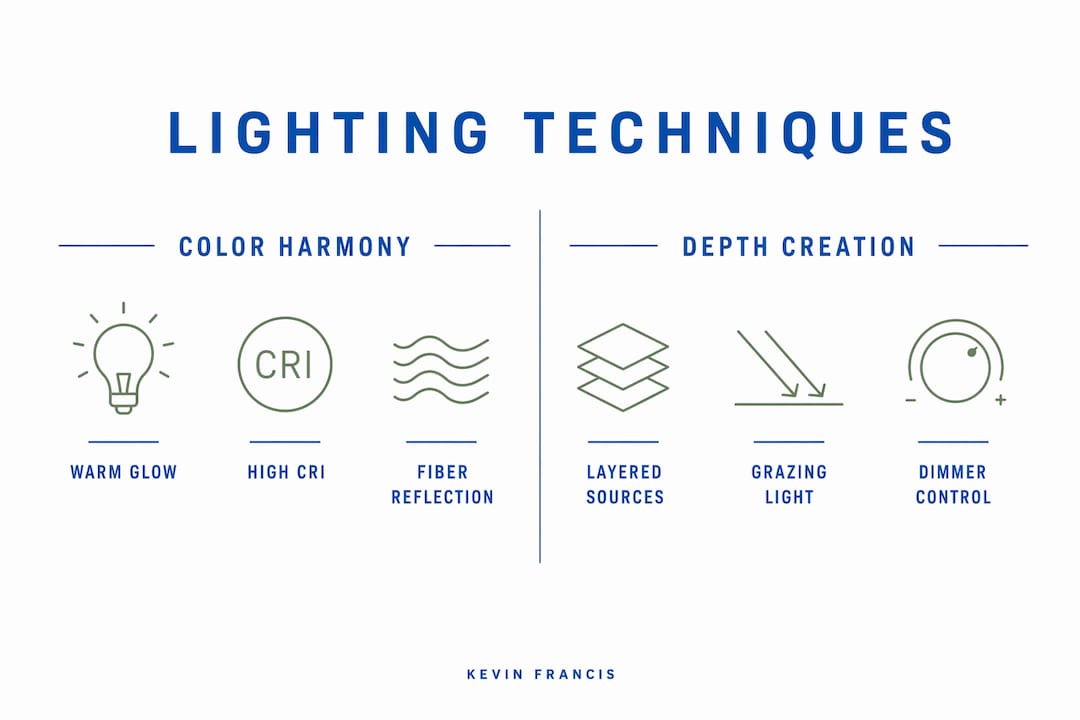
The proportions matter as much as the layers themselves. Ambient lighting should account for 50–60% of total luminosity, task lighting for 20–30%, and accent lighting for 10–20%. This balance creates a room that feels warm and complete rather than dramatically lit in some areas and dim in others.
Here is how each layer functions in relation to your rug:
- Ambient lighting provides the room’s foundational glow. A statement chandelier, recessed ceiling fixtures, or a large pendant centered over a dining table all serve this role. The ambient layer sets the overall brightness and color temperature that your rug lives within.
- Task lighting adds focused brightness for reading, working, or conversation. Floor lamps positioned near a sofa or armchair cast pools of light that graze the rug’s surface at a low angle, naturally revealing pile and texture as a secondary benefit.
- Accent lighting is the layer that transforms a rug into a focal point. Adjustable spotlights, track lighting aimed downward, or picture lights repurposed toward the floor can all direct a concentrated beam onto the rug’s most compelling design areas.
- Decorative lighting includes table lamps, sconces, and candelabras that contribute warmth and visual interest without a primary functional role. These sources soften the room and add the jewel-box effect that defines luxury atmospheres.
Pro Tip: If you are working with a single overhead fixture, add one floor lamp positioned at the rug’s edge. That small addition introduces the low-angle light that reveals texture and immediately makes the space feel more considered.
What lighting techniques reveal texture in luxury area rugs?
Grazing light is the single most effective technique for showcasing the texture of a luxury area rug. The term refers to shallow-angle illumination, where a light source is positioned close to the rug’s surface and aimed across it rather than straight down. This geometry creates micro-highlights and shadows within the pile and weave, making the rug’s three-dimensional structure visible in a way that overhead light never can.
The ideal setback distance for grazing light is 6–12 inches from the rug’s edge. At this distance, the shadows cast by individual fibers are long enough to read clearly without becoming so dramatic that the effect feels theatrical. Adjusting the angle steepens or softens the shadow length, giving you precise control over how much relief you reveal.
The contrast between overhead uniform lighting and angled accent lighting is striking. Uniform overhead light treats the rug like a flat printed surface. Angled grazing light treats it like the textured, handcrafted surface it actually is, one where the depth of a Tibetan knot or the raised pile of a hand-tufted motif becomes part of the visual experience.
Practical fixture choices for grazing include:
- Adjustable spotlights mounted on a track system, angled toward the rug from a low ceiling position
- Floor lamps with directional shades, positioned at the rug’s perimeter and aimed inward at a shallow angle
- Recessed gimbal fixtures, which allow the beam to tilt away from vertical and graze the floor surface
- Table lamps on low surfaces, such as side tables at sofa height, which cast light across the rug at a naturally raking angle
| Technique | Fixture Type | Best For |
|---|---|---|
| Grazing light | Track spotlight, floor lamp | High-pile wool, hand-knotted rugs |
| Overhead accent | Recessed gimbal, pendant | Flat-weave, kilim, geometric patterns |
| Perimeter fill | Sconce, table lamp | Large rugs needing edge definition |
| Directional spot | Adjustable track head | Medallion centers, focal motifs |
How can smart controls and dimmers optimize rug lighting?
Scene-based lighting control allows you to save and recall specific combinations of brightness and color temperature across multiple fixtures simultaneously. For a rug-centered living room, this means you can shift from a bright, balanced daytime setting to a warm, dimmed evening atmosphere with a single tap. Each scene changes how the rug reads in the room, altering its contrast, warmth, and apparent depth.
Three scenes cover the majority of residential needs:
- Daytime scene: Brighter output at 3000K–3500K, balanced across ambient and task layers. The rug appears clear and color-accurate, ideal for appreciating pattern and detail.
- Evening relaxation scene: Dimmed ambient lighting at 2700K with accent lights slightly boosted. The rug’s warm tones deepen, and texture shadows become more pronounced, creating an intimate atmosphere.
- Entertaining scene: Moderate brightness with warm color temperature across all layers. Accent lights on the rug’s focal points draw guests’ attention downward, anchoring the room’s composition.
Dimmers do more than reduce brightness. They prevent the harsh glare that flattens rug texture and washes out color, and they extend the life of LED bulbs by reducing operating stress. Tunable white LED systems, such as those offered by Lutron and Philips Hue, allow you to shift color temperature between scenes without changing bulbs. This is the most flexible and genuinely elegant rug lighting solution available for residential interiors.
Smart home integration through platforms like Apple HomeKit, Google Home, or Amazon Alexa makes scene switching effortless. The result is a living space that adapts its mood as naturally as the light outside changes through the day.
Practical tips for combining luxury lighting and area rugs
Styling area rugs with luxury lighting requires attention to proportion, pattern complexity, and fixture character. A rug with a bold, intricate medallion pattern calls for restrained, focused accent lighting rather than multiple competing sources. A simpler geometric or solid-field rug can carry more dramatic lighting without visual overload.
Directing accent beams toward complex rug design areas anchors attention and integrates the rug with surrounding statement pieces like a chandelier or fireplace. This technique treats the rug as an accent piece with the same compositional weight as wall art or sculpture. The light does not just illuminate the rug. It curates it.
Consider these practical guidelines:
- Match fixture style to rug character. A hand-knotted Persian-inspired rug pairs naturally with warm brass or bronze fixtures. A modernist geometric rug reads better under matte black or polished chrome fittings.
- Account for natural light. A rug positioned near south-facing windows receives strong daylight that shifts its apparent color temperature throughout the day. Choose artificial lighting that complements rather than competes with that natural variation.
- Scale lighting zones to rug size. A large area rug covering most of a living room floor needs multiple accent sources to light it evenly. A single spotlight creates a bright center and dim edges, which fragments the rug’s visual unity.
- Avoid harsh direct downlighting. A bare recessed fixture aimed straight down at a rug creates a hot spot of glare that bleaches color and eliminates texture. Always angle or diffuse direct sources.
- Use light-colored rugs intentionally. Light-colored rugs reflect ambient light, brightening the entire room and distributing illumination more evenly. Dark rugs absorb light and define intimate zones. Knowing this lets you use rug color as a tool for controlling the room’s overall light quality.
Pro Tip: Before finalizing your lighting plan, photograph your rug under different light sources at different times of day. The camera captures color shifts your eye adapts to and ignores, revealing how dramatically the same rug changes under different conditions.
Key takeaways
Luxury lighting transforms area rugs from background elements into intentional focal points through layered sources, precise color temperature, high CRI ratings, and grazing angles that reveal texture and depth.
| Point | Details |
|---|---|
| Color temperature matters | Match warm 2700K–3000K light to warm-toned rugs and cool 3500K–4000K to cool-toned rugs. |
| CRI 90+ is non-negotiable | High CRI lighting preserves the subtle color undertones that define luxury rug quality. |
| Layer ambient, task, and accent | Use a 50–60% ambient, 20–30% task, 10–20% accent split for balanced, dimensional rug presentation. |
| Graze, do not flood | Position fixtures 6–12 inches from the rug’s edge at a shallow angle to reveal pile and weave texture. |
| Use scene controls | Smart dimmers and tunable white LEDs let you adapt rug presentation to mood and time of day. |
Lighting is the last detail most homeowners get wrong
I have spent years designing rugs that carry real visual complexity, patterns built from hundreds of hours of handwork, colors achieved through careful dyeing, textures that reward close attention. And I have watched those same rugs disappear under flat overhead lighting in rooms where every other design decision was made with care.
The honest truth is that most homeowners treat lighting as an afterthought, something you sort out after the furniture arrives. But lighting is not a finishing touch. It is the medium through which everything else in the room is perceived. A rug lit poorly is a rug half-seen.
What I have found consistently is that two changes make the greatest difference: adding a single floor lamp at the rug’s perimeter to introduce grazing light, and switching to a 90+ CRI bulb at the right color temperature for the rug’s palette. Neither change is expensive. Both are transformative. The rug you thought you knew reveals itself differently, with shadows in the pile you had never noticed and colors that suddenly match what you saw in the showroom.
Scene control is the more sophisticated step, and it genuinely changes how you live with a space. Being able to shift a room from bright and clear to warm and intimate without moving a single fixture is a quiet luxury that compounds over time. You stop tolerating your lighting and start choosing it.
The rugs we create at Kevin Francis Design are designed to reward this kind of attention. The texture of a Tibetan-knotted pile, the depth of a hand-dyed wool field, the geometry of a woven pattern: all of these qualities exist in three dimensions. They need light that honors that dimensionality rather than flattening it.
— Kevin O’Gara
Discover rugs designed to shine under luxury lighting
The principles in this article come to life most fully when the rug itself is worthy of the light you give it.
The Lotto Hand-Knotted Wool Area Rug from Kevin Francis Design is a piece built for exactly this kind of considered presentation. Its hand-knotted wool construction creates a surface rich with tactile depth, one that responds beautifully to warm grazing light and glows under a well-chosen 90+ CRI source. The layered color palette shifts subtly as your lighting scenes change through the day, offering a living quality that printed or machine-made rugs simply cannot match. Explore the full collection at Kevin Francis Design and find the piece that your lighting plan deserves.
FAQ
What color temperature is best for area rugs?
Warm rugs in reds, oranges, and yellows look richest under 2700K–3000K bulbs. Cool-toned rugs in blues, greens, and purples respond better to 3500K–4000K sources.
What is CRI and why does it matter for rug lighting?
CRI, or Color Rendering Index, measures how accurately a light source renders surface colors on a scale of 0–100. A CRI of 90 or above is recommended for luxury rugs to preserve subtle color undertones and fiber richness.
How does grazing light enhance a rug’s texture?
Grazing light is positioned 6–12 inches from the rug’s edge at a shallow angle, casting micro-shadows across the pile and weave that reveal three-dimensional texture invisible under flat overhead lighting.
Should i use dimmers for area rug lighting?
Dimmers prevent harsh glare that flattens rug texture and allow you to shift brightness and warmth to suit different moods. Tunable white LED systems from brands like Lutron or Philips Hue offer the most flexible control.
How many light sources does a luxury rug need?
A well-lit luxury rug benefits from at least three layers: ambient light for overall illumination, one or more task sources for functional brightness, and a dedicated accent source aimed at the rug’s focal points or edges.
Recommended
- Types of Designer Lighting for Luxury Homes: A Style Guide – Kevin Francis Design
- Types of Luxury Area Rug Fibers: A Decorator’s Guide – Kevin Francis Design
- Tibetan Knot Rug Interior Applications: Designer Guide – Kevin Francis Design
- Professional Rug Appraisal for Luxury Pieces: A Collector’s Guide – Kevin Francis Design


