


Acquiring designer rugs from the secondary market is defined as purchasing pre-owned, vintage, or antique rugs from auction houses, galleries, and online resale platforms rather than directly from a manufacturer or retailer. The secondary market offers access to pieces that simply cannot be found anywhere else: a hand-knotted Anatolian rug woven before commercial production changed the craft, or a signed studio piece with documented exhibition history. Industry standards classify rugs as antique at 100+ years and vintage at 25–100 years old, with 1920 marking a pivotal threshold before synthetic dyes and mechanized weaving reshaped the trade. Understanding provenance, condition, and craftsmanship separates a rewarding acquisition from a costly mistake.
What key criteria determine value when acquiring designer rugs on the secondary market?
Nine marks determine whether a pre-owned designer rug is worth serious consideration. Nine factors assess quality: knot density, wool quality, dye chemistry, origin, age, condition, design originality, rarity, and provenance. Rugs that satisfy five or more of these marks qualify as beautiful acquisitions; pieces that meet eight or nine are investment-grade collectibles.
Knot density and material quality
Knot density is the single most labor-intensive variable in a rug’s construction. Doubling knot density can require two to four times more weaving time, which explains why finely knotted Persian and Turkish rugs command prices that seem extraordinary at first glance. When you identify quality craftsmanship in a secondary market piece, count the knots per square inch from a close-up photo of the back of the rug. The back never lies: a tight, even grid of knots signals skilled hands and premium materials.
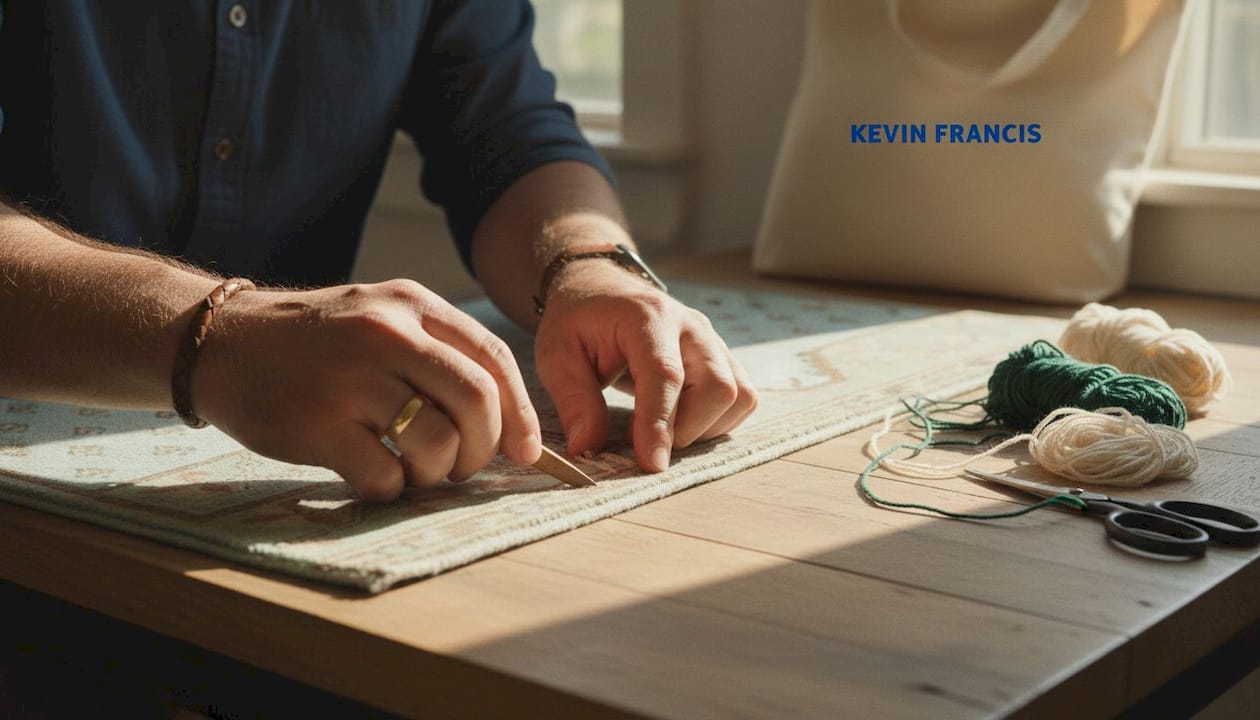
Wool quality matters just as much as density. Lustrous, lanolin-rich highland wool develops a soft patina over decades, while lower-grade wool becomes brittle and dull. Run your fingers through the pile in photos or videos and look for a gentle sheen rather than a flat, matte surface.
Dye chemistry and design originality
Natural dyes derived from plants and insects age with extraordinary grace, deepening into warm, complex tones that synthetic dyes cannot replicate. The damp-cloth test is a reliable field check: press a damp white cloth against the pile for thirty seconds. Bleeding or transfer strongly suggests synthetic dye. Design originality is equally telling. Regional weaving traditions produce distinctive geometric grids, floral medallions, and animal motifs that carry the fingerprint of a specific village or workshop. A rug with a clearly identifiable regional vocabulary and no signs of mechanical repetition carries far greater value than a generic pattern.
Provenance documentation
Provenance includes dealer invoices, auction records, exhibition catalogs, letters, and original labels. Digital documentation is now the baseline expectation for high-value rugs in 2026. A rug with a paper trail connecting it to a named collector, gallery, or auction house carries a higher price floor and far greater confidence for the buyer. Treat missing provenance not as a minor gap but as a meaningful risk factor.
Pro Tip: Ask the seller to photograph the back of the rug in natural daylight. The knot pattern, any repairs, and the true color of the foundation threads are all visible there and invisible in standard listing photos.
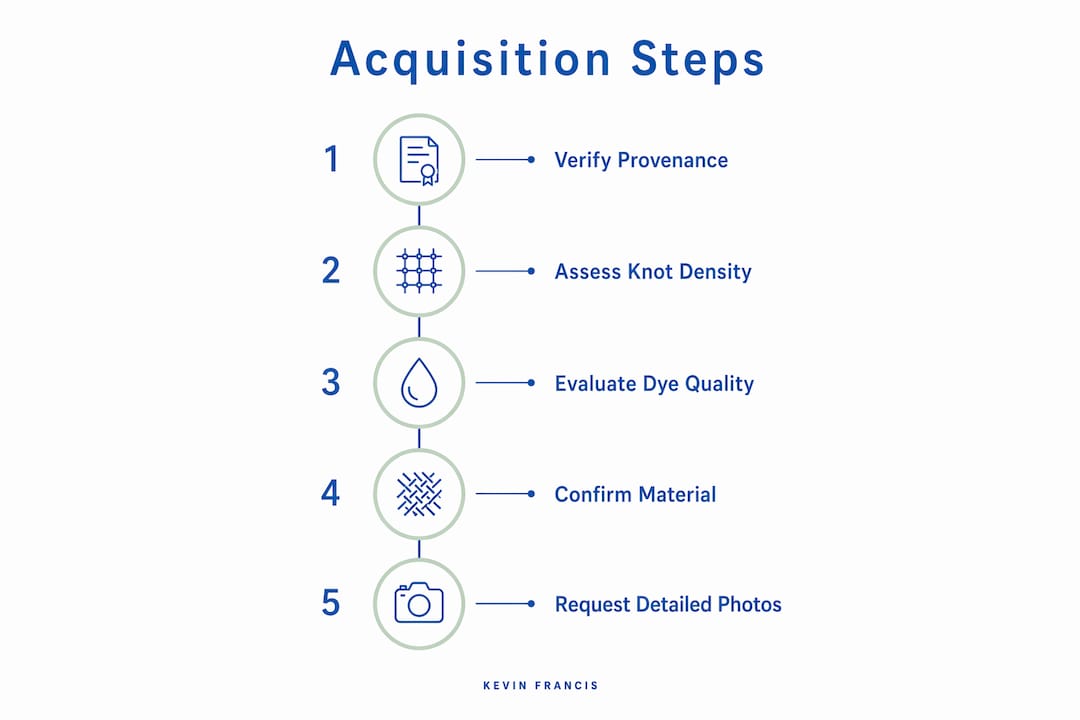
How to source and evaluate designer rugs from trusted channels
The main channels for buying designer rugs online and in person each carry distinct advantages and risks.
- Established auction houses offer condition reports, provenance research, and buyer protections. Bidding competitively requires pre-registration and a clear maximum budget.
- Specialist galleries provide expert curation and often allow in-person viewing before purchase. Prices tend to reflect the gallery’s overhead, but the authentication support is worth it for significant acquisitions.
- Vintage rug marketplaces online aggregate listings from multiple dealers. Quality varies widely, so seller reputation and return policies matter enormously.
- Private sales and estate sales occasionally surface extraordinary pieces at fair prices, but they offer the least documentation and the highest verification burden.
What to request from any seller
Request 6–12 inch close-up photos of the pile, corners, and fringe, plus a short video showing how the texture moves under raking light. These images reveal moth damage, reweaving, color correction, and pile wear that standard listing photos conceal. A seller who declines this request is a seller worth walking away from.
The table below outlines the core information to request before committing to any secondary market purchase.
| Information to Request | Why It Matters |
|---|---|
| Fiber content (wool, silk, cotton) | Determines durability, care requirements, and value |
| Knot density (knots per square inch) | Signals craftsmanship level and production time |
| Origin and approximate age | Establishes regional tradition and classification |
| Provenance documents | Confirms ownership history and raises price confidence |
| Condition report with repair notes | Reveals hidden damage and restoration costs |
Pro Tip: Cross-reference a seller’s listed origin and age against the design vocabulary of the rug. An “18th-century Persian” piece with a pattern that only emerged in the 1950s is a red flag no provenance document can fix.
Step-by-step process for a successful secondary market acquisition
A disciplined process protects you from impulse purchases and ensures the rug you acquire genuinely fits your space and budget.
- Measure your room and define your brief. Know the exact footprint you need, the color palette of the space, and whether the rug will anchor a seating area or serve as a hallway runner. Function shapes every subsequent decision.
- Identify three to five candidate rugs. Comparing multiple listings sharpens your eye and gives you a realistic sense of market pricing for a given quality level.
- Request full documentation and media. Use the checklist from the sourcing section above. Do not proceed without close-up photos and a condition report.
- Calculate the total landed cost. Factor in price, shipping, import duties, insurance, and potential restoration costs before comparing listings. A rug priced $2,000 below a competitor may cost $3,000 more once duties and repairs are included.
- Arrange insured, white-glove delivery for any piece valued above a threshold you set in advance. Standard freight carriers are not equipped to handle antique textiles.
- Inspect on arrival within the return window. Lay the rug in the intended room and view it in the actual light conditions of the space. Pile direction and lighting change a rug’s apparent color dramatically. What reads as warm gold in a seller’s warehouse may appear olive green under your north-facing windows.
Antique rugs with strong provenance and verified natural dyes appreciate 8–12% annually on average. That trajectory makes a well-sourced piece both a design statement and a long-term asset.
Common pitfalls when buying pre-owned designer rugs
The secondary market rewards patience and penalizes haste. Knowing the warning signs before you commit saves both money and disappointment.
- Vague or missing provenance. A seller who describes a rug as “antique Persian” without documentation is offering a story, not a fact. Provenance and documentation raise both confidence and the price floor of vintage rugs significantly.
- Dramatic discounts without explanation. A 60% reduction from an estimated retail value signals either hidden damage, a misattributed origin, or a seller eager to move a problem piece.
- Inconsistent wear patterns. Natural aging produces even, gradual pile reduction across high-traffic zones. Localized bare patches or abrupt color shifts suggest repairs, chemical washing, or artificial distressing.
- Sellers who resist documentation requests. Reliable sellers provide transparent return policies and guarantees of authenticity. A seller who deflects requests for fiber content, knot density, or repair history is not a seller who stands behind the piece.
- Marketing language substituting for facts. Words like “heirloom,” “museum quality,” and “investment piece” carry no verifiable meaning without supporting documentation.
Buying a rug based on marketing terms alone is the most common and most expensive mistake in secondhand rug shopping. Physical inspection and provenance documentation are the only reliable substitutes for the trust that comes from buying new.
Pro Tip: If authenticity is in question after purchase, contact a certified textile conservator or an independent appraiser who specializes in Oriental and decorative rugs. A professional assessment typically costs far less than the loss on a misrepresented piece.
Key Takeaways
Successful secondary market acquisition of designer rugs requires verified provenance, physical condition assessment, and a full landed-cost calculation before any purchase commitment.
| Point | Details |
|---|---|
| Use the nine-mark framework | Evaluate knot density, dye chemistry, origin, age, and provenance before committing to any piece. |
| Request close-up media | Ask for 6–12 inch pile photos and a texture video to reveal damage invisible in standard listings. |
| Calculate total landed cost | Add shipping, duties, insurance, and restoration to the list price before comparing options. |
| Verify provenance documents | Dealer invoices, auction records, and exhibition catalogs are the baseline for high-value acquisitions. |
| Inspect in situ before accepting | View the rug in your actual room lighting, accounting for pile direction, before finalizing the purchase. |
What I’ve learned from years of living with secondary market rugs
The most honest thing I can tell you about buying pre-owned designer rugs is that the internet has made the research easier and the temptation faster. That combination is not always a friend to good decisions.
I’ve watched collectors acquire extraordinary pieces through patient, methodical comparison, and I’ve seen equally passionate buyers pay premium prices for rugs that unraveled, literally and figuratively, within a year. The difference was almost never budget. It was process. The buyers who fared best treated every listing as a starting point for a conversation, not a transaction. They asked uncomfortable questions, requested inconvenient photos, and walked away from sellers who made them feel difficult for doing so.
Physical verification still matters even when you are buying designer rugs online. A video call with a seller who walks the rug through raking light, folds a corner to show the foundation, and holds the fringe up to the camera tells you more than a hundred static images. I’d also encourage you to think about long-term rug care from the moment of acquisition. A rug that arrives in good condition and receives proper maintenance holds its value and its beauty for generations.
The secondary market is genuinely one of the most rewarding places to find a piece that carries history, character, and craft in equal measure. It simply asks more of you than a retail purchase. Give it that, and it gives back something no new rug can replicate.
— Kevin O’Gara
Curated designer rugs from Kevin Francis Design
For collectors who want the character of a hand-knotted piece without the verification burden of the secondary market, Kevin Francis Design offers a curated selection of luxury wool rugs crafted using traditional Tibetan knotting and Turkish weaving techniques.

The Lotto hand-knotted wool rug draws on a 16th-century Anatolian geometric tradition, rendered in premium highland wool with full provenance from the studio. The Cairene hand-knotted rug brings the intricate lattice patterns of historic Cairo workshops into a contemporary interior context. For those drawn to bold geometry, the Anatolia maze rug offers hand-tufted craftsmanship with the visual drama of a labyrinthine pattern. Each piece ships with detailed photography, fiber documentation, and the full story of its making.
FAQ
What does “secondary market” mean for designer rugs?
The secondary market refers to any channel where pre-owned rugs are resold, including auction houses, galleries, vintage rug marketplaces, and private sales. It is distinct from buying directly from a manufacturer or authorized retailer.
How do I verify a rug’s age before buying?
Industry standards classify rugs as antique at 100+ years old and vintage at 25–100 years old, with pre-1920 pieces predating commercial weaving methods. Request provenance documents, examine dye chemistry, and compare the design vocabulary against documented regional traditions.
What photos should I always request from a seller?
Request 6–12 inch close-up photos of the pile, corners, and fringe, plus a short video showing texture under raking light. These reveal repairs, moth damage, and color inconsistencies that standard listing images conceal.
Are antique rugs a good investment?
Antique rugs with verified provenance and natural dyes appreciate 8–12% annually on average, placing them among the more reliable categories of decorative art investment. Condition, documentation, and origin all affect that trajectory.
What is the biggest mistake buyers make on the secondary market?
Purchasing based on marketing language rather than physical evidence and documentation is the most common and costly error. Always request fiber content, knot density, origin, age, and provenance records before committing to any secondhand rug purchase.


