


Protecting luxury rugs in high-traffic areas is defined as the practice of combining rotation, padding, gentle cleaning, and environmental controls to prevent fiber degradation, color loss, and structural damage in heavily used residential spaces. A handmade wool or Tibetan-knotted rug represents both a financial investment and a piece of living art, and without a consistent care routine, even the finest craftsmanship yields to daily foot traffic within a few years. The good news is that natural lanolin in wool provides inherent stain resistance, giving quality rugs a built-in advantage that simple habits can amplify. Rotation, the right rug pad, and timely cleaning are the three pillars that keep luxury rugs vibrant for decades.
How does rotating your luxury rug prevent uneven wear and fading?
Rug rotation is the single most underused protection technique in residential care. Most homeowners vacuum faithfully but never move the rug itself, which means the same fibers absorb foot traffic, furniture pressure, and sunlight every single day.
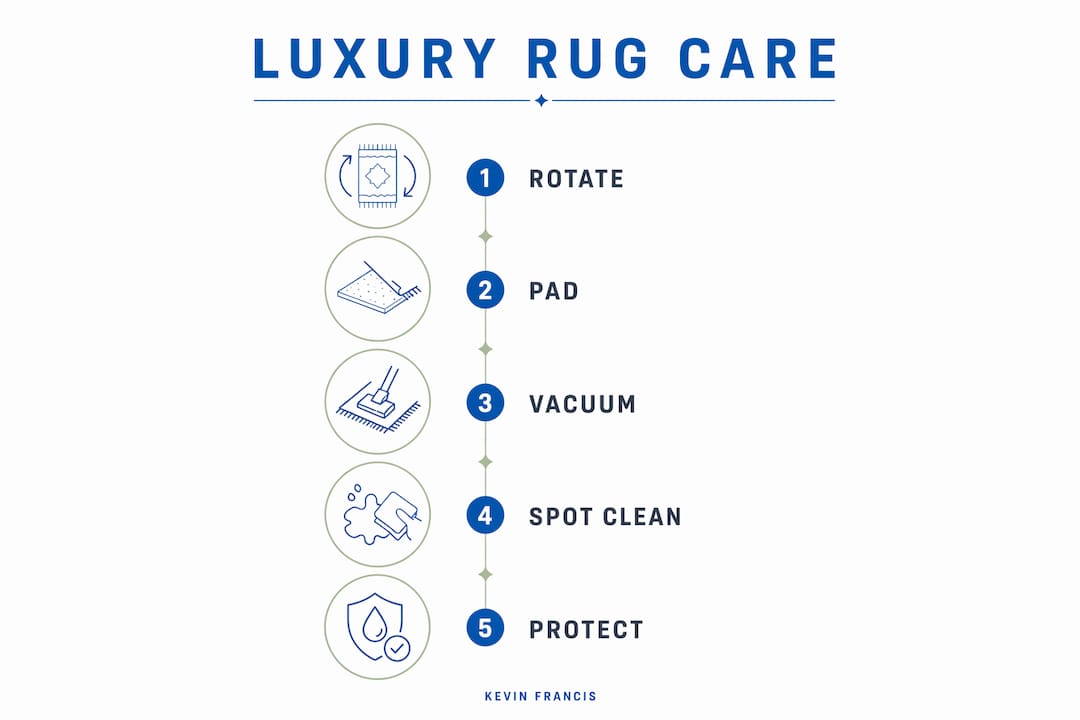
Rotating your rug every 3–6 months prevents the formation of traffic lanes, those worn, matted paths that appear where people walk most often. It also equalizes sun exposure across the rug’s surface, slowing the dye degradation that causes one side to fade while the other stays rich. In rooms with strong directional light, a 180-degree turn twice a year makes a visible difference within the first twelve months.
Furniture placement complicates rotation because heavy sofas and armoires compress fibers beneath their legs. The solution is to rotate the rug and reposition furniture slightly at the same time, so pressure points shift rather than deepen. In rooms where furniture cannot move, rotating the rug 90 degrees still redistributes the traffic pattern meaningfully.
| Traffic Level | Rotation Interval | Primary Benefit |
|---|---|---|
| Low (bedroom) | Every 12 months | Equalizes minor sun fading |
| Moderate (living room) | Every 6 months | Prevents traffic lane formation |
| High (entryway, hallway) | Every 3 months | Reduces fiber compression and fading |
| Very high (open-plan family area) | Every 2–3 months | Preserves pile height and color uniformity |
Pro Tip: Mark your calendar with a recurring reminder tied to the season change. Rotating at the start of each new season in high-traffic rooms keeps the schedule effortless and consistent.
What are the best rug pad options to protect your luxury rug and flooring?
A quality rug pad does four things at once: it cushions impact, reduces slippage, protects the floor beneath, and extends the life of the rug fibers above. Most homeowners treat rug pads as an afterthought, but the pad is arguably the most cost-effective rug protection solution available.
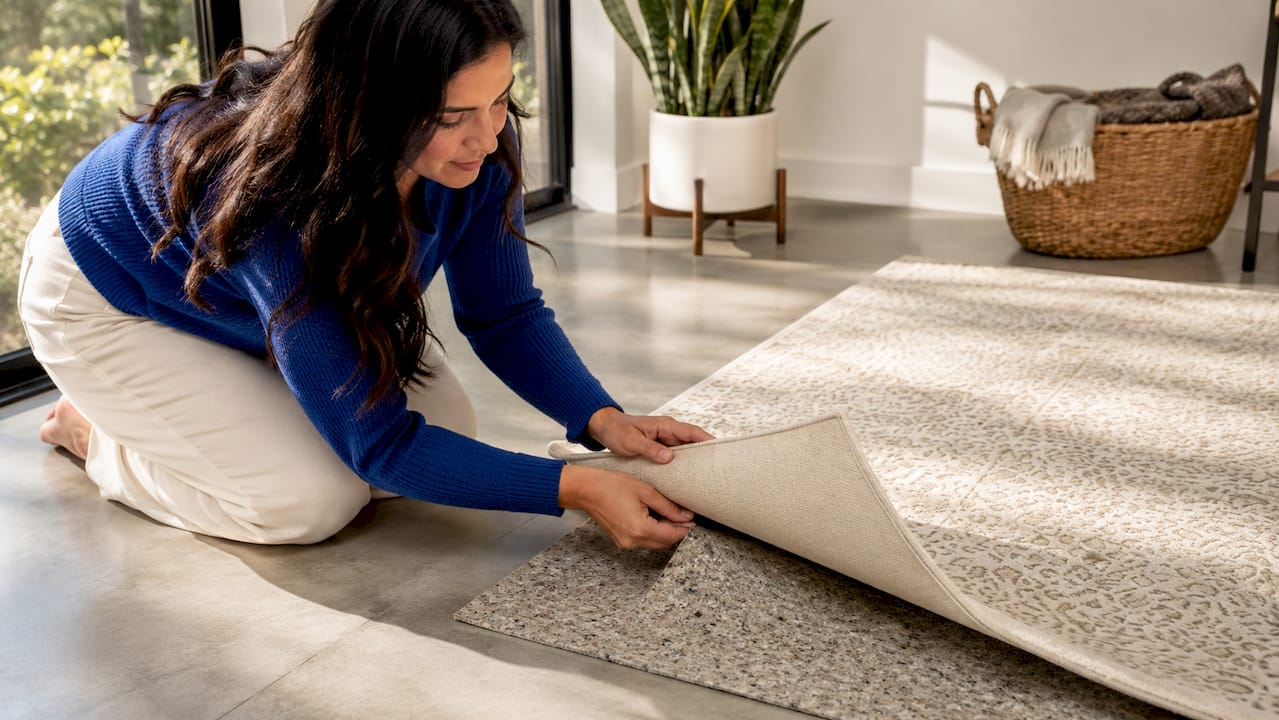
Natural rubber and felt-rubber hybrid pads are the two materials worth using under luxury rugs. Natural rubber grips both the floor and the rug backing without adhesives, making it ideal for hardwood, tile, and stone. Felt-rubber hybrids add a layer of cushioning that absorbs impact, which is especially valuable in entryways and hallways where foot traffic is concentrated and repetitive.
The danger with budget options is chemical. Cheap synthetic or PVC-backed pads outgas over time and react with polyurethane floor finishes, leaving permanent stains or lifting the finish entirely. That damage is irreversible and often costs more to repair than the rug itself. Avoiding adhesive-backed pads on hardwood is not a preference. It is a necessity.
Pad sizing matters as much as material. The pad should be cut approximately one inch smaller than the rug on all sides, so it stays hidden while still supporting the full rug surface. Thickness between 1/4 inch and 3/8 inch suits most luxury rugs without creating a tripping hazard at the edges.
| Pad Material | Best Floor Type | Key Benefit | Avoid When |
|---|---|---|---|
| Natural rubber | Hardwood, tile, stone | No adhesives, strong grip | Radiant heat floors (check manufacturer) |
| Felt-rubber hybrid | Hardwood, laminate | Cushion plus grip | Very thick pile rugs (may feel unstable) |
| Felt only | Low-traffic areas | Soft underfoot feel | High-traffic zones (slides over time) |
| Synthetic/PVC | Not recommended | Low cost | Always: damages polyurethane finishes |
Pro Tip: Replace your rug pad every 3–5 years even if it looks fine. Rubber degrades silently, losing grip and cushion before any visible sign appears.
Which cleaning routines keep luxury rugs vibrant in busy areas?
High-traffic area rug care depends on frequency and gentleness in equal measure. Aggressive cleaning damages fibers just as surely as neglect does, so the goal is a routine that removes dirt without stressing the pile.
Vacuuming is the foundation of any luxury rug maintenance plan. For delicate handmade rugs, including hand-tufted and Tibetan-knotted pieces, suction-only vacuuming protects the pile from the mechanical beating that beater bars deliver. Vacuum weekly in high-traffic rooms and twice weekly in entryways where dirt ingress is highest.
Spot cleaning requires speed and restraint. Blot spills immediately with a clean white cloth, working from the outer edge of the stain inward to avoid spreading. Use a mild detergent diluted in cool water, never hot water, which can set stains and shrink natural fibers. Rubbing is the most common mistake. It pushes the spill deeper into the pile and distorts the fiber structure.
Professional cleaning every 12–18 months removes embedded grit that vacuuming cannot reach. Grit is the silent enemy of luxury rugs. Each grain acts like a tiny blade, cutting fibers from the inside every time someone walks across the surface. Professional cleaning also restores color vibrancy and addresses odors that accumulate in high-traffic zones. With pets or children in the home, schedule professional cleaning annually rather than waiting eighteen months.
Key cleaning habits for high-traffic rugs:
- Vacuum weekly with suction-only settings on delicate or handmade rugs.
- Blot spills within minutes using a clean cloth and mild, pH-neutral detergent.
- Never use bleach, ammonia-based cleaners, or steam cleaners on wool or natural fiber rugs.
- Address odors with a light dusting of baking soda left for 30 minutes, then vacuumed away.
- Schedule professional rug cleaning every 12–18 months, or annually in homes with pets.
Pro Tip: Test any cleaning solution on a hidden corner of the rug before applying it to a visible area. Color bleeding can happen even with mild products on certain natural dyes.
What preventative environmental and furniture strategies help protect luxury rugs?
The environment around a rug shapes its longevity as much as what happens underfoot. Sunlight, humidity, and furniture pressure are the three environmental forces that cause the most cumulative damage in residential settings.
UV-filtering window films and curtains reduce the dye degradation that sunlight causes over months and years. A rug placed in a sun-drenched living room without any window treatment can fade noticeably within a single summer. UV films are particularly effective because they block harmful rays without darkening the room, preserving both the rug and the ambiance of the space.
Furniture cups under heavy legs distribute pressure across a wider surface area, preventing the deep, permanent dents that sofas and dining tables leave in pile rugs. Shifting furniture a few inches every few months, even without a full rug rotation, breaks the compression cycle before it becomes permanent.
Practical environmental and placement tips for durable rugs in entryways and living areas:
- Place a walk-off mat or welcome mat just outside the entry door to capture dirt before it reaches the luxury rug.
- Use UV-filtering window film on south and west-facing windows where sun exposure is most intense.
- Keep indoor humidity between 40% and 60% to prevent natural fiber rugs from drying out or absorbing excess moisture.
- Avoid placing luxury rugs directly over radiant heat vents, which dry out wool fibers and distort backing materials.
- Lift rugs rather than dragging them when repositioning, to avoid stretching the foundation weave.
- Check the style and placement guide for room-specific recommendations on rug sizing and positioning.
Ventilation also plays a quiet role. Rugs in poorly ventilated rooms trap moisture and odors more readily, which accelerates fiber breakdown and encourages mold in humid climates. A well-aired room is a simple, free form of rug protection that most homeowners overlook entirely.
Key Takeaways
Protecting luxury rugs in high-traffic areas requires consistent rotation, a quality natural rubber or felt-rubber pad, gentle weekly vacuuming, and environmental controls like UV window film and furniture cups working together.
| Point | Details |
|---|---|
| Rotate every 3–6 months | Prevents traffic lanes and equalizes sun fading across the rug surface. |
| Use natural rubber or felt-rubber pads | Protects both the rug and the floor without chemical damage to finishes. |
| Vacuum weekly with suction only | Removes surface dirt without damaging delicate handmade or natural fiber piles. |
| Schedule professional cleaning annually | Removes embedded grit that cuts fibers from within and restores color vibrancy. |
| Control sunlight and furniture pressure | UV films and furniture cups prevent fading and permanent compression dents. |
What I’ve learned from years of watching beautiful rugs age badly
The most common mistake I see is treating a luxury rug like a piece of furniture: something you place once and maintain only when something goes wrong. That reactive approach is exactly how a handmade piece worth thousands of dollars ends up looking tired within five years.
What I’ve come to believe, after working with handmade textiles for years, is that consistent gentle habits outperform any single heroic intervention. A homeowner who vacuums weekly, rotates seasonally, and blots spills immediately will always have a better-looking rug than one who ignores the piece for two years and then sends it for an expensive professional restoration.
Natural fibers like wool have a quiet resilience built into them. The lanolin that occurs naturally in wool repels moisture and resists staining in ways that synthetic fibers simply cannot replicate. But that resilience is not unconditional. It depends on you not stripping it away with harsh chemicals or aggressive scrubbing.
For renters especially, I’d encourage a focus on the pad and the rotation schedule above all else. You may not control the flooring beneath you, but you absolutely control whether your rug slides, compresses unevenly, or fades on one side. Those are the variables that determine how a rug looks when you move out, and whether it travels with you in the same condition it arrived.
The real luxury of a well-made rug is not just how it looks on day one. It’s how it looks on day one thousand.
— Kevin O’Gara
A rug built for the life you actually live
Not every luxury rug is designed with real residential traffic in mind. The Panthera Spotted Leopard Performance Area Rug from Kevin Francis Design is one that is. Its bold animal motif and rich tonal palette bring the kind of visual drama that anchors a room, while its construction holds up to the demands of active households.
Kevin Francis Design crafts each piece with the understanding that a rug lives in a home, not a showroom. The Panthera rug pairs beautifully with the care routines outlined here, rewarding consistent maintenance with lasting color and pile integrity. If you’re ready to invest in a statement piece that earns its place in a busy room, the Panthera is worth a close look.
FAQ
How often should I rotate a luxury rug in a high-traffic area?
Rotate your rug every 3–6 months in high-traffic rooms like living rooms and entryways. This prevents traffic lane formation and equalizes sun fading across the entire surface.
What type of rug pad is safe for hardwood floors?
Natural rubber and felt-rubber hybrid pads are the safest choices for hardwood floors. Synthetic or PVC-backed pads outgas and can permanently damage polyurethane floor finishes.
How do I clean a luxury rug without damaging the fibers?
Vacuum weekly using a suction-only setting and blot spills immediately with a mild, pH-neutral detergent and cool water. Never rub a spill, and avoid bleach, ammonia, or steam cleaners on natural fiber rugs.
How often do luxury rugs need professional cleaning?
Professional cleaning every 12–18 months is the standard recommendation, or annually in homes with pets or very high foot traffic. Professional methods remove embedded grit that vacuuming cannot reach and restore color vibrancy.
Can sunlight really damage a luxury rug indoors?
Sunlight causes dye degradation in natural fiber rugs even through standard glass windows. UV-filtering window films or curtains on south and west-facing windows significantly slow fading over time.


