


Professional cleaning is defined as the only method capable of removing the embedded soils, allergens, and contaminants that destroy luxury rug fibers from the inside out. Vacuuming handles surface debris, but it leaves behind the grit and moisture that quietly degrade hand-knotted wool, silk, and Tibetan-knotted foundations over time. Experts recommend professional cleaning every 12–24 months for typical households, and every 6–12 months for homes with pets, children, or heavy foot traffic. Understanding why luxury rugs require professional cleaning is the first step toward protecting a piece that is as much an investment as it is a work of art.
Why vacuuming alone cannot protect luxury rugs
The most dangerous misconception in luxury rug care is that regular vacuuming keeps a rug clean. Embedded grit acts like sandpaper inside rug fibers, grinding against the pile with every footstep and accelerating wear that no vacuum can prevent. This damage is invisible at first. By the time you notice thinning or dullness, the fiber structure has already been compromised.
Vacuuming removes loose surface particles, but it cannot reach the base of the pile where fine grit, dust mite waste, pet dander, and mold spores accumulate. These contaminants do not just affect air quality. They chemically weaken natural fibers like wool and silk, causing colors to fade and pile to mat prematurely. A rug that looks clean on the surface can hold years of damaging material in its foundation.
“The biggest misconception is that vacuuming alone can clean luxury rugs effectively. Embedded dirt causes structural damage invisible to casual observation.”
Common household cleaning attempts make things worse. Steam cleaning, for example, forces hot water and pressure deep into fibers. This combination can cause color bleeding, shrinkage, and foundation rot in Oriental and hand-knotted rugs. The heat opens dye molecules and destabilizes them, while excess moisture left in the foundation creates the conditions for mildew and dry rot.
- Grit and fine soil grind fibers with each step, causing premature wear
- Allergens, mold spores, and pet dander accumulate below the surface pile
- Vacuuming only addresses loose surface debris, not embedded contaminants
- Steam cleaning and high-pressure extraction risk shrinkage and color bleeding
- Moisture trapped in the foundation leads to mildew, odor, and dry rot
What techniques do professional cleaners use for luxury rugs?
Professional rug cleaning is a discipline distinct from carpet cleaning, and the difference in method protects what makes luxury rugs worth preserving. Trained specialists begin with a thorough inspection of the rug’s foundation, fiber type, and dye stability before selecting any cleaning agent or process. This pre-assessment prevents the kind of blanket treatment that damages delicate materials.
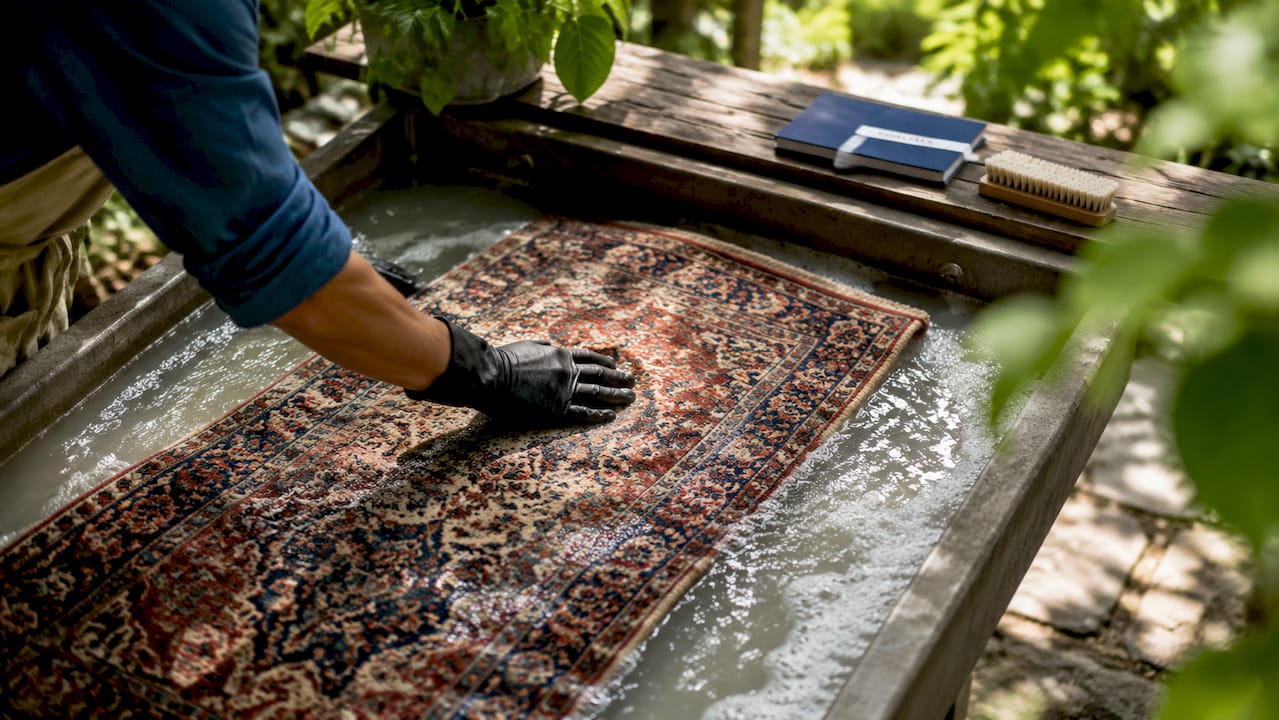
The core of professional care involves pH-balanced, fiber-specific cleaning solutions applied through controlled immersion washing rather than hot water extraction. Immersion washing allows the cleaning solution to penetrate the full depth of the pile without the pressure or heat that causes shrinkage. Dyes remain stable, and the foundation retains its shape.
Key professional techniques include:
- Pre-inspection: Assessing fiber type, dye stability, and foundation condition before any cleaning begins
- pH-balanced solutions: Fiber-appropriate agents that clean without stripping natural oils from wool or damaging silk
- Controlled immersion washing: Full submersion in temperature-regulated water, not high-pressure steam or extraction
- Enzymatic deodorization: Biological treatments that neutralize odor at the source rather than masking it
- Specialized drying: Climate-controlled drying rooms that remove moisture evenly, preventing dry rot and shrinkage
Pro Tip: When selecting a professional cleaner, ask specifically whether they use off-site immersion washing or in-home extraction. Off-site facilities offer the controlled environment that delicate rugs require.
Moisture control during drying is where many well-intentioned cleaning attempts fail. Off-site washing facilities provide regulated temperature, airflow, and humidity levels that simply cannot be replicated in a home setting. Patience in drying is not a luxury. It is a structural necessity.
How often should you schedule professional rug cleaning?
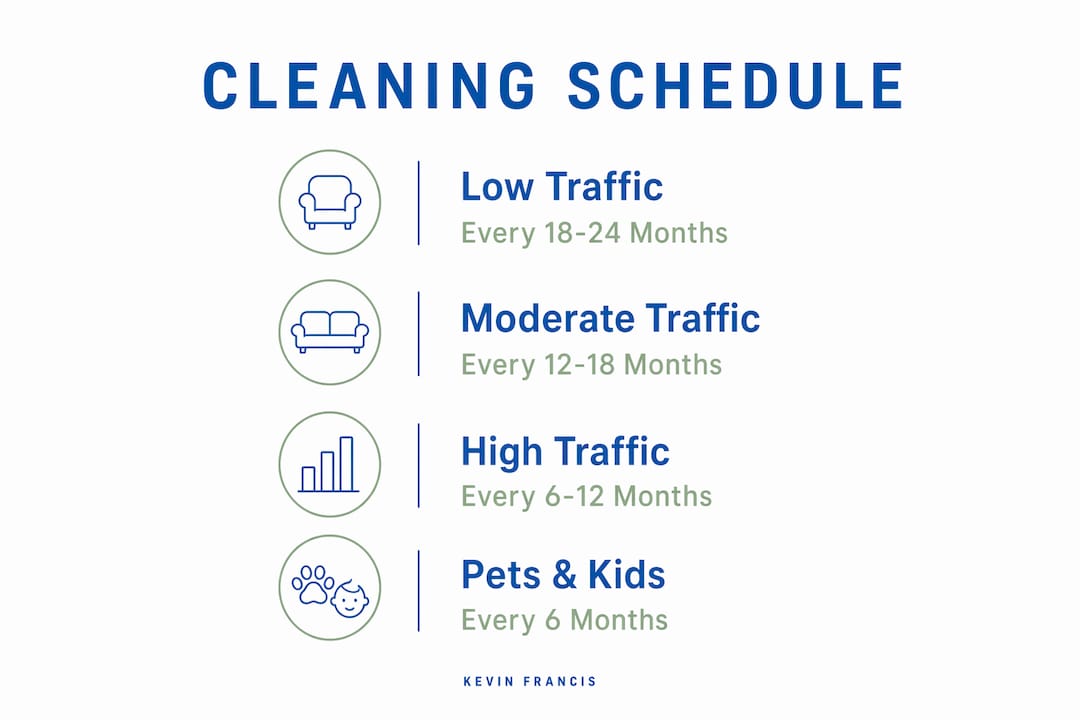
Cleaning frequency is the single most practical decision you make for a luxury rug’s longevity. The standard recommendation of every 12–24 months applies to rugs in low-traffic rooms with no pets or children. Increase that frequency and the rug’s condition improves proportionally.
| Household condition | Recommended cleaning interval |
|---|---|
| Low traffic, no pets or children | Every 18–24 months |
| Moderate traffic, no pets | Every 12–18 months |
| Pets or young children present | Every 6–12 months |
| High-traffic entryways or dining areas | Every 6–12 months |
Delaying professional cleaning does not save money. It accelerates fiber degradation, causes color loss, and can result in permanent structural damage that no amount of future cleaning can reverse. A rug that receives timely care retains its pile density, color vibrancy, and foundation strength for generations.
Between professional cleanings, weekly vacuuming with a suction-only, brushless head removes loose surface debris without agitating delicate fibers. Spot treatment with a clean, damp cloth handles fresh spills before they set. These habits support professional care but do not replace it.
Pro Tip: Schedule your professional cleaning appointment at the same time each year, ideally in spring or fall, so the rug is refreshed before the season when it sees the most use.
Professional cleaning appointments also serve as inspections. A trained specialist will identify early signs of moth damage, foundation weakness, or fraying edges that you might not notice until the damage is severe. Catching these issues early costs far less than repairing them later.
What are the risks of DIY and in-home luxury rug cleaning?
At-home cleaning methods carry real risks for luxury rugs, and those risks increase with the quality and delicacy of the piece. The most common mistake is treating a hand-knotted or hand-tufted rug the way you would treat wall-to-wall carpet.
- Heat damage: Steam cleaners and hot water extraction machines use temperatures that open and destabilize dye molecules, causing color bleeding and fiber damage in natural fibers.
- Chemical damage: Consumer detergents are formulated for synthetic carpets. Applied to wool or silk, they strip natural oils, cause brittleness, and alter pH in ways that accelerate fiber breakdown.
- Pressure damage: High-pressure water forces grit deeper into the pile rather than extracting it, compounding the abrasion problem.
- Moisture retention: Without climate-controlled drying, moisture trapped in the foundation creates mildew, persistent odor, and eventually dry rot that destroys the rug’s structural base.
- Silk fiber loss: Silk rugs require specialized handling because improper suction or agitation causes permanent fiber loss. Even a gentle home vacuum with a rotating brush can cause irreversible damage to silk pile.
In-home steam cleaning is one of the most common causes of Oriental rug damage reported by professional cleaners. The combination of heat, pressure, and inadequate drying creates conditions that can ruin a rug in a single session. The surface may look clean immediately afterward, but the foundation damage reveals itself over the following months as shrinkage, odor, and color loss appear.
The difference between surface cleaning and deep extraction matters enormously. Surface cleaning addresses what you can see. Deep extraction, done correctly by trained professionals, removes what is actually destroying the rug.
How does professional cleaning extend the life of a luxury rug?
Professional cleaning can extend a luxury rug’s lifespan by decades by removing the contaminants that cause fiber degradation and color fading. This is not a minor benefit. A hand-knotted rug that might otherwise show significant wear in fifteen years can remain vibrant and structurally sound for fifty or more with proper care.
The long-term benefits of professional rug care extend well beyond appearance:
- Fiber strength: Removing embedded grit stops the abrasive action that thins pile and weakens knots over time
- Color vibrancy: Deep cleaning restores the clarity of natural dyes and prevents the dull, flat appearance caused by soil buildup
- Structural integrity: Clean foundations resist moth infestation and dry rot, the two leading causes of catastrophic rug damage
- Resale and investment value: A well-maintained luxury rug holds its value far better than one showing neglect
- Health benefits: Allergen removal creates a healthier living environment, particularly for households with allergy or asthma sufferers
The importance of rug cleaning becomes clearest when you consider what a luxury rug represents. A piece woven using Tibetan knotting techniques or hand-tufted by skilled artisans carries both monetary and artistic value. Protecting that value requires the same level of care and expertise that went into creating it. Routine professional cleaning is the most direct way to honor that craftsmanship and protect your investment for the long term. For guidance on caring for handmade rugs, the details of fiber-specific maintenance make a meaningful difference.
Key Takeaways
Professional cleaning is the single most effective practice for preserving the fiber strength, color vibrancy, and structural integrity of a luxury rug over its full lifespan.
| Point | Details |
|---|---|
| Vacuuming is insufficient | Weekly vacuuming removes surface debris but cannot extract embedded grit, allergens, or mold from the pile base. |
| Cleaning frequency matters | Schedule professional cleaning every 12–24 months, or every 6–12 months in homes with pets, children, or high traffic. |
| DIY methods cause real damage | Steam cleaning, consumer detergents, and high-pressure extraction risk color bleeding, shrinkage, and foundation rot. |
| Off-site facilities are safer | Climate-controlled immersion washing and specialized drying prevent dry rot, mildew, and fiber loss. |
| Professional care extends lifespan | Deep cleaning removes the contaminants that degrade fibers, preserving beauty and investment value for decades. |
What I’ve learned about luxury rugs and the cleaning myth
I’ve spent years working with handmade rugs, and the most persistent mistake I see homeowners make is assuming that a rug that looks clean is clean. The damage happening inside a luxury rug is almost always invisible until it’s too late to fully reverse.
Vacuuming is necessary. I vacuum my own rugs weekly. But I think of it the way I think of dusting a painting. It maintains the surface, but it does nothing for what’s happening beneath. The real preservation work happens at the professional level, with people who understand fiber chemistry, dye stability, and the structural demands of hand-knotted construction.
The other mistake I see regularly is homeowners reaching for a steam cleaner after a spill, thinking speed matters more than method. Speed does matter, but the method matters more. A damp cloth and patience will always serve a luxury rug better than heat and pressure. If the spill is serious, call a professional. The cost of a cleaning visit is a fraction of the cost of repairing heat-damaged silk or a shrunken foundation.
My advice for anyone who owns a rug worth caring about: schedule your professional cleaning before you think you need it. The healthy home benefits of clean rugs extend beyond aesthetics. A rug that is genuinely clean contributes to better air quality, a more comfortable home, and a piece that will outlast you if you treat it well.
— Kevin O’Gara
Rugs worth protecting deserve the care they were made for
The artisan rugs in the Kevin Francis Design collection are created to last generations. Each piece, from the hand-knotted wool constructions to the hand-tufted maze designs, carries the kind of craftsmanship that rewards careful maintenance.

Professional cleaning is the most direct way to honor that craftsmanship. A rug that receives proper care retains its color, its structure, and its presence in a room for decades. The Lotto hand-knotted wool rug and the Anatolia hand-tufted maze rug represent exactly the kind of investment that professional care protects. Browse the full Kevin Francis Design collection and find a piece worth caring for.
FAQ
Why do luxury rugs need professional cleaning?
Luxury rugs accumulate embedded grit, allergens, and mold deep in their pile that vacuuming cannot reach. Professional cleaning removes these contaminants using fiber-specific methods that preserve dyes, structure, and longevity.
How often should a luxury rug be professionally cleaned?
Experts recommend professional cleaning every 12–24 months for typical households, and every 6–12 months for homes with pets, children, or high foot traffic.
Can I use a steam cleaner on a luxury rug?
Steam cleaning can cause shrinkage, color bleeding, and foundation rot in Oriental and hand-knotted rugs. Professional off-site immersion washing is the safer alternative for delicate luxury pieces.
What happens if I never professionally clean my luxury rug?
Embedded soil acts like sandpaper inside the fibers, causing premature wear, color fading, and structural breakdown. Neglect can result in permanent damage that no future cleaning can fully reverse.
Are silk rugs more vulnerable to improper cleaning?
Silk rugs are among the most delicate luxury textiles. Improper suction, agitation, or chemical exposure can cause permanent fiber loss, making trained professional cleaning the only safe option for silk pile rugs.


