


A luxury rug is defined as a floor textile distinguished by its fiber origin, construction method, and knot density rather than price alone. This luxury rug buying guide checklist gives you a clear framework for evaluating every factor that separates a genuinely fine rug from an expensive imitation. We cover size, material quality, craftsmanship markers, style longevity, and care routines so you can invest with confidence. Kevin Francis Design has built its entire collection around these same standards, from hand-knotted wool to Tibetan knotting techniques that reward close inspection.
1. Your luxury rug buying guide checklist starts with size
Choosing the wrong size is the single most common mistake homeowners make. A rug that is too small floats in the middle of a room like an afterthought, while the right size anchors the entire space. Larger rugs create cohesion and balance room layout far more effectively than undersized alternatives.
Measure your room before you shop, and leave a border of bare floor around the rug’s perimeter. In a living room, aim for 18 inches of exposed floor on each side. In a dining room, the rug should extend at least 24 inches beyond the table edge so chairs remain on the rug when pulled out.
- Living rooms: Use a rug large enough for at least the front legs of every sofa and chair to rest on it.
- Bedrooms: A rug that extends 24–36 inches beyond the sides and foot of the bed creates a warm landing zone each morning.
- Entryways and hallways: Choose a runner that leaves 4–6 inches of floor visible on each side for a framed, intentional look.
- Open-plan spaces: Use rug size to define zones. Each zone deserves its own correctly scaled rug rather than one oversized piece that blurs boundaries.
Pro Tip: Tape out the rug’s dimensions on your floor with painter’s tape before ordering. Living with the footprint for a day reveals whether the scale feels right in real light and real furniture context.
2. Selecting premium materials and craftsmanship indicators
Material quality is the most reliable predictor of how a luxury rug ages. Wool remains the gold standard for durability and warmth. Hand-spun wool from New Zealand or Afghan highlands commands premium recognition because the fiber’s natural lanolin content resists soil and maintains pile resilience for decades.
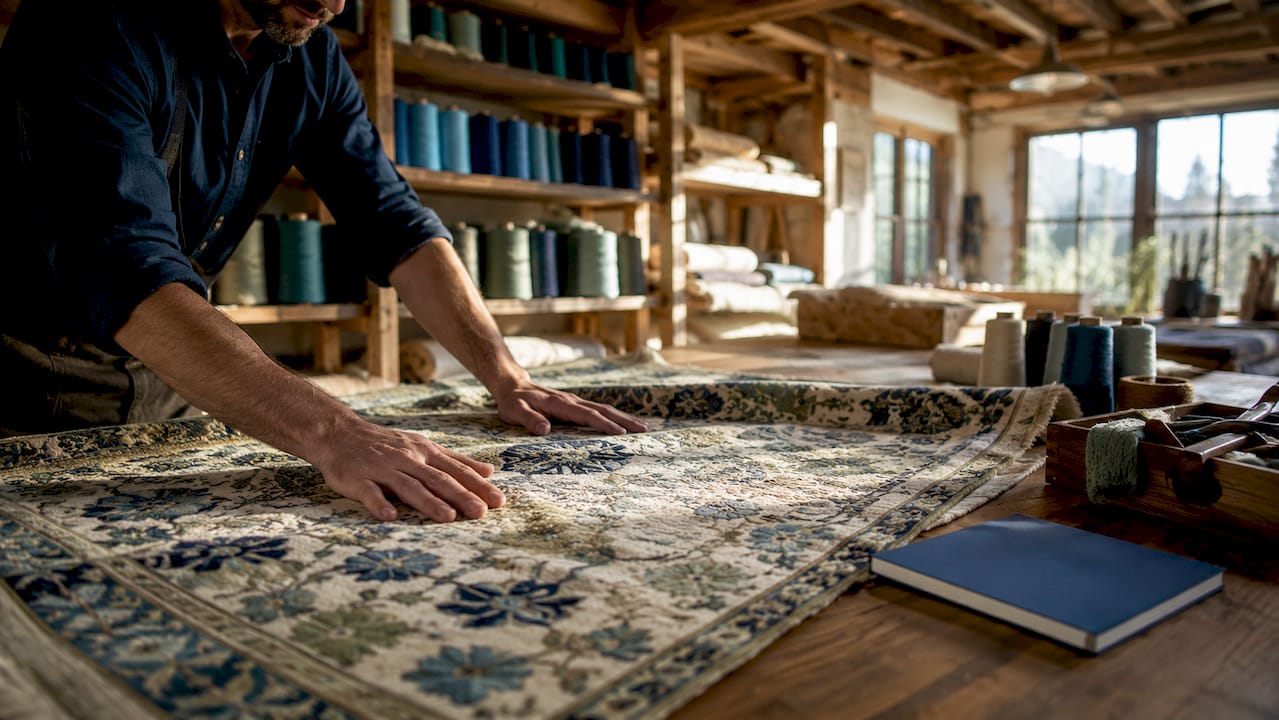
Silk adds luster and allows for finer detail, but it requires more careful placement. Silk rugs belong in low-traffic rooms where their sheen can be admired without the abrasion of daily foot traffic. Wool-silk blends offer a practical middle ground, combining durability with visual richness.
Knot density as a quality marker
Knots per square inch, or KPSI, is the industry standard measure of a rug’s fineness. Luxury rugs typically range from 200 to 800+ KPSI, with top-tier silk pieces exceeding 1,000 KPSI. Higher KPSI means finer pattern detail and a denser, more durable pile. Always ask for the KPSI specification before purchasing, and verify knot density claims against physical examination. Inconsistencies between stated and visible density are a clear warning sign of misrepresentation.
Dye quality and aging
Natural plant-based dyes develop a patina with age rather than fading to a washed-out shadow of their original color. That aging process adds depth and character, much like the way a fine leather develops a glow over years of use. Synthetic dyes, by contrast, tend to fade unevenly and lose vibrancy within a decade.
| Quality Indicator | What to Look For | Red Flag |
|---|---|---|
| Knot density (KPSI) | 200–800+ for wool; 800–1,000+ for silk | Vague or unverifiable claims |
| Fiber origin | Named region (New Zealand wool, Afghan highland) | Generic “natural fiber” labeling |
| Dye type | Natural or vegetable dyes with documented sourcing | Uniform, plastic-bright color |
| Edge finish | Tightly wrapped, even selvedge | Fraying or glued edges |
| Pile evenness | Consistent height across the full surface | Bald patches or uneven shearing |
Pro Tip: Turn the rug over and examine the back. On a genuine hand-knotted piece, individual knots are visible and the pattern reads clearly through the foundation. A blurry or uniform backing indicates machine manufacture.
3. Incorporating style, color, and texture for lasting impact
Timelessness in rug design is the quality that separates a purchase you will love for thirty years from one you regret in five. Interior designers consistently recommend neutral and earthy palettes as the most adaptable foundation for luxury interiors. Ivory, warm taupe, terracotta, and deep indigo all age gracefully alongside changing furniture and paint choices.
Texture deserves as much attention as color. A flat-woven kilim reads cool and graphic, while a high-pile wool rug adds warmth and softness underfoot. Tibetan knotting, as practiced in Kevin Francis Design’s collections, produces a sculptural pile that catches light differently throughout the day, giving a room a painterly, living quality.
- Test samples in your actual room. Lighting dramatically affects rug color perception, and a rug that looks warm in a showroom can read cold under your home’s specific natural and artificial light. Request physical samples and live with them for at least 48 hours before deciding.
- Consider vintage rugs. Vintage pieces showcase natural wear patterns that soften a room’s look and carry the added assurance of proven durability. A rug that has survived fifty years has already demonstrated its structural integrity.
- Match pile height to room function. Low pile suits dining rooms and high-traffic corridors. High pile belongs in bedrooms and sitting rooms where comfort underfoot is the priority.
- Coordinate with lighting intentionally. Warm incandescent or Edison-style bulbs deepen amber and red tones in a rug. Cool daylight bulbs flatten warm hues. Understanding how your lighting affects rug appearance prevents expensive surprises after delivery.
For homeowners drawn to statement pieces, the luxury interior rug styles of 2026 show a clear preference for geometric abstraction and nature-inspired motifs over purely decorative florals. These patterns hold visual interest without competing with furniture or art.
4. Maintenance, rug pads, and protecting your investment
A quality rug pad is not optional for a luxury rug. Rug pads protect the foundation from structural compression and uneven wear, and they prevent slippage that can damage both the rug and the floor beneath. Choose a pad made from natural rubber or felt, sized to sit one inch inside the rug’s perimeter on all sides.
Routine care preserves the pile and the dyes. Vacuum weekly using a suction-only setting without a beater bar, which can pull and break hand-knotted fibers. Rotate the rug 180 degrees every six months to distribute foot traffic and light exposure evenly.
- Spills: Blot immediately with a clean white cloth. Never rub. Work from the outer edge of the spill inward to prevent spreading.
- Professional cleaning: Schedule a professional wash every two to three years for hand-knotted wool rugs. Silk pieces may need more frequent attention in high-use rooms.
- Storage: Roll the rug pile-side inward around an acid-free tube. Wrap in breathable cotton muslin, never plastic, which traps moisture and encourages mold.
- Professional appraisal: For rugs valued above a meaningful threshold, a certified appraisal protects your investment for insurance purposes and documents provenance.
Professional installation and premium underlay together maximize a luxury rug’s lifespan and maintain its structural integrity over decades. This is especially true for large format pieces where improper installation causes buckling and accelerated wear at the edges.
Pro Tip: Ask your rug specialist about the specific cleaning method recommended for your fiber type before the rug is delivered. Wool, silk, and plant-fiber rugs each require different treatments, and using the wrong method can cause irreversible damage.
For rugs placed in busy corridors or family rooms, the guidance on rugs for high-traffic areas offers practical advice on pile selection and fiber durability that extends the checklist into real-world use.
Key takeaways
A luxury rug purchase succeeds when size, material quality, craftsmanship verification, style longevity, and proper maintenance are each addressed before and after the sale.
| Point | Details |
|---|---|
| Size first, always | Measure your space and use painter’s tape to confirm scale before ordering. |
| KPSI is your quality benchmark | Request knot density specifications and verify them against physical examination. |
| Natural dyes age beautifully | Plant-based dyes develop patina; synthetic dyes fade unevenly within a decade. |
| Test samples in your room | Lighting shifts color perception significantly; live with samples for 48 hours minimum. |
| A rug pad is non-negotiable | Natural rubber or felt pads prevent compression, slippage, and structural wear. |
What I have learned from years of choosing rugs for refined interiors
The most consistent mistake I see is buying a rug that is too small. Homeowners worry about a large rug overwhelming a room, but the opposite is almost always true. A generously scaled rug makes a room feel grounded and complete. A small rug makes even beautiful furniture look adrift.
The second pattern I notice is buyers prioritizing visual trend over material truth. A rug can photograph beautifully and still be a poor investment if the fiber is low-grade or the dyes are synthetic. I always encourage people to identify quality markers in person before committing. Turn the rug over. Count the knots. Ask where the wool was sourced.
Color choice is where I see the most regret. A bold, trend-driven palette can feel thrilling in the showroom and exhausting at home within two years. Neutral and earthy tones, by contrast, seem to deepen in richness as a room evolves around them. I have watched the same warm ivory rug look equally at home in a mid-century interior and a more classical setting simply because the color had enough warmth and restraint to adapt.
The checklist approach is not about removing joy from the process. It is about protecting the joy you feel on the day you buy, so it is still there ten years later.
— Kevin O’Gara
Kevin Francis Design rugs built to meet every checklist standard
The collections at Kevin Francis Design are conceived with every checklist criterion in mind, from fiber sourcing to final pile height.
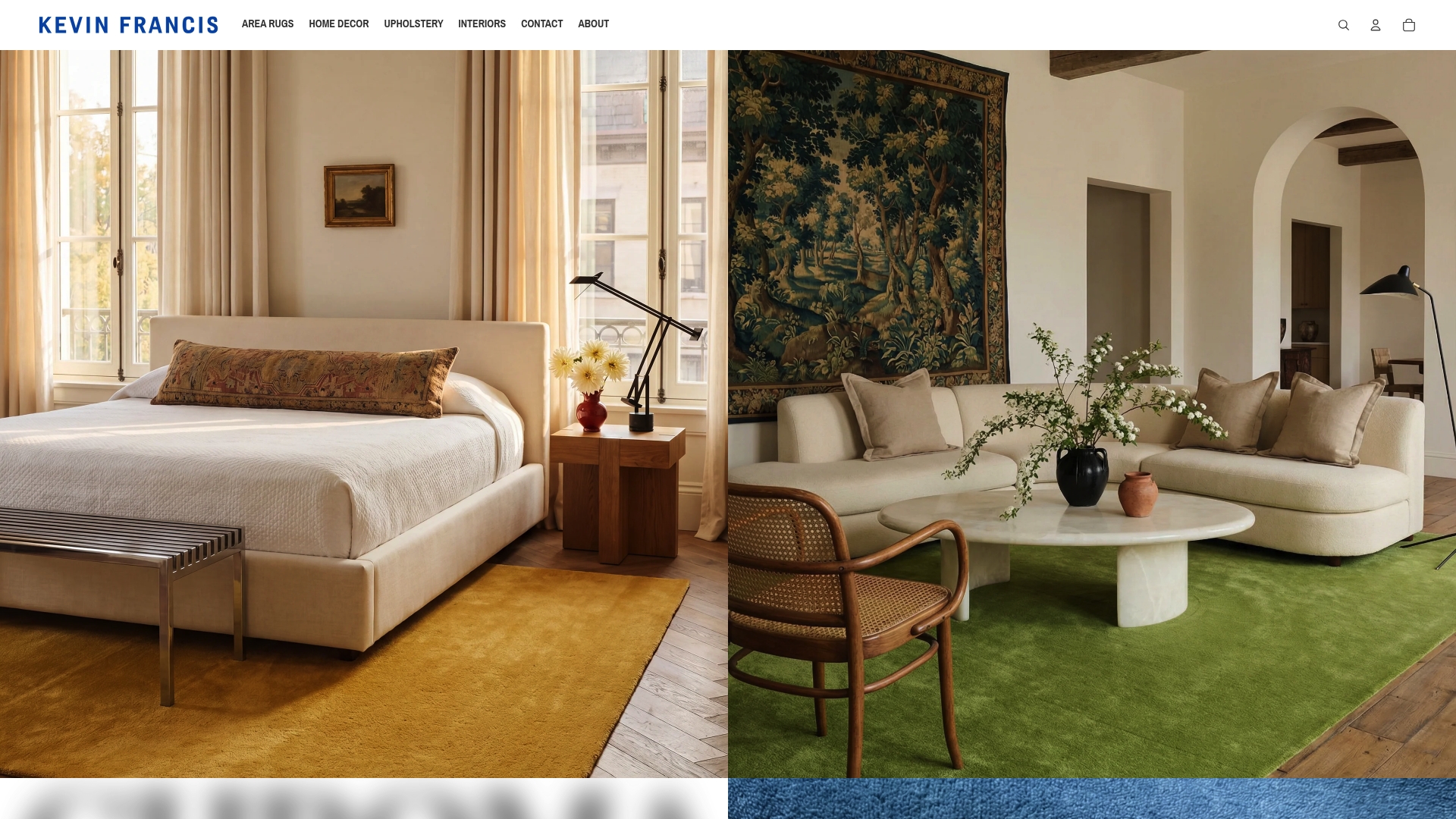
Each piece is handmade using hand-knotting, hand-tufting, or Tibetan knotting techniques, with natural fibers and dyes that reward long ownership. The Lotto Hand-Knotted Wool Rug exemplifies the standard: premium wool, verifiable knot density, and a geometric pattern designed to remain visually compelling across decades of interior change. For homeowners drawn to bold pattern with artisan construction, the Anatolia Hand-Tufted Maze Rug offers striking design at a considered scale. Custom sizing and design consultations are available for those whose spaces call for something made entirely to measure. Explore the full collection at Kevin Francis Design to find the piece that meets your checklist and your vision.
FAQ
What is KPSI and why does it matter for luxury rugs?
KPSI stands for knots per square inch and measures how finely a rug is woven. Luxury rugs typically range from 200 to 800+ KPSI, with higher counts indicating finer detail and greater durability.
How do I know if a rug is genuinely hand-knotted?
Turn the rug over and look at the back. A genuine hand-knotted rug shows individual knots and a clear pattern through the foundation. A blurry or uniform backing indicates machine production.
What size rug should I choose for a living room?
Choose a rug large enough for at least the front legs of all major seating to rest on it. When in doubt, size up rather than down to anchor the space effectively.
How often should I clean a luxury wool rug?
Vacuum weekly with a suction-only setting and schedule a professional wash every two to three years. Silk rugs may need more frequent professional care depending on foot traffic.
Do natural dyes really make a difference in rug quality?
Natural plant-based dyes develop a rich patina as they age rather than fading unevenly. That aging process adds character and value, making naturally dyed rugs a stronger long-term investment than synthetic alternatives.


