


A bespoke rug is defined as a one-of-a-kind textile created entirely around the owner’s personal vision, making it one of the most direct expressions of individual identity available in interior design. Unlike any mass-produced floor covering, a truly bespoke piece encodes your color sensibility, cultural references, and aesthetic values into every hand-tied knot. Understanding how bespoke rugs reflect owner identity means recognizing that the rug underfoot is not decoration. It is autobiography. The commissioning process, the motifs chosen, the fibers selected, and even the wear the rug accumulates over years all contribute to a portrait of the person who lives with it.
How the commissioning process shapes your rug as an identity statement
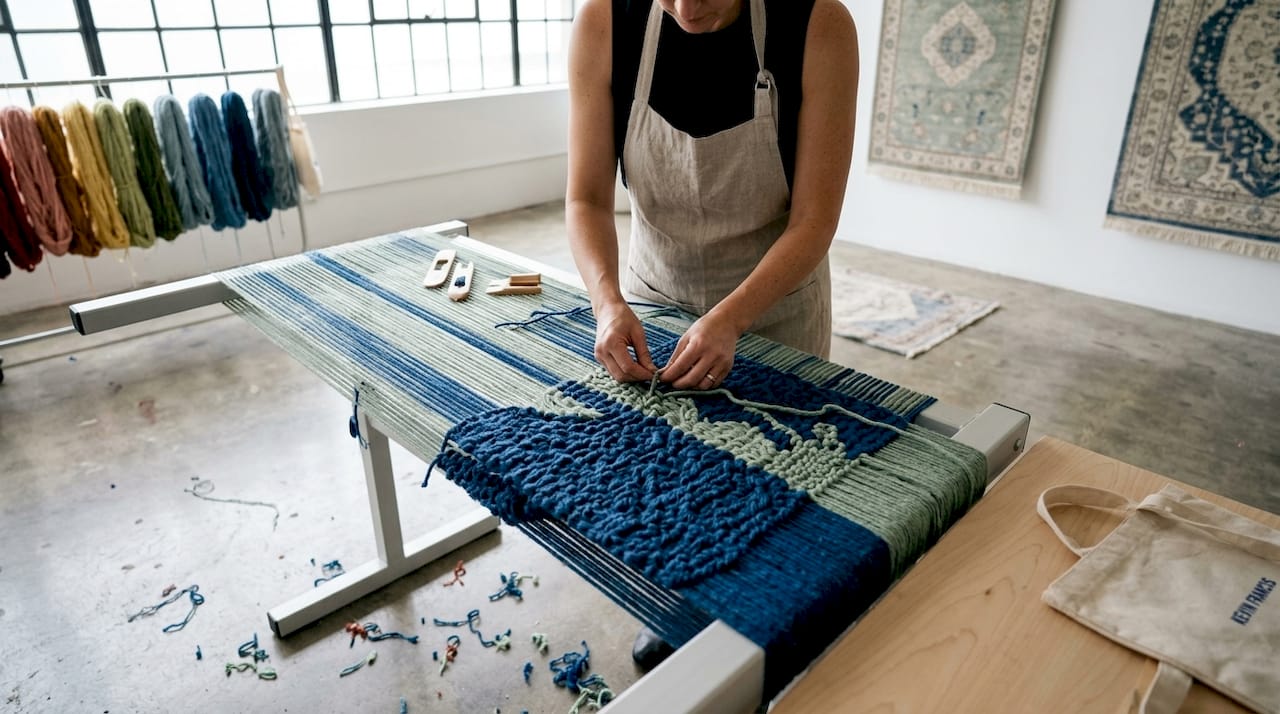
The standard industry term for this category is bespoke, drawn from the tailoring world, where a garment is “bespoken” entirely for one client. In rug-making, the commissioning process is where identity expression begins in earnest, long before the first knot is tied.
The process typically unfolds in four stages:
- Concept submission. You provide mood boards, color references, architectural drawings, or personal imagery that captures the feeling you want the rug to carry. This is the most revealing stage. What you reach for instinctively tells a skilled designer a great deal about your aesthetic identity.
- Design development. The artisan or studio translates your references into a scaled drawing or digital rendering. At Kevin Francis Design, this stage draws on Kevin Francis O’Gara’s creative vision to marry client intent with genuine artistic sensibility.
- Sample approvals. Two approved samples are standard practice in bespoke hand-knotted rug commissioning, adding two to four weeks to the timeline. This step exists because the number-one cause of disappointment is a finished rug that differs from the client’s mental image.
- Production and delivery. A bespoke hand-knotted rug typically takes 16 to 24 weeks from approved design to delivery, with timelines varying by size and complexity.
Knot density is a technical choice that carries real identity weight. Higher knot density, above 300 knots per square inch, produces finer detail and richer visual depth, but extends production to 20 to 30 weeks. Choosing a high-density weave signals a commitment to precision and permanence. Choosing a lower density for a more impressionistic, painterly surface is equally valid and equally revealing. The fiber selection, whether hand-spun Himalayan wool, lustrous silk, or plant-based alternatives, adds another layer of tactile identity that no photograph can fully convey. For a closer look at how fiber choices shape the final character of a rug, the guide to luxury rug fibers at Kevin Francis Design is worth reading before you commission.
Pro Tip: Bring at least three physical fabric or paint swatches from your room to the concept submission stage. Digital color references shift dramatically between screens and woven wool, and physical swatches give your artisan the most accurate starting point.
What cultural symbols and colors reveal about the owner
Traditional rug motifs are not decorative accidents. They are a coded language, and choosing to incorporate them into a personalized rug design is a deliberate act of cultural self-identification.
Research into hand-woven rugs from the Kayseri region of Turkey found that motifs like elibelinde, pıtrak, and ram’s horn carry distinct cultural meanings, connecting the rug to weaver communities and collective heritage that stretches back centuries. When a contemporary owner commissions a rug incorporating a tree of life motif, they are not simply choosing a pleasing pattern. They are aligning themselves with a symbol of growth, connection, and continuity that resonates across Persian, Anatolian, and Central Asian traditions.
“Traditional rug motifs act as cultural storybooks, connecting owners not only to personal identity but also to collective heritage and memory.” — Rug Symbolism: What Traditional Rug Patterns Really Mean
Color operates with equal power. Research into color and personality expression through rugs shows that specific hues communicate distinct owner traits:
- Red and deep crimson signal confidence, focus, and a taste for drama. A red-ground rug in a study or library reads as a statement of intellectual authority.
- Rust and terracotta suggest warmth, casual living, and an affinity for the organic. These tones connect the interior to the natural world.
- Black and charcoal indicate a preference for structure, clarity, and visual discipline. They anchor a room with quiet authority.
- Soft ivory and warm white reflect an ease with openness and a refined, unhurried sensibility.
The borders and repetitive geometric elements of a rug also carry meaning. Borders traditionally served as protective frames, and their complexity often reflected the status and ambition of the patron who commissioned the work. Choosing a bold, multi-layered border today is a quiet nod to that history. Choosing no border at all, as many modernist-inspired designs do, is equally expressive, signaling a preference for the open and the contemporary.
Wear, too, becomes part of the rug’s symbolic vocabulary over time. Faded areas show where people sat or gathered, embedding memory physically into the textile. A rug that has lived in a family for a generation carries a visible record of that life, making it a biography as much as a floor covering.
Bespoke vs. custom rugs: which one truly expresses your identity?
The terms bespoke and custom are often used interchangeably, but they describe meaningfully different products and meaningfully different relationships to personal identity.
| Feature | Bespoke rug | Custom rug |
|---|---|---|
| Design origin | Created entirely from your concept | Modified from an existing template |
| Artisan involvement | Deep collaboration throughout | Limited to production adjustments |
| Uniqueness | Genuinely one-of-a-kind | One of many variations |
| Identity depth | Full personal and cultural expression | Surface-level personalization |
| Timeline | 16 to 30 weeks | Typically shorter |
| Investment | Higher, reflecting exclusivity | Lower, reflecting shared design costs |
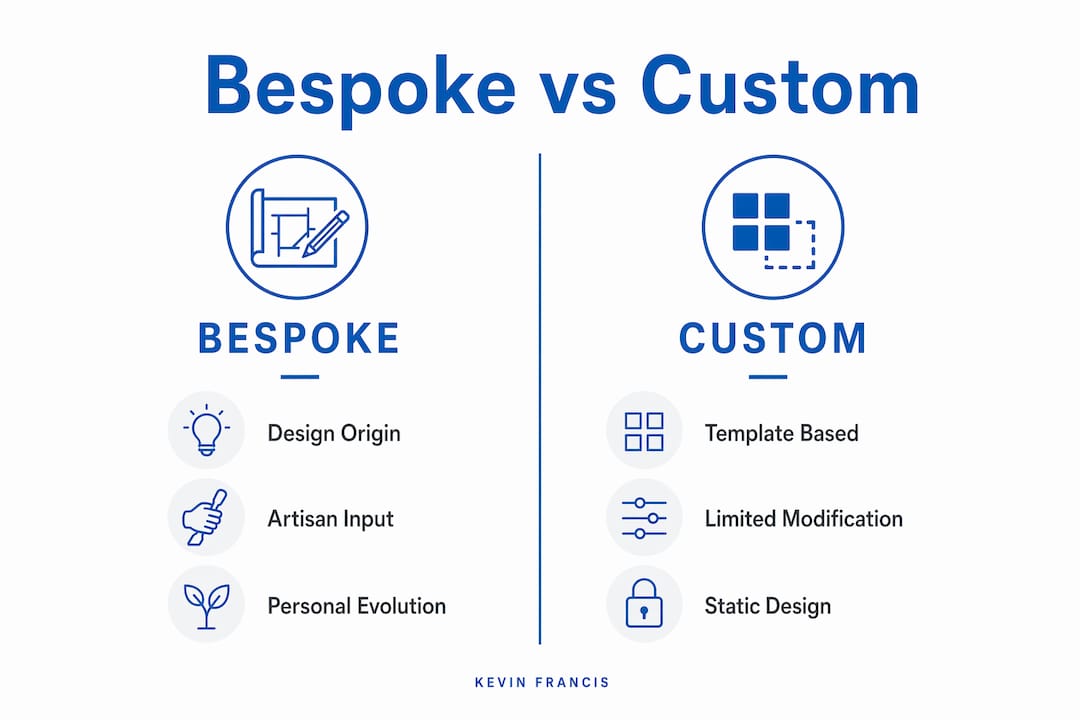
Bespoke rugs feature exclusive artistic input, while custom rugs modify existing templates. This distinction matters enormously for identity expression. A custom rug can match your color palette and approximate your preferred scale. A bespoke rug can incorporate the specific animal motif you sketched on a napkin, the exact shade of blue you photographed on a Moroccan tile, or the geometric abstraction you have carried in your imagination for years.
Bespoke rugs also evolve with their owners in a way that custom pieces rarely do. Because the design is singular, wear patterns develop as part of an evolving owner biography, adding narrative depth rather than simply showing age. A custom rug that fades looks worn. A bespoke rug that fades looks lived in, which is a very different thing.
Pro Tip: If you are drawn to a particular cultural tradition, such as Tibetan knotting or Persian pile weaving, ask your studio about regional knot techniques from master weavers in Iran, Turkey, or Pakistan. The regional origin of the craft adds an additional layer of authenticity and cultural identity to the finished piece.
How to place and live with your bespoke rug to tell your story
A bespoke rug placed thoughtlessly in a room is like a painting hung in a corridor where no one pauses. Strategic placement amplifies the personal narrative the rug carries.
- Anchor the primary gathering space. Place your rug in the room where you spend the most time and receive guests. The living room or dining room is where the rug’s story becomes a shared experience, inviting conversation about its origins and meaning.
- Choose high-traffic paths deliberately. Placing a bespoke rug where it will be walked across daily is not careless. It is intentional. The wear that accumulates in those paths becomes part of the rug’s biography, recording the rhythms of your household.
- Coordinate with other personalized elements. A bespoke rug reads most powerfully when it is part of a considered interior rather than an isolated statement. Pairing it with artisan-made accessories and original artwork creates a room that feels genuinely authored rather than assembled.
- Rotate periodically in the early years. Rotating a rug 180 degrees every 12 to 18 months distributes wear evenly and preserves the design’s integrity while still allowing the rug to develop its lived character naturally.
- Let the rug lead the color conversation. Because a bespoke rug is designed around your specific palette, it is the most reliable anchor for surrounding color decisions. Pull wall colors, upholstery, and textiles from the rug rather than trying to find a rug that matches an already-fixed room.
The significance of personalized rugs in a home extends beyond aesthetics. Bespoke pieces invite the people who enter your home to understand something true about you, your history, your taste, and your values, without a word being spoken. That is a rare quality in any object.
Key takeaways
A bespoke rug is the most complete expression of owner identity available in interior design, combining personal design choices, cultural symbolism, artisan craftsmanship, and the evolving story of use into a single object.
| Point | Details |
|---|---|
| Commissioning encodes identity | Concept submissions and sample approvals translate personal vision into a unique, hand-crafted object. |
| Color and motif carry meaning | Specific hues and traditional symbols communicate personality traits and cultural heritage to every observer. |
| Bespoke differs from custom | Bespoke rugs are created entirely from your concept; custom rugs modify existing designs, limiting identity depth. |
| Wear builds biography | Strategic placement in high-traffic areas allows the rug to accumulate a visible record of your life over time. |
| Placement amplifies the story | Anchoring gathering spaces with a bespoke rug transforms it from decoration into a shared personal narrative. |
Why I believe a bespoke rug is the most honest thing in a room
I have worked with clients who arrive knowing exactly what they want and clients who arrive with nothing more than a feeling. Both groups, without exception, produce rugs that are unmistakably theirs. That is what the bespoke process does. It draws out something the client already carries and gives it a physical form that will outlast the furniture, the paint color, and possibly the house itself.
What I find most moving is the moment a client sees the finished piece for the first time. There is always a pause. Not because it is beautiful, though it usually is, but because it is recognizable. They see themselves in it. That recognition is not something you can achieve with a rug selected from a catalog, however fine that rug may be.
I also want to say something that most design writing avoids: do not be afraid of wear. The clients who protect their bespoke rugs under glass, metaphorically speaking, miss the point entirely. A rug that has been lived on, that carries the soft impressions of a decade of gatherings, is more expressive and more valuable as an identity object than one kept pristine. Embrace the evolving biography your rug will write for you. It is the most honest record of a life well lived that your home will ever contain.
— Kevin O’Gara
Bring your identity to life with Kevin Francis Design
At Kevin Francis Design, every bespoke rug begins with a conversation about who you are and how you live. Our handmade luxury rugs, crafted through handweaving, hand-tufting, and Tibetan knotting, are designed to carry your personal vision with the depth and permanence it deserves. Whether you arrive with a fully realized concept or a single image that moves you, we work with you through every stage of the commissioning process to produce a piece that is genuinely, irreducibly yours. Explore our bespoke rug collections and begin the conversation that ends with a rug that tells your story.
FAQ
What makes a rug truly bespoke rather than just custom?
A bespoke rug is created entirely from the owner’s original concept through artisan collaboration, producing a genuinely one-of-a-kind piece. A custom rug modifies an existing design template, which limits the depth of personal identity expression.
How long does it take to commission a bespoke hand-knotted rug?
A bespoke hand-knotted rug typically takes 16 to 24 weeks, with high-density weaves extending to 30 weeks. Sample approvals add two to four weeks but are the most reliable way to protect your vision.
What do rug colors say about the owner’s personality?
Color choices in rugs signal distinct personality traits: red conveys confidence and focus, rust suggests warmth and casual living, and black indicates a preference for structure and clarity.
Should I worry about my bespoke rug wearing over time?
Wear on a bespoke rug is not damage. It is biography. Faded areas record where people gathered and lived, adding narrative depth and emotional value that a pristine rug cannot carry.
Can traditional motifs be incorporated into a modern bespoke rug design?
Traditional motifs like the tree of life, ram’s horn, and geometric borders can be reinterpreted within contemporary designs, connecting the owner to centuries of cultural heritage while remaining visually current.
Recommended
- Tibetan Knot Rug Interior Applications: Designer Guide – Kevin Francis Design
- Building an Artisan Rug Collection for Your Home – Kevin Francis Design
- Types of Exclusive Designer Rug Collections Explained – Kevin Francis Design
- Types of Luxury Area Rug Fibers: A Decorator’s Guide – Kevin Francis Design


