


Specifying bespoke rugs for hotel public spaces is defined as the process of selecting custom-woven floor textiles that meet commercial durability standards, fire safety regulations, and brand-specific design requirements for high-traffic hospitality environments. The industry term for this practice is contract rug specification, and it differs from residential rug selection in almost every measurable way. Wool fiber, Tibetan knotting technique, knot density, fire retardancy ratings, and precise lead time management are the five pillars every hospitality designer and hotel manager must master before a single thread is ordered. Get these right, and a bespoke rug becomes the defining element of a lobby or lounge. Get them wrong, and you face compliance failures, premature wear, and costly replacements.
What materials and weave types best suit bespoke hotel rugs?
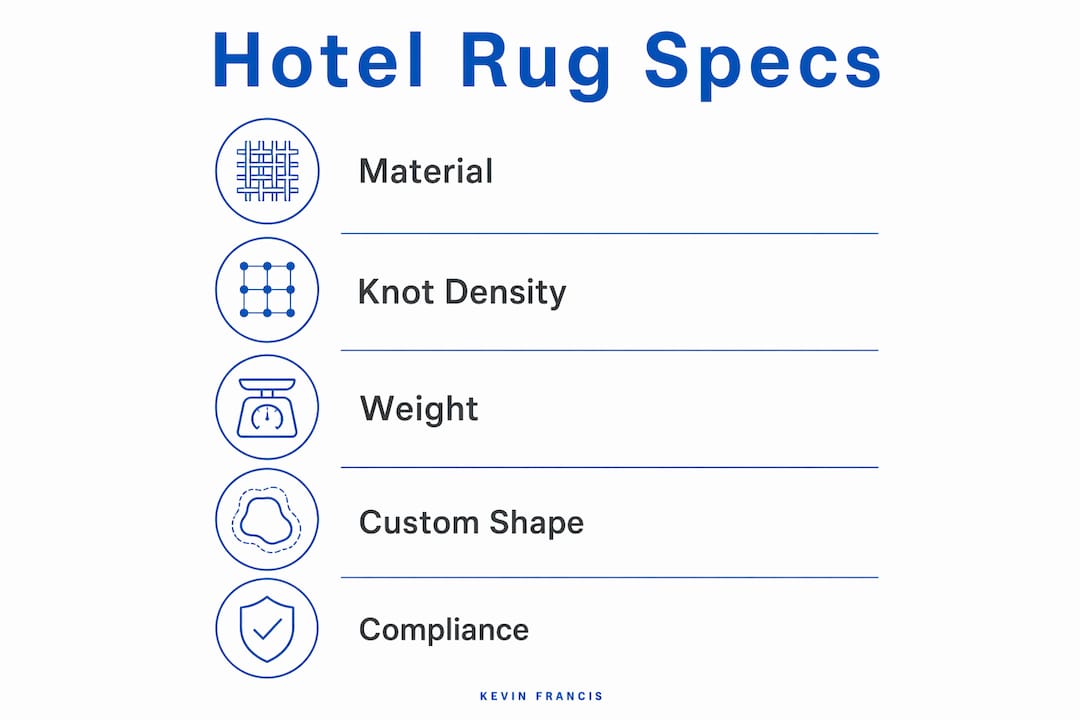
Wool is the definitive material choice for contract rug specification in luxury hotel public spaces. Hand-knotted wool rugs handle ten times the foot traffic of residential rugs and resist fire by charring rather than melting, a property that directly supports compliance with commercial safety standards. No synthetic fiber replicates this combination of resilience, natural flame resistance, and long-term appearance retention.
Knot density and weave construction
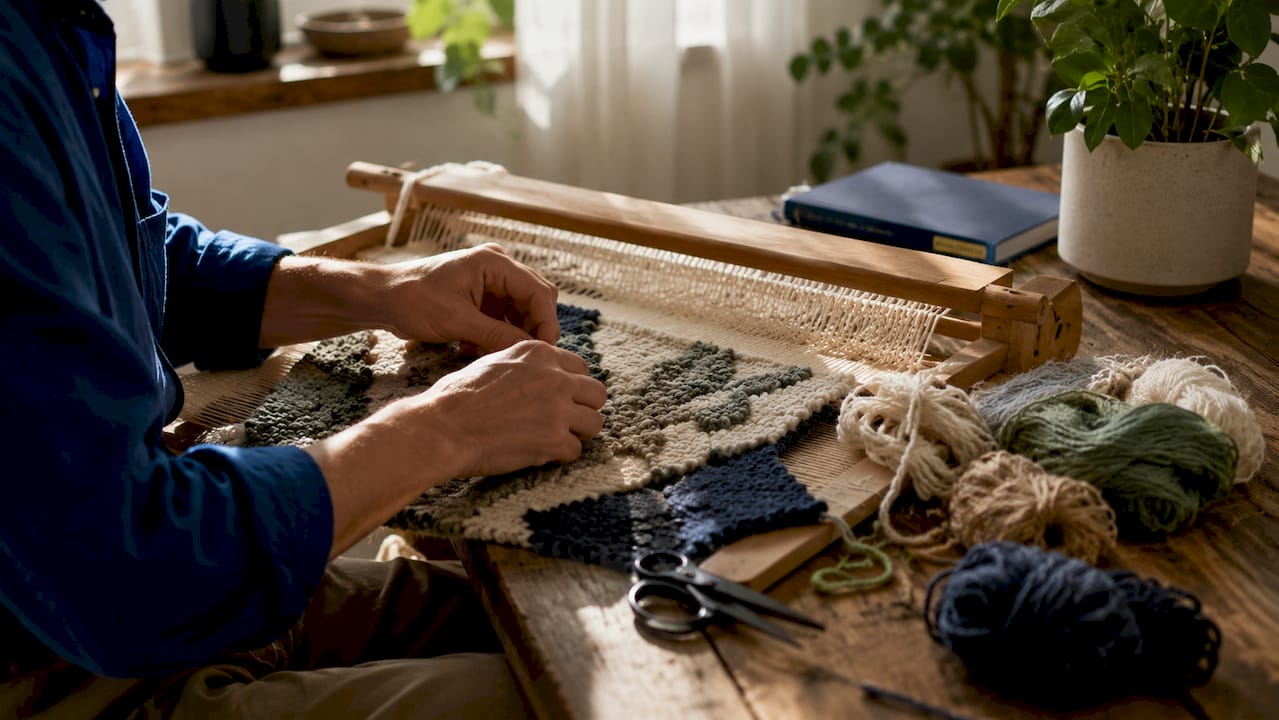
Knot density of 80–100 knots per square inch is the recommended specification for high-traffic hotel lobbies using a Tibetan weave. A 100-knot density delivers excellent crush resistance, and a cut pile height of 6–8mm prevents trip hazards in busy circulation zones. That specification is not arbitrary. It reflects the mechanical reality of rolling luggage, stiletto heels, and thousands of footsteps per day compressing the pile.
Hand-knotted construction outperforms hand-tufted construction in longevity for the most demanding public areas. A hand-knotted vs. hand-tufted comparison shows that hand-knotted rugs, where each knot is individually tied to the warp, can last decades under commercial use. Hand-tufted rugs, which use a tufting gun and latex backing, are better suited to lower-traffic hospitality areas such as private dining rooms or executive lounges where replacement cycles are more acceptable.
Silk blends: sheen with caution
Silk adds a luminous, painterly quality to a rug’s surface, catching light in ways that pure wool cannot. The specification rule is firm: silk content below 30% of total fiber composition preserves necessary wear resistance in public areas. Higher silk percentages reduce durability sharply. Reserve silk-rich compositions for decorative accent rugs in low-traffic areas, such as a display alcove or a private suite corridor, where visual impact matters more than abrasion resistance. For a deeper understanding of how fiber choices affect performance, the luxury area rug fibers guide from Kevin Francis Design offers a thorough breakdown.
Weight and backing specifications
Hotel lobby rugs should weigh 3.5–4.5kg per square meter to prevent buckling caused by luggage trolleys and concentrated foot traffic. That weight keeps the rug planted on the floor without relying solely on adhesive or padding. Commercial-grade cotton or linen warp backing, combined with a non-slip underlay, completes the specification for a rug that stays stable under daily operational pressure.
Pro Tip: Request a sample swatch at full pile height and specified weight before approving a production order. A swatch reveals how the color reads under your lobby’s specific lighting and confirms the pile density feels appropriate for the space.
How to determine the optimal size, shape, and layout for hotel public space rugs?
Rug sizing in hotel public spaces follows one governing principle: the rug must anchor the furniture arrangement and define the zone without blocking circulation paths. A rug that is too small floats beneath furniture and reads as an afterthought. A rug that extends into walkways creates a trip hazard and disrupts the natural flow of guests moving through the space.
Practical sizing and layout guidance for the most common hotel public areas:
- Lobbies: The rug should sit beneath the full seating arrangement, with at least 18 inches of rug extending beyond the front legs of all sofas and chairs. This creates a visual room within a room, a jewel-box effect that signals arrival and comfort simultaneously.
- Corridors: Runner widths of 27–36 inches suit most hotel corridor widths. The runner should stop 6–12 inches from each wall to reveal the floor material beneath and avoid a wall-to-wall carpet appearance.
- Lounge and bar areas: Define individual seating clusters with separate rugs rather than one large field. This approach improves acoustics and gives each cluster a sense of intimacy within the larger room.
- Pre-function spaces: Rectangular rugs work best here, oriented to guide guests toward the main event space. Avoid round rugs in directional spaces; they interrupt the visual flow rather than supporting it.
Custom cuts and architectural integration
Many luxury hotel lobbies feature curved walls, columns, or built-in millwork that standard rectangular rugs cannot accommodate. Custom-cut rugs, where the pile is shaped and edge-finished to follow the floor plan exactly, are the correct solution. The edge finishing method matters as much as the cut itself. Serged edges in a matching wool yarn are the most durable finish for commercial use. Bound edges in leather or cotton tape are appropriate for lower-traffic areas where the aesthetic payoff justifies the reduced durability.
Pro Tip: Commission a paper template of the floor area before finalizing dimensions. Lay the template in the space during a busy period to observe how guests naturally move around it. You will often find that your initial size estimate needs adjustment.
Layering for acoustics and floor protection
Dual-layer rug systems use a heavy anchor rug beneath a decorative top rug to protect floors, prevent movement, and improve room acoustics. In hotel lobbies with hard stone or terrazzo floors, this approach reduces echo and impact noise meaningfully. Heavy-duty natural fiber anchor rugs provide the stability base, while the bespoke decorative rug above carries the design statement. The system also makes it practical to refresh the decorative layer without disturbing the anchor.
What fire safety and commercial compliance standards must bespoke hotel rugs meet?
Fire safety compliance to BS 4790 or NFPA 253 is mandatory for hotel operators and is typically required for certification before a property opens or undergoes a licensed renovation. These standards measure how quickly a floor covering ignites and spreads flame under controlled test conditions. Failing to meet them is not a design inconvenience. It is a legal liability that can delay a hotel opening or trigger an operational shutdown.
Wool’s charring property is its most commercially valuable safety characteristic. When exposed to flame, wool chars and self-extinguishes rather than melting or dripping burning material. This behavior is precisely what BS 4790 and NFPA 253 reward, making wool the material of choice for designers who need both beauty and compliance in the same specification.
Key compliance practices for hospitality designers and hotel managers:
- Request test certificates at the specification stage, not after production. Reputable artisan studios provide fiber composition certificates and fire test results for the specific construction you are ordering.
- Specify the standard by name in your purchase order. Stating “fire retardant” without citing BS 4790 or NFPA 253 leaves the compliance interpretation open to the supplier.
- Retain all documentation in the project file. Hotel inspectors and insurers require physical evidence of compliance, not verbal assurances.
- Retest after any significant cleaning treatment. Some chemical cleaning processes strip fire-retardant treatments from synthetic fibers. Wool does not require topical treatment, which is another reason it remains the preferred fiber for contract specification.
Non-compliance carries consequences beyond regulatory fines. A rug that fails a fire inspection must be removed immediately, leaving a public space bare during a period that may coincide with peak occupancy. The reputational and operational cost of that scenario far exceeds the cost of specifying correctly from the start.
How to manage procurement timelines and installation logistics for bespoke hotel rugs?
Bespoke hand-knotted rugs are not subject to mechanical acceleration. Every knot is tied by hand, and the pace of production is governed by the number of artisans at the loom and the physical dimensions of the piece. Large rugs measuring 6x9 meters require 4–6 artisans weaving simultaneously, and the weaving period alone runs 10–16 weeks. Total project timelines, from design approval to installation, run 18–22 weeks. That figure is not a guideline. It is the physical reality of the craft.
A practical procurement sequence for hospitality projects:
- Lock the design and dimensions before placing the order. Any revision after production begins resets the timeline. Treat the design approval as a contractual milestone, not a soft checkpoint.
- Build the rug delivery into the critical path of the renovation schedule. The rug should arrive at least two weeks before the planned installation date to allow for inspection, acclimatization, and any edge finishing adjustments.
- Coordinate with the flooring contractor. The subfloor must be clean, level, and dry before installation. A bespoke rug laid over an uneven or damp subfloor will buckle regardless of its weight specification.
- Plan installation during low-occupancy periods. Large rugs require multiple handlers and temporary closure of the installation zone. Scheduling this during a soft-opening phase or a planned maintenance closure avoids disruption to guests.
- Inspect the rug under the space’s actual lighting before the area reopens. Colors read differently under lobby lighting than under the daylight or studio lighting used during design approval. Catching a color discrepancy before guests arrive is far preferable to discovering it afterward.
Pro Tip: Add a four-week buffer to the studio’s quoted lead time when scheduling against a fixed opening date. Customs clearance, freight delays, and final edge finishing adjustments are common sources of unexpected delay in international rug commissions.
Ongoing care after installation extends the life of a bespoke hotel rug significantly. Rotating the rug 180 degrees every six months distributes wear evenly across the pile. Professional cleaning every 12–18 months, using methods appropriate for hand-knotted wool, preserves both the fiber and the color. The care guide for handmade luxury rugs from Kevin Francis Design outlines the specific cleaning approaches that protect the investment over time.
Key Takeaways
Specifying bespoke rugs for hotel public spaces requires wool construction, a knot density of 80–100 knots per square inch, fire compliance to BS 4790 or NFPA 253, and a procurement timeline of 18–22 weeks built into the project schedule.
| Point | Details |
|---|---|
| Wool is the contract standard | Hand-knotted wool handles ten times residential foot traffic and self-extinguishes under flame. |
| Knot density determines durability | Specify 80–100 knots per square inch with a 6–8mm pile height for high-traffic lobbies. |
| Silk content must stay below 30% | Higher silk percentages reduce wear resistance; reserve silk-rich blends for low-traffic accent areas. |
| Fire compliance is non-negotiable | Cite BS 4790 or NFPA 253 by name in the purchase order and retain all test certificates on file. |
| Build 18–22 weeks into the schedule | Bespoke hand-knotted production cannot be accelerated; add a four-week buffer for freight and finishing. |
What I’ve learned from specifying rugs in demanding hotel environments
The most common mistake I see in hospitality rug specification is treating the rug as a finishing touch rather than a structural decision. Designers finalize the architecture, the furniture, the lighting, and then order the rug with whatever time remains. That sequence almost always produces a compromised result, either in the design, the compliance documentation, or the timeline.
The projects that go well share one characteristic: the rug specification begins at the same time as the furniture layout. When you know the rug’s dimensions, weight, and fiber composition from the start, every other decision in the room becomes easier. The furniture scale, the acoustic treatment, the lighting color temperature. They all respond to the rug rather than competing with it.
I’ve also found that the durability versus aesthetics trade-off is largely a false choice when you work with the right construction. A hand-knotted wool rug at 100-knot Tibetan density is genuinely beautiful. The pile has depth and warmth that no machine-made alternative replicates. The craft is visible in the surface, and guests feel it underfoot even when they cannot articulate why the space feels more considered than others they have visited.
The artisan relationship matters enormously. A studio that understands commercial specification will flag compliance issues before production, not after. They will tell you when a color combination will not read well at the scale you have specified, or when a design motif will lose resolution at a given knot density. That kind of collaboration is worth more than a lower price from a studio that simply executes the brief without questioning it.
Finally, maintenance is where long-term value is either preserved or lost. A bespoke hotel rug is an asset. Treat it with the same care you would give any significant capital investment in the property, and it will serve the space for twenty years or more.
— Kevin O’Gara
Kevin Francis Design’s bespoke wool rugs for luxury hotel spaces
Kevin Francis Design crafts hand-knotted wool rugs built to the specifications that luxury hotel public spaces demand: commercial-grade fiber composition, Tibetan knotting technique, and customizable dimensions that accommodate the most demanding floor plans. Each piece is made to order, with design consultation available for hospitality projects that require close collaboration on pattern scale, color, and compliance documentation.
For designers and hotel managers who need a statement piece with proven durability, the collection includes options at varying pile densities and formats, from grand lobby centerpieces to corridor runners. The Anatolia hand-tufted maze rug offers a stocked option for hospitality areas where lead time is the primary constraint. Reach out to discuss your project’s specific requirements, and we will work with you from specification through installation.
FAQ
What knot density is best for a hotel lobby rug?
A knot density of 80–100 knots per square inch using a Tibetan weave is the recommended specification for high-traffic hotel lobbies. This density delivers crush resistance and design clarity while keeping the pile height within the safe 6–8mm range.
How long does a bespoke hotel rug take to produce?
Total lead time for a bespoke hand-knotted hotel rug runs 18–22 weeks, including 10–16 weeks of weaving. Large pieces require multiple artisans working simultaneously, and the process cannot be mechanically accelerated.
Which fire safety standards apply to hotel rugs in the US?
NFPA 253 is the primary American standard for floor covering flammability in commercial hospitality settings. Wool construction supports compliance naturally because it chars and self-extinguishes rather than melting or spreading flame.
Can silk be used in hotel public space rugs?
Silk can be included in hotel rugs when kept below 30% of the total fiber composition. Higher silk content reduces wear resistance significantly, so pure silk or high-silk blends are best reserved for decorative rugs in low-traffic areas.
How do I prevent a large hotel rug from buckling?
Specify a rug weight of 3.5–4.5kg per square meter and pair it with a commercial-grade non-slip underlay. Adequate weight keeps the rug planted under luggage trolleys and concentrated foot traffic without relying solely on adhesive.


