


An area rug is defined as a spatial anchor in interior design, a single element that simultaneously defines zones, grounds furniture, and shapes the emotional atmosphere of a room. The role of area rug in spatial design goes far beyond decoration. A well-placed rug creates invisible boundaries in open floor plans, absorbs sound, adds warmth underfoot, and gives a room a sense of intentional order. Get the sizing wrong, and the entire layout feels unresolved. Get it right, and the room reads as composed, layered, and alive. This guide covers the industry standards, material choices, and practical techniques that make the difference.
How does an area rug define and enhance spatial zones?
Area rugs create visual and functional boundaries without physical barriers. In open floor plans, where a living area, dining space, and entry hall share one continuous floor, a rug tells the eye where one zone ends and another begins. This technique, known in interior design as zone delineation, replaces walls with texture and color. The effect is both practical and atmospheric.
Large rugs spanning multiple seating areas unify open-plan spaces and add a sense of luxury and cohesion. That cohesion is not accidental. It comes from the rug pulling furniture into a shared visual field, so a sofa, two chairs, and a coffee table read as a group rather than scattered objects.
Rugs also guide traffic flow. A runner in a hallway signals the path forward. A rug centered beneath a seating arrangement signals a place to pause. These cues are subtle but powerful, shaping how people move through and experience a space.
- Zone delineation: One rug per functional area, such as seating, dining, or entry, keeps each zone visually distinct.
- Scale and intimacy: A large rug in a generous room creates a sense of enclosure without closing the space off.
- Traffic guidance: Runners and directional rugs naturally channel movement through corridors and transitional spaces.
- Acoustic softening: Rugs absorb sound, reducing echo in rooms with hard floors and high ceilings.
Pro Tip: In a studio apartment or open-plan living space, use two rugs of different sizes and complementary colors to carve out a living zone and a dining zone. The visual separation works even when the two areas sit just a few feet apart.
What are the best sizing and placement guidelines for area rugs?
Sizing is the single most consequential decision in rug selection. The standard perimeter gap for an area rug is 18–24 inches from the walls, extending up to 36 inches in larger rooms. This gap lets the floor breathe and prevents the rug from reading as failed wall-to-wall carpeting.
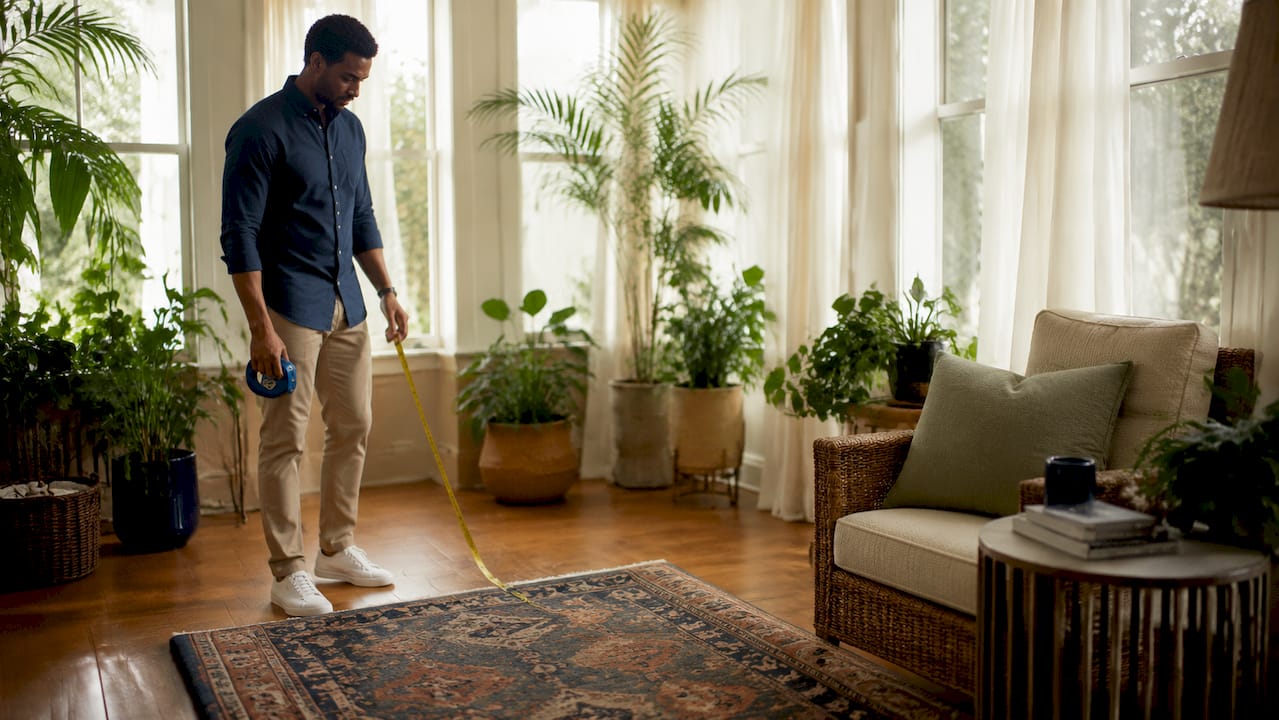
Undersized rugs isolate furniture and decrease room cohesion. A rug that only fits beneath the coffee table, leaving sofa legs floating on bare floor, fragments the arrangement. The most common sizes for living rooms and bedrooms are 8x10 feet and 9x12 feet. In most living rooms, at least the front legs of every major seating piece should rest on the rug.
Dining rooms follow a specific rule. Dining room rugs should extend 24–30 inches beyond the table edges on all sides. This extension keeps chairs on the rug even when pulled out, preventing the scraping and tipping that happens when chair legs catch the rug’s edge.
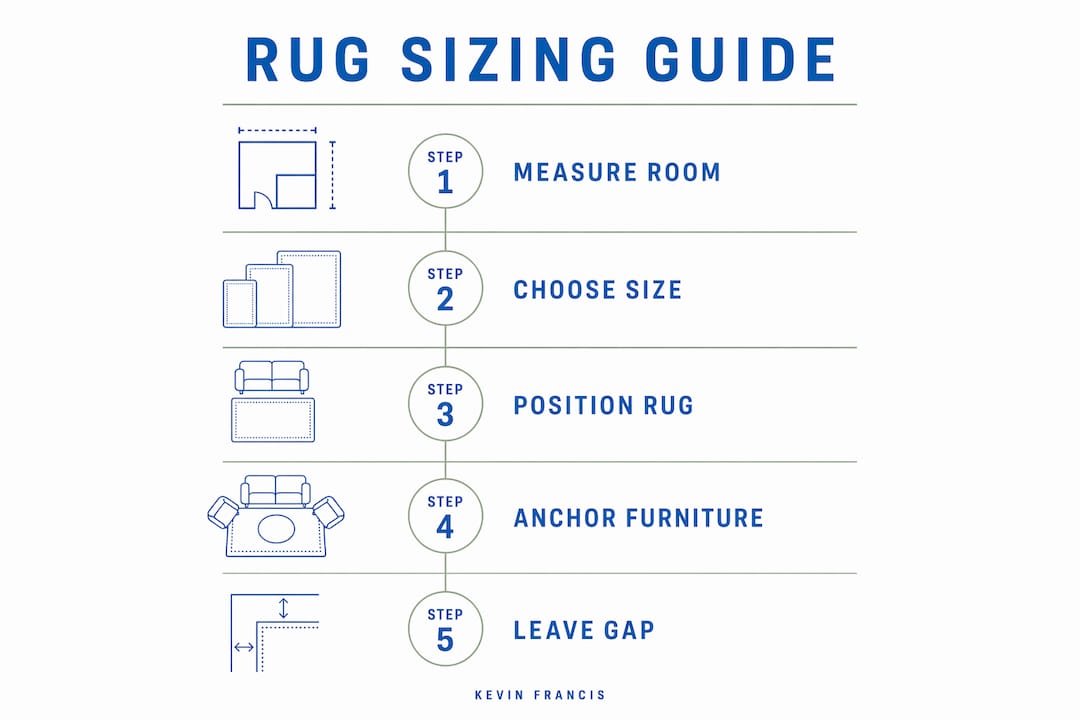
| Room | Recommended rug size | Key placement rule |
|---|---|---|
| Living room | 8x10 ft or 9x12 ft | Front legs of all seating on the rug |
| Dining room | Table width plus 48–60 inches | 24–30 inches beyond each table edge |
| Bedroom | 8x10 ft or 9x12 ft | Extends 18–24 inches on each side of the bed |
| Hallway | Runner, 2–3 ft wide | 6 inches from each wall |
| Open plan | 9x12 ft or larger | One rug per functional zone |
Pro Tip: Before buying, lay painter’s tape on the floor in the exact dimensions of the rug you are considering. Live with the outline for a day. You will immediately see whether the size works or whether you need to go larger.
The perimeter gap also scales with room size. A modest border suits a smaller room, while a wider border suits a grand space. The goal in both cases is balance: the rug should feel anchored, not cramped and not adrift.
How do rug materials, pile, and patterns influence spatial design?
Material choice determines how a rug performs over years of daily use, not just how it looks on the day it arrives. Cut-pile wool or silk rugs perform better in homes with pets compared to loop-pile constructions, which snag easily and degrade faster under claws. Designer MacNamara specifically favors cut-pile wool for its resilience and tactile warmth in family-centered spaces.
Beyond durability, material affects the sensory quality of a room. Wool rugs absorb sound effectively, making them ideal for rooms with hard floors and high ceilings where echo is a concern. Silk adds a luminous sheen that catches light differently throughout the day, creating a painterly quality that shifts with the hours. Natural fibers like jute and sisal bring an organic, earthy texture that grounds a room without competing with bold furniture.
Pattern and color carry their own spatial logic. A rug with a strong geometric or medallion pattern draws the eye downward and anchors the room’s center. A softer, more impressionistic wash of color lets furniture and architecture take the lead. Light-colored rugs open a space visually, while deeper tones create intimacy and enclosure.
- Wool: Durable, sound-absorbing, and warm underfoot. Ideal for living rooms and bedrooms.
- Silk: Luminous and refined, best suited to low-traffic areas where its sheen can be appreciated.
- Cut-pile construction: Recommended for pet-friendly homes due to resistance to snagging.
- Loop-pile construction: Prone to pulling in high-traffic or pet-heavy environments.
- Jute and sisal: Textural and natural, excellent as a neutral base for layering.
Stylistic alignment matters as much as material performance. A hand-knotted rug with an intricate floral motif suits a room with classical architecture and antique furniture. A flat-weave geometric works beautifully in a space with clean lines and modern upholstery. The rug should feel like it belongs to the room, not like a beautiful object that arrived from somewhere else.
When might skipping an area rug be the best design choice?
Not every room benefits from a rug. Designers sometimes choose to omit rugs in spaces with strong architectural character, where a rug would compete with rather than complement the existing design. A room with extraordinary stone floors, intricate tile work, or rich hardwood grain often reads better without a rug covering its most compelling feature.
High-traffic dining areas present a practical case for going rug-free. Chair movement causes constant wear, and food spills demand frequent cleaning. Designers in these situations lean on striking lighting and strong furniture silhouettes to provide spatial definition instead. A sculptural pendant light above a dining table anchors the zone just as effectively as a rug beneath it.
When skipping a rug, consider these alternatives for spatial definition and warmth:
- Lighting placement: A pendant or chandelier centered over a seating or dining area defines the zone from above rather than below.
- Furniture arrangement: A tight, intentional grouping of chairs and tables creates its own visual boundary without a rug.
- Material contrast: Pairing a polished concrete floor with a linen sofa and a velvet chair creates textural richness that a rug might actually dilute.
- Color blocking: Painting an accent wall or using a bold piece of art to anchor one end of a room gives the eye a focal point that replaces the grounding function of a rug.
- Plants and objects: A large potted plant or a sculptural side table at the edge of a seating area can signal the zone’s boundary with equal clarity.
The decision to skip a rug should be deliberate, not a default. A room without a rug can feel airy, architectural, and confident. A room without a rug by accident often feels cold and unresolved.
What practical tips help homeowners choose and use area rugs effectively?
The most common mistake homeowners make is choosing a rug that is too small. Larger rugs create more unified, polished spaces, while undersized rugs make furniture appear to float and segregate the layout. When in doubt, go one size larger than your instinct suggests.
Layering smaller decorative rugs over larger neutral bases offers both stylistic flexibility and budget efficiency. A large, flat-weave jute rug as a base, topped with a smaller hand-knotted piece, creates depth and visual interest while keeping the overall sizing correct. This technique also lets you introduce pattern and color without committing to a single large statement rug.
- Use painter’s tape on the floor to visualize rug dimensions before purchasing.
- Check door clearance for any rug placed near a door. A thick pile can prevent the door from swinging freely.
- Leave wall gaps of 18–24 inches consistently. Consistency matters more than the exact number.
- Match pattern scale to room scale. Large patterns suit large rooms. Small, intricate patterns suit intimate spaces.
- Consider custom sizing for rooms with unusual proportions where standard sizes leave awkward gaps.
Pro Tip: When layering rugs, keep the base rug neutral in color and low in texture. The top rug carries the visual interest. Reversing this creates visual noise rather than depth.
Color and pattern harmony across multiple zones matters in open floor plans. Two rugs in the same space do not need to match, but they should share at least one color or tonal quality. This shared thread keeps the eye moving comfortably through the space rather than stopping abruptly at each zone’s edge.
Key takeaways
An area rug’s role in spatial design is foundational: it defines zones, anchors furniture, and shapes the sensory quality of a room through material, scale, and placement.
| Point | Details |
|---|---|
| Sizing is critical | Leave 18–24 inches from walls and always err toward a larger rug to unify furniture. |
| Dining room extension | Rugs should extend 24–30 inches beyond table edges to keep chairs on the rug. |
| Material affects performance | Cut-pile wool resists pet damage and absorbs sound better than loop-pile constructions. |
| Skipping rugs is valid | Architecturally rich spaces and high-traffic dining areas often read better without a rug. |
| Layering adds depth | A neutral base rug topped with a smaller decorative piece achieves proper scale and visual interest. |
Why I think most homeowners underestimate the rug’s spatial power
After years of working with clients on residential interiors, I have come to believe that the rug is the most undervalued decision in a room. Homeowners spend months choosing furniture and minutes choosing a rug. The result is almost always a rug that is too small, too timid, or too safe.
The sizing mistake is the most painful to watch. A beautiful sofa arrangement collapses visually the moment you place a 5x8 rug beneath a coffee table and leave the sofa legs floating on bare floor. The room stops reading as a composed space and starts reading as a furniture showroom. A 9x12 rug in the same room would have pulled everything together instantly.
Material is the second area where I see homeowners shortchange themselves. A synthetic rug at a lower price point may look right in the store, but it rarely ages well. Wool develops a patina. It softens underfoot over years of use. It absorbs sound in a way that makes a room feel quieter and more settled. That quality is worth the investment, particularly in rooms where you spend real time.
What I find most rewarding is watching a client discover layering for the first time. Placing a hand-knotted piece over a simple jute base transforms a room without requiring a complete redesign. It adds depth, warmth, and a sense of collected, personal style that no single rug can achieve alone. The artisan rug collection approach, building a considered group of pieces over time, is how truly beautiful interiors are made.
My honest advice: treat the rug as the foundation of the room, not the finishing touch. Choose it first, or at least alongside the furniture. Let it set the scale, the palette, and the mood. Everything else will follow more naturally than you expect.
— Kevin O’Gara
Luxury wool rugs sized for every spatial design need
At Kevin Francis Design, we create handmade rugs built to meet the sizing and material standards that make a room feel genuinely resolved.
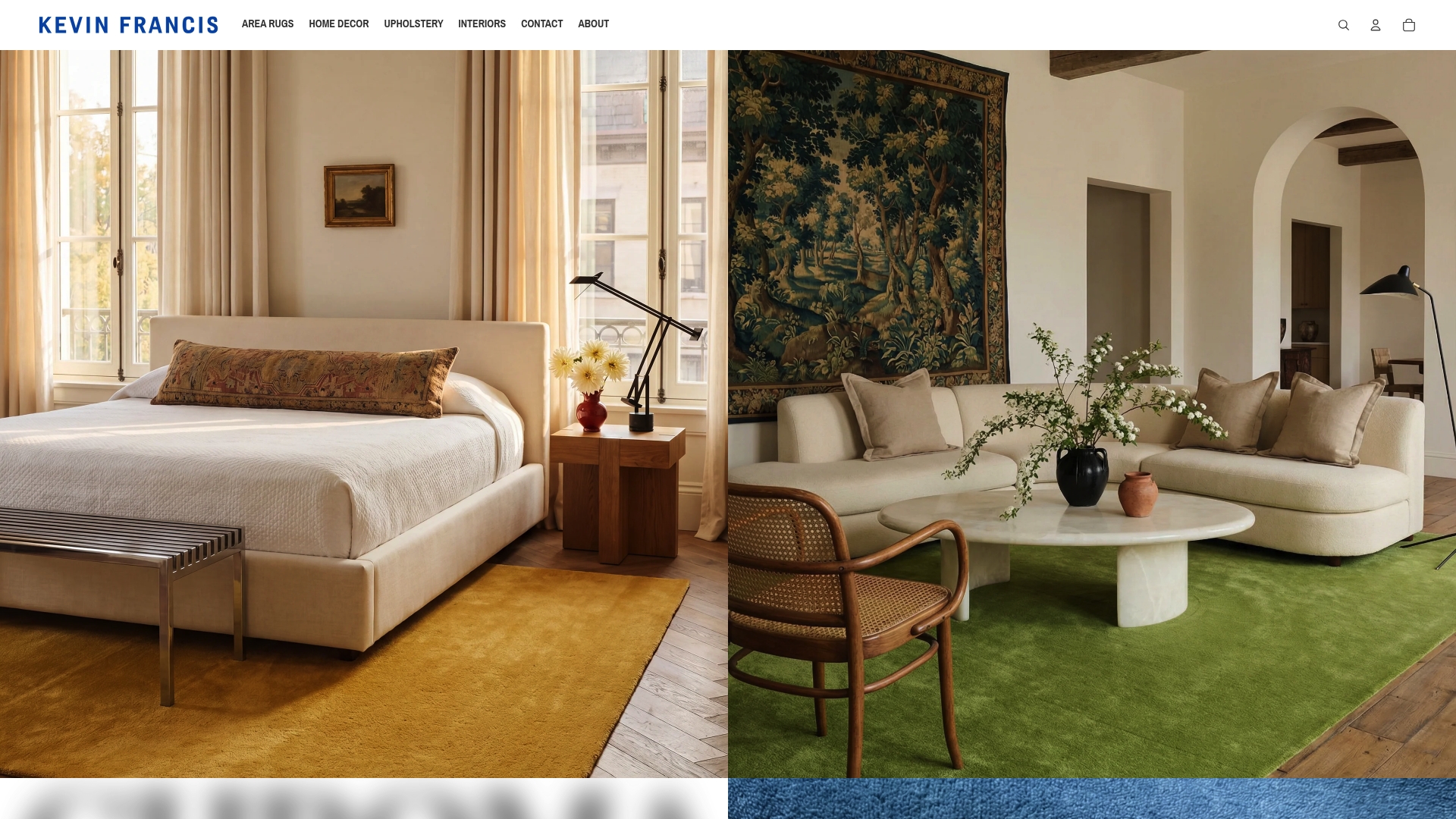
The Lotto Hand-Knotted Wool Area Rug is crafted using Tibetan knotting techniques, with a cut-pile wool construction that performs beautifully in both high-use living rooms and quieter bedroom settings. Its proportions are designed to meet the 18–24 inch perimeter gap standard in most residential spaces, giving you the spatial grounding that transforms a furniture arrangement into a composed interior. Each piece carries the warmth, texture, and quiet authority that only handmade craftsmanship can deliver. For rooms with distinctive proportions, our custom rug design services offer sizing tailored to your exact space.
FAQ
What is the standard perimeter gap for an area rug?
The standard perimeter gap is 18–24 inches from the walls, extending up to 36 inches in larger rooms. This gap keeps the rug from feeling like failed wall-to-wall carpeting and lets the floor breathe visually.
How far should a dining room rug extend beyond the table?
A dining room rug should extend at least 24 inches beyond each edge of the table, with 30 inches preferred. This extension keeps chair legs on the rug even when chairs are pulled out fully.
What rug material works best in homes with pets?
Cut-pile wool or silk rugs perform best in pet-friendly homes. Loop-pile constructions snag easily under claws and degrade faster in high-traffic, pet-heavy environments.
Do all rooms need an area rug?
No. Rooms with strong architectural features, such as intricate tile or exceptional hardwood, often read better without a rug. Lighting placement and intentional furniture arrangement can define spatial zones just as effectively.
How do I layer rugs without creating visual noise?
Use a large, neutral, low-texture rug as the base and place a smaller, patterned piece on top. The base rug handles the sizing and grounding; the top rug carries the color and pattern interest.


