


For any natural-fiber rug, the maintenance rhythm is straightforward: vacuum with suction only every week, blot spills immediately without rubbing, keep plant-based fibers like jute and sisal dry, rotate the rug regularly, use a quality rug pad, and schedule professional cleaning every 3–5 years for wool hand-knotted pieces. The IICRC and specialist rugmakers at Kevin Francis Design both reinforce this routine as the foundation of any rug care checklist for natural fibers.
Your quick-reference checklist:
- Weekly: Vacuum with suction only, no beater bar, following pile direction
- Weekly: Blot any spills immediately with a clean white cloth; never rub
- Monthly: Inspect edges, fringes, and backing for early signs of fraying or moisture
- Monthly: Check that the rug pad is flat and providing adequate airflow beneath the rug
- Seasonally: Shake or air the rug outdoors; rotate 180 degrees every 12–18 months
- As needed: Spot-clean with a pH-neutral, wool-safe cleaner; test on a hidden corner first
- Every 3–5 years: Schedule professional in-plant cleaning for hand-knotted wool rugs (more often in high-traffic homes or with pets)
- Before storage: Roll the rug pile-inward around a core; wrap in breathable cloth, never plastic
Key Takeaways
Consistent weekly vacuuming, immediate blotting of spills, and professional in-plant cleaning every 3–5 years are the three actions that most reliably extend the life of a natural-fiber rug.
| Point | Details |
|---|---|
| Regular suction-only vacuuming | Remove abrasive grit before it cuts fibers; never use a beater bar on natural-fiber rugs. |
| Moisture is the enemy of plant fibers | Jute, sisal, and seagrass require dry or very low-moisture methods; soaking causes permanent browning. |
| Professional cleaning cadence | Hand-knotted wool rugs benefit from in-plant cleaning every 3–5 years; high-traffic rugs every 1–2 years. |
| Rotate every 12–18 months | Even light exposure and foot traffic distribution prevents uneven fading and wear. |
| Kevin Francis Design wool rugs | Handmade pieces like the Lotto Hand-Knotted Wool Area Rug are built for longevity with the right care routine. |
Table of Contents
- How should you vacuum a natural-fiber rug each week?
- What do you do the moment a spill hits a natural-fiber rug?
- How do jute, sisal, seagrass, and wool rugs differ in their care needs?
- When should you schedule professional rug cleaning?
- What tools and products should you keep on hand?
- What mistakes permanently damage natural-fiber rugs?
- Expert tips from a rugmaker on preserving handmade and luxury rugs
- How do you handle stains, fraying, and shedding in natural-fiber rugs?
- What most rug care advice gets wrong
- Handmade rugs that reward careful stewardship
- Sources
- FAQ
How should you vacuum a natural-fiber rug each week?
Regular vacuuming is the most protective habit you can build for a natural-fiber rug. Fine grit and sand particles work their way into the knots and weave over time, acting like tiny blades that slowly cut through fibers from the inside. Removing that grit before it embeds is far easier than repairing the damage it causes.
The technique matters as much as the frequency. Always use a suction-only setting or a canister vacuum without a rotating brush head. A beater bar or spinning brush agitates the pile aggressively, loosening knots on hand-knotted pieces and accelerating fringe wear on jute and sisal. Vacuum in the direction of the pile and occasionally flip the rug to vacuum the back. Vacuuming both sides dislodges embedded grit that suction from the face alone cannot reach.
In high-traffic rooms, a twice-weekly pass is worth the few extra minutes. For a bedroom rug that sees light foot traffic, once a week is sufficient. Placing a low-profile doormat at every entry point reduces the volume of tracked-in grit dramatically, extending the time between deeper cleans.
Pro Tip: Choose a rug pad with a felt top and rubber base. Beyond preventing slipping, a good felt-backed pad cushions foot impact, reduces pile abrasion, and promotes airflow beneath the rug — genuinely helpful in humid climates where moisture can accumulate unseen.
What do you do the moment a spill hits a natural-fiber rug?
Speed is everything. The first sixty seconds after a spill determine whether you are dealing with a surface stain or a permanent one.
- Blot immediately with a clean, dry white cloth. Press firmly and lift; never rub or scrub, which spreads the spill and pushes it deeper into the weave.
- Work from the outer edge inward to prevent the stain from spreading.
- Test any cleaning solution on an inconspicuous corner first and allow it to dry fully before applying it to the stain.
- For water-based spills (coffee, juice, wine), apply a small amount of pH-neutral, wool-safe cleaner diluted in cold water. Blot again; do not pour the solution directly onto the rug. For wine stains specifically, blotting with cold water first before any cleaner is applied tends to lift the most pigment.
- For oil-based spills (butter, grease), sprinkle a dry absorbent powder such as baking soda or cornstarch, let it sit for 15 minutes, then vacuum gently before any damp treatment.
- Dry the area fast. Point a fan directly at the damp spot, or use a cool setting on a hair dryer held at a distance. On plant-fiber rugs, slow drying is the enemy.
- Never use steam on jute, sisal, or seagrass. The heat and moisture together cause cellulosic browning and can shrink or distort the weave permanently.
- Call a professional if the spill is large, the fiber is delicate, or the stain has already dried. Attempting to re-wet an old stain on a plant-fiber rug often causes worse, permanent browning.
How do jute, sisal, seagrass, and wool rugs differ in their care needs?
The single most important distinction in any natural fiber rug maintenance plan is moisture tolerance. Plant-based fibers and wool sit at opposite ends of that spectrum, and treating them the same way is one of the most common causes of irreversible damage.
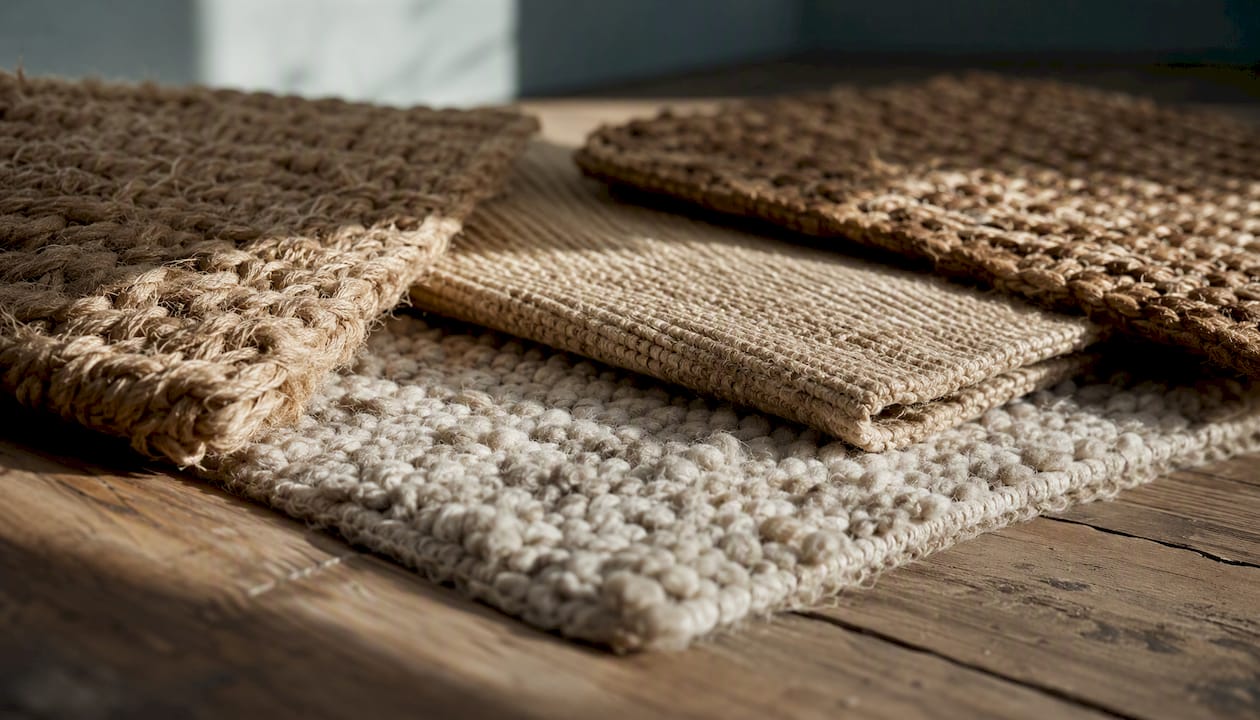
Plant fibers (jute, sisal, seagrass) contain natural sugars and lignins that wick to the surface when wet, causing cellulosic browning as the rug dries. They shrink, distort, and develop odor when saturated. Dry-compound cleaning is the professional default for these materials: thorough dry soil removal first, minimal damp spotting only when unavoidable, and forced-air fast drying immediately after. Keep these rugs away from bathrooms, laundry rooms, and any area prone to humidity.
Wool is more forgiving. Its natural lanolin coating offers brief resistance to liquid absorption, giving you a small window to blot a spill before it sets. Wool tolerates careful spot treatment with cold water and a pH-neutral cleaner, and it responds well to periodic professional hand-washing. Hot-water extraction, however, can cause felting and shrinkage, so it should only be used by a specialist who understands wool’s behavior.
| Fiber | Moisture tolerance | Safe home care | Professional method | Common permanent damage |
|---|---|---|---|---|
| Jute | Very low | Dry vacuum, dry compound | Dry or low-moisture in-plant | Browning, shrinkage, odor |
| Sisal | Very low | Dry vacuum, dry compound | Dry or low-moisture in-plant | Browning, distortion |
| Seagrass | Low | Dry vacuum, damp blot only | Low-moisture in-plant | Browning, mold |
| Wool (hand-knotted) | Moderate | Suction vacuum, cold-water spot | Hand-wash in-plant | Felting, dye migration |
| Wool (tufted/latex-backed) | Moderate | Suction vacuum, cold-water spot | Low-moisture on-site or in-plant | Backing delamination |
Fringes on hand-knotted rugs are structural, not decorative. Pulling, machine-washing, or aggressive brushing can unravel the knots at the rug’s edge. Comb fringes gently by hand and address any fraying with a specialist before it progresses. Tufted rugs with latex backings have a different failure mode entirely: the adhesive can break down over years of use, causing delamination that no amount of surface care can reverse. Knowing how to spot a high-quality hand-knotted rug helps you understand what you are caring for and what cleaning methods are appropriate.
For any rug where in-plant cleaning is the right call, the IICRC recommends removing the rug from the home and cleaning it under controlled conditions to reduce shrinkage and edge-curl risks.
When should you schedule professional rug cleaning?
The honest answer is: sooner than most homeowners think, and always with an IICRC-certified technician.
For hand-knotted wool rugs under normal residential use, professional hand-wash cleaning every 3–5 years is the standard recommendation. High-traffic rooms, homes with pets, or rugs near dining areas may need attention every 1–3 years. Plant-fiber rugs rarely benefit from wet professional cleaning; when they do need specialist attention, a low-moisture in-plant service is the only safe option.
| Rug type | Normal use cadence | High-traffic / pets |
|---|---|---|
| Hand-knotted wool | Every 3–5 years | Every 1–2 years |
| Tufted wool | Every 2–3 years | Every 1–2 years |
| Jute / sisal / seagrass | Dry cleaning as needed | Specialist consult annually |
Questions to ask any professional cleaner before you hand over a valued rug:
- Are you IICRC-certified, and do you have experience with hand-knotted or plant-fiber rugs specifically?
- Do you offer in-plant cleaning, and is that your default for delicate or shrinkage-prone pieces?
- What is your drying protocol, and how long does the rug stay in your facility?
- Will you provide a documented condition report and photographs before cleaning begins?
- What cleaning method do you use for plant-fiber rugs, and can you confirm it is low-moisture?
What tools and products should you keep on hand?
A well-stocked home kit for natural fiber rug maintenance does not need to be elaborate. The right few items, used correctly, handle the vast majority of everyday care.
- Suction-only canister vacuum or an upright with the brush roll disabled
- Soft-bristle hand brush for gentle fringe detangling and edge care
- Absorbent white cloths (avoid colored cloths, which can transfer dye)
- pH-neutral, wool-safe spotter diluted per the product’s instructions
- Dry-compound cleaning powder for plant-fiber spot treatment
- Portable fan or air mover for fast drying after any damp treatment
- Dehumidifier for homes in humid climates, particularly if plant-fiber rugs are in use
What to leave out of your kit entirely: alkaline detergents, bleach-based sprays, solvent-only home cleaners marketed for carpets, and any product with a strongly acidic or strongly alkaline pH. These can strip lanolin from wool, accelerate cellulosic browning in jute, and cause irreversible dye migration. High-traffic area rug care also benefits from keeping cleaning supplies accessible, so a spill response is never delayed by a search through the utility closet.
What mistakes permanently damage natural-fiber rugs?
Some damage is recoverable. These are the mistakes that are not.
Beyond soaking, the highest-risk mistakes are:
- Using a beater bar or rotating brush head on any natural-fiber rug, which loosens knots and frays edges
- Scrubbing a stain rather than blotting, which spreads it and drives it deeper
- Applying steam to plant-fiber rugs, which combines heat and moisture into a damaging combination
- Folding a rug for storage, which cracks the foundation and distorts the weave
- Leaving a damp rug flat on a hard floor, which traps moisture and invites mold and odor
If you have already applied moisture to a plant-fiber rug and notice browning or a musty smell developing, stop all DIY attempts. Document the current condition with photographs, note what was applied and when, and contact an IICRC-certified specialist. Chasing an old stain with more moisture almost always deepens the damage.
Expert tips from a rugmaker on preserving handmade and luxury rugs
Artisan rugs, whether hand-knotted in the Tibetan tradition or handwoven with natural plant fibers, are built to last generations — but only when their care matches the craft that went into making them.
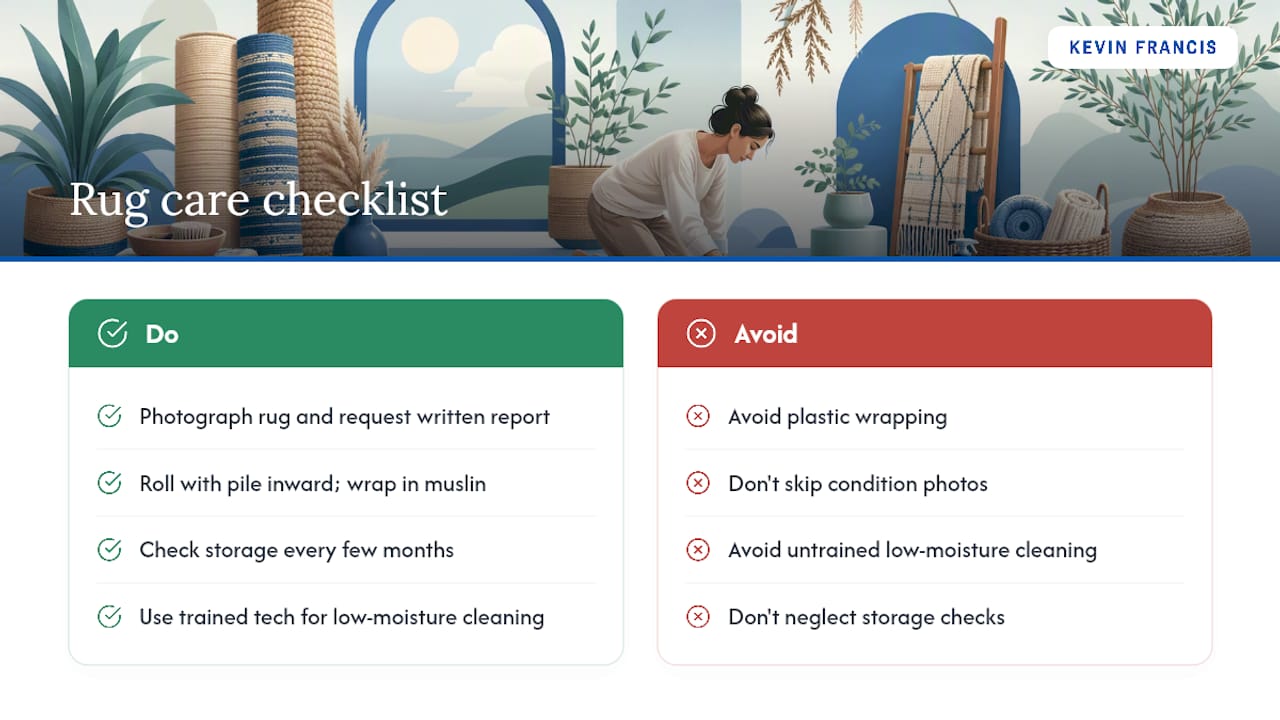
The most overlooked step before any professional cleaning is documentation. Photograph the rug in good light before it leaves your home: capture any existing water rings, browning, color variations, or areas of wear. Natural fibers often carry pre-existing marks that can look like new damage after cleaning, and a condition report protects both you and the cleaner. Specialist rug plants treat condition photography as standard practice precisely because these misunderstandings are common.
For storage, roll the rug with the pile facing inward around a sturdy cardboard or PVC core. Wrap it in breathable cotton muslin or acid-free paper, never plastic, which traps moisture and creates the conditions for mold and moth activity. Check stored rugs every few months and consider cedar blocks or lavender sachets as natural moth deterrents.
On-site low-moisture cleaning can be the right choice for plant-fiber rugs that cannot safely travel, but only when performed by a technician who understands the fiber’s moisture limits. For hand-knotted wool pieces, in-plant washing under controlled humidity and temperature remains the gold standard.
Pro Tip: When you call a specialist, ask specifically whether they will provide a written condition report before and after cleaning. A cleaner who offers this without prompting is demonstrating the kind of professional rigor your rug deserves.
How do you handle stains, fraying, and shedding in natural-fiber rugs?
Shedding is normal in new wool rugs and typically diminishes after the first few months of regular vacuuming. It is the rug releasing short fiber clippings left from the manufacturing process, not a sign of structural failure. Vacuum consistently and resist the urge to pull loose fibers; snip them cleanly with scissors instead.
Fraying at the edges or fringes is a different matter. On hand-knotted rugs, a fraying fringe signals that the knots anchoring the pile are at risk. A rug repair specialist can re-secure the foundation before the damage travels inward. Catching it early costs a fraction of what a full re-fringing or re-weaving repair runs.
Stains on plant-fiber rugs that have already dried are among the most challenging problems in natural fiber rug maintenance. The fiber’s open texture allows staining agents to bond quickly, and re-wetting to lift them risks browning. A specialist using dry-compound methods and controlled low-moisture spotting offers the best chance of improvement without compounding the damage. For wool, older stains often respond to a careful professional hand-wash, though some dye-based stains (red wine, certain food colorings) may only lighten rather than disappear entirely.
Sun exposure causes gradual but cumulative fading, particularly on naturally dyed wool rugs. Rotating the rug every 12–18 months distributes light exposure evenly, and UV-filtering window film is worth considering in rooms with strong direct sunlight. High-end fibers benefit from rotation as one of the simplest preventive measures available.
What most rug care advice gets wrong
Most guides treat natural-fiber rug care as a cleaning problem. It is really a moisture management problem, and that distinction changes everything about how you approach it.
The conventional advice to “spot-clean promptly with a mild detergent” is sound for synthetic rugs and even for wool, but applied to jute or sisal, it is the beginning of a damage spiral. The fiber absorbs the moisture, the sugars and lignins wick upward as it dries, and the result is a brown ring that is often worse than the original stain. The advice is not wrong in principle; it is wrong in application, and most generic guides do not make that distinction clearly enough.
What I find equally underestimated is the value of doing less. Homeowners who vacuum consistently, use a good rug pad, and rotate their rugs seasonally rarely need emergency interventions. The rugs that arrive at specialist plants in the worst condition are almost always the ones that received too much amateur treatment: over-wetted, scrubbed, steamed, or treated with the wrong chemistry. Restraint is a form of care.
The other gap in standard advice is the condition report. Photographing your rug before any professional cleaning is a five-minute habit that protects a significant investment. Pre-existing browning, water rings, and color variations are common on natural fibers, and without documentation, there is no baseline to compare against after cleaning. Any specialist worth trusting will welcome that record.
Handmade rugs that reward careful stewardship
The care principles in this guide were written with a specific kind of rug in mind: one made with intention, by hand, from materials that age beautifully when treated well. The Lotto Hand-Knotted Wool Area Rug from Kevin Francis Design is exactly that kind of piece. Hand-knotted in the Turkish tradition using premium wool, it carries the structural integrity that rewards the suction-only vacuum, the careful blot, and the periodic in-plant wash this guide describes.

Kevin Francis Design’s collection is built for homeowners who want a rug that deepens in character over years of thoughtful use, not one that needs replacing when life happens. Browse the full collection at Kevinfrancisdesign and find the piece that belongs in your home for the long term.
Sources
- How to Care for a Hand-Knotted Rug: The Complete Guide for Owners and Retailers - NP Rugs
- How to Clean a Rug: Care Tips for Every Material | GF Rug Guide
- Jute Rug Cleaning: A Pro Operator Guide
- Rug Care for High-End Fibers - Rug Renovating
FAQ
How do you care for a natural-fiber rug at home?
Vacuum weekly with suction only (no beater bar), blot spills immediately with a dry white cloth, and keep plant-fiber rugs like jute and sisal away from moisture. Schedule professional in-plant cleaning every 3–5 years for wool hand-knotted pieces.
Can you vacuum a natural-fiber rug safely?
Yes, with the right technique. Use a suction-only setting or a canister vacuum without a rotating brush head, and vacuum in the direction of the pile. Vacuuming both sides occasionally helps dislodge embedded grit.
What is the healthiest material for a natural-fiber rug?
Wool is generally the most resilient and forgiving natural fiber: its lanolin coating resists liquid briefly, it tolerates careful spot treatment, and it responds well to professional hand-washing. It also tends to shed allergens less readily than synthetic alternatives.
What natural-fiber rug is easiest to clean?
Wool is the easiest natural fiber to spot-clean at home because it tolerates cold water and pH-neutral cleaners without immediate browning. Jute and sisal are the most demanding, requiring dry or very low-moisture methods to avoid permanent cellulosic browning.


