


The most effective high-traffic area rug material options are those that resist crushing, repel stains, and hold their appearance through years of daily use. Fiber type is the single biggest factor in how long a rug survives a busy hallway, a family living room, or a pet-friendly entryway. Wool, nylon, polypropylene, sisal, and jute each bring distinct strengths to heavy-use spaces. Choosing the right one means weighing durability against maintenance commitment, upfront cost against total lifespan, and raw practicality against the beauty you want underfoot. This guide covers every major material so you can make a confident, informed choice.
1. High-traffic area rug material options: natural fibers worth knowing
Natural fibers have anchored the rug world for centuries, and for good reason. Wool is the gold standard among durable rug materials. Its natural crimp gives each fiber an elastic memory that springs back after compression, which is exactly what you need in a space that sees constant foot traffic. Quality wool rugs maintain their appearance for 15–20 years or more, compared to synthetics that can show visible matting within three years. That longevity is not a luxury detail. It is a structural advantage built into the fiber itself.
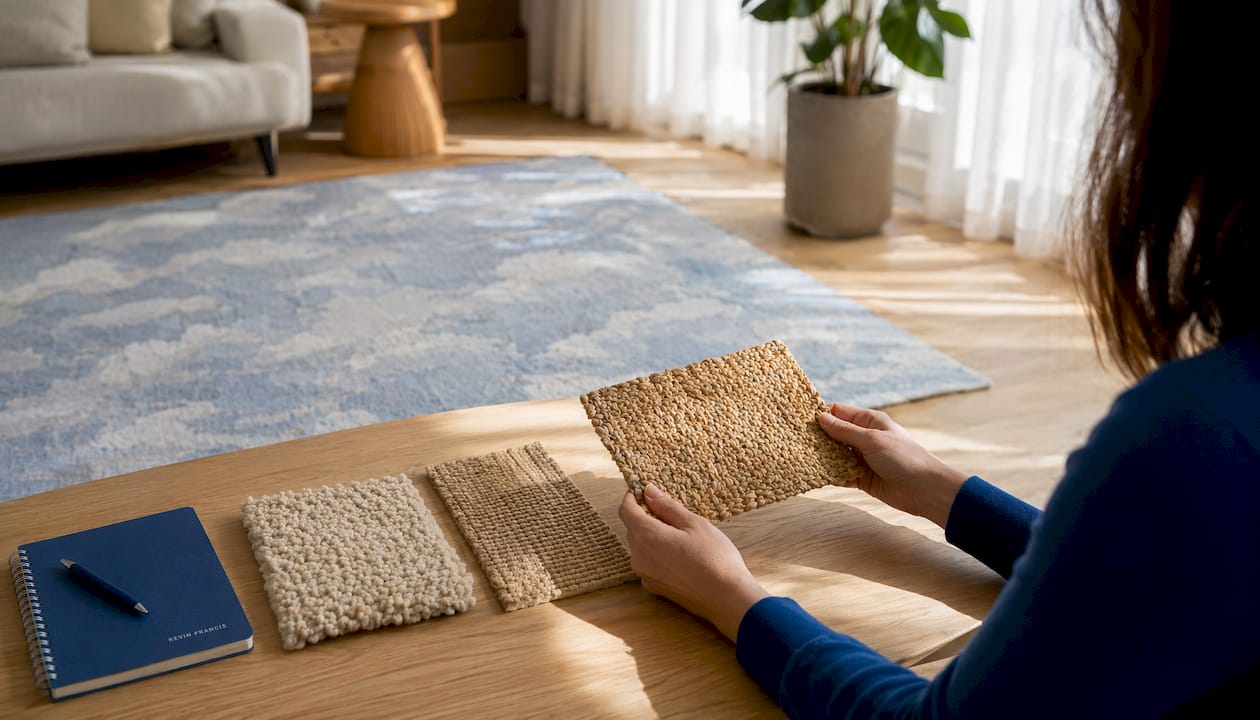
Sisal and jute occupy a different corner of the natural fiber world. Sisal is extremely durable but rough underfoot, making it best suited for entryways and mudrooms where physical wear is intense. Jute is softer than sisal but absorbs moisture more readily, which limits its use in kitchens or damp entryways. Both are flatweave constructions by nature, which means they lie flat, resist curling, and keep dirt near the surface where a vacuum can reach it.
Wool pros and cons:
- Pros: Natural resilience, elastic memory, hypoallergenic, ages gracefully, 15–20+ year lifespan
- Cons: Higher upfront cost, requires professional cleaning, can be damaged by harsh chemicals
Sisal pros and cons:
- Pros: Extremely tough, ideal for entryways, biodegradable, holds pattern well
- Cons: Rough texture, difficult to clean, absorbs moisture and stains
Jute pros and cons:
- Pros: Softer than sisal, eco-friendly, affordable for a natural fiber
- Cons: Less durable than sisal, moisture-sensitive, not suited for wet areas
Natural fibers also carry environmental benefits that matter to many homeowners. Wool is renewable and biodegradable. Sisal and jute are fast-growing crops with a low processing footprint. For those who want their home to reflect a commitment to sustainability without sacrificing durability, these materials offer a compelling case.
2. Key synthetic rug materials that perform well in high-traffic zones
Synthetic fibers dominate the affordable end of the rug market, and the best ones genuinely earn their place in busy homes. Polypropylene is the most common synthetic fiber, prized for its stain and moisture resistance. It does not absorb liquid the way natural fibers do, which makes it one of the best area rugs for pets and households with young children. Spills bead on the surface rather than soaking in, giving you time to blot before a stain sets.
Nylon is the premium synthetic for durability and crush resistance. It was developed for commercial environments where floors take punishment that would destroy most residential rugs. In a home setting, nylon holds its pile height longer than polypropylene and resists abrasion from foot traffic and furniture. The trade-off is cost: nylon sits above polypropylene in price, though still well below quality wool.
Polypropylene pros and cons:
- Pros: Budget-friendly, stain-resistant, moisture-resistant, easy to clean, pet-safe
- Cons: Less soft underfoot, can fade in direct sunlight, shorter lifespan than wool
Nylon pros and cons:
- Pros: Best crush resistance among synthetics, abrasion-resistant, holds pile well
- Cons: Higher cost than polypropylene, not as eco-friendly, can feel synthetic underfoot
Polyester pros and cons:
- Pros: Soft texture, vibrant color retention, affordable
- Cons: Crushes faster than nylon, less durable in extreme high-traffic zones
Synthetic rugs generally last 3–10 years, with some requiring replacement as early as three years in very busy spaces. That means a homeowner could go through two to four synthetic rugs in the same span that one quality wool rug would still be performing. The math shifts the conversation from sticker price to total cost of ownership.
3. Why rug construction and pile height matter in high-traffic areas
Fiber type alone does not determine how a rug holds up. Construction is equally important, and it is the detail most homeowners overlook when choosing rug fibers for heavy use. Low-pile rugs with a pile height of 0.25 to 0.5 inch resist crushing far better than plush or shag styles. They also keep grit and debris near the surface, where regular vacuuming can remove it before it works its way down to the foundation.
Flatweave and looped pile constructions outperform cut pile in busy areas. A looped pile anchors each fiber at both ends, which reduces the risk of snagging and fiber loss. A cut pile, by contrast, leaves each fiber tip exposed and vulnerable to abrasion. Flatweaves have no pile at all, making them the most durable construction of all for entryways and hallways.
| Construction type | Pile height | Best use | Durability |
|---|---|---|---|
| Flatweave | None | Entryways, hallways | Excellent |
| Looped pile | Low (0.25–0.5 in) | Living rooms, offices | Very good |
| Cut pile (low) | Low (0.25–0.5 in) | Living rooms, bedrooms | Good |
| Cut pile (high/shag) | High (1+ in) | Low-traffic bedrooms | Poor for traffic |
Pro Tip: For hallways and entryways, choose a flatweave or looped-pile rug with a pile height under 0.5 inch. That single specification will do more for longevity than almost any other choice you make.
Construction also interacts with material in meaningful ways. A tightly hand-knotted wool rug, like those made using Tibetan knotting techniques, combines the elastic resilience of wool with a dense, low-profile construction that resists both crushing and fiber loss. That combination is why handmade wool rugs appear in homes generation after generation.
4. Color, pattern, and maintenance tips to prolong rug life in heavy-use areas
Color and pattern are functional choices in high-traffic rugs, not just aesthetic ones. Darker tones and busy, textured patterns mask footprints, dirt, and small spills between cleanings. A mid-tone geometric or an organic, painterly motif will look fresh far longer than a pale, solid field. This is one of the most practical pieces of advice in any area rug material comparison, and it costs nothing extra to apply.
Maintenance habits shape a rug’s lifespan as much as the fiber itself. Grit acts like microscopic knives on rug fibers, cutting through the structure with every footstep. Removing that grit before it accumulates is the single most effective thing you can do to extend a rug’s life.
Practical care tips for high-traffic rugs:
- Vacuum twice weekly, focusing on the zones that receive the most foot traffic
- Rotate the rug 180 degrees every six months to distribute wear evenly
- Blot spills immediately rather than rubbing, which spreads the stain and damages fibers
- Use a rug pad underneath to reduce friction, prevent slipping, and cushion the pile
- Schedule professional cleaning for natural fibers every 12–18 months
- Avoid steam cleaning wool rugs, which can cause shrinkage and distort the pile
Pro Tip: Rotating your rug is the easiest maintenance step most homeowners skip. Even a quarter-turn every few months prevents one section from wearing out while the rest stays pristine.
Protecting your rug in high-traffic areas also means thinking about what sits on top of it. Heavy furniture legs concentrate enormous pressure on a small area of pile. Furniture cups or felt pads distribute that weight and prevent permanent indentations, especially in wool and looped-pile constructions.
Key Takeaways
The best rug for a high-traffic area combines a resilient fiber, a low-pile construction, and a maintenance routine that removes abrasive grit before it damages the foundation.
| Point | Details |
|---|---|
| Wool outlasts synthetics | Quality wool rugs maintain appearance for 15–20+ years; synthetics may need replacing in 3–10 years. |
| Construction shapes durability | Flatweave and looped-pile rugs resist crushing and snagging better than cut-pile styles. |
| Pile height is a specification | Choose 0.25–0.5 inch pile height for hallways and entryways to optimize cleaning and wear resistance. |
| Color and pattern work for you | Dark tones and busy patterns mask everyday dirt and extend the time between deep cleanings. |
| Vacuuming twice weekly is non-negotiable | Grit acts as an abrasive on fibers; removing it regularly is the most effective longevity strategy. |
The trade-off nobody talks about honestly
People ask me all the time whether they should buy a synthetic rug for a busy hallway because it is easier to clean. My honest answer is: it depends on how you define “easy.” A polypropylene rug is easy to wipe down. But replacing it every five years is not easy on your wallet, your time, or your sense of home.
What I have seen over years of working with clients on residential interiors is that the homeowners who invest in a well-constructed wool rug, care for it properly, and choose a pattern that works with their lifestyle end up far happier than those who cycle through budget synthetics. The total cost of ownership favors quality wool across two decades, even accounting for professional cleaning costs. That is not a sales argument. It is arithmetic.
The nuance I would add is this: not every space calls for the same solution. A mudroom that takes on wet boots and dog paws every winter day is a different problem than a formal living room that sees moderate foot traffic. For the mudroom, a tough sisal or a polypropylene flatweave makes complete sense. For the living room, a hand-knotted wool rug with a rich pattern will reward you for decades. Matching the material to the specific demands of the space is the real skill, and it is one worth taking seriously.
I also think people underestimate how much a rug’s pattern does for them. A painterly, textured design does not just look beautiful. It actively hides the evidence of daily life. That is not a compromise. It is good design working on your behalf.
— Kevin O’Gara
Rugs built for beauty and the demands of real life
At Kevin Francis Design, we believe a rug should be both a work of art and a genuinely hard-wearing investment. For living rooms and dining spaces that see daily use, the Cumulus Cloud hand-knotted wool rug brings Tibetan knotting craftsmanship together with wool’s natural resilience, creating a piece that deepens in character with age rather than wearing out. For households with pets and children, the Panthera Spotted Leopard performance rug offers stain resistance and bold style in equal measure.
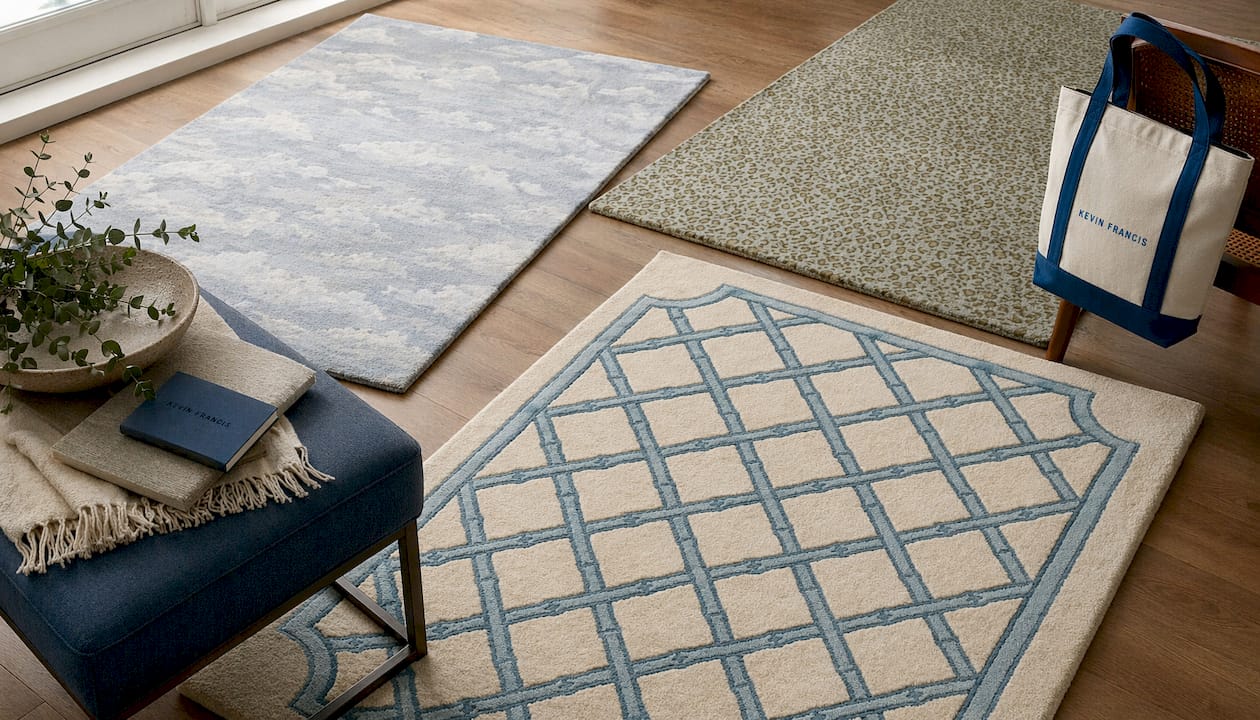
The Brighton Bamboo Trellis hand-tufted rug rounds out the collection with an eco-conscious construction and a trellis pattern that masks wear beautifully. Each piece is designed with the understanding that a beautiful home and a practical one are not competing ideas.
FAQ
What is the most durable rug material for high traffic?
Wool is the most durable natural fiber for heavy-use areas, maintaining its appearance for 15–20 years or more due to its natural elastic memory. Among synthetics, nylon offers the best crush resistance and abrasion performance.
What are the best area rugs for pets?
Polypropylene rugs are the top choice for homes with pets because they resist moisture and stains at the fiber level, giving you time to clean spills before they set. A low-pile construction also prevents pet hair from embedding deeply into the pile.
How often should I vacuum a high-traffic rug?
Vacuum high-traffic rugs at least twice weekly, focusing on the zones that receive the most foot traffic. Grit acts as an abrasive on rug fibers, and removing it regularly is the most effective way to extend a rug’s lifespan.
Does pile height affect how long a rug lasts?
A pile height of 0.25 to 0.5 inch is ideal for high-traffic areas because it resists crushing and keeps debris near the surface for easy vacuuming. High-pile and shag rugs trap dirt deeper and compress faster under foot traffic.
Are natural fiber rugs worth the higher cost in busy homes?
For most living spaces, yes. Wool rugs can last 20–50 years with proper care, while synthetic rugs typically need replacing every 3–10 years. The higher upfront cost of a quality natural fiber rug often proves more economical over two decades.


