


Limited production increases luxury desirability when scarcity is supply-driven rather than time-driven, and when it carries authentic exclusivity cues, heritage narratives, artisan materials, or controlled distribution, rather than an arbitrary countdown clock. This is what researchers call limited-quantity scarcity, or LQS, and it consistently outperforms its counterpart, limited-time scarcity, in raising willingness to pay. Commodity theory explains part of why: when access to something narrows, people assign it more value simply because it is harder to get.
At Kevin Francis Design, we have watched this play out with collectors long before we had academic language for it. A hand-knotted rug made in a genuinely limited run behaves differently in the market than a mass piece with a handcrafted over mass-produced banner slapped on it.
- Desirability rises most when scarcity is real, not staged.
- Product visibility matters. A rug in a formal living room signals more than a bath mat ever will.
- Overused or poorly justified scarcity erodes brand equity instead of building it.
The mechanism that matters is perceived exclusivity, not scarcity itself. Scarcity is only the trigger; exclusivity is the psychological event that changes what buyers are willing to pay.
Key Takeaways
Limited production increases luxury desirability primarily by raising perceived exclusivity, and that mediating effect, not scarcity itself, drives willingness to pay and repurchase intent.
| Point | Details |
|---|---|
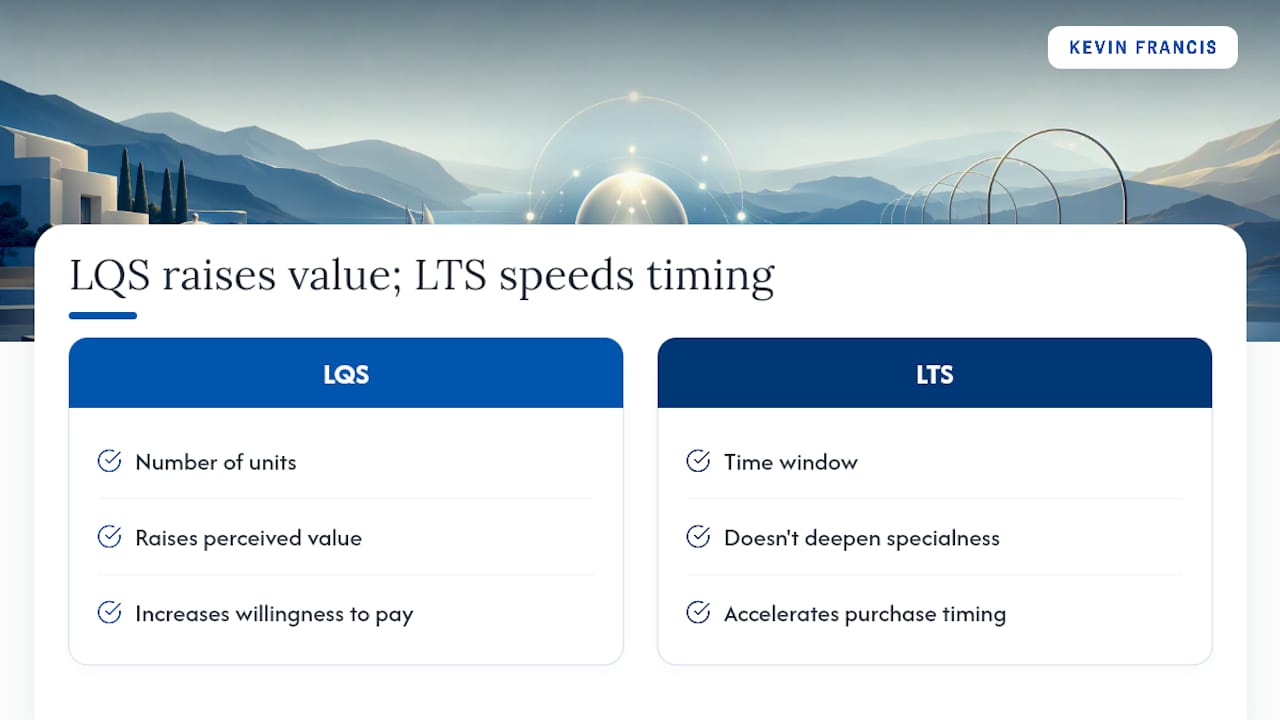
| LQS beats LTS | Quantity-based limits raise perceived value more reliably than time-based countdowns, which mainly speed up purchase timing. |
| Heritage amplifies scarcity | Pairing a production cap with a genuine heritage or artisan story produces the strongest willingness-to-pay lift. |
| Watch product visibility | Socially visible items gain more signaling value from limited runs than items no one else sees. |
| Manage the sellout, don’t celebrate it | Immediate sellouts can hurt repurchase intent; waitlists and client allocation protect long-term desirability. |
| Kevin Francis Design applies this directly | The Lotto Hand-Knotted Wool Area Rug ties its limited run to real knotting capacity and client-direct allocation rather than manufactured urgency. |
Table of Contents
- How Limited Production Affects Luxury Desirability Through Psychology
- What the Research Says About Scarcity and Desirability
- Building a Limited-Production Release That Protects Brand Equity
- How Should Marketers Measure the Effect on Desirability?
- A Kevin Francis Design Example: The Lotto Rug Release
- When Does Limited Production Backfire?
- Why Scarcity Only Works With Craft Behind It
- Plan Your Own Limited-Production Collection
- Sources
- FAQ
How Limited Production Affects Luxury Desirability Through Psychology
Two theories do most of the explanatory work here. Commodity theory holds that anything becomes more valuable as it becomes less available, a fairly intuitive idea that nonetheless holds up under repeated testing. Signalling theory adds the social layer: owning something rare tells other people something about you, your taste, your resources, your access. Together, they explain why a strictly limited edition can carry meaning far beyond its material cost.
The causal chain tends to run in a fairly predictable order. A brand caps production, which creates a rarity cue, which shifts how exclusive and distinctive the item feels to the buyer, which then raises both willingness to pay and the odds of a repeat purchase down the line. Research on supply-driven scarcity finds that perceived exclusivity acts as the real mediator between limited quantity and repurchase intention, meaning scarcity alone barely moves the needle unless it actually makes the product feel special.
What makes that feeling credible rather than gimmicky? A handful of things:
- Heritage stories tied to a technique, region, or family workshop
- Natural material limits, like the availability of a specific wool grade or dye lot
- Artisan processes that cap output by design, not by marketing decision
- Small adopter groups, which research on status signalling in luxury consumption shows heighten a buyer’s sense of unique social standing
Pro Tip: Lead every limited-run announcement with the material or craft constraint, not the countdown. “Only 40 hours left” reads as a sale. “Only 40 rugs, because our weaver can knot one per month” reads as craftsmanship.
What the Research Says About Scarcity and Desirability
The distinction between limited-quantity scarcity and limited-time scarcity is not academic hairsplitting. It changes what marketers should actually do. Studies on the psychology behind paying more for limited-edition heritage products show that LQS cues raise willingness to pay through increased perceived brand value, and that effect gets notably stronger when the product also carries a heritage story. The interaction between quantity limits and brand heritage is where the real premium lives, not in either factor alone.
Limited-time scarcity behaves differently. Scarcity messaging research comparing the two formats finds that LTS mainly accelerates purchase timing rather than deepening how special the product feels. It gets people to buy now. It does not make them feel like they own something rare. For luxury positioning, that is a meaningful gap, since the entire point of a luxury purchase is the feeling of owning something few others have.
Several psychological moderators shift how strongly this all plays out:
- Need for uniqueness (NFU): consumers high in NFU respond far more strongly to quantity limits than to time pressure.
- Consumer mindset: the heritage and quantity synergy is strongest among people with a growth mindset, who tend to see the purchase as part of a personal story rather than a fixed status marker.
- FoMO: one study found scarcity had no significant direct effect on purchase intention on its own, but FoMO significantly amplified the influence of need for uniqueness on purchase intention among younger cohorts, meaning FoMO works through NFU, not around it.
- Generational variation: Gen Z and Gen Y buyers respond more to authentic behind-the-scenes process storytelling than to scarcity messaging by itself.
Statistic to remember: in the FoMO and NFU study cited above, scarcity’s direct effect on purchase intention was not statistically significant (p = 0.804), while FoMO’s moderating role on need for uniqueness was (p = 0.0185). The takeaway for marketers is blunt: scarcity messaging without a uniqueness hook is largely wasted spend on younger buyers.
Product visibility is the last major boundary condition. A limited-run item that others can actually see, a rug in an entryway, a coat, a car, generates more social signaling value than something private, like undergarments or a home office chair no visitor ever encounters. And one caution deserves equal weight here: immediate sellouts for hedonic limited editions can hurt future repurchase intention by creating a sense of unattainability rather than desire.
Building a Limited-Production Release That Protects Brand Equity
Translating the research into a release plan means making four decisions well before launch day.
- Choose the release format deliberately. Small controlled runs work best when you want maximum exclusivity signaling with the least public spectacle. Client-direct allocation suits high-value, relationship-driven categories where the brand already knows its best collectors. Waitlists and raffles serve larger interested audiences without the chaos of a public sellout.
- Build the story around real constraint. Lead with the artisan process, the material limit, or the heritage detail. Present the production cap as a structural commitment to quality, something the craft itself demands, not a headline price tactic bolted on afterward.
- Sequence the launch. Seed the story with a small community first (past collectors, designers, press), then open allocation, then go public if there is remaining supply.
- Protect the aftermarket. Authentication marks, numbered certificates, and clear reseller guidance keep counterfeit risk from undercutting trust in the piece.
A short dos-and-don’ts list keeps teams honest during the excitement of a launch:
- Do use rarity rooted in material or technique, not an arbitrary cap chosen for marketing optics.
- Do offer multiple, staggered access points (previews, waitlists) rather than one single public rush.
- Don’t rely on countdown timers alone. Identity-driven narratives outperform pure urgency tactics for luxury buyers specifically.
- Don’t repeat virtual rarity capsules back to back without a fresh story. Research on perceived value in luxury rarity finds virtual rarity has mixed effects and can hurt emotional and social value if it feels manufactured.
- Don’t let sellout speed become the marketing headline. Manage it, don’t celebrate it.
Pro Tip: Selective digital amplification, a single well-placed feature, a curated online community, works better than mass promotion. Research on luxury e-commerce strategy shows brands can grow digital reach without diluting exclusivity, provided the amplification stays matched to the right collector segment rather than blasted to everyone.
How Should Marketers Measure the Effect on Desirability?
Testing this rigorously means comparing conditions, not guessing.
- Run an LQS group against a no-limit control group and measure the gap in stated willingness to pay.
- Run an LQS-plus-heritage group against a plain LTS group to isolate whether the story or the quantity limit is doing more work.
- Track the same cohort over two release cycles to see whether repurchase intent holds or declines.
Core KPIs worth tracking include perceived exclusivity (measured by survey), willingness-to-pay shifts, conversion lift at launch, repurchase intent, resale market pricing signals, and broader brand equity measures like preference share. Watch for warning indicators too: sentiment spikes tied to “I couldn’t get one” complaints, a drop in repurchase intent after a fast sellout, or a rise in counterfeit and authenticity questions from customers.
A Kevin Francis Design Example: The Lotto Rug Release
The Lotto Hand-Knotted Wool Area Rug offers a compact case study in doing this the right way. Production was capped by the realistic output of hand-knotting, not by an arbitrary marketing number, and the story we told centered on the pattern’s artistic roots and the weaver’s process rather than a ticking clock.
- Allocation ran client-direct through our design consultations before any broader release.
- Each piece carried documentation tying it to its production batch, which supports authentication and resale confidence.
- We tracked waitlist-to-purchase conversion and collector inquiries rather than raw traffic.
What we noticed was not a rush. It was patience. Collectors who understood the knotting timeline waited for their piece rather than demanding a substitute, which told us the story had done its job.
When Does Limited Production Backfire?
Scarcity fails when it stops feeling true. Watch for these red flags:
- Buyers sense the “limit” is arbitrary rather than tied to material or craft.
- Capsule releases repeat too often with no new story behind them.
- A sellout happens so fast it creates a sense the brand is unreachable rather than aspirational.
- Authentication is weak enough that counterfeits start circulating.
- Mitigate by grounding every release in a real, explainable constraint.
- Slow the release cadence rather than chasing constant “drops.”
- Set a decision rule in advance: if repurchase intent drops or complaints spike within the launch week, pause the format and revisit the story before running it again.
Why Scarcity Only Works With Craft Behind It
I have never been comfortable with scarcity as a pricing lever on its own. What draws me to limited production is the discipline it forces on the design process itself. When we cap a run at Kevin Francis Design, it is usually because a weaver, a dye process, or a pattern genuinely limits how many pieces can exist with integrity. That constraint protects the collector as much as it protects us.

Manufactured urgency insults the buyer’s intelligence eventually. Real scarcity, tied to a hand and a story, does the opposite. It rewards attention. We will keep our supply chains honest about that difference.
Plan Your Own Limited-Production Collection
If you have been circling the idea of a capsule collection but worry about looking gimmicky, start where the craft actually lives. Kevin Francis Design builds limited runs around real production constraints, hand-knotting timelines, dye-lot availability, artisan capacity, rather than an arbitrary number chosen to create buzz. That is the difference between a piece collectors chase and one they forget by next season.
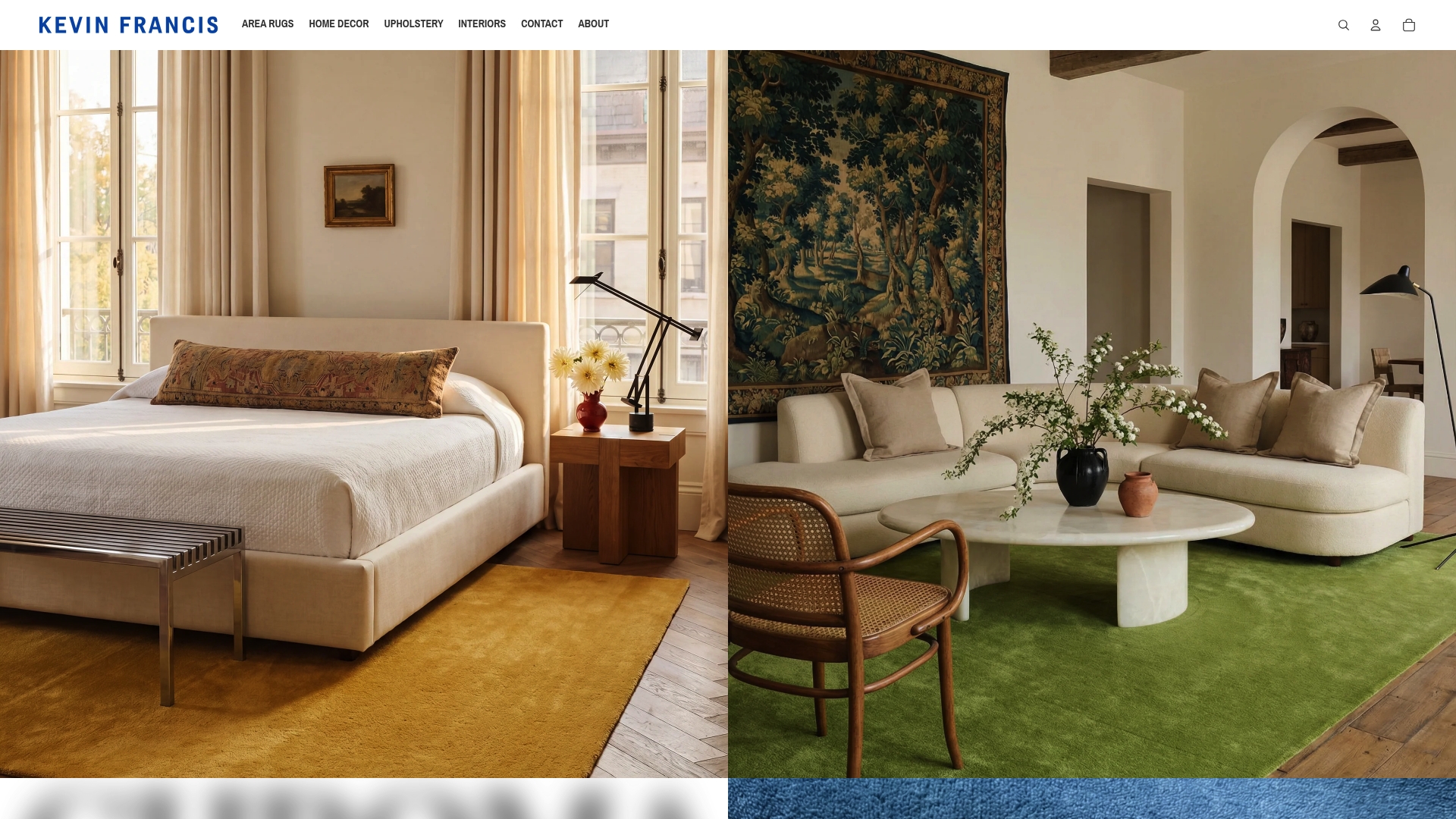
The Lotto Hand-Knotted Wool Area Rug shows the model in practice: a capped run tied to a documented knotting process, allocated first to design clients before wider release. If you are weighing a custom-commission run for a project or your own collection, our design team can walk through timeline, materials, and allocation options together. Start that conversation on the Lotto rug’s product page and see what a genuinely limited piece could look like in your space.
Sources
- The psychology behind paying more for limited-edition heritage products
- From rarity to desire: immediacy of sellouts, distribution strategies and repurchase intentions
- Scarcity message effects on consumption behavior: Limited edition product considerations
FAQ
Does Limited Production Always Increase Luxury Desirability?
No. It increases desirability mainly when scarcity is supply-driven and paired with a credible story, heritage, artisan process, or material limit; arbitrary or repeated scarcity can backfire.
What Is the Difference Between LQS and LTS?
Limited-quantity scarcity (LQS) caps how many units exist and tends to raise perceived value and willingness to pay, while limited-time scarcity (LTS) mainly accelerates purchase timing without deepening how special the product feels.
Why Do Immediate Sellouts Sometimes Hurt a Luxury Brand?
Fast sellouts can create a sense of unattainability that reduces repurchase intention for hedonic products, which is why brands use waitlists and client allocation instead of open rushes.
How Does Kevin Francis Design Apply Limited Production?
Kevin Francis Design ties production caps to real artisan capacity, as with the Lotto Hand-Knotted Wool Area Rug, and allocates pieces client-direct before wider release to protect both story and collector trust.
Which Consumers Respond Most Strongly to Scarcity Cues?
Buyers high in need for uniqueness respond most strongly, and FoMO significantly amplifies that effect among younger cohorts, while scarcity alone showed no significant direct effect in that same study.


