


Wool is defined as the gold standard of area rug materials, and the performance gap between wool and synthetic rugs is wider than most homeowners realize. A quality wool rug lasts 20–50 years with regular care, while synthetic alternatives show noticeable wear within 3–5 years under heavy use. That lifespan difference alone reframes the entire cost conversation. Add in wool’s natural elasticity, lanolin coating, and biodegradability, and the case for natural fiber rugs becomes difficult to argue against. Understanding why wool outperforms synthetic rugs means looking at fiber science, real maintenance costs, and what a rug actually does to a room over decades.
Why wool outperforms synthetic rugs in durability
Wool’s durability advantage comes directly from its fiber structure. Each wool strand has a natural crimp, a microscopic wave that acts like a coiled spring. Wool fibers bend up to 20,000 times before breaking, compared to roughly 3,000 times for synthetic fibers. That is nearly seven times the resilience, and it shows up in how a rug holds its pile over years of foot traffic.
Synthetic fibers lack wool’s crimp memory. Once compressed, they flatten permanently, leaving a rug that looks tired and matted within a few years. Wool springs back. Place a heavy sofa leg on a wool rug for a season, lift it, and the pile recovers. The same test on a polypropylene rug leaves a lasting indent.
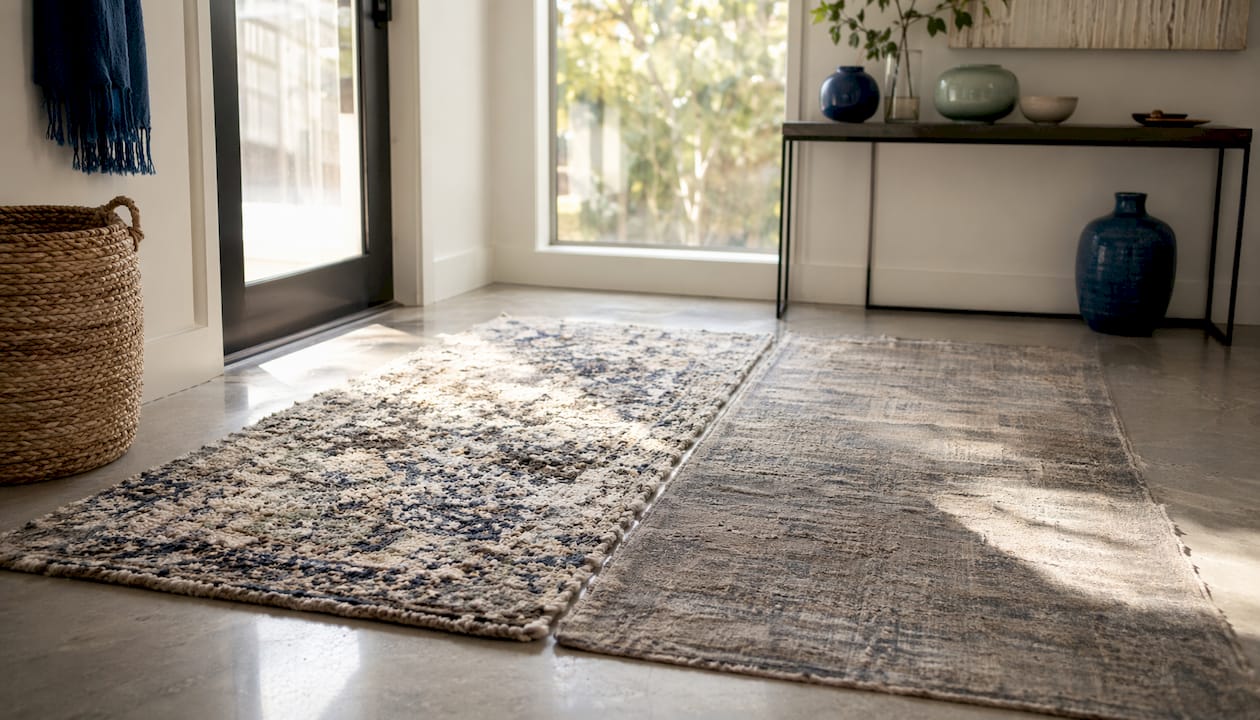
Here is how lifespan compares across the most common rug fiber types:
| Fiber type | Typical lifespan |
|---|---|
| Wool | 20–50 years |
| Nylon | 10–15 years |
| Polypropylene | 5–10 years |
The numbers tell a clear story. Even nylon, the most durable synthetic option, falls well short of wool’s ceiling. Polypropylene, the most common budget rug material, wears out in a fraction of the time.
- Wool pile recovers after compression; synthetic pile does not
- Wool’s natural elasticity prevents permanent crushing in high-traffic zones
- Nylon outlasts polypropylene but still degrades faster than wool
- Wool rugs can be professionally rewoven when damaged, extending their life further
Pro Tip: Place a wool rug in your highest-traffic room first. Its crush resistance will be most visible where foot traffic is heaviest, and you will see the difference within the first year.
Knowing how to spot a high-quality wool rug before you buy is the best way to make sure you get the full lifespan benefit.
How do wool and synthetic rugs compare for cleaning?
Wool and synthetic rugs require fundamentally different care routines, and the difference matters for long-term performance. Wool needs professional cleaning every 18–24 months to avoid fiber damage, while synthetic rugs tolerate more aggressive DIY cleaning every 12–18 months. Wool rewards patience and gentle handling. Synthetics forgive rougher treatment.
The reason comes down to lanolin, the natural oil found in wool fibers. Lanolin causes liquids to bead on the surface temporarily, giving you a window to blot a spill before it sets. That window is real but short. Leave a red wine spill for an hour, and lanolin’s protection is gone. Polypropylene, by contrast, repels water completely but can trap oily stains that are nearly impossible to remove.
- Wool: blot spills immediately, avoid harsh detergents, schedule professional cleaning every 18–24 months
- Synthetic: tolerates steam cleaning and stronger solutions, clean every 12–18 months
- Wool in bathrooms or basements carries mildew risk if moisture is not managed carefully
- Polypropylene works well in high-moisture zones where wool would struggle
Pro Tip: For wool rugs, always blot, never scrub. Scrubbing breaks the fiber crimp and accelerates the very wear you are trying to prevent.
The investment in professional rug cleaning is not an added burden. It is the maintenance that keeps a wool rug performing for decades rather than years.
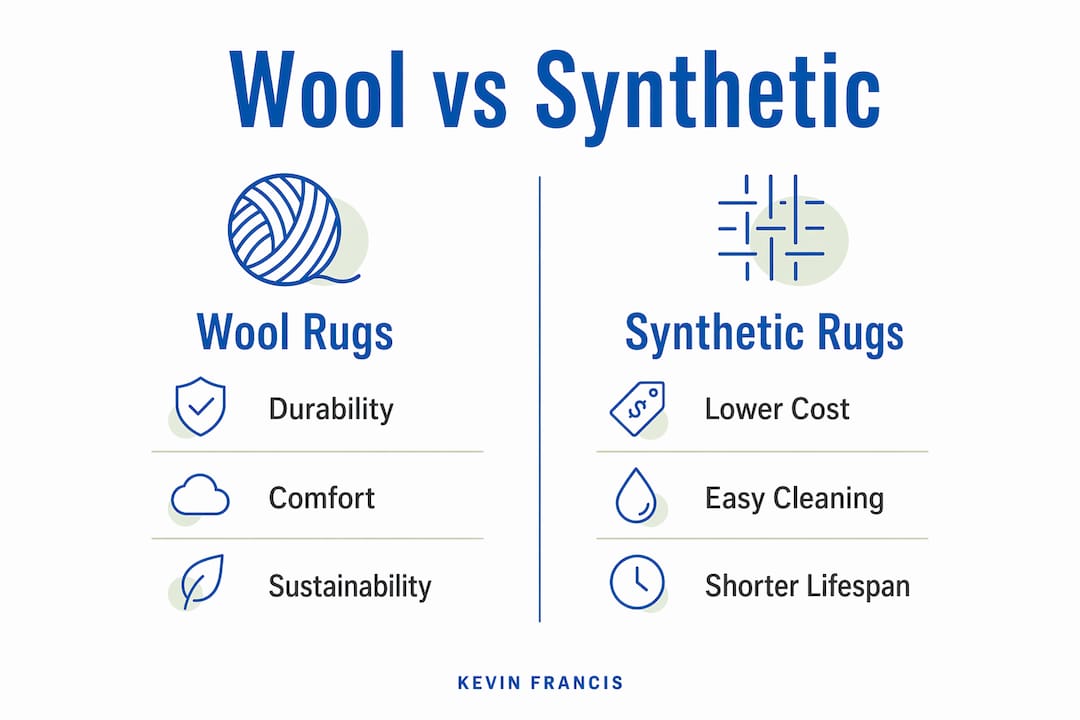
Is wool a more sustainable choice than synthetic rugs?
Wool is renewable, biodegradable, and free of microplastic pollution. Synthetic rugs are petroleum-based, non-biodegradable, and shed microplastics with every wash and wear cycle. Those microplastics enter waterways and persist in ecosystems for centuries. A discarded polypropylene rug does not decompose. It fragments.
Wool, by contrast, breaks down naturally at the end of its life. Sheep are shorn annually, making wool a genuinely renewable resource. Sustainability experts note that the environmental footprint of sheep farming exists but pales compared to the persistent pollution from synthetic fiber production and disposal. The full lifecycle of a wool rug, from farm to floor to compost, is far cleaner than the petroleum extraction and landfill fate of a synthetic alternative.
- Wool biodegrades; synthetic rugs persist in landfills for centuries
- Synthetic rugs shed microplastics during use and washing
- Wool is shorn annually without harming the animal, making it a renewable material
- A wool rug’s 20–50 year lifespan means far fewer replacements and far less waste
The environmental math is straightforward. One wool rug that lasts 40 years replaces four to eight synthetic rugs over the same period. Each of those synthetic rugs ends up in a landfill. The natural fiber rugs advantage is not just about how they feel underfoot. It is about what they leave behind.
Do wool rugs offer better comfort and long-term value?
Wool delivers a sensory experience that synthetic fibers simply cannot replicate. Wool traps warmth and regulates moisture naturally, making a room feel warmer in winter and less humid in summer. The pile has a softness that feels plush and alive underfoot, rather than the faintly plasticky texture of polypropylene. Color retention is another area where wool excels. Dye bonds at the fiber level, so the richness you see on day one is still visible a decade later.
Synthetic rugs also release volatile organic compounds (VOCs) and generate static electricity, while wool naturally prevents both. That matters for indoor air quality, especially in homes with children or anyone sensitive to off-gassing. Wool is a quieter, healthier material to live with.
The long-term value argument becomes concrete when you run the numbers:
- A synthetic rug priced at $250 lasts roughly 4 years, costing about $62.50 per year.
- A wool rug priced at $600 lasts roughly 12 years, costing about $50 per year.
- Wool costs less annually despite the higher purchase price.
- Wool rugs can be professionally rewoven when damaged, adding resale and restoration potential that synthetics cannot match.
| Value factor | Wool | Synthetic |
|---|---|---|
| Upfront cost | Higher | Lower |
| Annual cost | Lower | Higher |
| Repairability | Yes, professional reweaving | No, full replacement |
| Color retention | Decades | Fades within years |
| Resale value | Retains value | Minimal |
Pro Tip: When budgeting for a wool rug, calculate cost per year rather than sticker price. The math almost always favors wool, especially for rooms you use every day.
Designers consistently recommend wool for residential interiors precisely because it combines resilience, beauty, and permanence in a way no synthetic fiber can match.
Key Takeaways
Wool outperforms synthetic rugs in every long-term measure: durability, comfort, sustainability, and cost per year of use.
| Point | Details |
|---|---|
| Fiber resilience | Wool bends up to 20,000 times before breaking; synthetics fail at around 3,000. |
| Lifespan advantage | Wool lasts 20–50 years; polypropylene typically lasts 5–10 years. |
| Annual cost | A wool rug at $600 over 12 years costs less per year than a $250 synthetic over 4 years. |
| Sustainability | Wool is biodegradable and renewable; synthetics shed microplastics and fill landfills. |
| Repairability | Wool can be professionally rewoven; damaged synthetic rugs require full replacement. |
My honest view on choosing wool over synthetic
I have spent years working with natural fibers, and the question I hear most often is some version of: “Is wool really worth the extra money?” My answer is always yes, with one condition. You have to be willing to care for it properly.
What I have learned is that most people underestimate how much a rug shapes a room over time. A synthetic rug looks fine on day one. By year three, it has lost its color depth, its pile is flat, and the room feels cheaper for it. A wool rug aged well is something else entirely. It develops a patina, a quiet richness that only comes from years of lanolin and light and use. That quality is not something you can manufacture in a petrochemical plant.
The one honest caveat I offer is placement. Wool does not belong in a basement with moisture issues or directly beside a pool entrance. In those spots, a synthetic rug is the practical choice. But in a living room, a dining room, a bedroom, or any space where you actually live? Wool is the material that rewards you for choosing it.
If you are serious about why wool rugs are a great option for your home, think about the rooms where you spend the most time. Those are the rooms that deserve the best material you can put in them.
— Kevin O’Gara
Wool area rugs crafted to last a lifetime
Kevin Francis Design creates hand-knotted wool area rugs built for exactly the kind of longevity this article describes. Each piece is woven using traditional Tibetan knotting techniques, with wool selected for its natural crimp, density, and dye absorption.

The Lotto Hand-Knotted Wool Area Rug and the Selendi Hand-Knotted Wool Area Rug represent two of the finest expressions of this craft. Both are designed to hold their color, their pile, and their beauty for decades. For homeowners who want a rug that performs as beautifully as it looks, these pieces are worth every consideration.
FAQ
How long does a wool rug last compared to synthetic?
High-quality wool rugs last 20–50 years with proper care, while polypropylene rugs typically last 5–10 years and nylon rugs last 10–15 years.
Is wool easier to clean than synthetic rugs?
Synthetic rugs tolerate more aggressive cleaning and need attention every 12–18 months. Wool requires gentler professional cleaning every 18–24 months to protect its fibers.
Are wool rugs better for indoor air quality?
Wool naturally prevents static electricity and does not off-gas VOCs, while synthetic rugs can release volatile organic compounds and generate static, affecting indoor air quality.
Can a damaged wool rug be repaired?
Wool rugs can be professionally rewoven and restored through steam treatments that rejuvenate the pile. Synthetic rugs generally require full replacement when significantly damaged.
Are wool rugs more eco-friendly than synthetic rugs?
Wool is renewable, biodegradable, and does not shed microplastics. Synthetic rugs are petroleum-based, non-biodegradable, and contribute to microplastic pollution throughout their lifespan.


