


Handmade rugs age differently because their natural fibers, hand-tied knots, and organic dyes respond to time and environment in ways no machine-made textile can replicate. A well-crafted hand-knotted rug develops a patina, a softening of color and a gentle luster that collectors prize. A machine-made rug, by contrast, simply wears out. Understanding why handmade rugs age differently gives you the knowledge to protect your investment, anticipate how your rug will evolve, and make care decisions that work with the rug’s nature rather than against it.
Why handmade rugs age differently: the core explanation
Handmade rugs age differently because every element of their construction is organic and variable. Natural wool and silk fibers flex under foot traffic rather than crushing flat. Hand-tied knots allow individual repair without disturbing the surrounding pile. Natural dyes derived from plants and minerals interact with light and air over decades, shifting in tone rather than simply bleaching out. This is the fundamental difference between a living textile and a manufactured product.
Machine-made rugs deteriorate faster due to synthetic fibers and less durable weaving techniques. Handmade rugs can last 10–20 times longer and develop a unique patina that machine-made rugs never achieve. That longevity is not accidental. It is the direct result of materials, construction methods, and the way those two factors interact with your home environment over time.
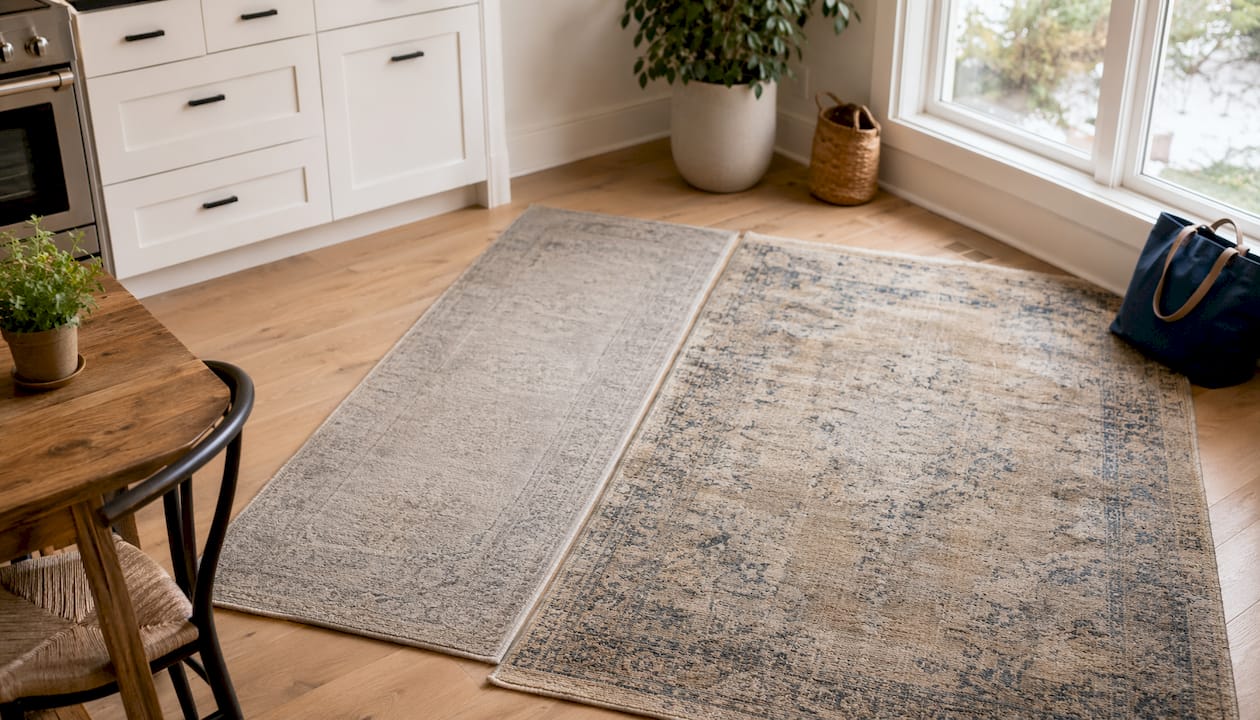
What materials in handmade rugs affect their aging process?
The fiber type is the single greatest factor in how a handmade rug wears. Wool is the most common and most forgiving choice. Its natural crimp gives it resilience, allowing the pile to spring back after compression. Silk adds a luminous quality but requires more careful handling because its fine filaments are more vulnerable to abrasion and moisture. Both materials age with grace when treated well.
Natural dyes behave in ways that synthetic dyes cannot match. Research confirms that natural dyes retain detectable chemical markers even after simulated 300 years of light exposure, indicating a durability that synthetic colorants rarely achieve. That means the rich indigo or madder red in a quality handmade rug is not simply fading to nothing. It is evolving, often toward warmer, more nuanced tones that add depth to the piece.
Some natural dyes follow a surprising path before they fade. Tannin-based dyes, used widely in traditional rug-making, may darken before fading due to chemical oxidation. This explains why older rugs sometimes appear richer in color than newer ones of the same type.
Key material factors that shape aging include:
- Wool fiber quality: High-lanolin wool resists dirt and moisture better, slowing fiber degradation.
- Silk content: Adds beauty but increases sensitivity to acidic conditions and humidity.
- Foundation materials: Cotton warps and wefts provide dimensional stability; wool foundations add cushion but can retain moisture.
- Natural vs. synthetic dyes: Natural dyes shift gradually and often beautifully; synthetic dyes tend to fade unevenly and harshly.
Pro Tip: When buying a handmade rug, ask specifically about the dye source. Vegetable-dyed rugs from reputable weavers age with far more elegance than those finished with chrome or acid dyes.
How does craftsmanship influence how handmade rugs wear over time?
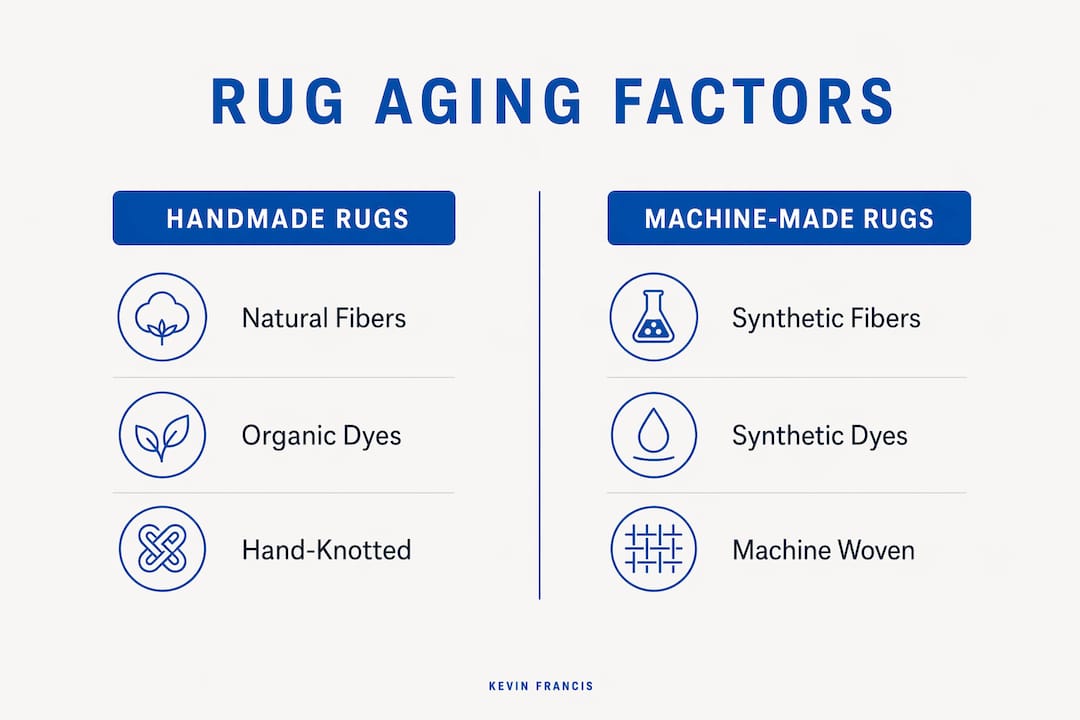
The weaving method determines how a rug holds together under decades of use. Hand-knotting, the technique used in Persian, Turkish, and Tibetan traditions, creates a structure where each knot is tied individually around the warp threads. This means the pile is mechanically locked in place rather than looped or glued. At Kevin Francis Design, Tibetan knotting is one of the core construction methods, and its structural integrity is precisely why these rugs remain beautiful for generations.
Hand-knotted rugs with higher knot density exhibit stronger structural integrity and resist pile thinning better over decades of use. Knot density is measured in knots per square inch (KPSI), and a higher count means finer, tighter construction. A rug with 100 KPSI will wear more evenly and hold its pattern definition far longer than one with 40 KPSI.
Knotting by hand using premium wool and silk creates durable structures resistant to pile flattening and structural breakage. Each individually tied knot also offers a repair opportunity that machine weaving cannot provide. A skilled restorer can reknot a damaged section without disturbing the surrounding pile.
The practical implications of craftsmanship quality on aging include:
- High KPSI construction: Resists localized thinning in high-traffic paths.
- Hand-knotted vs. hand-tufted: Hand-knotted rugs outlast hand-tufted ones because tufted pile is held by a latex backing that degrades over time.
- Warp and weft tension: Consistent tension during weaving prevents warping and buckling as the rug ages.
- Edge finishing: Hand-overcasted edges resist unraveling far longer than machine-serged edges.
Understanding the durability differences between construction methods helps you evaluate a rug’s long-term value before you buy.
What environmental and usage factors cause variations in rug aging?
Environment shapes how a handmade rug ages more than most owners realize. Light, humidity, temperature, and foot traffic each leave a distinct mark, and their combined effects can accelerate or slow the aging process dramatically.
Light exposure is the most visible culprit. UV radiation breaks down the molecular bonds in natural dyes, causing fading that concentrates in sun-exposed areas. The result is a rug that looks uneven, with bleached patches near windows and richer color in shaded zones. Rotation and protection from direct sunlight reduce uneven wear and dye fading, preserving both structural and aesthetic integrity.
Humidity and temperature work together in a particularly damaging way. Research shows that combined high heat and humidity significantly accelerate color fading in natural dyes, while temperature or humidity alone has minimal effect. This means a rug stored in a warm, damp basement ages far faster than one kept in a climate-controlled room.
Silk fibers face an additional threat in poor storage conditions. Acidic conditions and poor storage humidity lead to hydrolysis-driven degradation of silk fibers, a process that is silent and cumulative. Conservation experts identify this fiber hydrolysis as a key threat to luxury textile longevity, because the damage is invisible until the fiber literally crumbles.
Foot traffic creates a different kind of aging. The four primary usage factors that cause uneven wear are:
- Embedded dirt particles: Grit acts like sandpaper, abrading fibers internally and causing localized thinning and fraying from the inside out.
- Concentrated traffic paths: Doorways and hallways receive far more compression than room centers, creating visible wear lanes.
- Furniture pressure: Heavy furniture legs compress pile permanently if pads are not used.
- Improper underlays: A rug without a quality pad slides, buckles, and wears unevenly at fold points.
Placing your rug thoughtfully and protecting it in high-traffic areas extends its life considerably.
How do maintenance and cleaning practices affect the aging of handmade rugs?
Maintenance is the factor you control most directly, and it has an outsized effect on how a handmade rug ages. Proper maintenance including regular gentle vacuuming and professional cleaning delays fiber degradation and maintains rug aesthetics over the long term. The key word is “gentle.” Aggressive vacuuming with a beater bar tears at the pile and loosens knots.
The most effective care routine follows these principles:
- Vacuum regularly but gently: Use a suction-only attachment, moving with the pile direction. Avoid the fringe entirely.
- Rotate every 6–12 months: This distributes foot traffic and light exposure evenly across the entire surface.
- Schedule professional cleaning: A specialist who understands natural fibers and dyes should clean your rug every 2–3 years, depending on use.
- Avoid excessive moisture: Wet cleaning at home risks shrinkage, dye bleeding, and mold growth in the foundation.
- Keep harsh chemicals away: Standard carpet cleaners contain alkaline agents that strip natural lanolin from wool and weaken fiber structure.
Pro Tip: After any spill, blot immediately with a clean white cloth. Never rub. Rubbing drives the liquid deeper into the pile and spreads the stain laterally.
Professional cleaning for luxury rugs is not an indulgence. It is the single most effective maintenance step for preserving a handmade rug’s structure and color over decades. A professional wash removes the embedded grit that vacuuming cannot reach, the same grit that acts as an internal abrasive against every fiber.
Key Takeaways
Handmade rugs age distinctively because their natural fibers, hand-tied construction, and organic dyes respond to environment and use in ways that create patina rather than simple deterioration.
| Point | Details |
|---|---|
| Natural fibers age with character | Wool and silk develop patina over time; synthetic fibers simply degrade and flatten. |
| Knot density determines durability | Higher KPSI construction resists pile thinning and structural breakdown across decades of use. |
| Heat and humidity combine to fade dyes | Temperature and moisture together accelerate natural dye degradation far more than either factor alone. |
| Embedded dirt is the hidden enemy | Grit particles abrade fibers from within, causing uneven wear that vacuuming alone cannot prevent. |
| Rotation and professional cleaning preserve integrity | Rotating every 6–12 months and scheduling professional cleaning every 2–3 years are the two highest-impact care habits. |
What I’ve learned from watching rugs age over decades
The most common mistake I see is treating visible aging as damage. A handmade rug that has softened in color and developed a gentle sheen is not a rug in decline. It is a rug doing exactly what it was made to do. The patina on a well-maintained Persian or Tibetan piece is the textile equivalent of a fine wine opening up. It takes time, and it requires the right conditions.
What I find most collectors underestimate is the role of storage. A rug rolled incorrectly in a damp space for a single season can suffer more damage than twenty years of careful daily use. The hydrolysis process in silk fibers is invisible until it is catastrophic. I have seen pieces that looked pristine on the surface crumble at the fold lines because they were stored against a cold exterior wall.
The other misconception worth addressing directly: wear is not always a sign of poor quality. A high-traffic rug will show use. The question is whether it wears evenly and gracefully, which is a function of knot density and fiber quality, or whether it develops bald patches and fraying, which signals either poor construction or neglected maintenance. A rug from Kevin Francis Design, built on Tibetan knotting with premium wool, will wear evenly for generations when given basic care. That is not a marketing claim. That is what good construction does.
My honest advice: invest in a quality rug pad, rotate twice a year, and find a professional cleaner who specializes in handmade textiles before you need one urgently. Proactive care costs a fraction of restoration.
— Kevin O’Gara
Handmade rugs built to age beautifully
The rugs at Kevin Francis Design are made to be lived with, not preserved behind glass. Each piece is hand-knotted from premium wool using construction methods that reward proper care with decades of beauty.

The Lotto Hand-Knotted Wool Area Rug exemplifies this philosophy. Its dense knotting and natural wool pile are designed to develop a warm, luminous patina over time, growing more beautiful with each passing year. For those drawn to a softer palette, the Selendi Hand-Knotted Wool Area Rug offers the same structural integrity with a refined, timeless aesthetic. Both rugs reflect Kevin Francis O’Gara’s conviction that a truly great rug is an investment in lasting beauty, not just a floor covering.
FAQ
Why do handmade rugs develop a patina but machine-made rugs do not?
Handmade rugs use natural fibers and organic dyes that shift in tone gradually under light and use, creating a warm, layered patina. Machine-made rugs use synthetic materials that simply fade and flatten without developing any visual depth.
Do handmade rugs last longer than machine-made rugs?
Handmade rugs last significantly longer. Research shows handmade rugs can outlast machine-made alternatives by 10–20 times, provided they receive proper maintenance and are kept in appropriate environmental conditions.
How often should a handmade rug be professionally cleaned?
A handmade rug in regular use should receive professional cleaning every 2–3 years. Professional washing removes embedded grit that acts as an internal abrasive, which is the primary cause of fiber thinning over time.
What is the biggest environmental threat to a handmade rug’s color?
The combination of heat and humidity poses the greatest threat to natural dye stability. Research confirms that temperature and moisture together accelerate color fading far more than either factor does alone.
Can a worn handmade rug be restored?
Hand-knotted rugs can be restored by skilled restorers who reknot damaged sections individually. This repair option is unique to hand-knotted construction and is not available for machine-made or hand-tufted rugs.
Recommended
- Why Handwoven Rugs Develop Unique Character Over Time – Kevin Francis Design
- Handmade Rugs vs Machine-Made: Benefits Worth Knowing – Kevin Francis Design
- What Makes a Rug Truly Handmade: A Collector’s Guide – Kevin Francis Design
- Hand-Knotted vs Hand-Tufted Rugs: A Maker’s Comparison – Kevin Francis Design


