


"Timeless" is the most misused word in design. People use it to mean beige, safe, and forgettable, as if the way to last is to never make a choice. I think that is exactly backward. The rooms that still look good in fifty years are not the ones that played it safe. They are the ones built on good bones and real conviction. My whole aesthetic, what I call New Regency, is built on that idea: classical proportion underneath, and the confidence to mix old with new on top.
So before we get to the styles, here is the part the listicles skip. Timelessness is not a style you buy. It comes from three things.
A note: in the "Complete the Room" section below, some links are affiliate links. If you buy through them, KFD may earn a small commission at no cost to you. I only point to pieces I'd actually live with.
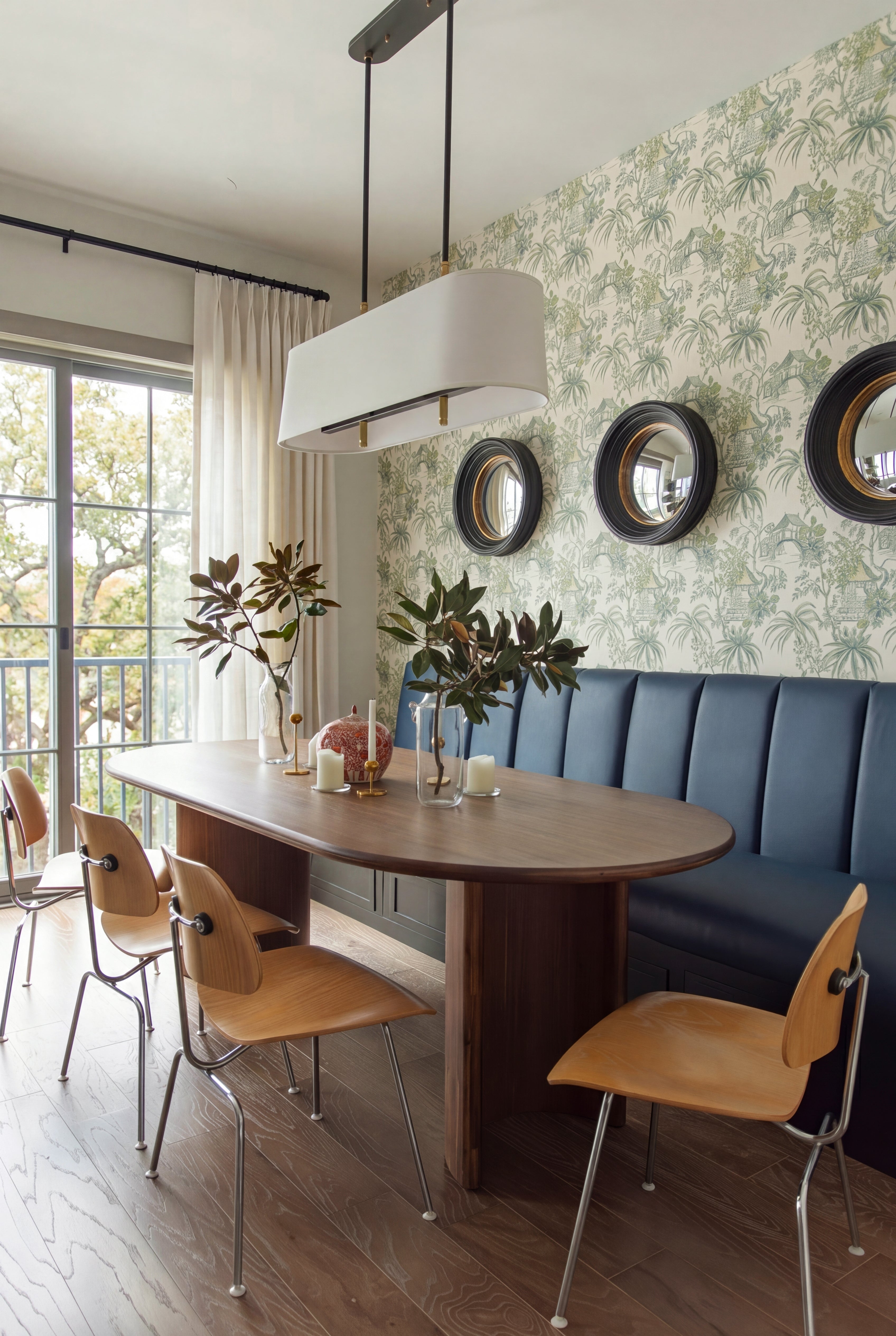
What actually makes a room timeless
Classical proportion. The reason a Georgian room still feels right today is proportion. The classical orders worked out the most pleasing relationships between height, width, and scale centuries ago, and nothing has improved on them since. Get the proportions right and a room reads as resolved no matter what you put in it. That foundation is the part of my style that will never change.
Contrast and intention. Old things look better with new things next to them. A room where everything matches and everything is from the same decade dates instantly, because it pins itself to a moment. Contrast and intention tell a far more compelling story than perfect agreement. A modern sofa under an antique mirror, a hand-knotted rug beneath a contemporary painting. That tension is what keeps a room alive. If mixing eras is the part that intimidates you, I wrote a whole guide on how to mix modern and vintage without it looking like an accident.
Buying what you love, not what you should. The hardest skill in design is telling the difference between loving something and thinking you ought to. Trend-chasing dates a room; genuine attachment does not. An investment piece is never overrated if you truly love it, and a room full of pieces you actually love will always feel timeless, because it feels like you.
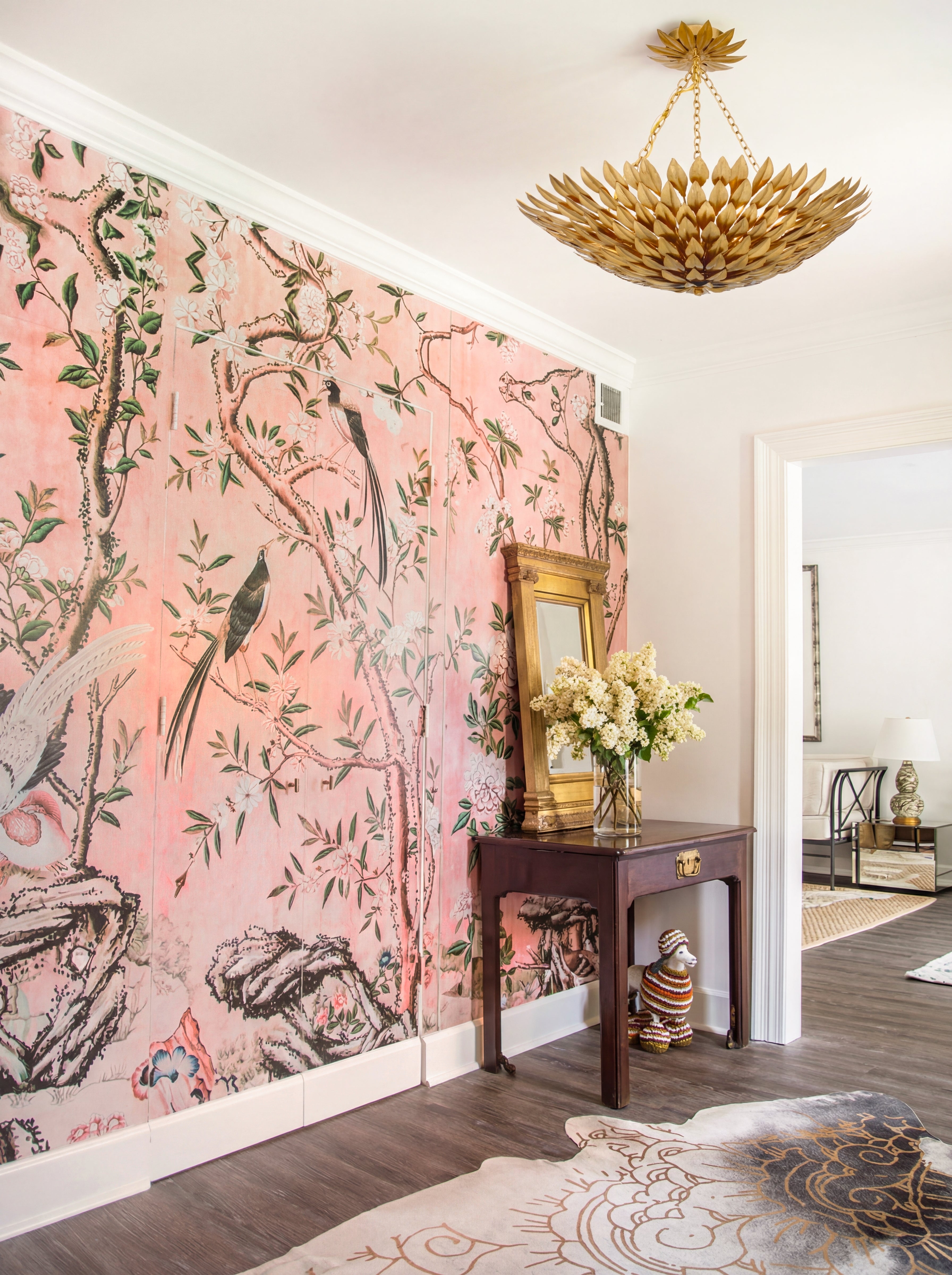
That entryway mural is a good example of contrast doing the heavy lifting: a classical scene on the wall, clean modern lines everywhere else. Pattern on the walls is one of the fastest ways to give a room a point of view, and you don't have to commit forever to do it. A removable design from our traditional and removable wallpaper collection lets you borrow that classical drama in a powder room or an entry without the permanence of hand-painting.
The timeless styles worth knowing
Neoclassical
The foundation of nearly everything that endures. Neoclassical design draws directly on classical proportion and architectural order, which is why it has never really gone out of style for more than a decade at a stretch. Think symmetry, restraint, and beautiful bones. Even if you never decorate in a strictly neoclassical way, its sense of proportion is the grammar the other timeless styles are written in.
Regency and Hollywood Regency
This is my home territory. Regency style, to me, is really about a relationship: Europe's love affair with classical and neoclassical design, reinterpreted with more glamour and color. Hollywood Regency took those same classical elements and exaggerated them for drama, gilt, lacquer, bold pattern, a sense of theater. Done with a light hand it is one of the most enduring looks there is, and I go deep on how to pull it off in my Hollywood Regency style guide. The mistake people make is taking it too seriously. It needs levity. A room like this should feel collected and a little playful, never like a museum. If you want the look without the whole-room commitment, start with the color: my guide to Regency color palettes is where I'd point you, and a saturated solid like a CHROMA rug anchors that kind of color story without competing with it.
Traditional and European antiques
Traditional design endures because it is rooted in centuries of craft. I lean French and love European antiques broadly, from Louis-era pieces to the pale, scrubbed elegance of Gustavian Swedish furniture. The key to keeping traditional from feeling stuffy is to use the antiques, not worship them. A gilt convex mirror or an old iron table earns its place by being lived with, not roped off. If you're building the look piece by piece, my breakdown of Regency furniture covers what to hunt for and how to use it, and a hand-knotted rug from the Iconium collection gives a traditional room the aged, heritage character that ties everything together.
Transitional
Transitional is the honest name for how most timeless rooms actually work: classical bones, modern comfort, and a mix of eras. It is New Regency without the glamour dialed up. If the idea of committing to one historical style feels like a costume, transitional is where you live. It is also the most forgiving place to start, because it is built on mixing rather than matching. A clean, modern flatweave like the Color Study collection is the kind of quiet anchor that lets antiques and contemporary pieces share a room comfortably.
Layered maximalism over cold minimalism
Strict minimalism photographs well and lives poorly. A room with nothing personal in it has nothing to age into. I would always rather a room be layered, patterned, and full of things with stories than empty in the name of restraint. Growing up around Atlanta's tree canopy and a family of collectors taught me that abundance, done with an eye, is its own kind of timeless. Houses should be lived in, and every room should be enjoyed. This layered, collected instinct is exactly what the Regency revival is really about, and a graphic, high-contrast piece from the Labyrinth collection is the kind of anchor a maximalist room can build a whole scheme around.
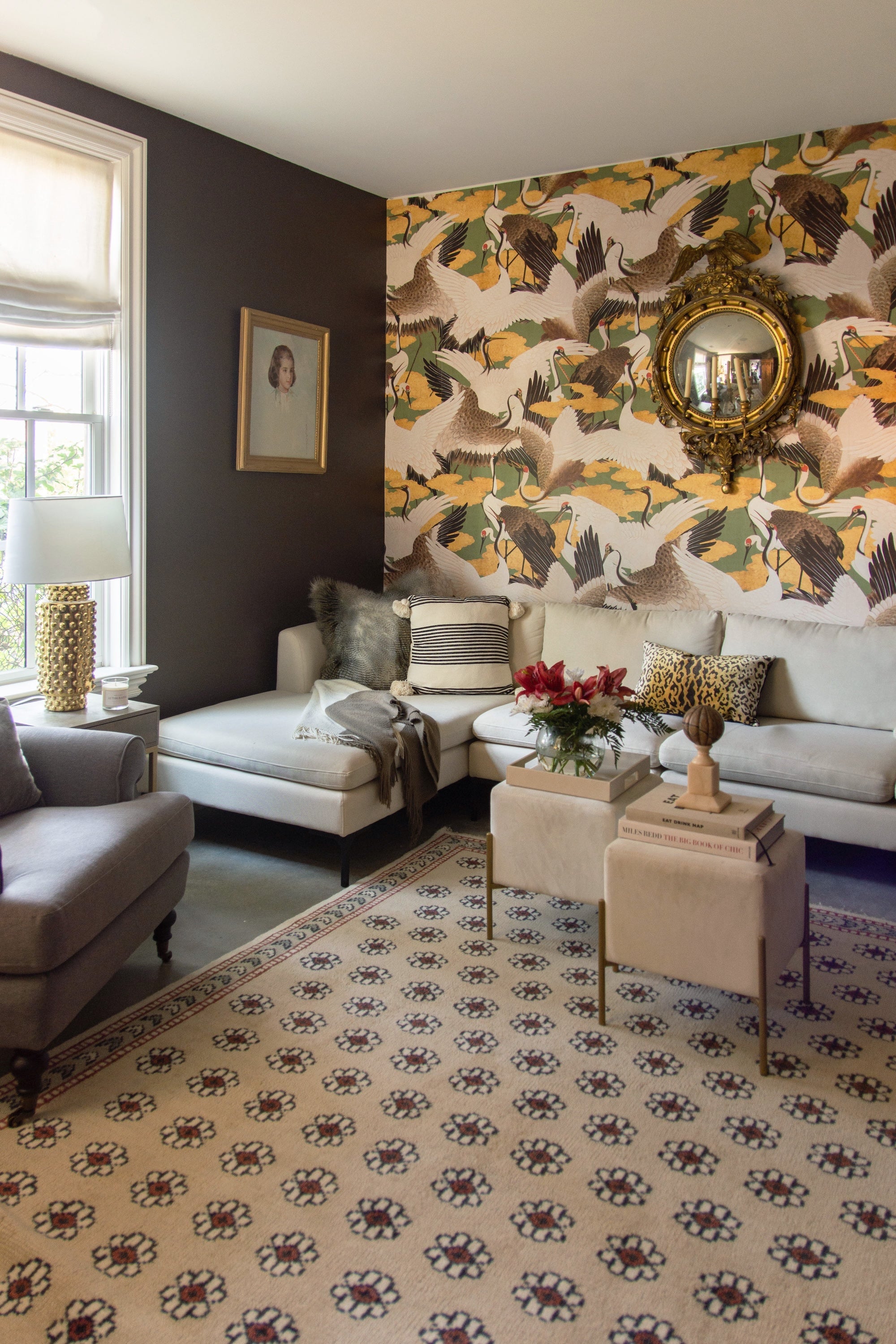
How to make any of these your own
Whatever style you land on, a few moves make a room feel personal and collected rather than catalog-ordered. Let a rug carry the color and the history of the room; a hand-knotted piece from the Iconium collection or a bold pattern from the Labyrinth collection gives a room an anchor with real character. Add a little gilt somewhere, and a mirror, ideally an old one, to bounce light and add depth. And give every room a hint of red, even something as small as the binding on a book. These are small things, but they are the difference between a room that follows a style and a room that owns it. You can see how I put it together across my own projects on the interior design portfolio.
Complete the room
Rugs and wallpaper are ours; the rest of a collected room isn't, so here's the shortlist I'd shop for the pieces we don't make: one antique or antiqued mirror to bounce light, a piece of case furniture with some age to it, an elegant chair you actually respond to, and an accessory with a little gilt. Buy those for love, not for the look, and they'll outlast every trend.

Timeless design: quick answers
What is the most timeless interior design style?
Anything built on classical proportion: neoclassical, traditional, and transitional all endure for that reason. But the most timeless room is one filled with pieces you genuinely love rather than ones chosen to follow a trend.
What makes an interior design timeless?
Good proportion, contrast between old and new, and genuine personal attachment to the pieces in the room. Matchy, trend-driven rooms date fastest; collected, intentional ones last.
What is New Regency style?
It is my signature blend of new and old: a neoclassical foundation, the glamour of the Regency and Hollywood Regency periods, and fresh, playful color. Classical bones with the confidence to mix eras and have fun.
Is minimalism timeless?
The restraint can be, but cold, impersonal minimalism rarely is. A room needs some warmth and personality to age well. Layering and a point of view tend to last longer than emptiness.
Where to start
Pick the style that genuinely pulls at you, build on good proportion, and mix in pieces you love rather than ones you think you should own. If you want a starting point with real character, a rug is the easiest way to set the tone of a room. Browse the full range of area rugs, or get in touch about a custom piece made for your space.


