


Custom wallpaper is defined as a bespoke wallcovering, designed and produced to a specific brief, that reshapes the visual identity, emotional atmosphere, and operational durability of a hotel space. Understanding why custom wallpaper transforms hotel interiors means recognizing it as an architectural tool, not a decorative afterthought. Commercial-grade wallpaper lasts up to 10 years in high-traffic hospitality environments, compared to just 2–3 years for paint. That gap alone makes a compelling case for investment. Kevin Francis Design brings this thinking to life through bespoke wallcoverings that combine artisan craftsmanship with the performance demands of modern hospitality.
How does custom wallpaper create emotional immersion in hotels?
Custom wallpaper functions as an active design element that shapes how guests feel the moment they enter a space. A painted wall holds color. A thoughtfully designed wallcovering holds a story, a texture, a mood. That distinction is the foundation of great hotel design.
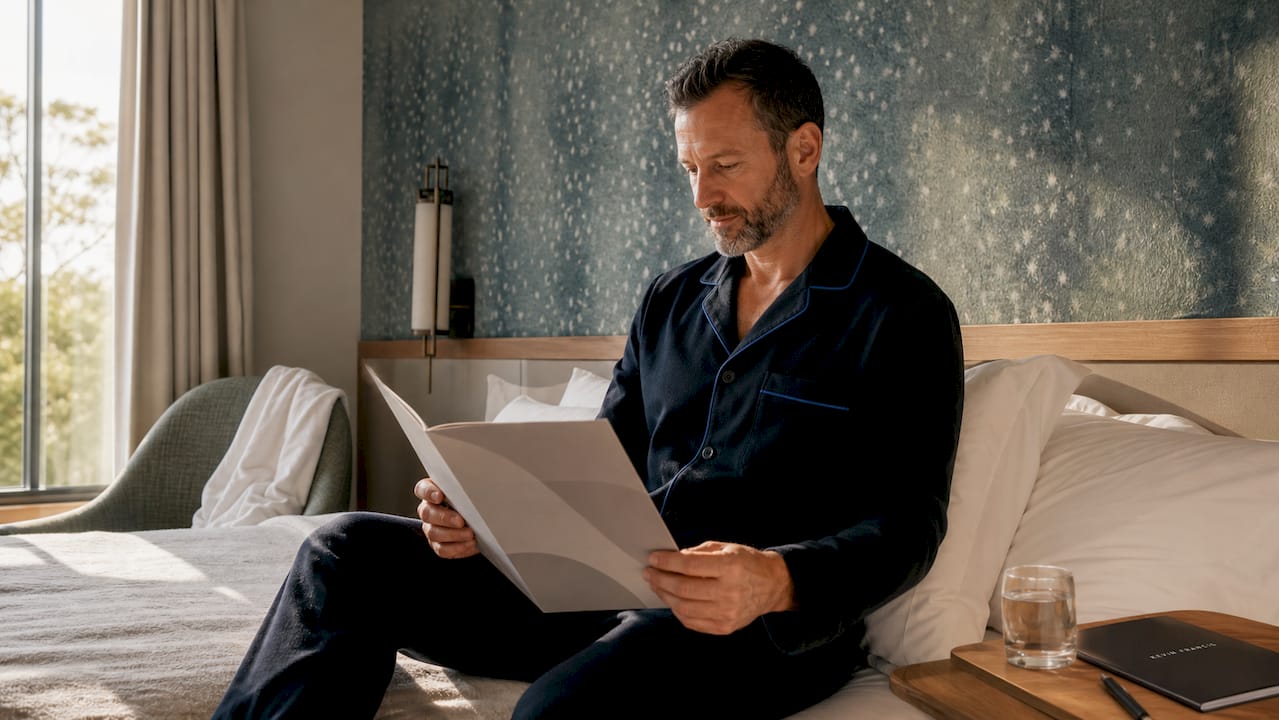
Guests value emotional immersion and multisensory experience over functional hotel quality when forming brand attitudes. This means the spatial design of a room, including its walls, does more to drive loyalty than thread counts or minibar selections. A mural depicting local flora in a boutique coastal hotel, or a geometric pattern drawn from the building’s architectural history, creates a sense of place that guests carry with them long after checkout.
Texture and pattern amplify this effect. Wallpaper introduces tactile depth that flat paint simply cannot replicate. A grasscloth-effect surface in a guest room reads differently under morning light than under evening lamplight, creating a living quality that shifts the guest’s experience through the day.
“Wallpaper is not decoration. It is the narrative layer of a room. When it is designed with intention, it becomes the detail guests photograph, share, and remember.”
Digital printing technology now enables custom hotel murals to move from concept to installation in a matter of weeks. That speed means a hotel no longer needs to choose between a fast renovation and a distinctive one. Designers can commission site-specific imagery, scaled precisely to a corridor or lobby wall, with color accuracy that matches brand guidelines to the millimeter.
Unique wall murals become signature hotel images that guests photograph and share across social platforms. That organic visibility is a form of brand marketing that no paid campaign can fully replicate. A striking feature wall in a lobby becomes the backdrop for hundreds of guest photographs each month.
- Mural storytelling connects the property to its location, history, or brand ethos
- Textured surfaces create sensory depth that changes with light and time of day
- Pattern repetition in corridors builds visual rhythm and wayfinding comfort
- Bespoke designs signal investment and care, raising perceived property value
Pro Tip: Commission a bespoke wallpaper design before finalizing your lighting plan. The two elements interact profoundly, and designing them together produces far richer results than retrofitting one around the other.
What practical benefits does custom wallpaper offer for high-traffic hotels?
Durability is the argument that converts skeptical hotel owners. Custom wallpaper, specified correctly, outperforms paint on every operational metric that matters in a hospitality setting.
Commercial vinyl wallpapers used in hospitality are scrubbable, scratch-resistant, mold-resistant, and engineered to meet fire safety regulations. A housekeeping team can wipe down a vinyl wallcovering with standard cleaning solutions without degrading the surface or the print. Paint, by contrast, shows scuffs within months in a busy corridor and requires touch-ups that rarely match the original color precisely.
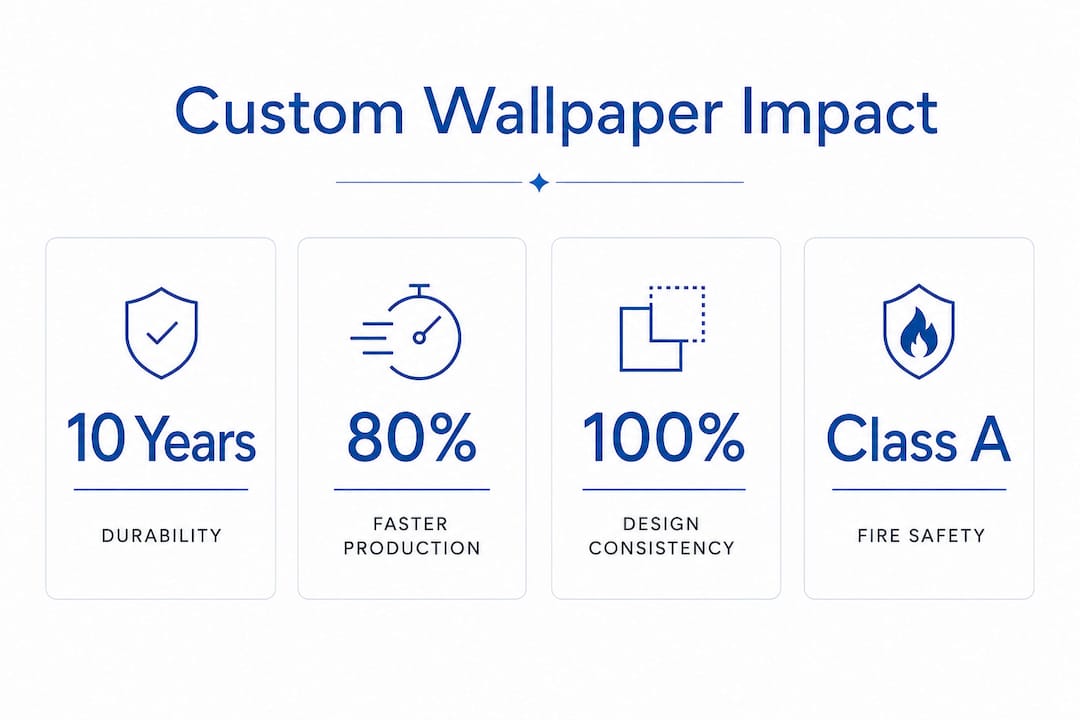
The lifespan comparison is stark. Commercial-grade wallpaper lasts up to 10 years, while paint requires reapplication every 2–3 years. Over a decade, a hotel that chooses wallpaper avoids three or four full repainting cycles, each of which requires room closures, labor costs, and guest disruption.
Fire safety compliance is non-negotiable in hospitality. Custom wallcoverings specified for hotel use carry Class A or Class 1 fire ratings, meeting the standards required by building codes across the United States. Specifying off-the-shelf residential wallpaper in a commercial setting creates both a safety risk and a liability exposure.
- Scrubbability: Type II commercial-grade surfaces withstand repeated cleaning without surface degradation
- Moisture resistance: Engineered substrates resist mold and humidity in bathrooms and pool-adjacent spaces
- Fire compliance: Hotel-grade wallcoverings meet ASTM E84 and NFPA 101 flame-spread requirements
- Longevity: A 10-year lifespan reduces lifecycle costs compared to frequent repainting
- Reduced disruption: Fewer renovation cycles mean fewer room closures and less operational interruption
Commercial wallpaper’s semi-permanence means removal does pull primer and paint from the wall surface, requiring re-preparation before re-installation. That is a real consideration. The long lifespan, however, means most hotel owners will not face that process for nearly a decade, making the initial investment straightforward to justify.
How do technological advances enable rapid, versatile hotel wallpaper design?
Digital printing has fundamentally changed what is possible in custom hotel wallcoverings. Production timelines that once stretched to months now compress to weeks, without sacrificing resolution or color fidelity.
Digital printing advances allow manufacturers to layer textures, use varied substrates including eco-friendly and fire-resistant materials, and produce high-fidelity tactile surfaces at scale. Haptic printing techniques add physical dimension to a printed surface, so a design that depicts woven linen or hammered metal actually feels textured under the hand. That sensory detail elevates the perceived quality of a space in ways that photography alone cannot capture.
The collaborative design workflow has also matured. Architects and interior designers now work directly with wallcovering manufacturers through digital proofing systems, reviewing scaled mock-ups on screen before a single roll is printed. This reduces costly errors and ensures the finished installation matches the design intent precisely.
- Brief and concept: The hotel’s brand guidelines, color palette, and spatial measurements are shared with the design team
- Digital proofing: Scaled artwork is rendered and reviewed, with color-matching against physical swatches
- Substrate selection: Material is chosen based on the room’s traffic level, moisture exposure, and fire requirements
- Production: Digital printing produces the full run, with consistent color across every panel
- Installation: Professional installers apply the wallcovering to Level 5 prepared wall surfaces
Maintaining design consistency across multiple hotel properties is one of the clearest advantages of digital production. A brand with 20 properties can specify the same custom pattern, printed to the same color standard, installed in every location. That visual coherence is a form of brand architecture that paint and generic wallpaper cannot deliver.
Pro Tip: Request a physical strike-off sample, a small printed section on the actual substrate, before approving full production. Screen color and printed color differ, and the strike-off eliminates surprises at installation.
What are best practices for integrating custom wallpaper across hotel spaces?
Each area of a hotel presents different demands, and the wallpaper specification should reflect those differences. A one-size-fits-all approach produces mediocre results. A room-by-room strategy produces a property that feels considered and coherent.
Guest rooms: creating calm and character
Guest rooms benefit most from wallpaper applied as a feature wall behind the headboard. This creates a focal point that anchors the room’s design without overwhelming a smaller space. Calming textures, soft botanical prints, or tonal geometric patterns work well here. Lighter, cooler colors in hotel interiors increase guests’ perception of environmental quality and willingness to pay a price premium. That finding has direct implications for how you specify color in guest rooms.
Corridors: durability with wayfinding intelligence
Corridors are the hardest-working surfaces in any hotel. They absorb luggage scuffs, cleaning trolley impacts, and thousands of daily foot-traffic passes. Wallpaper serves as an architectural tool for wayfinding and cognitive ease in hospitality design. A pattern that subtly shifts in tone between floors, or a directional motif that guides guests toward elevators, does functional work while remaining visually pleasing.
Lobbies: the statement moment
The lobby is where first impressions form and where custom wall art for corporate branding delivers its highest return. A full-height mural, a textured grasscloth feature wall, or a metallic-print panel creates the jewel-box effect that guests remember and photograph. Scale matters here. A design that reads beautifully on a mood board can feel timid when installed across a 20-foot lobby wall. Always review scaled drawings before finalizing the design.
| Hotel area | Recommended approach | Key specification priority |
|---|---|---|
| Guest rooms | Feature wall behind headboard, calming tones | Acoustic comfort, scrubbability |
| Corridors | Durable vinyl, wayfinding patterns | Type II commercial grade, impact resistance |
| Lobbies | Statement murals, textured grasscloth | Visual scale, fire compliance |
| Bathrooms | Moisture-resistant substrate, bold accents | Mold resistance, humidity tolerance |
Professional installation requires Level 5 wall finishes and environmental monitoring to prevent adhesive failures. Skipping proper surface preparation is the single most common cause of peeling and bubbling in hotel wallpaper installations. Budget for it from the start.
Key Takeaways
Custom wallpaper transforms hotel interiors by combining emotional storytelling, commercial durability, and design precision that paint and generic wallcoverings cannot match.
| Point | Details |
|---|---|
| Durability advantage | Commercial-grade wallpaper lasts up to 10 years, versus 2–3 years for paint, reducing lifecycle costs. |
| Emotional impact | Guests prioritize emotional immersion over functional amenities, making wall design a loyalty driver. |
| Fire and safety compliance | Hotel-grade wallcoverings must meet ASTM E84 and NFPA 101 standards; residential products do not qualify. |
| Digital production speed | Digital printing compresses timelines to weeks and maintains color consistency across multiple properties. |
| Room-specific specification | Each hotel area requires a different substrate, pattern scale, and durability rating for best results. |
Wallpaper as the most underestimated decision in hotel design
I have watched hotel owners spend months deliberating over furniture and minutes choosing wall finishes. That inversion of priorities costs them more than they realize.
The wall is the largest surface in any room. It sets the emotional register before a guest touches the bed, opens the minibar, or reads the welcome card. When that surface is generic, the room feels generic, regardless of how much was spent on everything else. When it carries a considered design, the entire space coheres around it.
What I have found, working across hospitality and residential interiors, is that wallpaper decisions made early in the design phase produce dramatically better outcomes than those made at the end. When the wallcovering is specified first, lighting, furniture, and textiles can be selected to complement it. When it is chosen last, it is always a compromise.
Emotional immersion from wallpaper can be more influential on guest behavior than room size or amenities. That is not a decorator’s opinion. It is a research finding. Hotel owners who understand this invest in their walls with the same seriousness they bring to their beds and their restaurants.
The other thing I would urge is professional installation, specified from the outset. A beautiful design installed on an improperly prepared surface will fail. The wallpaper gets blamed. The real cause was a skipped step in surface preparation. Protect your investment by treating installation as part of the design budget, not an afterthought.
— Kevin O’Gara
Bespoke wallpaper for hotel interiors by Kevin Francis Design
Kevin Francis Design offers a collection of bespoke wallcoverings built for spaces that demand both beauty and resilience. The Wilde Spotted Antelope Hide Wallpaper in Quartz Pink brings a warm, organic energy to guest rooms and lobby feature walls, with a painterly spotted pattern that reads differently at every scale.
For richer, warmer tones, the Whiskey Brown colorway offers depth and sophistication suited to lounge areas and executive floors. The Slate Blue variant delivers a cooler, more architectural presence, ideal for corridors and contemporary lobby installations. Each colorway is produced to commercial standards, designed to hold its character across years of hospitality use. Explore the full range at Kevin Francis Design to find the right fit for your property.
FAQ
How long does custom hotel wallpaper last?
Commercial-grade custom wallpaper lasts up to 10 years in high-traffic hospitality environments. That compares to 2–3 years for paint, making wallpaper the more cost-effective choice over a property’s lifecycle.
Does custom wallpaper meet hotel fire safety codes?
Hotel-specified wallcoverings carry Class A or Class 1 fire ratings and meet ASTM E84 and NFPA 101 flame-spread requirements. Residential wallpaper does not meet these standards and should never be used in commercial hospitality settings.
How does wallpaper affect the guest experience?
Research shows that emotional immersion from spatial design, including wall treatments, influences guest behavior more than room size or amenities. A well-designed wallcovering shapes mood, perceived quality, and likelihood of return.
What wall preparation does custom wallpaper require?
Professional installation requires Level 5 wall finishes and controlled environmental conditions to prevent adhesive failures. Skipping surface preparation is the leading cause of peeling and bubbling in hotel wallpaper installations.
Can custom wallpaper be consistent across multiple hotel properties?
Digital printing produces color-accurate panels to the same standard across unlimited locations. A hotel brand can specify one custom design and install it consistently across every property in its portfolio.


