


Bespoke, place-based interiors are the single most reliable mechanism boutique hotels have for converting price-sensitive browsers into loyal, preference-led guests. When a property tells a story no other building can replicate, guests stop comparing nightly rates and start seeking the experience. Experience-led interior design helps boutique hotels command higher ADR because guests are choosing a distinct narrative, not a commodity room. That shift from price comparison to preference is where the real commercial advantage lives, and it begins the moment someone steps through the door.
Key Takeaways
Bespoke, place-based interiors convert price-sensitive guests into preference-led bookers by creating a story and a set of sensory experiences no competitor can replicate.
| Point | Details |
|---|---|
| ADR and RevPAR impact | Experience-led design supports higher ADR by shifting guests from rate comparison to preference-based booking. |
| Place-based storytelling | Drawing from local culture and history creates authentic narratives that chain properties cannot replicate. |
| Art and bespoke furnishings | A survey of 268 guests empirically linked artistic engagement to improved overall hotel experience. |
| Commissioning discipline | A brief with clear KPIs, physical sample approvals, and a signed maintenance plan protects both the creative and commercial investment. |
| Kevin Francis Design | Offers hand-knotted rugs, custom textiles, and lighting for boutique hospitality developers seeking hospitality-grade bespoke specification. |
Table of Contents
- How do bespoke interiors move ADR, occupancy, and RevPAR?
- What is place-based design, and why does it matter?
- How do specific bespoke elements shape the guest journey?
- How do you commission bespoke interiors for a boutique hotel?
- What should you budget, and when will it arrive?
- How do you keep bespoke pieces beautiful under hotel use?
- What do real outcomes look like?
- A checklist for starting your bespoke interior project
- A perspective from Kevin Francis Design
- Bespoke interiors for boutique hotels, made tangible
- Sources
- FAQ
How do bespoke interiors move ADR, occupancy, and RevPAR?
Personalization and experience-driven service in boutique hotels drive higher guest spend, stronger loyalty, and reduced dependence on OTA discounting. The mechanism is straightforward: a guest who cannot find the same experience elsewhere has no rational basis for demanding a lower rate. That pricing power flows directly into ADR, and sustained ADR integrity protects RevPAR even when occupancy softens.
The installation pays for itself in under three months, and the asset continues earning for years. Bespoke furnishings outperform off-the-shelf pieces for delivering that kind of long-term narrative value.
| Design move | Likely metric direction | Mechanism |
|---|---|---|
| Signature site-specific art | ADR uplift, social sharing | Emotional resonance, Instagrammable moments |
| Commissioned area rugs | Perceived luxury, dwell time | Tactile warmth, visual anchoring |
| Custom lighting | Ambiance, review sentiment | Mood differentiation from chain properties |
| Bespoke wall coverings | Brand recall, direct bookings | Unique visual identity guests remember |
What is place-based design, and why does it matter?
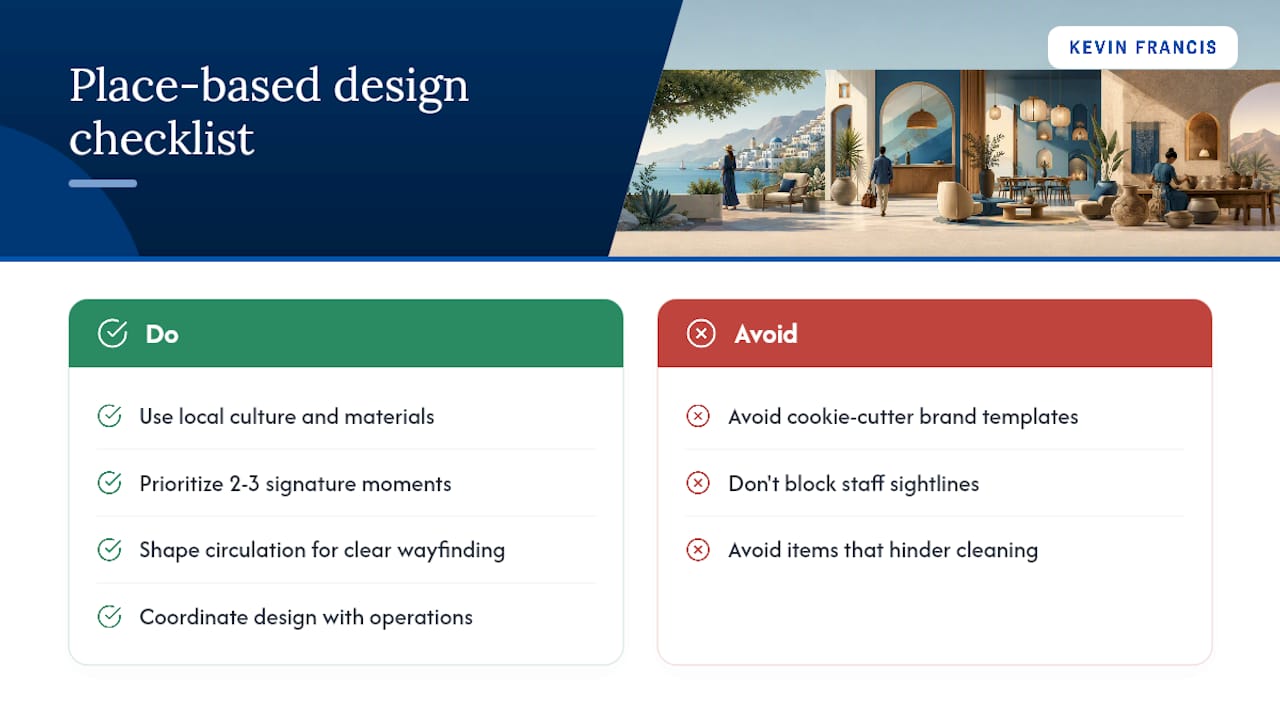
Place-based design draws from local culture, history, and material traditions to treat each property as an individual narrative rather than a replicable template. It is the opposite of brand-standard aesthetics, where a guest in Denver and a guest in Savannah encounter the same furniture plan and the same palette. Place-based work makes the building inseparable from its location.
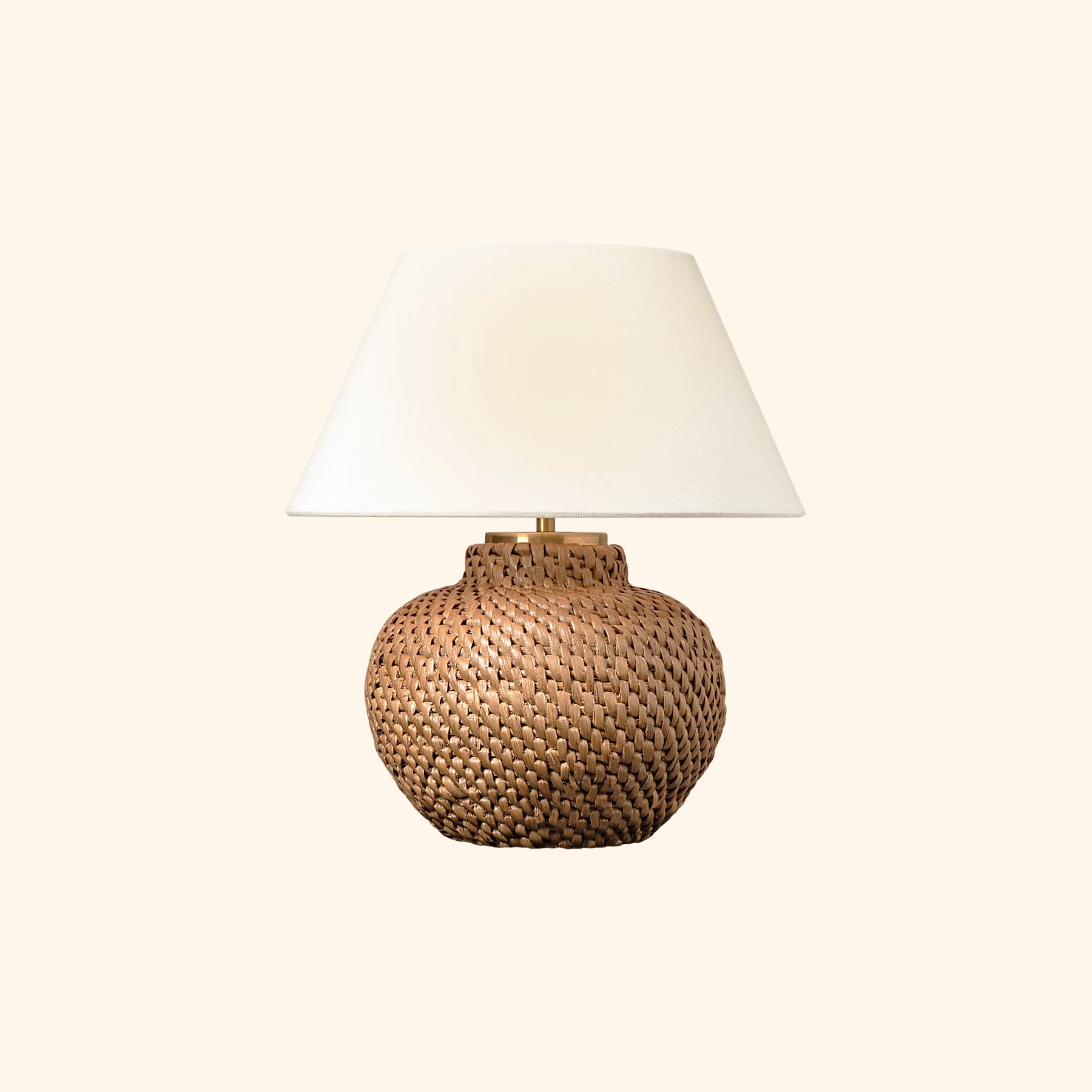
Storytelling is expressed through choices that most guests feel before they consciously register them: the grain of a locally sourced timber, a hand-knotted textile whose pattern echoes regional craft traditions, an arrival sequence that frames a view or a courtyard with intention. Circulation matters too, with carefully selected interior door designs and trends playing a key role in shaping the guest arrival and wayfinding experience. A well-designed path from entrance to room creates a series of small revelations rather than a corridor to endure.
One operational note: the story must support service, not fight it. A dramatic installation that blocks sightlines for front-desk staff, or a rug so precious it cannot be cleaned in place, creates hidden costs that erode the investment. Design and operations need to be briefed together from day one.
Pro Tip: Two or three deeply considered signature moments tied to place will outperform a property-wide surface theme every time. Pick the arrival, one public-space anchor, and one in-room detail, then make those three things genuinely extraordinary.
How do specific bespoke elements shape the guest journey?
A mixed-methods study (interviews n=15; survey n=268) found that visual art in luxury hotel settings engages guests through attention, cognitive inquiry, and emotive immersion, with artistic engagement empirically linked to improved overall hotel experience. That finding applies equally to commissioned rugs, custom lighting, and fitted textiles. Each element is a touchpoint that either deepens the story or dilutes it.
- Site-specific art: Holds attention at arrival and in corridors, prompts conversation, and generates social sharing that functions as organic marketing.
- Commissioned area rugs: Anchor public spaces visually and acoustically. The Lotto Hand-Knotted Wool Area Rug from Kevin Francis Design illustrates what hospitality-grade specification looks like: hand-knotted wool construction, a geometric pattern with genuine design lineage, and the scale and durability a lobby demands.
- Custom lighting: Shifts mood between day and evening service, signals quality, and is one of the fastest ways to separate a space from anything a guest has seen in a chain property.
- Bespoke wall coverings and upholstery: Create the layered, jewel-box effect that photographs beautifully and lingers in memory long after checkout.
- Sensory cues (scent, sound, texture): Reinforce the narrative at a subconscious level, extending perceived luxury without additional square footage.
How do you commission bespoke interiors for a boutique hotel?
A disciplined commissioning process protects both the creative vision and the budget. Work through these stages in sequence:
- Define brand narrative and KPIs. Write a one-page brief covering guest profile, signature moments, target ADR uplift, and the story the property tells.
- Scope and budget. Identify priority spaces and set a budget envelope by asset class before approaching any designer.
- Select a design partner. Look for hospitality-specific experience, a portfolio of place-based work, and transparent lead-time commitments. Ask to see maintenance plans from previous projects.
- Prototype and sample phase. Require physical samples for every textile and finish. Approve color, texture, and scale on-site, not on screen.
- Production and quality control. Agree on milestone inspections during fabrication, especially for handcrafted pieces with long lead times.
- Installation and handover. Schedule installation outside peak occupancy. Include a lighting-tuning session and a staff orientation so the team can speak knowledgeably about each piece.
Red flags in proposals: vague deliverables with no unit quantities, missing maintenance schedules, lead times that seem implausibly short for handcrafted work, and pricing that bundles design fees with fabrication costs invisibly.
Questions to ask designers: How do you handle on-site prototyping? What is your process when a fabricated piece does not match the approved sample? Who owns the intellectual property in a commissioned design?
What should you budget, and when will it arrive?
Handcrafted elements carry lead times that surprise owners new to bespoke commissioning. Custom hand-knotted rugs typically require 12–20 weeks from approved design to delivery. Bespoke furniture runs 10–16 weeks. Site-specific art installations vary widely, from 8 weeks for a single canvas to 6 months for a structural or multi-panel work.
Phased delivery reduces operational disruption: commission public-space anchors first, then guest rooms in rotation, so the property remains open and revenue-generating throughout.
| Asset type | Typical lead time | Key procurement consideration |
|---|---|---|
| Hand-knotted area rugs | 12–20 weeks | Approve sample on-site; confirm fiber and pile spec |
| Bespoke furniture | 10–16 weeks | Require finish samples; confirm COM (customer’s own material) policy |
| Site-specific art | 8–20 weeks | Agree installation method and wall-fixing spec in contract |
| Custom lighting | 8–16 weeks | Confirm electrical compliance and dimmer compatibility |
| Bespoke wall coverings | 6–10 weeks | Require fire-rating certification for hospitality use |
Even a modest ADR uplift compounds significantly. A $20 rate premium sustained across 200 occupied nights per year on 20 rooms generates $80,000 in additional annual revenue. That figure alone justifies a meaningful bespoke investment in most boutique models.
How do you keep bespoke pieces beautiful under hotel use?
Material specification is where bespoke projects succeed or fail in the long run. A hand-knotted wool rug is a sound hospitality investment when specified correctly; the same rug in the wrong pile weight for a high-traffic corridor becomes a maintenance liability within two seasons.
- Specify textiles with an abrasion rating appropriate to the traffic level of each space (Martindale 25,000+ for seating, 40,000+ for high-traffic upholstery).
- Require stain-resistant fiber treatments or specify inherently cleanable fibers such as wool, which releases most soils without chemical intervention.
- Choose low-VOC finishes and responsibly sourced fibers. Guests increasingly notice and value these choices, and they extend asset life by reducing off-gassing degradation.
- Build rug rotation schedules, upholstery cleaning intervals, and refinishing windows into vendor contracts at the point of purchase, not after the first incident.
Pro Tip: Write a maintenance schedule directly into the purchase contract, with the vendor’s signature. Specify cleaning methods, approved products, and the interval for professional inspection. A signed schedule is the difference between a 10-year asset and a 4-year replacement.
For specifying bespoke rugs in hotel public spaces, scale, pile density, and backing type are the three variables that determine whether a piece performs as beautifully in year five as it did on opening day.
What do real outcomes look like?
Curated art creates emotional resonance and can materially improve perceived luxury, with documented practitioner evidence showing that bespoke installations have been associated with a 23% increase in off-season occupancy in one cited firm’s case example. That figure reflects what happens when a property gives guests a reason to visit that exists independently of weather or local events.
- A lobby anchored by a commissioned rug and a site-specific artwork creates an arrival moment guests photograph and share, functioning as low-cost referral marketing.
- Luxury boutique hotel design that layers handwoven textiles, custom lighting, and place-specific art consistently produces stronger review sentiment and higher perceived value scores than properties relying on off-the-shelf furnishing packages.
- Kevin Francis Design works with boutique hospitality developers to commission rugs, textiles, and lighting that carry a property’s narrative from the lobby through to the guest room.
A checklist for starting your bespoke interior project
Pre-approval
- Define the property’s signature moment and the two or three spaces that will carry it
- Set a budget envelope by asset class
- Designate an internal project lead with authority to approve samples
Procurement
- Require physical samples for every textile, finish, and paint color
- Confirm maintenance plan is included in vendor contract before signing
- Agree on a phased delivery schedule that protects operational continuity
- Conduct an on-site mockup or prototype review before full production
Pre-opening and post-install
- Schedule a lighting-tuning session after installation
- Brief front-desk and housekeeping staff on each bespoke piece and its care requirements
- Photograph every installed element for insurance, marketing, and future procurement reference
A perspective from Kevin Francis Design
The most common mistake we see in boutique hotel commissioning is treating bespoke as decoration rather than strategy. A hand-knotted rug or a site-specific artwork is not finishing touch; it is the argument the property makes to every guest about why this place is worth the rate. When owners brief us with clear KPIs alongside the creative vision, the resulting pieces do measurable commercial work. When the brief is purely aesthetic, the outcome is beautiful but often underperforms. The discipline of connecting craft to commercial intent is what separates a memorable property from a merely pretty one.
Bespoke interiors for boutique hotels, made tangible
Kevin Francis Design brings the craft of bespoke interior specification directly to boutique hospitality developers. Where generic furnishing packages leave a property looking like every other well-appointed room block, our hand-knotted rugs, original textiles, and curated lighting give your spaces a material identity guests feel the moment they arrive. The Lotto Hand-Knotted Wool Area Rug is one example: hospitality-grade wool construction, a geometric pattern with genuine design lineage, and the scale to anchor a lobby or a suite sitting area with quiet authority. Custom sizing and colorway options mean the piece works within your property’s narrative, not against it. Browse the collection or reach out to discuss a custom interior design commission tailored to your property’s story and KPIs.
Sources
- Interior Design for Boutique Hotels: Crafting Unique Guest Experiences | RMCAD
- Unveiling the power of storytelling and co‐design: Enhancing customer value in cultural boutique hotels — Intaka Piriyakul, Rapepun Piriyakul. International Journal of Tourism Research.
- The Business Case for Boutique Hotels: Higher Profitability Through Personalization - Javier Burillo
FAQ
Why do bespoke interiors help boutique hotels charge more?
Bespoke interiors shift guests from comparing rates to seeking a specific experience, removing price as the primary decision factor. Experience-led design supports higher ADR because guests are choosing a story, not a commodity room.
What is place-based design in boutique hotels?
Place-based design draws from a property’s local culture, history, and material traditions to create an interior narrative unique to that location. RMCAD describes it as treating each property as an individual story rather than a replicable template.
How long does it take to commission a bespoke rug for a hotel?
Hand-knotted area rugs typically require 12–20 weeks from approved design to delivery, depending on size and complexity. Plan for physical sample approval on-site before committing to full production.
Which bespoke elements have the strongest impact on guest reviews?
Site-specific art, commissioned rugs, and custom lighting consistently appear in guest reviews as markers of quality and distinctiveness. A mixed-methods study of 268 guests empirically linked artistic engagement to improved overall hotel experience.
How do I protect a bespoke investment from wear and tear?
Write a maintenance schedule, approved cleaning methods, and refinishing intervals directly into the vendor contract at purchase. Specify textiles with appropriate abrasion ratings for each space’s traffic level.
Recommended
- Why Bespoke Furnishings Outperform Off-the-Shelf Pieces – Kevin Francis Design
- Why Bespoke Home Decor Commissions Pay Off – Kevin Francis Design
- Luxury Boutique Hotel Design: Inside Proper Hotels Collection – Kevin Francis Design
- Specifying Bespoke Rugs for Hotel Public Spaces – Kevin Francis Design


