


Knife, box, cartridge, and pin pleats are the four pleated lampshade styles worth knowing, and each one signals a different room personality. Knife pleats suit classic silk empire shades in traditional rooms. Box pleats bring architectural weight to modern spaces. Cartridge pleats read relaxed and countryish. Pin, or accordion, pleats add a delicate touch to boudoir lighting. The right one depends on your fabric, your frame, and how much drama your room can hold.
TL;DR:
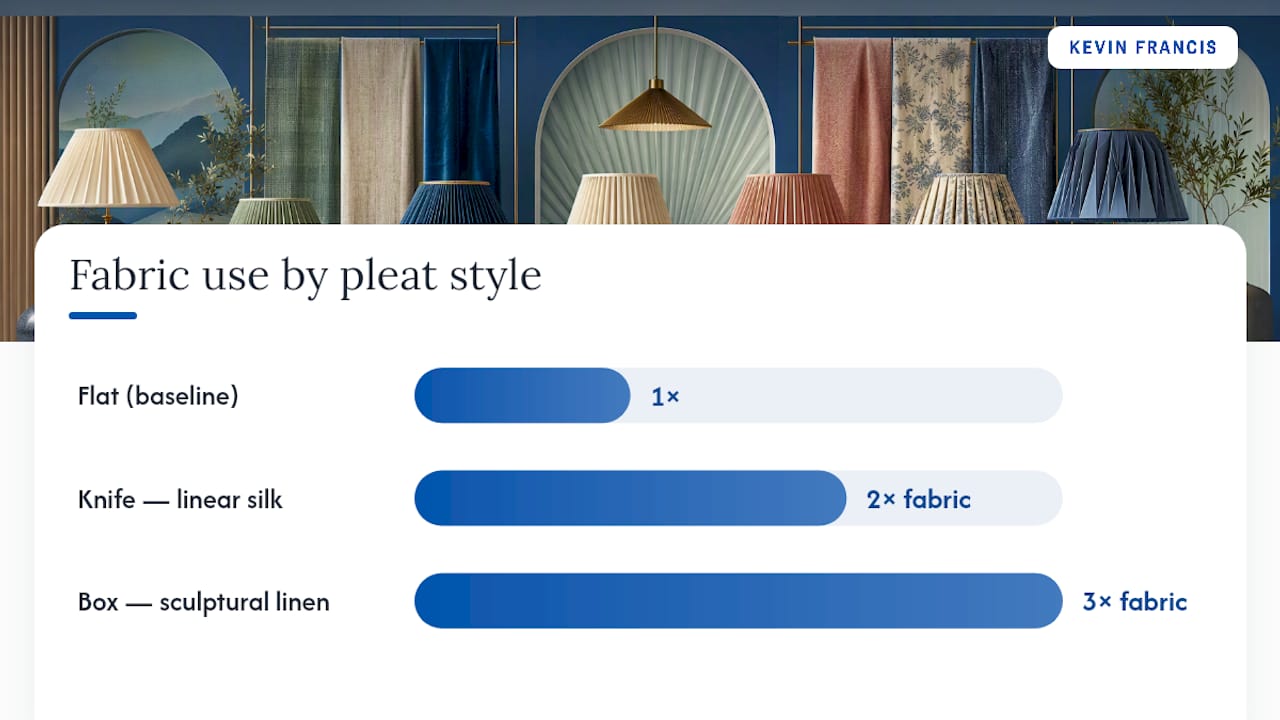
- Knife pleats are best suited for silk and fine cotton fabrics and require about double the fabric of the shade’s circumference.
- Box pleats are more fabric-consuming, provide a sculptural look, and work well with linen or heavier cotton on straight-sided drum frames.
- Tighter pleats, like pin or accordion styles, are delicate, best in silk or sheer synthetics, and add a subtle shimmer to boudoir lighting.
- The shade frame shape influences pleat appearance, with empire frames ideal for knife pleats and drum frames suited for box pleats.
- Proper sizing typically means the shade is about two-thirds the height of the lamp base and slightly wider than the base’s widest point.
Table of Contents
- What Are the Main Pleated Lampshade Styles?
- How Do Frame Shape and Construction Change the Look?
- Which Fabrics Hold a Pleat Best?
- What Size Pleated Shade Fits Your Lamp?
- How Do You Style Pleated Shades by Room?
- Can You Make or Recover a Pleated Shade Yourself?
- What Does a Designer Look for in a Pleated Shade?
- Why We Choose Pleated Shades for Curated Rooms
- Custom Pleated Lighting and Coordinated Rugs at Kevin Francis Design
- Sources
- FAQ
What Are the Main Pleated Lampshade Styles?
Every pleat type starts the same way: fabric folded and set against a frame, then anchored so the folds hold their shape under the glow of a bulb. What changes from one to the next is the fold’s geometry, and that geometry decides how much light escapes, how much fabric you need, and how formal the finished shade looks.
Knife pleats fold in one crisp, unbroken direction, like the pleats on a tailored skirt. They read tight and linear, and they flatter light to medium fabrics such as silk dupioni or fine cotton. Because the folds lie close together, knife pleats use about double the flat fabric of the shade’s circumference.
Box pleats alternate direction, creating a flat panel between each fold. That structure gives a more sculptural, three-dimensional look, but it is fabric-hungry. Box pleats require about triple the flat yardage, which is why box-pleated shades in linen or heavier cotton often cost more to produce than their knife-pleated cousins, according to fabric and construction guidance from Glass Lampshade Manufacturer.
Cartridge (rolled) pleats are soft, rounded tubes of fabric set upright side by side, giving a gentler, almost quilted rhythm.
Pin (accordion) pleats are the tightest and most delicate, tiny folds pressed close together for a shimmering, fan-like texture.
- Knife: linear, tailored, best in silk or fine cotton
- Box: sculptural, structured, best in linen or medium cotton
- Cartridge: soft, rounded, best in cotton or lightweight blends
- Pin/accordion: tiny, delicate, best in silk or sheer synthetics
Pleat pitch, meaning how close together the folds sit, changes the shade’s perceived scale. Wider pitch reads calmer and more contemporary. Tighter pitch reads more formal and more traditional.
How Do Frame Shape and Construction Change the Look?
The frame underneath a pleated shade does as much visual work as the pleat itself. Three shapes dominate: empire (tapered, wider at the bottom), drum (straight-sided, same diameter top and bottom), and coolie (a shallow, wide cone, often seen on Asian-inspired lighting).
- Empire frames pair naturally with knife pleats. The taper lets each fold narrow gracefully toward the top, which is why so many traditional silk shades use this shape.
- Drum frames suit box pleats particularly well. Because the diameter stays constant, the flat panels between folds sit evenly, giving that architectural look modern rooms favor.
- Coolie frames work beautifully with cartridge pleats, since the wide, shallow angle keeps the rounded folds from feeling crowded.
Construction matters just as much as shape. Hardback shades glue fabric to a stiff backing, holding pleats permanently crisp and diffusing light evenly, though they cannot be re-covered easily. Softback shades sew fabric directly onto the frame, which allows for a softer drape and easier re-covering, but the pleats can loosen slightly over years of use. Tapered frames also compress pleat spacing near the top, so tighter pleats near a lamp’s harp often need slightly narrower fabric allowances. Whichever you choose, check for a flame-retardant liner, since that safety layer is standard on quality shades and worth confirming before you buy.
Which Fabrics Hold a Pleat Best?
Fabric choice decides whether your lampshade glows, diffuses, or simply blocks light, and pleated construction makes that choice even more visible because every fold catches light differently.
Silk delivers a warm, golden glow and holds a knife pleat with crisp precision, which is why so many heirloom-style shades default to silk or faux silk. The tradeoff: silk pleats need professional cleaning, since water spotting and shrinkage are real risks on such a fine weave, a caution echoed in fabric behavior notes from Glass Lampshade Manufacturer.
Linen diffuses light more softly and has enough body to hold a wide box pleat without collapsing, making it a natural fit for transitional rooms.
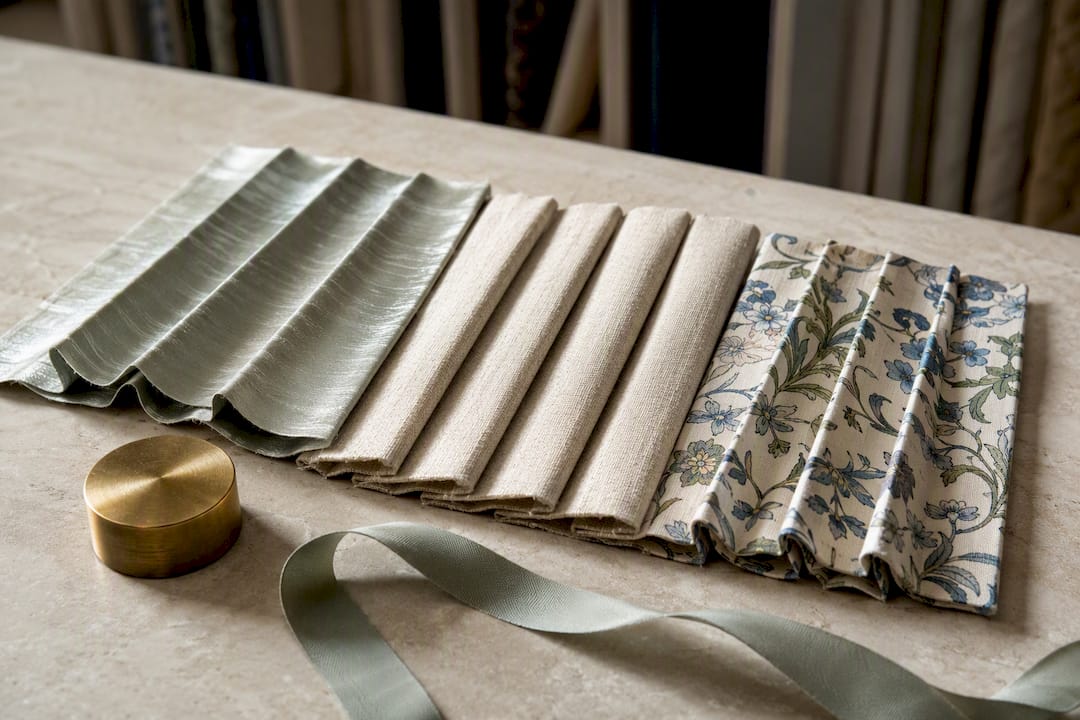
Cotton and printed cottons handle patterns cleanly when box-pleated, since the flat panel between folds keeps a motif from distorting.
Velvet and other heavy fabrics create a dramatic, moody glow but need reinforced backing to hold a pleat’s shape, plus regular dusting to keep the pile looking fresh.
Polyester blends cost less, resist fading, and shrug off daily wear, making them the practical pick for a busy family room or rental.
- Silk: luminous, formal, knife-pleat favorite, dry-clean only
- Linen: textured, diffused glow, best in box or wide pleats
- Cotton: pattern-friendly, casual to semi-formal
- Velvet: dramatic, heavy, needs sturdy backing
- Polyester: durable, colorfast, budget-friendly
Pro Tip: If you love the look of silk but worry about upkeep, ask about a faux silk or silk-polyester blend. It pleats almost as crisply and tolerates a damp cloth without flinching.
What Size Pleated Shade Fits Your Lamp?
A shade that’s the wrong size undoes every good decision you made about pleat type and fabric. Interior designers generally follow a proportion rule: the shade should stand roughly two-thirds the height of the lamp base, and its width should extend slightly beyond the base’s widest point, guidance echoed in Houzz’s lampshade sizing advice.
- Bedside lamps usually need a shade between 12 and 16 inches wide, keeping tight pleats like pin or knife so the profile stays slim on a nightstand.
- Floor lamps can carry wider box or cartridge pleats, since the taller silhouette absorbs more visual bulk gracefully.
- Console and sofa table lamps sit in between, and this is where pleat density matters most: denser pleats visually shrink a shade, so size up slightly if you’re set on a tight pin pleat.
Before finalizing, check harp clearance so the shade sits level, confirm the bulb type won’t overheat pleated fabric, and make sure the finished silhouette doesn’t intrude on a walking path.
How Do You Style Pleated Shades by Room?
Pleat choice is really a shorthand for the mood a room is reaching for, and matching that shorthand correctly is what separates a considered space from a mismatched one.
- Traditional rooms call for silk or faux silk knife-pleated empire shades, finished with a narrow trim that keeps the look tailored rather than fussy.
- Transitional and modern spaces favor wide box pleats in linen, kept to a neutral palette with minimal or no trim, letting the geometry speak for itself.
- Cottagecore, country, and casual interiors lean into cartridge pleats with small-scale prints on cotton, echoing the softer, lived-in feel those rooms are built around.
- As accents, pleated shades can tie a room together by picking up a color thread from nearby textiles. A shade in the same warm rust as a hand-knotted rug, or the same ivory as a linen sofa, makes a lamp feel designed rather than added on.
Patterned pleated shades almost always work best box-pleated, since the flat panel between folds lets a motif read cleanly instead of distorting into the fold, a point echoed in Cuvée Home’s lampshade style guide. If you’re weighing lighting choices against the rest of a room’s architecture, it helps to think of shades the same way you’d think about lighting as a broader design element, one piece in a larger visual conversation. The same logic that governs choosing an interior door style for a room’s architecture applies here: consistency of formality matters more than any single element.
Can You Make or Recover a Pleated Shade Yourself?
A DIY pleated sleeve is one of the more forgiving textile projects a confident home sewer can take on, and it doesn’t require replacing the whole shade if you already like the frame underneath.
Start with a yardage rule: budget roughly twice the shade’s flat circumference for knife pleats and closer to three times for box pleats. A creasing tool or bone folder gives sharper, more consistent folds than fingers alone, and for paper-based pleated panels, a weight of 160 to 220 gsm holds a crease without tearing, a range recommended in the Dannells pleated shade style guide.
- Stapling suits softback frames and speeds up simple projects.
- Stitching gives cleaner, more durable results on fabric that will see daily light exposure.
- Clip-on pleated sleeves let you test the look without committing to a permanent recover.
Pro Tip: Uneven pleats almost always trace back to inconsistent fold spacing. Mark your fold points with a fabric pencil before you crease a single one.
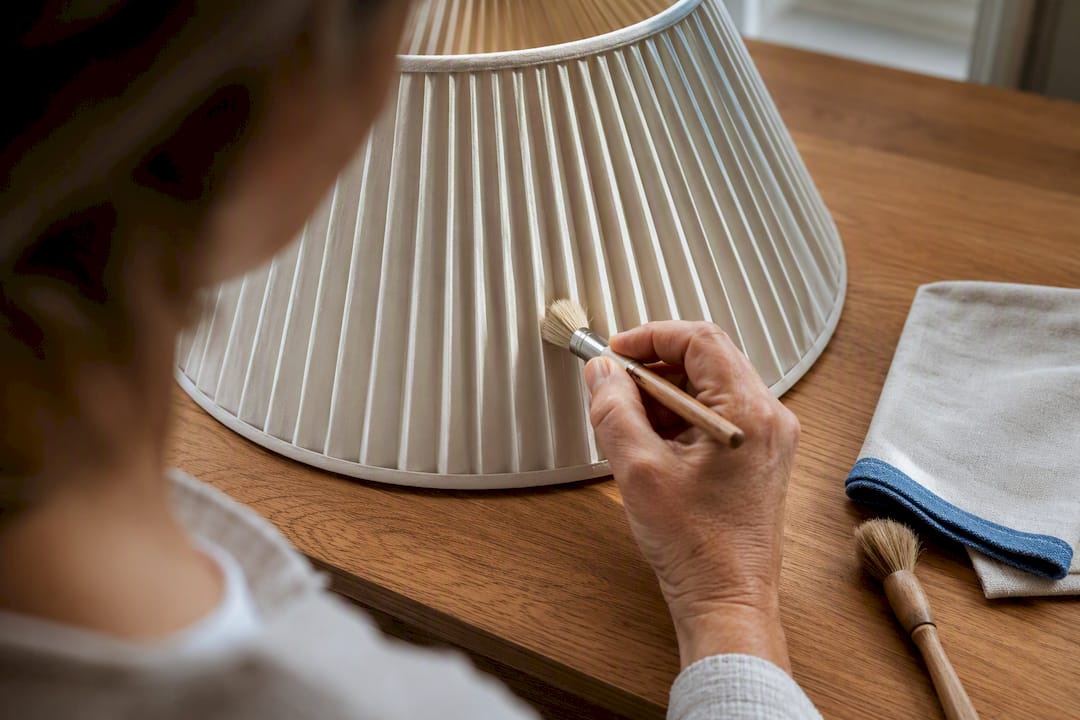
For cleaning, dust pleated shades weekly with a soft brush attachment, spot-treat cotton or synthetic blends carefully, and send silk or velvet shades to a professional rather than risk water spotting.
What Does a Designer Look for in a Pleated Shade?
A pleated shade should never compete with a room’s real focal point. When a hand-knotted rug or a bold textile is already doing the visual heavy lifting, the shade’s job is to support that story quietly, usually in a solid or subtly textured fabric rather than a busy pattern.
Pair a warm silk knife pleat with a rug that carries the same undertone, and the whole room feels considered rather than assembled piece by piece. Trim should echo a rug’s border color, never fight it. Custom pleat depth and fabric choice let a shade breathe alongside a labyrinth motif or an art deco pattern without ever competing for attention.
Kevin O’Gara’s approach favors restraint: let one textile lead, and let the lighting follow its lead in color and weight.
Why We Choose Pleated Shades for Curated Rooms
We return to pleated shades again and again because craftsmanship shows up in the smallest folds, the same way it shows up in a hand-knotted rug’s selvedge. A pleat, done well, is texture you can read across a room. That’s why we pair our lighting choices so deliberately with the designer lighting styles and rugs we build each collection around.
— Kevin O’Gara
Custom Pleated Lighting and Coordinated Rugs at Kevin Francis Design
If you’ve fallen for the look of a hand-pleated silk shade but can’t find a size or trim that matches your room’s palette, custom is the more honest answer than settling for close enough.
Curated lighting and artisan textiles can be built side by side, so a pleated shade and its companion rug can be developed as one cohesive story rather than two separate shopping trips. Our hand-tufted and hand-knotted rugs, including the Knossos Hand-Tufted Maze Rug, the Selendi Hand-Knotted Wool Area Rug, and the fully bespoke Talisman Rug, give you a palette to pull a shade’s fabric and trim from directly. For rooms built around a maze motif or an art deco pattern, that pairing turns a single lamp into part of the room’s larger design language rather than an afterthought sitting in the corner. Browse the Lucca and Theseus maze rugs for inspiration, or reach out to start a custom lighting and textile inquiry built around your own room.
Sources
- Pleated Lampshade: Types, Fabrics, Sizing & Styling Guide - Glass Lampshade Manufacturer
- How to choose a lampshade — Houzz
- Why Pleated Lampshades Are the Biggest Lighting Trend Right Now – Cambrille
- Lampshade Style Guide - Pleated shades - Dannells Blog
FAQ
Are pleated lampshades still in style?
Yes. Designers are bringing pleated shades back into modern interiors specifically for the texture and handmade character they add against minimalist bases, a trend noted by Cambrille.
What are the different pleated lampshade styles called?
The four main types are knife, box, cartridge (rolled), and pin or accordion pleats, each defined by fold direction and pitch.
What lampshade trends should you expect in 2026?
Expect wider box pleats in natural linen, softer neutral palettes, and pleated shades paired deliberately with textured, hand-crafted rugs and textiles rather than left to stand alone.
What is the lampshade sizing rule?
A common rule sets shade height at roughly two-thirds the height of the lamp base, with shade width extending slightly beyond the base’s widest point, per Houzz’s guidance.


