


Custom pillow sizes typically range from small 12-inch accents to oversized 26-inch euros, with lumbar, bolster, and body formats covering everything in between. The right approach is to measure your furniture, choose an insert size slightly larger than the cover for a plump finish, and order the finished dimensions that suit your space. Start there, and the rest is refinement.
TL;DR:
- Custom pillow sizes are most effective when the insert is one to two inches larger than the cover to ensure a plush, rounded appearance.
- Pillows under 16 inches are considered accents and should be paired with larger pillows for balance, while larger sizes work better on deep or oversized furniture.
- The most common mistake is ordering the insert size instead of the finished cover size, which results in pillows that look flat or undersized.
- Furniture scale and pattern size should guide pillow dimensions, with larger pillows suited for bigger sofas and large patterns that require more space to read properly.
- Measure furniture carefully, rounding to the nearest half inch, and consider existing proportions and pattern scale to achieve a cohesive and polished look.
Table of Contents
- What Are the Standard Custom Pillow Sizes?
- Sizing Pillows for Sofas, Chairs, and Sectionals
- Insert Sizing: Why Bigger Almost Always Looks Better
- How to Measure and Order Custom Pillows Correctly
- Designer Notes on Proportion, Pattern, and When to Go Custom
- Caring for Custom Pillows Across Sizes and Materials
- What Drives the Price of a Custom-Sized Pillow
- Matching Custom Pillow Sizes to Your Room’s Design Story
- The Case for Getting Pillow Sizing Right the First Time
- Order Custom Lumbar Pillows Built to Your Exact Dimensions
- Sources
- FAQ
What Are the Standard Custom Pillow Sizes?
Before you customize anything, it helps to know the vocabulary the industry already uses. Square throw pillows run in a fairly predictable ladder: 12x12, 14x14, 16x16, 18x18, 20x20, 22x22, 24x24, and 26x26 inches, with 18x18 sitting at the most popular size for good reason. It scales beautifully on almost any sofa without overwhelming the cushion beneath it.
Lumbar pillows, the long rectangular shapes that cradle your lower back or dress up a headboard, typically measure 12x20 or 14x22 inches, though extra-long lumbar formats push well past that standard for a more sculptural, editorial look. Bed pillows follow their own logic entirely. Standard bed pillows measure 20x26 inches, queen runs 20x30, king stretches to 20x36, and euro shams land at a generous 26x26. Body pillows commonly measure 20x54 inches, while bolsters range from compact 8x20 tubes to substantial 9x36 versions, often used to anchor a daybed or add architectural interest to a reading nook.
| Shape | Common sizes | Best used for |
|---|---|---|
| Small throw | 12x12, 14x14 | Accent chairs, layering on top of larger pillows |
| Standard throw | 16x16, 18x18 | Sofas, loveseats, everyday styling |
| Large throw | 20x20, 22x22, 24x24, 26x26 | Deep sofas, floor seating, statement pieces |
| Lumbar | 12x20, 14x22, or custom-long | Lower back support, headboard styling |
| Bolster | 8x20, 8x24, 9x36 | Daybeds, benches, decorative rolls |
| Euro | 26x26 | Bed layering, backdrop behind sleeping pillows |
| Body | 20x54 | Side-sleeper support, reading nooks |
| Bed pillow (standard/queen/king) | 20x26, 20x30, 20x36 | Sleeping pillows sized to mattress width |
A few working rules make this chart practical rather than purely academic:
- Pillows under 16 inches read as accents, not anchors, so pair them with a larger companion.
- Anything above 22 inches starts to dominate a normal sofa cushion and works best on deep or oversized seating.
- Custom lumbar lengths beyond the standard 22 inches create a longer, more architectural line across a headboard or sofa back.
Sizing Pillows for Sofas, Chairs, and Sectionals
Furniture scale should drive your pillow order, not the other way around, as explained in custom closet designs for real life. A useful starting rule: throw pillows should never exceed one-third the height of the sofa back, which keeps a seating piece looking inviting rather than blocked off by cushions nobody wants to move.
Here’s how that translates by furniture type:
- Loveseats and small chairs work best with 16x16 or 18x18 pillows, two per seat, plus an optional small lumbar.
- Standard sofas typically call for two 18x18 or 20x20 pillows plus a centered lumbar, following the popular 2-2-1 layering rule.
- Large sofas and sectionals handle 20x24 or 22x24 pillows well, often in pairs of two or three sizes layered from back to front.
- Accent chairs usually need just one 18x18 or a single lumbar, kept modest so it doesn’t crowd the seat.
- Chaise lounges benefit from a bolster at one end plus one or two 20x20 squares along the length.
The 2-2-1 rule breaks down like this: two matching large pillows in the back corners, two smaller or patterned pillows just in front of those, and one lumbar or accent piece centered between them. It is not a strict formula, more a proportion guide, but it prevents the common mistake of piling identical squares across a sofa with no visual hierarchy.
- Place your largest pillows against the back cushions.
- Layer progressively smaller shapes toward the center.
- Reserve lumbar or bolster shapes for the focal point, not the corners.
Insert Sizing: Why Bigger Almost Always Looks Better
The single most overlooked detail in custom pillow shopping is insert sizing, and it explains why some pillows look plush and sculptural while others look flat and deflated. The rule: size your insert one to two inches larger than your cover for small and medium pillows, and two to three inches larger for oversized covers.
Statistic snapshot: An 18x18 cover typically takes a 20x20 insert. A 20x20 cover typically takes a 22x22 insert. That two-inch cushion of extra fill is what creates the rounded, hotel-quality look designers chase.
- Down and feather blends compress easily, so they can handle a slightly larger oversize without looking overstuffed.
- Polyester fill holds its shape but can feel stiff if oversized too aggressively, so stay closer to the one-inch end of the range.
- Extra-large euros and custom-long lumbars sometimes need the fuller two-to-three-inch oversize on both dimensions to avoid a sunken, sagging center.
- Specialty fills, like shredded memory foam blends, distribute unevenly, so test a sample before committing to a full custom order.
How to Measure and Order Custom Pillows Correctly
Getting an accurate custom pillow starts with the tape measure, not the checkout page. Vendors, including custom pillow makers like Kovi Fabrics, commonly ask for finished dimensions rounded to the nearest half inch, since fractional measurements create confusion during production.
- Measure the seat width, back height, and depth of the furniture piece the pillow will sit on.
- Measure armrest clearance if the pillow will sit near an arm, so it doesn’t get crushed.
- For curved or tufted furniture, measure at the widest flat point rather than following the curve.
- Decide whether you want the finished cover size or the insert size to be your reference point, since the two differ by one to three inches.
- Round every measurement to the nearest half inch before submitting your order.
When you place the order, include the finished size, your insert preference (matched or oversized), fabric choice, trim details, and zipper placement. Ask about lead times upfront. Handmade custom pieces take longer than off-the-shelf inventory, and that difference matters if you’re styling for an event or a client deadline.
Pro Tip: Keep a small notebook or phone note with every furniture measurement in your home. When you find a fabric you love, you’ll order the right size on the first try instead of guessing and returning.
The most common mistake shoppers make is ordering the insert size instead of the finished cover size, which results in a pillow that looks too small the moment it’s stuffed. The second most common mistake is skipping the armrest clearance check, which leads to pillows that constantly slide or get crushed against the furniture’s arm.
Designer Notes on Proportion, Pattern, and When to Go Custom
Pillow size is never just a number. It’s a proportion decision tied to everything else in the room, from the rug underfoot to the headboard behind the bed. A pillow that feels perfectly scaled on a petite loveseat can look almost comical on a deep, oversized sectional, which is exactly why rug scale and pillow scale need to move together rather than being chosen in isolation.
Pattern scale changes the math too. Large-scale motifs need more square footage to read properly, which is one reason a narrow lumbar sometimes outperforms a square pillow when you’re trying to break up a long horizontal sofa back.
When a motif is painterly and expansive, a small pillow chops the story into confetti. Give the pattern room to breathe, and consider an extra-long lumbar when you want elegance without visual clutter across a sofa back.
Caring for Custom Pillows Across Sizes and Materials
Larger pillows and denser fills need different care than a small polyester accent, and knowing the difference protects your investment. Down and feather inserts benefit from an occasional fluff and rotation to prevent clumping, especially in oversized 24x24 or euro-sized covers where fill has more room to shift. Memory foam holds its shape longer but should never be machine washed. Spot clean the cover instead and let the foam air out periodically.
Polyester-filled pillows are the most forgiving across every size, resisting moisture and holding loft with minimal maintenance, which makes them a practical choice for high-traffic family rooms. Handwoven or hand-tufted covers generally do best with professional cleaning rather than a home washing machine, since natural fibers and dense weaves can shrink or distort under high heat.
Rotate every pillow, regardless of size, every few weeks so one side doesn’t bear all the sun exposure or body weight. Fluff feather and down inserts by hand after each use to keep that rounded silhouette intact. For custom-long lumbars and oversized euros, occasional professional cleaning preserves both the fill loft and the fabric’s color depth, particularly for the richer, saturated palettes often used in hand-tufted designs. A pillow that gets flattened underfoot on a daybed will wear differently than one styled purely for looks on a guest bed, so match your care routine to how the piece actually gets used, not just its size.
What Drives the Price of a Custom-Sized Pillow
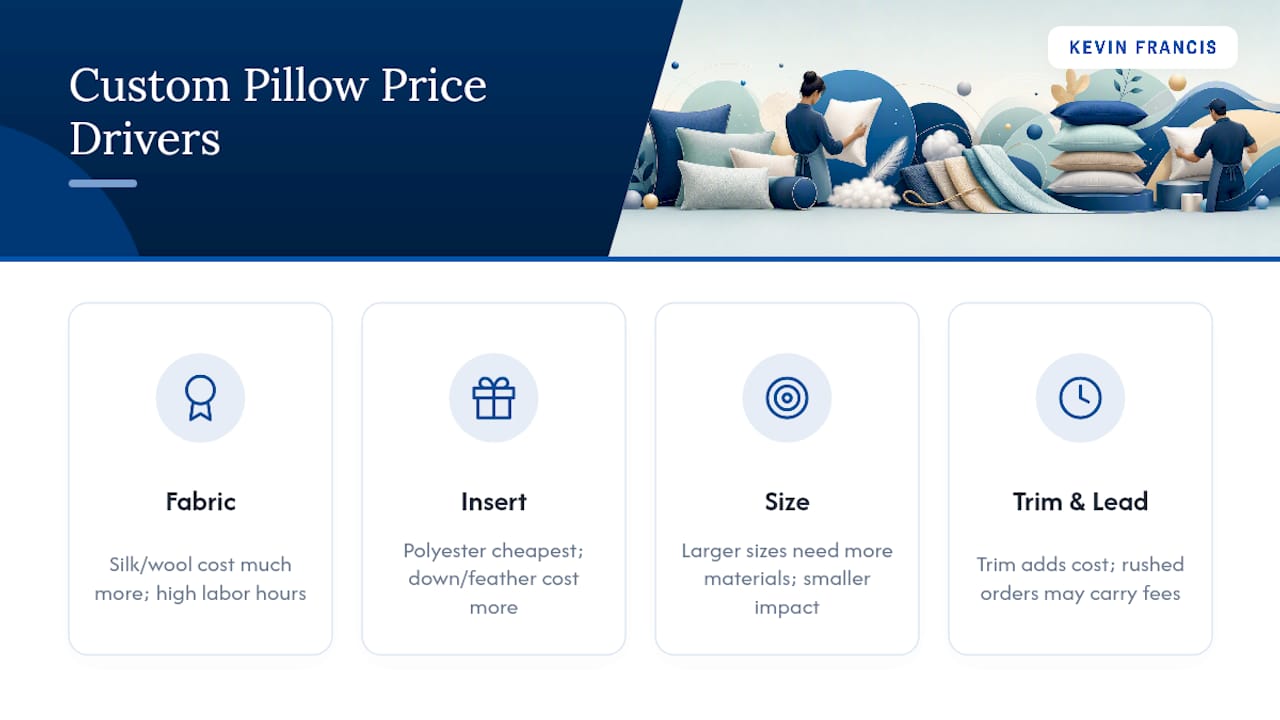
Custom pillow pricing depends on more variables than most first-time buyers expect, and size is only one piece of that equation. Fabric choice moves the price more than almost anything else. A cotton blend costs meaningfully less than a hand-loomed silk or a densely hand-tufted wool textile, since the latter requires significantly more labor hours per square foot.
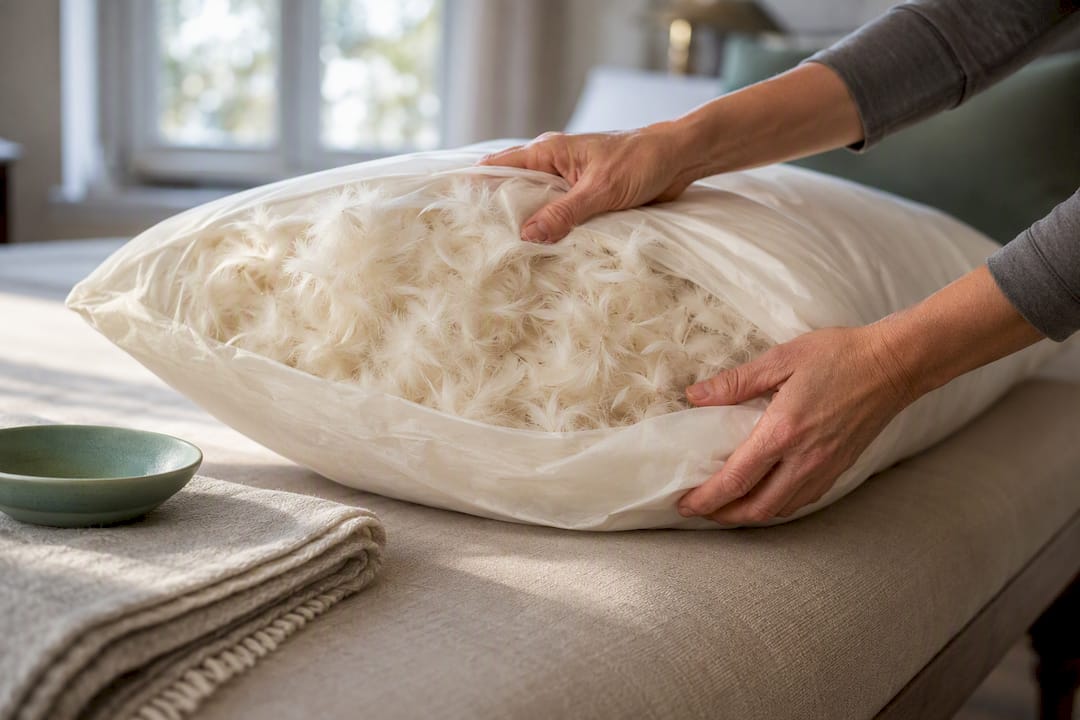
Insert type is the second major driver. Polyester fill sits at the accessible end of the spectrum, while down and feather blends cost more upfront but tend to hold their shape and loft longer, which can make them the better long-term value despite the higher sticker price. Specialty fills, like memory foam blends, usually land somewhere in between.
Size itself has a real but smaller impact than fabric or fill. Moving from an 18x18 to a 24x24 increases the amount of fabric and fill needed, but that jump rarely doubles the price the way switching from polyester to a hand-embroidered silk might. Custom-long lumbars, because of the extra length and the precision needed to keep proportions balanced, often carry a modest premium over standard lumbar sizing.
Trim details, whether piping, fringe, or a decorative closure, add incremental cost but also add the kind of finishing touch that separates a mass-produced pillow from an artisan one. Lead time matters financially too: rushed custom orders sometimes carry expedite fees, so building in a few extra weeks of buffer time can protect both your budget and your patience.
Matching Custom Pillow Sizes to Your Room’s Design Story
The best pillow sizing decisions start with the room’s existing scale, not with a pillow you liked in isolation. A large-scale floral or labyrinth-inspired pattern deserves a pillow big enough to let that design unfold, while a delicate, small-scale print can get lost entirely on anything larger than an 18x18.
Color and texture pairing matters just as much as dimension. A room built around a hand-knotted wool rug in rich, saturated tones calls for pillows that echo that depth, whether through a similarly dense weave or a complementary jewel-tone palette. If your sofa is neutral and your walls are quiet, an oversized 24x24 or 26x26 pillow in a bold botanical print becomes the room’s visual anchor rather than competing with everything else in the space.
Consider sightlines, too. A pillow styled for a formal living room, viewed mostly from across the space, can carry a bolder, larger-scale pattern than one styled for a reading chair, where you’ll be sitting close enough to notice fine detail. For layered bedroom looks, a euro sham behind your sleeping pillows, paired with a centered lumbar, creates the kind of hotel-inspired depth that photographs well and feels intentional in person. If you’re experimenting with mixed prints, handcrafted cushion covers offer a low-risk way to test scale and pattern before committing to a full custom order.
The Case for Getting Pillow Sizing Right the First Time
Most sizing guides treat pillow dimensions as a math problem: measure the sofa, pick a number, done. That advice isn’t wrong, but it undersells how much proportion and pattern scale actually shape whether a room feels finished or slightly off. The conventional wisdom stops at “measure your furniture.” It rarely mentions that pattern scale changes the effective size a pillow needs to be, or that an insert chosen to match the cover exactly, rather than intentionally oversized, is the single most common reason a custom pillow disappoints on arrival.
If you take one thing from this guide, prioritize the insert oversize rule before you worry about fabric or trim. A beautifully patterned cover on an undersized insert will always look deflated, no matter how much the textile itself cost. Get the fill right, respect the one-third back-height rule for sofas, and let pattern scale guide your dimension choice rather than defaulting to whatever size looks safest on a screen.
— Kevin O’Gara
Order Custom Lumbar Pillows Built to Your Exact Dimensions
Finished, handcrafted pillows can be made to order with artisan textile detailing not typically found on standard mass-market pieces.
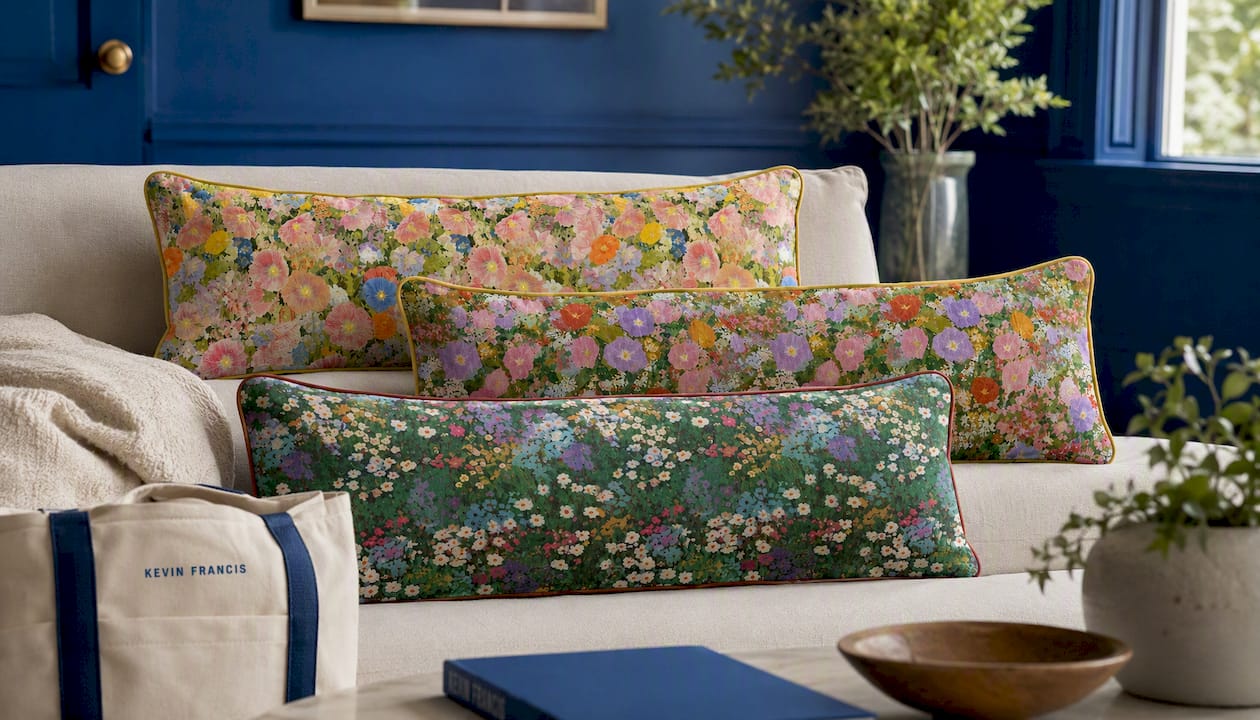
Three extra-long lumbar designs show the range available right now. The Petunia Meadow Extra Long Lumbar Pillow brings a painterly floral wash suited to a neutral sofa that needs a focal point. The Primrose Meadow Extra Long Lumbar Pillow leans softer and more impressionistic, ideal for a bedroom bench or a reading chair styled for close viewing. The Cosmos Meadow Extra Long Lumbar Pillow carries a deeper, more dramatic palette built for rooms anchored by dark wood or a richly colored rug.
Request fabric swatches, confirm your finished dimensions against the measurements you’ve already taken, and place your order directly through the product page. Lead times vary by fabric and season, so reach out early if you’re styling toward a specific date.
Sources
- Your guide to pillow sizes for every space | Wayfair
- Throw pillow sizes (Standard & common dimensions) | Designing Idea
- Throw pillows standard sizes | Mattress Miracle
- Throw pillow size guide & chart | Society6
FAQ
What are the different sizes of custom pillows?
Custom pillows span small 12x12 accents, standard 18x18 and 20x20 throws, oversized 24x24 to 26x26 statement pillows, lumbar shapes around 12x20 or 14x22 (including extra-long custom versions), bolsters from 8x20 to 9x36, and euro shams at 26x26.
What is the 2-2-1 pillow rule?
The 2-2-1 rule arranges two matching large pillows in the back corners, two smaller or patterned pillows just in front, and one lumbar or accent pillow centered between them for visual balance.
What are the different sizes of pillows?
Bed pillows follow standard (20x26), queen (20x30), and king (20x36) sizing, while decorative pillows range from 12-inch accents to 26-inch euros, with lumbar and bolster shapes filling special roles.
Is a 24-inch pillow too big for a couch?
It depends on the sofa’s back height, since pillows generally shouldn’t exceed one-third of that height. A 24x24 pillow suits a deep, tall sofa but can overwhelm a low-profile loveseat.


