


Most homeowners spend somewhere between $600 and $2,500 to have a room professionally papered, with labor alone running $5.50 to $8 per square foot on a standard job. The final number swings on three things: the wallpaper itself (peel-and-stick versus hand-printed grasscloth are different universes), how much wall repair and old-paper removal your walls need, and whether your installer has a job minimum that makes a small accent wall cost more per square foot than a whole living room. The scenarios and checklist below can help you estimate a reasonable budget for wallpaper installation.
TL;DR:
- Wallpaper installation costs typically range from $5.50 to $8 per square foot for labor, with total project costs varying significantly based on room size and complexity.
- Material type influences both cost and difficulty; peel-and-stick wallpaper is cheapest and easiest to install, while grasscloth and murals require specialist handling and increase labor time.
- Wall condition and preparation, including old wallpaper removal, wall repair, and priming, can add substantial costs, especially if multiple layers or damaged surfaces are involved.
- Large or premium projects, such as murals or textured textiles, justify higher budgets due to pattern matching and specialist installation requirements.
- Local labor rates vary by region, with metro areas like New York or San Francisco charging at the higher end and smaller markets closer to the lower end of the typical price range.
Table of Contents
- How Much Does Wallpaper Installation Cost per Square Foot and Room?
- Does Wallpaper Material Change the Installation Price?
- What Site Conditions Push Wallpaper Costs Higher?
- Real Budget Examples for Common Room Sizes
- How Do Wallpaper Installers Actually Charge?
- When Does Premium Wallpaper Justify a Bigger Budget?
- Should You Hire a Pro or Hang Wallpaper Yourself?
- Explore Bespoke Wallpaper With Kevin Francis Design
- Where to Check Local Wallpaper Pricing Yourself
- Sources
- FAQ
How Much Does Wallpaper Installation Cost per Square Foot and Room?
Every installer prices differently, but three units come up again and again in quotes: per square foot, per roll, and per room. Knowing all three lets you sanity-check a bid instead of just accepting it.
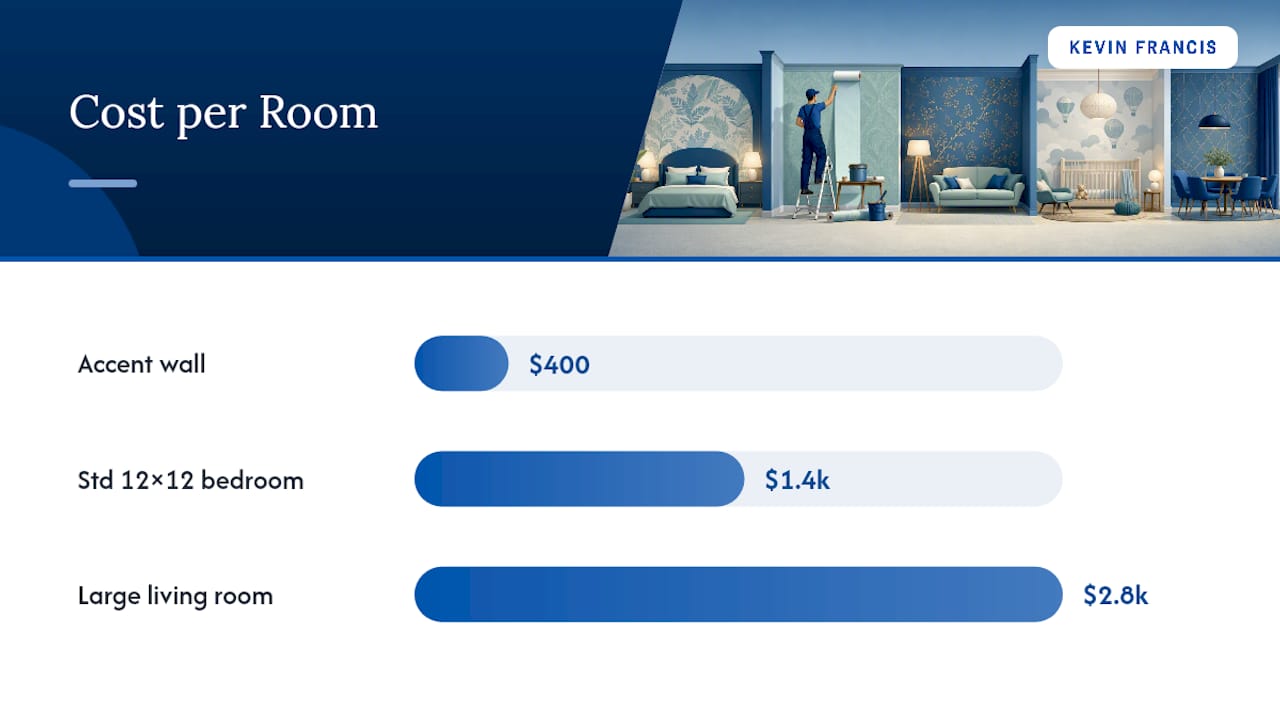
Homewyse puts the national estimated range for basic mid-range installation at $4.99 to $10.53 per square foot, a figure that already folds in materials, standard prep, and typical contractor markup. Trade sources peg standard labor specifically, separate from materials, at roughly $5.50 to $8 per square foot, with specialty materials running higher. Angi reports that most homeowners land between $325 and $825 for a single room, averaging around $600, with an all-in per-square-foot rate of $3 to $8.
Rolls of wallpaper typically cover between 25 and 30 square feet each, with mid-range rolls varying in price depending on the brand and finish. Bespoke, hand-printed patterns from designers cost considerably more per roll, sometimes double or triple that range, which is a separate line item from labor.
- Accent wall (30–60 sq ft): $200 to $600 total, often against a minimum job fee
- Standard 12x12 bedroom (roughly 400 sq ft of wall): $800 to $2,000
- Large living room (250–500+ sq ft): $1,500 to $4,000 or more
Installer minimums can affect the total cost, especially for small projects, as professionals often charge a flat minimum fee to cover setup, travel, and prep time. That is why a tiny half-bath accent wall can cost nearly as much per square foot as an entire bedroom.
Does Wallpaper Material Change the Installation Price?
The paper you choose changes both the material cost and how long an installer spends on your walls.
Peel-and-stick wallpaper sits at the affordable end, generally $20 to $60 per roll, and installers can often hang it faster than traditional paste-the-wall paper because there is no paste mixing or drying time. It is forgiving enough that many homeowners handle it themselves on flat, smooth walls, which is exactly the case we cover in our guide to peel and stick wallpaper for effortless designer style.
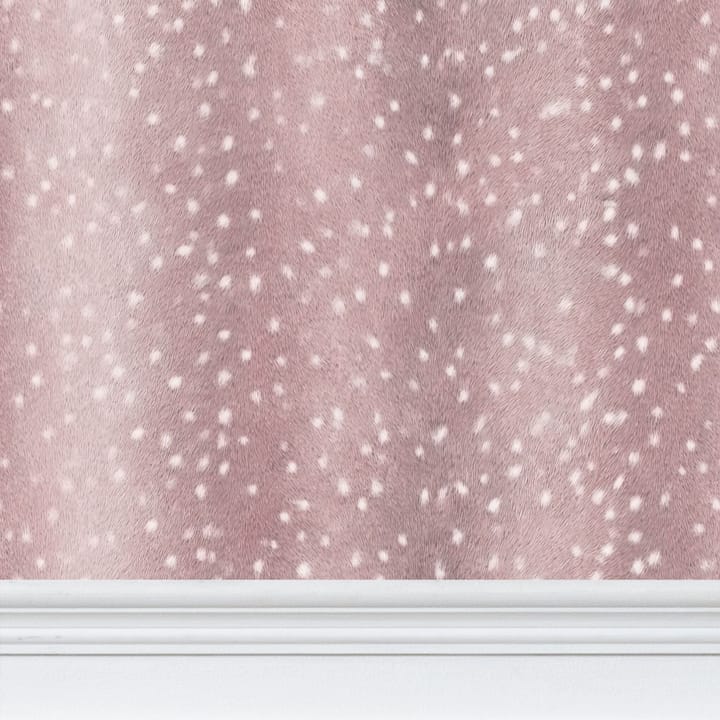
Traditional vinyl and paper-backed wallpapers cost more to install because they require careful pasting, seam rolling, and a steadier hand to avoid bubbles. Fabric-backed and grasscloth papers push labor higher still. Natural, woven textiles like grasscloth require specialist adhesives and a slower, more deliberate hanging technique, because a torn or overlapped seam on a natural textile can mean an expensive reorder.
Murals and large-scale patterned papers add another layer of complexity: pattern matching.
- Peel-and-stick: lowest material and labor cost, DIY-friendly on smooth drywall
- Standard vinyl or paper: moderate cost, straightforward for an experienced installer
- Grasscloth, fabric, and woven textiles: premium material cost plus a labor premium for specialist handling
- Murals and large pattern repeats: material cost varies, but labor time can climb 10 to 50 percent higher due to alignment work
For anything with a woven texture or a mural-scale pattern, hiring a specialist installer is not a luxury. It is the difference between a wall that reads as intentional and one that reads as a mistake.
What Site Conditions Push Wallpaper Costs Higher?
Your walls have a history, and that history shapes your quote before a single roll gets hung.
Old wallpaper removal is one of the most common surprise line items. Depending on how many layers are on the wall and whether the old paper was applied over unprimed drywall, removal typically adds a per-square-foot fee on top of the install price, and local cost data shows small removal jobs can run disproportionately high once a minimum fee is factored in.
Wall condition matters just as much. Cracked plaster, water stains, or old glue residue often calls for skim coating and priming before any paper goes up, and that prep work is billed separately from the wallpaper hang itself.
- Removal of existing wallpaper: commonly adds a per-square-foot fee, more for multiple layers
- Wall repair and skim coating: priced by the hour or by the room, depending on damage severity
- Priming: often a modest flat add-on, but necessary on bare drywall or after heavy repair
- Pattern repeat and waste factor: complex repeats can require 10 to 25 percent more material and meaningfully more labor time
- High ceilings, crown molding, and fixture trimming: each added cut or reach adds labor hours
Pro Tip: Ask your installer to inspect your walls in person before finalizing a quote. A phone estimate almost never accounts for what is hiding under your existing paper, and that gap is where budgets blow up.
Real Budget Examples for Common Room Sizes
Numbers are more useful with a scenario attached to them. Here is how the math typically plays out across three common projects, based on the per-square-foot and per-roll ranges above.
- Accent wall, 30 to 60 square feet: two to three rolls of mid-range paper ($60 to $250 in material) plus labor at the installer’s minimum fee, usually landing between $500 and $900 total.
- Standard bedroom, 100 to 200 square feet of wall (after subtracting doors and windows): five to eight rolls ($200 to $600 in material) plus labor at $5.50 to $8 per square foot, landing around $1,200 to $2,200.
- Large living room, 250 to 500+ square feet: ten or more rolls, higher material cost for a statement pattern, and labor that can reach $2,500 to $4,500 once pattern matching and ceiling height are factored in, a range consistent with room-by-room aggregated data.
To build your own estimate, measure each wall’s width and height, multiply for square footage, then subtract roughly 15 square feet per standard door or window. Add 10 to 25 percent for waste, more if your pattern has a large repeat, and apply the labor and material rates above to that adjusted total. It takes ten minutes and gets you within striking distance of a real quote.
How Do Wallpaper Installers Actually Charge?
Installers bill in one of four ways, and knowing which method you are being quoted helps you compare bids apples to apples.
- Per square foot: the most common method for whole-room jobs, typically $5.50 to $8 for standard labor
- Per hour: Taskrabbit data shows an average hourly rate near $62, common for smaller jobs or touch-up work
- Per roll hung: less common, but some installers price this way for simple, repeat-free patterns
- Flat job minimum: a fixed floor, often $750 to $1,100, that applies regardless of room size
Where you live shapes these numbers more than most people realize. Hourly and per-square-foot rates in major metros like New York, San Francisco, and Boston run noticeably higher than Midwest and Southern markets, a gap that tracks with regional wage data for skilled trades generally. A homeowner in a high-cost coastal metro should expect quotes at the upper end of every range in this article; a homeowner in a smaller Midwestern city should expect the lower end.
Before signing anything, ask every installer the same set of questions:
- Are you licensed and insured, and can you provide proof?
- Does the quote include materials, or is that priced separately?
- Who handles waste disposal for old wallpaper?
- Is wall prep and priming included, or billed as an add-on?
- What is the estimated timeline, and what happens if it runs long?
- Do you offer any warranty on seams or adhesion?
A red flag worth walking away from: a written quote with no square footage listed, no mention of what happens if the walls need repair, or a price that seems far below every other bid you have collected. Cheap quotes usually mean corners get cut on prep, and that shows up within a year as bubbling seams.
When Does Premium Wallpaper Justify a Bigger Budget?
Bespoke and artisan wallpaper is where the calculation shifts from “what’s the going rate” to “what is this pattern worth to the room.” A hand-printed, painterly design earns its price when it functions as the room’s centerpiece rather than a backdrop, which changes how you should budget the install itself.
The mistake I see most often is treating a premium paper like a commodity install. If you’re paying for a pattern this considered, the extra half day an installer spends dry-fitting the drops before committing to paste is not overhead. It’s insurance against having to reorder yardage you can’t easily match six months later.
Ordering 20 to 30 percent extra yardage up front and confirming the dye lot before installation day protects both your budget and your timeline. It is a small step that prevents the most expensive kind of mistake in this business: a mismatched reorder.
Pro Tip: Bring your installer the actual wallpaper sample, not a photo, before scheduling the job. Finish and texture read completely differently in person, and that conversation upfront avoids rework later.
Should You Hire a Pro or Hang Wallpaper Yourself?
I recommend hiring a professional without hesitation for murals, woven or natural textiles like grasscloth, and anything with a large pattern repeat. The margin for error is too costly, and a botched seam on a hand-printed paper cannot be patched invisibly. Small, non-textured peel-and-stick projects on flat, smooth drywall are genuinely fine to DIY. Just know the trade-off: warranty coverage and seam durability both favor the professional install, especially over years of daily wear.
— Kevin O’Gara
Explore Bespoke Wallpaper With Kevin Francis Design
Kevin Francis Design gives you a direct path to designer-grade wallpaper without the guesswork of matching a big-box pattern to a custom room. Every design starts as original artwork, printed sustainably and sized to your walls, so the yardage math and dye-lot consistency your installer needs are handled before the first roll ships.
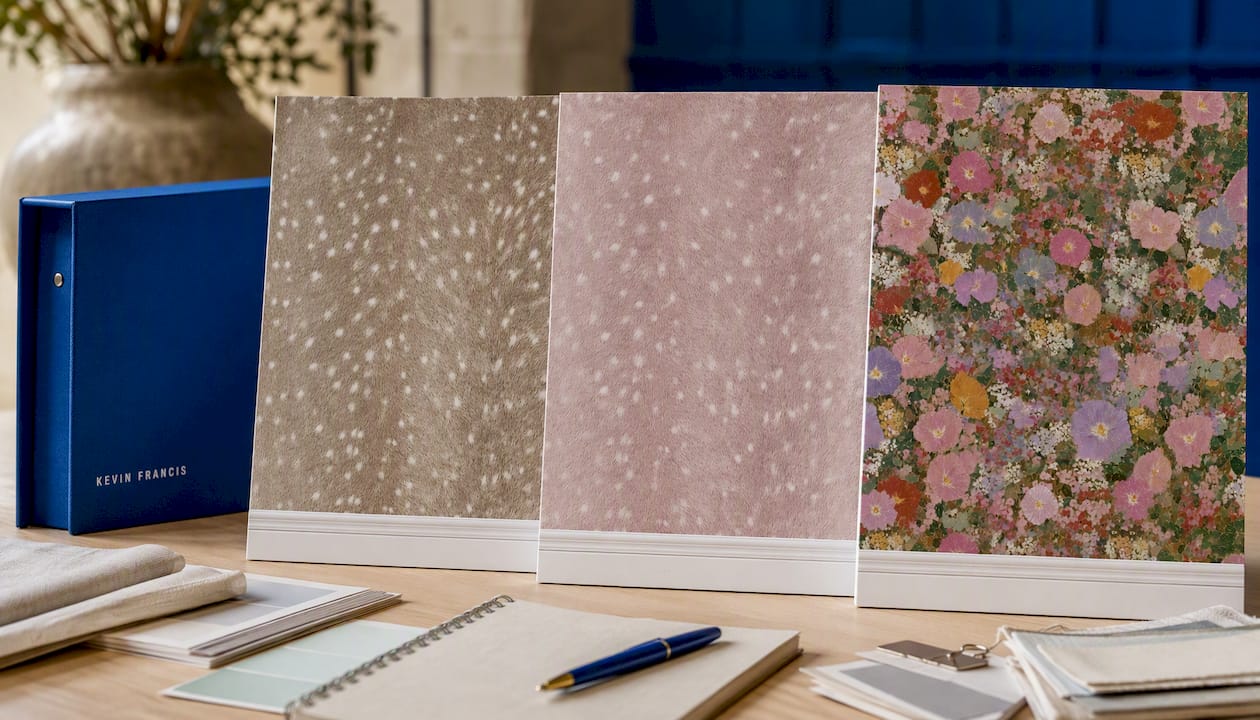
Three patterns show the range of what is possible. The Wilde Spotted Antelope Hide Wallpaper in Whiskey Brown brings a warm, painterly animal motif suited to dens and dining rooms, while the same design in Quartz Pink softens that same silhouette for a bedroom or powder room. For a lighter, botanical mood, The Primrose Meadow Floral Wallpaper reads like petals dissolving into sunlight across a wall, an effect that reads best paired with the right floor treatment, as we cover in how rugs complement wallpaper. Request samples of any pattern and book a measurement-based consultation directly through the Kevin Francis Design site to get an accurate quote before your installer ever picks up a pasting brush.
What our paper costs, before the installer
Every KFD paper comes two ways. Traditional runs $78 for a 3-yard roll, $144 for a single and $286 for a double; removable runs $134, $218 and $432. A double roll is 2 by 33 feet, so 66 square feet before waste, which puts traditional at about $4.30 a square foot and removable at about $6.50. On a smooth accent wall the removable version is the one that lets you skip the installer’s minimum entirely. Samples are $8, and I would order one of every paper you are considering before you book anyone.

Bronte Ribbon Maze, Box Hedge Green
A ribbon maze in a proper boxwood green. The paper I would put in a dining room full of brown furniture.
From $78 a roll, removable from $134
See options →

Keats Pebble Marbled, Blue/Pink
An all-over marbled pattern with no obvious repeat line, so it forgives seams and walls that are not quite plumb.
From $78 a roll, removable from $134
See options →

Austen Gingham, French Blue
A small check in French blue. Crisp in a guest bedroom or under a chair rail, and blue is a color you never tire of.
From $78 a roll, removable from $134
See options →
The full range, including the Wilde and Meadow papers above, is in the traditional and removable wallpaper collection.
Where to Check Local Wallpaper Pricing Yourself
For a number specific to your zip code, run your dimensions through the Homewyse cost calculator, which adjusts its per-square-foot estimate for local labor rates. Cross-check against Taskrabbit’s cost guide for hourly rates in your metro, and Angi’s pricing page for typical single-room totals. The Bureau of Labor Statistics also publishes regional wage data for skilled trades, useful context if a quote seems unusually high or low for your area. If your project involves structural wall changes alongside the wallpaper, a load-bearing wall removal cost guide is worth a look before you finalize scope.
Sources
- Cost to Install Wallpaper
- How Much Does Wallpaper Installation Cost? | Angi
- Breaking Down Wallpaper Installation Costs: The Ultimate 2026 Pricing Guide
- Cost to Hang Wallpaper in the U.S.: Price Ranges by Room and Material 2026 – Current Cost
FAQ
How much does it cost to wallpaper a 12x12 room?
A standard 12x12 bedroom, with roughly 100 to 200 square feet of paperable wall after doors and windows, typically costs $1,200 to $2,200 total for materials and professional labor.
How much will 200 square feet of wallpaper cost?
At $5.50 to $8 per square foot for standard labor, 200 square feet runs roughly $1,100 to $1,500 in labor alone, plus material costs of $200 to $600 depending on the paper you choose.
How much does it cost to have wallpaper professionally installed?
Most single-room professional installations average around $600, with a typical range of $325 to $825, according to Angi. Larger rooms, premium materials, or extensive wall prep push that number well above $2,000.
How much does it cost to get someone to put up wallpaper?
Expect either a per-square-foot rate of $5.50 to $8, an hourly rate near $62, or a flat job minimum of $750 to $1,100, whichever your installer uses to price a job of your size.


