


The luxury resort interior design approach is defined as a multisensory, concept-driven methodology that integrates architecture, landscape, lighting, materials, and sound into a single authored atmosphere. This is not decorating. It is spatial storytelling at a professional scale, where every decision serves emotional precision and guest experience. Firms like VOID Architecture, BAMO, and Wimberly Interiors have demonstrated that the most enduring resort interiors are built on a coherent concept derived from place, not applied as a theme after the fact. For interior designers, architects, and hospitality professionals, understanding this methodology is the foundation of every successful luxury project.
What is the luxury resort interior design approach?
Luxury resort interior design is a singular sensory experience that treats architecture, landscape, and interiors as one composition rather than three separate disciplines. The shift from opulent spectacle to authored atmosphere defines the modern standard. Successful projects operate on a 1:1 ratio where all elements are conceived simultaneously for emotional precision, consistent privacy, and brand identity. That simultaneity is what separates a luxury resort from a well-decorated hotel.
The methodology rests on three core commitments: place-based authenticity, sensory layering, and spatial sequence. Each decision, from the grain of a stone floor to the temperature of a corridor light, must serve the guest’s emotional journey. Luxury is defined today as timeless purity and purposeful details that anticipate guest needs without overwhelm. That definition rules out visual noise, ornamental excess, and generic markers of wealth.
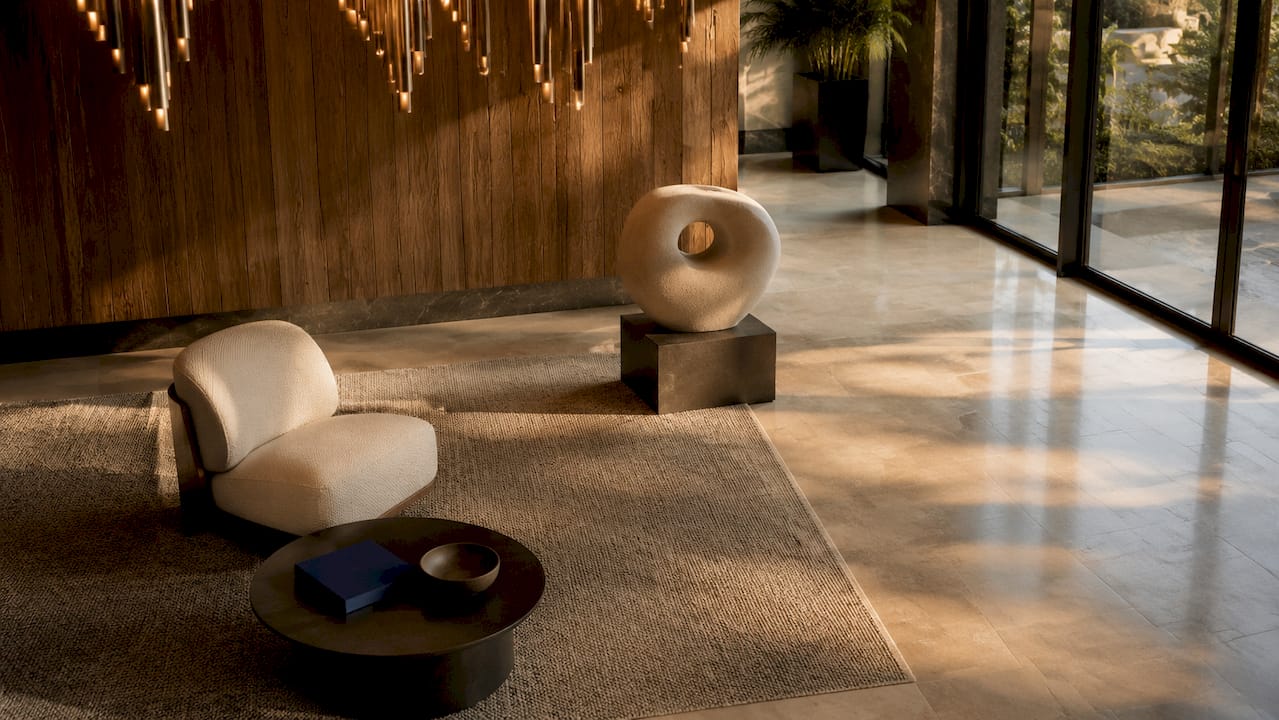
Interior designers entering this field must also recognize the industry’s standard vocabulary. “Experiential resort design” and “hospitality interior design” are the recognized professional terms. The phrase “luxury resort interior design approach” describes the methodology behind them. Both framings matter for professional communication and project briefs.
What are the core principles and sensory elements?
The most visible shift in luxury resort interiors is the move away from maximalism toward curated restraint. Real value comes from seamless integration of stone, wood, and linen, not from visual noise or shine. A disciplined neutral palette anchors the spatial mood. Cream, taupe, soft sand, and muted earth tones dominate, with a single grounding deep accent color providing depth without distraction.
Lighting is the most underestimated element in interior design for luxury resorts. Warm ambient lighting at 2700K–3000K, dimmed to 30–40% of full output, creates intimacy and calm. Overhead lighting actively harms luxury perception and should be avoided as a primary source. Bedside sconces, floor-level path lights, and under-shelf glow are the correct placements. Understanding designer lighting for luxury spaces is not optional for this work. It is structural.
The sensory principles that define features of luxury resort interiors include:
- Tonal palette discipline: Neutrals with one deep accent. No competing color stories across a single space.
- Authentic natural materials: Stone, reclaimed wood, raw linen, and hand-knotted textiles carry tactile warmth that synthetic finishes cannot replicate.
- Acoustic masterplanning: Sound design shapes mood and privacy decisively. It must be integrated at the layout stage, not added post-construction.
- Residential warmth: Layered furnishings, comfortable rhythms, and private spatial pockets make guests feel sheltered rather than performed at.
- Spatial privacy: Sightlines, thresholds, and acoustic buffers must be designed so guests feel genuinely secluded, even in shared spaces.
Pro Tip: Test your lighting scheme at 30% dimmer output before finalizing fixture placement. A space that reads as intimate at low light will feel generous at full output. The reverse is rarely true.
How does a concept-driven, place-based approach shape resort projects?
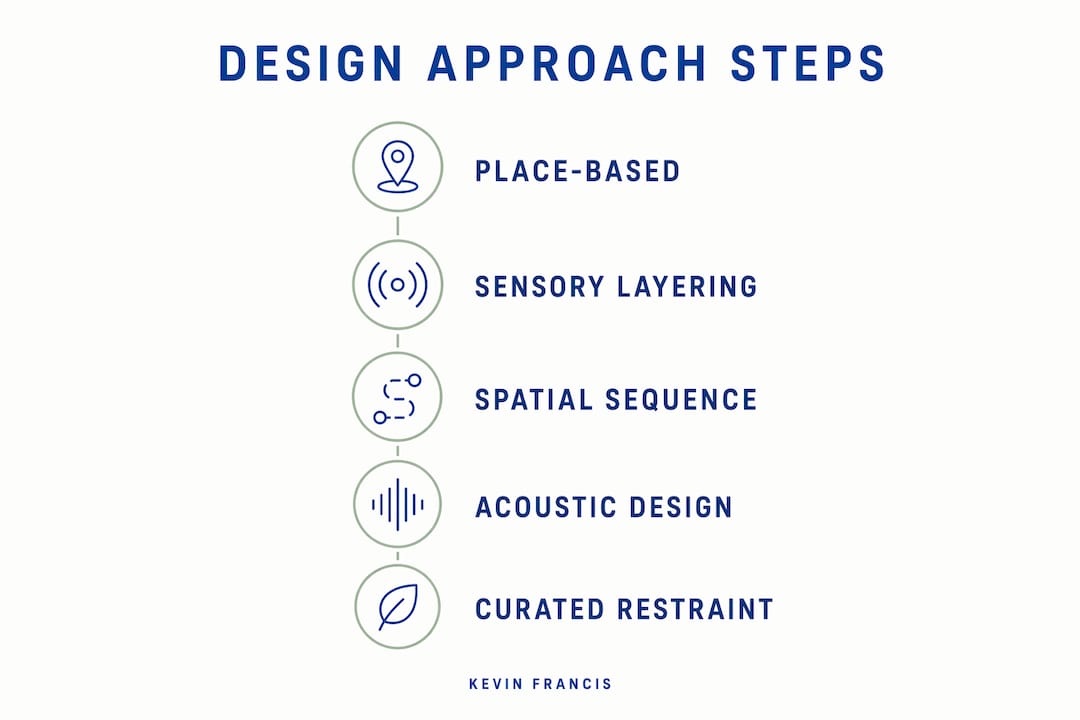
The strongest resort interiors begin with a spatial concept derived from the place itself, not from a marketing brief. Authenticity arises from strong spatial ideas guided by place characteristics such as geology, seasonal light, local craft traditions, or the soundscape of the site. That concept must be precise enough to guide decisions at every scale, from masterplan to the texture of a door handle.
A concept-driven process follows a clear sequence:
- Site analysis as design input. Read the geology, the quality of light at different hours, the dominant sounds, and the existing vegetation. These are not background conditions. They are the raw material of the concept.
- Derive a spatial idea, not a theme. A theme is decorative. A spatial idea governs proportion, sequence, material, and light. The difference shows in the finished work.
- Integrate architecture, landscape, and interiors simultaneously. Treating these as separate commissions produces visual inconsistency. The best resort designs are conceived as one composition from the first sketch.
- Apply preservation-first methodology where possible. Reusing existing structures and materials reduces demolition costs and grounds the guest experience in history and ecology. Lagen Island Resort, designed by WATG and Wimberly Interiors, demonstrates this as a benchmark for the industry.
- Design the arrival sequence with compression before release. Guests are led through a slow reveal rather than immediate exposure to everything on entry. A narrow, quiet approach corridor that opens into a generous, light-filled arrival hall creates anticipation. That emotional arc is the arrival experience discipline that separates destination resorts from ordinary hospitality.
- Maintain concept integrity through every detail. The concept must survive the procurement process. If a specified material becomes unavailable, the replacement must be evaluated against the concept, not against budget alone.
The best resort designs avoid generic formulas and embrace concept-led decisions that ensure long-term value and distinctiveness. This is the discipline that produces resorts guests return to, not just visit once.
What are the current trends in luxury hospitality design?
The defining trend in luxury hospitality design is the shift from visual spectacle to authored atmosphere. Guests at the highest tier no longer respond to opulence for its own sake. They respond to spaces that feel considered, private, and alive with sensory intelligence.
| Trend | Old approach | Current standard |
|---|---|---|
| Lighting | Overhead chandeliers as focal points | Warm layered ambient at 2700K–3000K, no overhead primary sources |
| Materials | Polished marble and gilded finishes | Raw stone, reclaimed wood, hand-woven textiles, natural linen |
| Sound | Background music as afterthought | Acoustic masterplanning from initial layout stage |
| Indoor/outdoor | Distinct separation between zones | Terraces, courtyards, and thresholds that dissolve the boundary |
| Residential comfort | Hospitality formality throughout | Layered interiors with home-like warmth and elevated service |
| Technology | Visible tech as a luxury signal | Invisible integration that supports sensory experience without intrusion |
The residential comfort trend deserves particular attention. Guests now expect the warmth of a private home combined with the precision of five-star service. Layered textiles, area rugs with tactile depth, and furniture arranged for conversation rather than display all contribute to this effect.
Pro Tip: When blurring indoor and outdoor boundaries, treat the threshold itself as a designed moment. A change in floor material, a shift in ceiling height, or a single specimen plant placed at the transition point signals the guest’s passage from one sensory world to another.
How can designers apply luxury resort design concepts in practice?
Applying the luxury resort interior design approach to real projects requires discipline at the process level, not just the aesthetic level. The following principles guide professional execution:
- Establish the concept before selecting materials. Material choices made without a governing concept produce beautiful rooms that feel disconnected from each other and from the place.
- Commission acoustic design alongside architecture. Sound is a structural element. Neglecting it compromises privacy, mood, and the guest’s perception of luxury in ways that cannot be corrected with soft furnishings alone.
- Select materials for longevity and emotional resonance. Stone, solid wood, hand-knotted wool, and natural linen age with dignity. Synthetic alternatives that mimic these materials do not carry the same sensory weight. Exploring luxury rug fiber options is one concrete way to understand how material choice affects tactile experience.
- Design spatial sequence from arrival to the most private spaces. Map the guest’s emotional journey. Every threshold, view, and transition should be intentional.
- Maintain brand identity through material and spatial consistency. A resort’s identity lives in its textures, its light, and its proportions. Inconsistency across spaces signals a lack of authorship.
- Avoid the most common pitfalls. Generic luxury markers, such as oversized chandeliers, mirrored surfaces, and gold hardware, signal effort rather than confidence. Neglecting sound design is the single most common technical failure in otherwise well-executed projects.
Collaboration across architecture, landscape, and interiors is not a preference. It is the method. Projects that assign these disciplines to separate teams without a shared concept brief consistently produce less coherent results than those governed by a unified design intelligence.
Key takeaways
The luxury resort interior design approach succeeds when concept, materiality, sensory sequencing, and acoustic design are unified from the first stage of a project.
| Point | Details |
|---|---|
| Concept before decoration | Derive the design idea from geology, light, or craft traditions specific to the site. |
| Lighting defines luxury | Warm ambient light at 2700K–3000K, dimmed to 30–40%, is the standard for exclusivity. |
| Sound is structural | Acoustic masterplanning must begin at the layout stage, not after construction. |
| Arrival sequence matters | Compression before release builds emotional anticipation and deepens the guest experience. |
| Curated restraint wins | Natural materials and spatial order create more perceived value than ornamental excess. |
Why concept-led design is the only honest path forward
I have watched the luxury hospitality sector cycle through trends for years, and the pattern is consistent. The resorts that age well are the ones where someone made a difficult conceptual decision early and held to it. The ones that feel dated within a decade are the ones where the design was assembled from a catalog of luxury signals rather than derived from a place.
The shift toward curated restraint is not a trend in the fashion sense. It is a correction. The industry spent years equating luxury with visual complexity, and guests responded by feeling exhausted rather than restored. The resorts that understood this first, like the Four Seasons Bora Bora project by BAMO, built spaces that feel genuinely timeless because they were designed around emotional precision rather than spectacle.
For emerging designers entering this field, my honest advice is to resist the impulse to demonstrate your taste through accumulation. The hardest skill in luxury resort design is knowing what to remove. A room that holds its breath before it speaks is always more powerful than one that announces itself immediately.
The influence of this methodology is also moving into residential interiors. Clients who have stayed in concept-led resorts return home wanting the same quality of sensory experience. That is where the work becomes genuinely exciting. The principles of spatial sequence, acoustic comfort, and material authenticity translate directly into private homes, and the designers who understand both scales are the ones building the most interesting practices right now.
— Kevin O’Gara
Bring resort-quality craft into your interiors with Kevin Francis Design
The principles that define luxury resort interiors, natural materials, tactile depth, and spatial restraint, begin at the floor. Kevin Francis Design’s hand-knotted and hand-tufted rugs are made for spaces where every element earns its place.
The Lotto Hand-Knotted Wool Area Rug is woven using traditional Tibetan knotting techniques, producing a surface with the warmth and density that resort-quality interiors demand. For designers working with geometric or maze-inspired concepts, the Anatolia Hand-Tufted Maze Rug offers a refined pattern language rooted in architectural tradition. Both pieces are available for custom sizing and specification through Kevin Francis Design’s bespoke design service.
FAQ
What defines the luxury resort interior design approach?
The luxury resort interior design approach is a concept-driven methodology that integrates architecture, landscape, lighting, materials, and sound into a unified sensory experience. It prioritizes emotional precision and place-based authenticity over decorative excess.
Why is acoustic design critical in luxury resort interiors?
Acoustic masterplanning shapes guest privacy and mood at a fundamental level and cannot be effectively corrected after construction. Sound design must be treated as a structural element from the initial layout stage.
What lighting standard applies to luxury resort interiors?
Warm ambient lighting at 2700K–3000K, dimmed to 30–40% of full output, is the professional standard for luxury resort spaces. Overhead lighting as a primary source reduces perceived luxury and should be replaced with sconces, floor-level path lights, and under-shelf placements.
How does a place-based concept improve resort design outcomes?
A concept derived from site-specific elements such as geology, seasonal light, or local craft traditions guides decisions consistently from masterplan to interior detail. This coherence produces resorts that feel distinctive and age well, rather than spaces that rely on generic luxury markers.
What materials are most effective in luxury resort interiors?
Stone, reclaimed wood, raw linen, and hand-knotted wool are the materials that carry the tactile and visual weight luxury resort interiors require. These materials age with dignity and reinforce the sensory authenticity that guests at the highest tier now expect.


