


How rugs function as design assets in luxury home staging
The most accomplished luxury stagers treat rugs not as finishing touches but as foundational tools. A well-chosen artisan rug defines architectural zones, anchors furniture groupings, and communicates craftsmanship before a buyer speaks a single word. In rooms where every surface whispers quality, the rug underfoot often speaks loudest.
Luxury buyers differentiate between staged decoration and curated design by reading quality cues: hand-finishing, dye richness, and fiber feel function as silent markers that confirm a property’s perceived value and maintenance level. A room styled with a hand-knotted wool rug reads as intentional. The same room with a machine-made substitute reads as assembled.
Here is what rugs accomplish in high-end staging:
- They define and anchor architectural zones in expansive, open-plan luxury spaces.
- They serve as visual cues of craftsmanship, exclusivity, and seller discernment.
- They contribute to spatial composure, giving large rooms a sense of resolution rather than emptiness.
- They support a curated narrative that positions the property above comparable listings.
- They create an emotional connection, helping buyers project their own identity into the space.
What spatial design and rug sizing look like in a luxury interior
Scale is the first principle. Staging luxury homes requires rugs sized to the room’s architectural scale in great rooms to achieve composure; anything smaller leaves furniture looking adrift in the space. A 20x30 great room with a modest rug does not read as understated. It reads as unfinished.
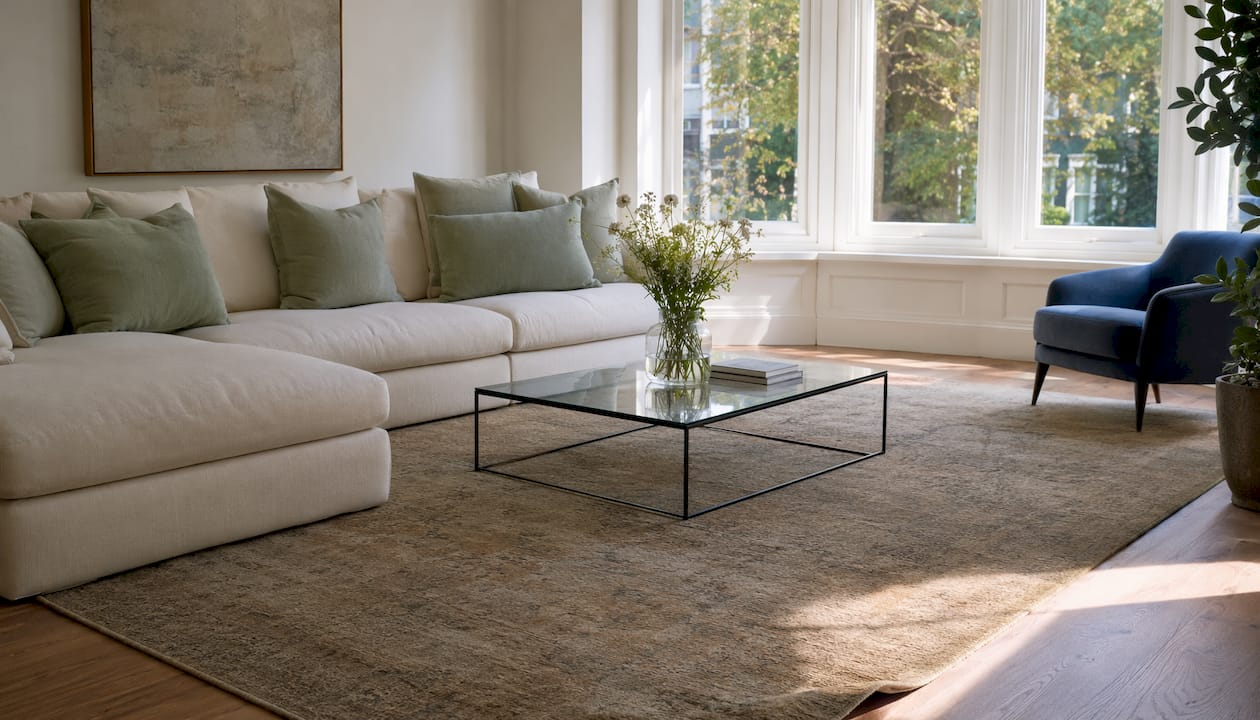
Beyond size, the right rug anchors conversation areas and creates visual zones within open-plan layouts, giving buyers an immediate sense of how a room functions. Color theory plays a quiet but powerful role here. Warm neutrals, layered taupes, and soft stone tones complement the marble, steel, and glass finishes common in luxury interiors without competing with them.
Material choice adjusts what designers call the emotional temperature of a room. Bouclé and alpaca soften spaces dominated by hard architectural finishes; a structured geometric pattern in a heavier wool balances rooms with plush upholstery. The goal is equilibrium, not contrast.
- Size rugs to the room’s architectural scale, not the furniture footprint alone.
- Use color to complement the existing palette rather than introduce a competing focal point.
- Choose fiber and texture to moderate the room’s tactile and visual temperature.
- Keep rugs pristine for showings: professional cleaning before listing and light vacuuming between open houses preserves both appearance and photography quality.
Pro Tip: For listing photography, low to medium pile heights photograph most cleanly. High-pile rugs can appear bulky on camera and obscure the rug’s pattern, which is often its most persuasive quality in online listings.
Why rugs are a market strategy tool in premium real estate
The smartest luxury stagers now think like analysts, reading neighborhood demand, buyer demographics, and price-band behavior before selecting a single textile. A rug chosen this way is not decoration. It is a pricing signal.
In upper-tier listings, buyers expect layered materials, design coherence, and details that suggest the seller understands quality. A hand-knotted artisan rug communicates exactly that. It says the seller paid attention, and by extension, so did the property. That inference matters when buyers are making decisions worth millions.
- Analyze local market data to align rug style and texture with buyer demographics and neighborhood character.
- Use artisan rugs as investment assets that justify premium price points and reinforce exclusivity.
- Treat well-chosen rugs as photography assets: a rug that anchors furniture and creates depth improves listing photos, which remain the first showing for most buyers.
- Recognize that rugs are movable and reusable across listings, making them among the highest-ROI staging investments relative to cost.
The same logic applies beyond residential interiors. Luxury staging principles transfer naturally to high-value assets like yachts, where curated textiles and spatial composure signal the same quality and care to discerning buyers.
What artisan craftsmanship cues luxury buyers actually look for
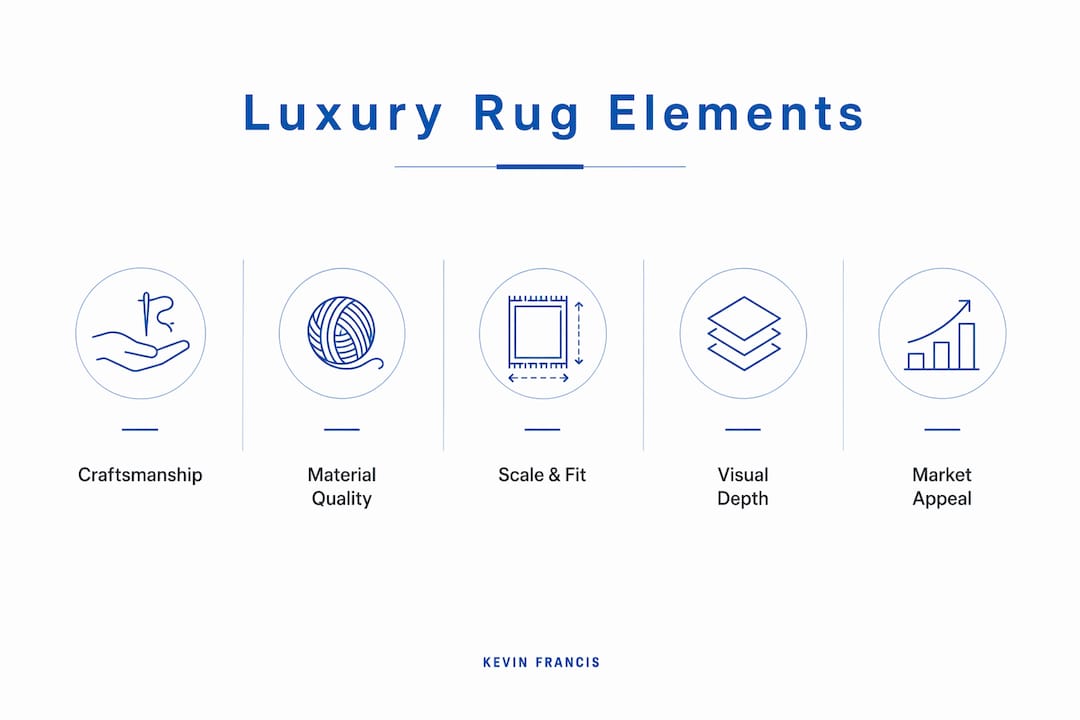
Luxury buyers do not simply see a rug. They read it. Hand-finishing details such as knot density, fiber origin, and natural dye processing are subtle cues that discerning buyers equate with overall home quality. A hand-knotted wool rug with visible pile variation and rich, saturated color tells a story of time, skill, and material integrity that no machine-made piece can replicate.
Layering handmade rugs adds a further dimension. Combining artisan pieces carefully creates visual depth that photographs beautifully and registers emotionally during showings. A base rug in a warm neutral, layered with a smaller hand-knotted accent, creates the kind of richness that buyers associate with well-appointed, well-maintained homes.
- Assess handwoven or hand-knotted construction as a primary quality indicator.
- Look for natural dye saturation and fiber luster as markers of premium material sourcing.
- Use layering to add perceived richness and photographic depth without overwhelming the space.
- Maintain artisan rugs with professional care between showings; their condition signals how the entire property has been managed.
A well-chosen artisan rug increases buyer trust and perceived sale value by signaling craftsmanship through hand-finishing and fiber quality. In high-end staging, craftsmanship reads as trustworthiness, and trustworthiness is exactly what buyers seek when committing to a large financial decision.
Kevin Francis Design brings artisan rugs to your staging vision
When a luxury interior calls for a rug that does more than cover a floor, Kevin Francis Design offers something genuinely rare: handmade artisan pieces conceived as works of art, crafted through handweaving, hand-tufting, and Tibetan knotting techniques that produce the fiber richness and dye depth luxury buyers recognize on sight.
The Lotto Hand-Knotted Wool Area Rug exemplifies this approach. Its hand-knotted construction, rich wool pile, and art-inspired pattern create the kind of resolved, painterly presence that anchors a luxury room and elevates every photograph. Designer Kevin Francis O’Gara draws on modernist art movements and architectural inspiration to produce pieces that carry a narrative, giving staged interiors a curatorial depth that purely decorative rugs cannot achieve. For your next luxury staging project or refined residential interior, explore the full collection at Kevin Francis Design and find the piece that transforms a room into a statement.
Key Takeaways
Rugs are the most versatile and highest-impact staging asset in luxury interiors, combining spatial function, craftsmanship signaling, and market strategy in a single piece.
| Point | Details |
|---|---|
| Scale determines composure | Luxury rooms require rugs sized to the architectural scale to anchor furniture and avoid an unfinished look. |
| Material adjusts room temperature | Bouclé and alpaca soften hard architectural spaces; structured wool balances heavy upholstery. |
| Artisan cues build buyer trust | Hand-knotted construction, natural dye richness, and fiber quality signal craftsmanship and property care. |
| Market data guides rug selection | Buyer demographics and neighborhood price bands should inform rug style, texture, and scale choices. |
| Kevin Francis Design | Hand-knotted pieces like the Lotto Wool Area Rug deliver the artisan depth and painterly presence luxury staging demands. |
FAQ
How do rugs define space in luxury home staging?
Rugs anchor furniture groupings and create distinct activity zones within open-plan layouts, giving large luxury rooms a sense of intention and spatial resolution that bare floors cannot achieve.
What rug size works best for a luxury great room?
Staging experts recommend rugs sized appropriately to the architectural scale of the room; anything smaller leaves furniture looking visually disconnected from the space.
Why do luxury buyers respond to hand-knotted rugs?
Hand-knotted construction, natural dye saturation, and fiber quality are craftsmanship cues that luxury buyers read as evidence of overall property quality and attentive maintenance.
How does rug layering improve staging results?
Layering a smaller hand-knotted accent over a neutral base rug adds visual depth and textural richness that photographs well and creates the kind of curated warmth buyers associate with premium interiors.
Which rug materials work best for high-end staging?
Wool, alpaca, and bouclé are the most effective choices: they photograph cleanly, adjust a room’s tactile temperature, and convey the natural fiber quality that discerning buyers associate with luxury.


