


The single best approach to curated art collections for hospitality interiors is a narrative-driven program anchored to brand identity, built during the fit-out phase, and assembled from a deliberate mix of local commissions, selected purchases, and rentable works. This is not a decorating afterthought handled the week before opening. It is a program with a goal, a budget architecture, and a delivery method decided before a single frame goes on a wall.
The Hospitality Art Experience Model gives this instinct academic backing: it links specific visual art attributes directly to guest emotion, attitude, and booking behavior, which means the pieces on your walls are doing measurable work, not just filling space. If you take one thing into your next planning meeting, take this three-part checklist:
- Program goal: define what the art needs to do for brand identity and guest experience before you look at a single piece.
- Delivery method: decide the dominant mix, whether that leans toward commission, purchase, or rental, based on zone and budget.
- Next step: write a one-page curatorial brief before you contact a gallery, artist, or consultant.
Kevin Francis Design works from this same principle in every custom textile and rug program we build for hospitality clients: art and interior are not separate line items, they are one narrative told in different materials.
Key Takeaways
A hospitality art program succeeds when it starts with a narrative brief in the fit-out phase and mixes commissions, purchases, and rentals according to zone priority and budget.
| Point | Details |
|---|---|
| Write the brief first | Define brand objective, guest persona, and palette before contacting any gallery, artist, or platform. |
| Match sourcing to zone | Reserve commissions for signature public pieces, purchases for unique rooms, rentals for flexible programs. |
| Budget public spaces heavier | Lobby and arrival sequences drive first impressions and deserve a larger share of the art budget. |
| Protect timeline discipline | Commissions need 3 to many months; lock textiles and rugs into the same schedule, not as a last-minute add. |
| Anchor identity with signature textiles | A repeatable piece like the Lotto Hand-Knotted Wool Area Rug reinforces brand recognition across suites and public areas. |
Immediate next steps for your team:
- Draft the one-page narrative brief and circulate it to ownership for sign-off.
- Identify which public space will carry the signature commission, and start that vendor search first given its longer lead time.
- Confirm insurance, conservation, and condition-reporting requirements before signing any procurement contract.
Table of Contents
- What Makes Curated Art Collections for Hospitality Interiors Worth the Investment?
- How Do You Plan a Curated Art Collection From Brief to Installation?
- Where Should You Source Art for a Hospitality Project?
- What Are the Rules for Displaying Art in Hospitality Spaces?
- How Much Should a Hospitality Art Program Cost?
- How Do You Choose the Right Art Consultant for a Hospitality Project?
- How Custom Rugs and Textiles Anchor a Curated Art Program
- How Do Sustainability and Ethical Sourcing Shape Art Selection?
- Bring a Signature Textile Into Your Art Program
- Sources
- FAQ
What Makes Curated Art Collections for Hospitality Interiors Worth the Investment?
Guests form an opinion about a property within seconds of entering the lobby, and the art on the walls is doing more of that work than most owners assume. A mixed-methods study of hotel artwork involving 15 interviews and a 268-person survey found that guests engage with hotel art through three distinct channels: attention holding, cognitive inquiry, and emotive immersion. Properties that scored higher on those three channels also scored higher on overall guest experience.
That is not a soft correlation. It means the right piece, placed at the right decision point, changes how a guest feels about the entire stay, not just the wall it hangs on.
A separate finding worth building into any capital pitch: lobby artwork and interior design measurably shape first impressions and are linked to higher loyalty among environmentally conscious travelers, according to sustainability research on hotel lobby design. If your property targets guests who care about provenance and sourcing, the art program is a loyalty lever, not just a design flourish.
Art also does structural work most designers underestimate: it functions as wayfinding. Repeating a motif or color story at key decision points in the guest journey (elevator lobby, corridor turn, spa entrance) creates continuity that guests register subconsciously, according to hospitality design commentary on guest experience. This “halo effect” extends beyond the art itself into perceived service quality. Guests who notice a coherent, intentional art program tend to rate housekeeping, front desk service, and food and beverage more generously, even when nothing else changed.
- Art shapes emotional response and attitude toward the property, per the Hospitality Art Experience Model.
- Engagement with art correlates with better overall guest experience scores.
- Lobby art specifically influences first impressions and loyalty among sustainability-minded travelers.
- Repeated motifs support wayfinding and reinforce brand recall across the guest journey.
Pro Tip: When you pitch an art budget to ownership or a development committee, don’t lead with aesthetics. Track Net Promoter Score shifts, booking intent language in reviews, and F&B spend in art-adjacent spaces like lobby bars or restaurant corridors. Those three metrics translate a curatorial decision into a revenue conversation stakeholders already understand.
How Do You Plan a Curated Art Collection From Brief to Installation?
The workflow runs in one direction: narrative brief, budget bands, zone priority, sourcing mix, conservation requirements, approval gates. Skip a step and you end up with mismatched pieces bought under deadline pressure, which is the single most common failure mode in hospitality art programs.
- Write the narrative brief first. Define the brand story the art needs to tell, the guest persona you’re designing for, and the palette or mood already set by the interior architecture.
- Set budget bands by zone, not by piece. Public spaces, corridors, and guest rooms each carry different cost logic.
- Prioritize zones. Lobby and arrival sequences matter most for first impression; corridors matter most for wayfinding; rooms matter most for repeat-guest personalization.
- Decide your sourcing mix. Reserve commissions for signature, high-visibility pieces; use purchases for unique guest rooms; use rentals where the program needs flexibility, such as a rotating gallery wall or a seasonal pop-up.
- Build in conservation and insurance requirements before you sign a single vendor contract, not after installation.
- Set approval gates. Decide who signs off at concept, at 50% delivery, and at final installation, and put those names in the brief.
A practical commissioning guide for hotel art programs recommends locking payment structure and intellectual property terms into the contract at the brief stage, not during negotiation. That single habit prevents most of the disputes that stall installation timelines.
| Delivery Method | Typical Lead Time | Best Use |
|---|---|---|
| Ready-made purchase | 2 to 6 weeks | Guest rooms, secondary corridors |
| Limited edition print | 4 to 10 weeks | Repeatable pieces across multiple floors |
| Custom commission | 3 to many months | Lobby anchor pieces, signature staircases |
| Rental program | 1 to 4 weeks | Pop-ups, seasonal rotations, restaurant refreshes |
Your one-page brief, whether it goes to an internal design team or out as an RFP, should cover:
- Brand objective in one sentence
- Guest persona and expected dwell time in each zone
- Palette, materials, and mood references
- Physical constraints (wall dimensions, structural load, lighting conditions)
- Deliverables and installation timeline
- IP and licensing notes
Pro Tip: Before committing to a full property rollout, pilot the narrative in a single public space, such as the lobby or elevator bank. Watch how guests actually interact with it for two to three weeks before you commission the same story into forty guest rooms. A pilot costs a fraction of a full rollout and catches problems no mood board will reveal.
Where Should You Source Art for a Hospitality Project?
The rule of thumb: commission for signature public pieces, purchase for unique guest rooms, and rent for programs that need flexibility. Matching the sourcing route to the zone is what keeps a hospitality art budget from spiraling.
Commissions work best when a property needs one unrepeatable, story-anchored piece, typically for the lobby or a grand staircase. They cost more and take longer (often three to nine months), but they generate press-worthy stories and give a property something no competitor can replicate.
Direct gallery or artist purchases suit unique guest rooms or boutique properties where budget allows individual pieces without the lead time of a full commission. Lead times run two to six weeks, and the sustainability angle is strong when you’re buying from regional galleries or working artists.
Online art platforms offer speed and scale, useful for larger properties needing dozens of similar-caliber pieces across guest floors, though the “narrative” quality tends to thin out compared to commissioned or gallery-sourced work.
Rental programs fit properties that want to rotate art seasonally or test a concept before committing capital. They carry the lowest upfront cost and the shortest lead time, but they sacrifice the permanence that builds long-term brand association.
Before signing with any source, run a procurement checklist:
- Confirm contract terms cover IP, image rights, and reproduction limits.
- Request a condition report at delivery and establish a baseline for future comparison.
- Confirm insurance coverage during transit, installation, and ongoing display.
- Establish a written conservation plan, including cleaning cadence and restoration budget.
- Clarify who owns delivery and installation responsibility, the vendor or your contractor.
When you vet a vendor for a portfolio review, demand a track record relevant to hospitality specifically, not general gallery experience. Ask for installation references at comparable scale, a clear commissioning workflow they can walk you through, proof of insurance and conservation capability, and invoicing terms that match your project’s payment schedule.
What Are the Rules for Displaying Art in Hospitality Spaces?
Three factors decide whether a piece reads correctly in a real space: scale, lighting, and placement relative to sightlines. Get those three right and even a modest piece looks intentional. Get them wrong and even a museum-grade commission looks like an accident.
Scale should relate to the furniture and architecture around it, not to the wall alone. A piece hung over a lobby sofa needs to span roughly two-thirds of the sofa’s width to feel resolved rather than orphaned. Mounting height for sightline work in corridors and public areas generally centers artwork at 57 to 60 inches from the floor, measured to the piece’s center, which aligns with average adult eye level.
Grouping strategies matter in corridors, where guests move quickly and only catch art in peripheral vision. Repeating a motif or frame style at regular intervals reads better than scattering unrelated pieces, because it reinforces the wayfinding function discussed earlier rather than competing with it.
Framing and glazing decisions depend on traffic and light exposure. Museum-quality UV-filtering glass protects color-sensitive works in high-light lobbies, but hospitality-grade acrylic glazing is often the better call in guest rooms and high-traffic corridors, since it resists shattering and scuffing far better under daily housekeeping contact.
Environmental controls, theft prevention, and maintenance protocol round out the presentation plan:
- Keep direct sunlight off original works; use UV-filtering film on adjacent windows where relocation isn’t possible.
- Anchor larger or valuable pieces with security mounts, particularly in guest-accessible corridors.
- Schedule a condition check every six to twelve months and budget a restoration line item annually.
- Clean glazing and frames on a quarterly cadence using non-abrasive, conservation-approved materials.
Before handoff to construction, confirm wall fixings match the substrate (drywall anchors differ significantly from masonry mounts), verify fire code compliance for any wall-mounted or freestanding installation near egress paths, and get written sign-off from the general contractor once pieces are hung.
Pro Tip: In lobbies with polished stone or high-gloss tile, glare off glazing is one of the most common installation mistakes. Angle track lighting at roughly 30 degrees from the wall plane rather than straight-on, and choose low-iron glass where budget allows. It cuts reflected glare dramatically without flattening the color of the piece.
How Much Should a Hospitality Art Program Cost?
Budget in three layers: a per-room baseline, a multiplier for public spaces, and a commissioning premium for signature pieces. Most cost overruns happen when public-space art gets budgeted like guest-room art, which underfunds the pieces guests see first and most often.
Primary cost drivers include artist or vendor commission fees, framing and mounting, shipping and customs for imported works, insurance during transit and display, installation labor, and an ongoing conservation reserve. Industry guidance on budgeting and briefing hotel art programs treats the per-guest-room figure as a starting reference point that should scale with room count, market tier, and how many public spaces need signature-level treatment. Treat any published per-room number as a floor to adjust upward, not a fixed target.
| Purchase Type | Lead Time | Cost Behavior |
|---|---|---|
| Ready-made purchase | Short (2 to 6 weeks) | Predictable, lowest per-piece cost |
| Limited edition | Medium (4 to 10 weeks) | Moderate cost, scales well across floors |
| Custom commission | Long (3 to many months) | Highest per-piece cost, highest brand value |
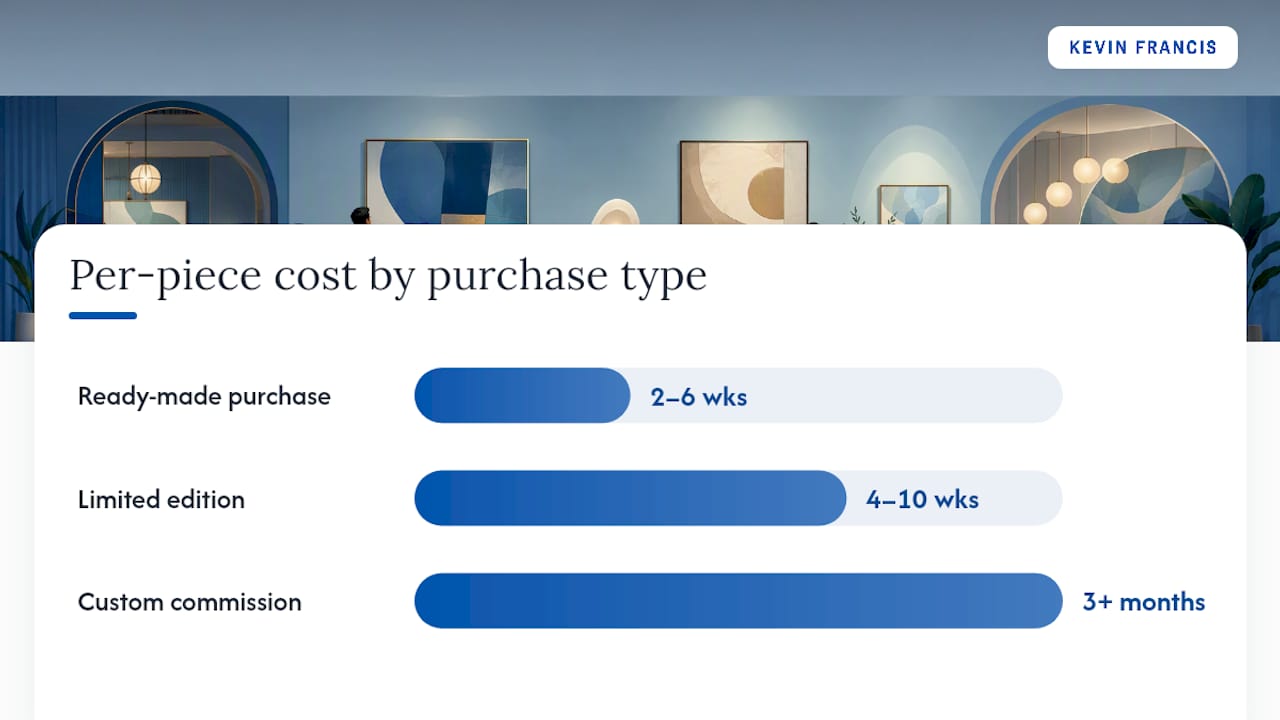
Planned procurement, where a property buys its full art scheme in one coordinated round, is typically cheaper per piece than late, piecemeal purchasing done room by room as construction closes in. That single scheduling decision, buying early and buying in bulk, is one of the most reliable cost controls available to a project team.
If your schedule is tight, prioritize public spaces first. A strong lobby or restaurant commission does more brand work per dollar than a full guest-room rollout, and guest rooms can be finished in a second phase without guests ever noticing the staggered timeline. Some industry case studies tied to community-focused art programs report occupancy and food and beverage upside tied to strong placemaking, reinforcing why the public-space-first sequencing pays off even under budget pressure.
How Do You Choose the Right Art Consultant for a Hospitality Project?
The single most important hiring criterion is a proven hospitality-specific portfolio paired with a clear, documented procurement process. General gallery experience or residential curation does not transfer cleanly to hotel-scale logistics, guest-safety requirements, or multi-vendor installation coordination.
Score candidates against this checklist during interviews or RFP review:
- Portfolio relevance: has the consultant delivered art programs at comparable scale in hospitality specifically?
- Procurement capability: can they show a documented workflow from brief to installed piece?
- Local artist network: do they have relationships that support regional sourcing and sustainability goals?
- Project management: can they coordinate with general contractors on installation timing?
- Insurance and installation experience: do they carry appropriate liability coverage and installation crews?
During the interview, ask these questions and expect concrete evidence in response, not general assurances:
- Can you share three hospitality case studies with photos and outcomes?
- Who installed your last hotel project, and can I call that general contractor?
- What does your standard commission contract cover regarding IP and image rights?
- How do you handle condition reporting at delivery?
- What is your typical timeline from signed brief to installed piece?
- Do you carry transit and installation insurance, and at what coverage level?
- How do you structure fees: flat rate, percentage of art budget, or per room?
- What happens if a commissioned piece is delivered late or damaged?
Red flags worth walking away from: no hospitality references at all, vague or missing IP and licensing language in the sample contract, no proof of insurance, no documented installation workflow, and no plan for post-installation maintenance. A consultant who can’t answer the insurance question directly is not ready for a multi-property engagement.
Fee structures vary by project size. A flat fee suits smaller, single-property engagements with a defined scope. A percentage of the total art budget (commonly in a similar range to interior design fee structures) works better for large, multi-phase developments where scope will shift. A per-room rate suits standardized guest-room rollouts where the consultant is repeating a formula across dozens of units.
How Custom Rugs and Textiles Anchor a Curated Art Program
A signature rug or custom textile functions as a grounding artwork in its own right, modulating scale, color, and the physical points where guests actually touch the space. Wall art sets the story; the floor and soft furnishings carry that story into the parts of the room a guest walks on, sits on, and photographs.
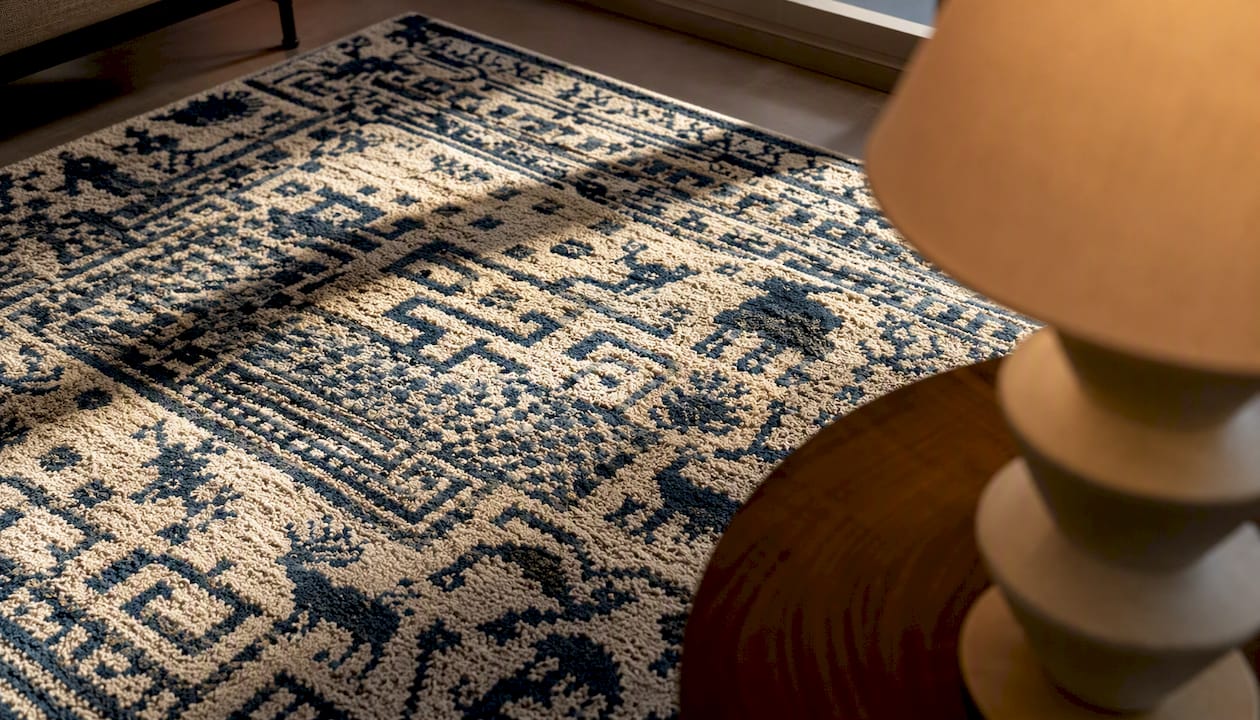
At Kevin Francis Design, we brief custom textiles into a curatorial program the same way a consultant briefs a commissioned painting: material spec, pattern narrative, color ties to the surrounding artwork, durability rating for commercial traffic, and a realistic timeline. A hand-knotted wool piece needs the same lead-time discipline as a commissioned painting, often measured in months rather than weeks, so it belongs in the brief from day one, not added as a last-minute furnishing decision.
The Lotto Hand-Knotted Wool Area Rug is a strong example of how a single signature textile can become a repeatable identity asset. Placed consistently across a lobby, a signature suite, and a flagship restaurant, a rug with this kind of distinctive pattern reinforces brand recognition the same way a repeated motif does in a wall-art program, giving guests a visual thread that ties disparate spaces together.
- Custom rugs establish a color and pattern baseline that wall art can either echo or intentionally contrast.
- A repeatable signature textile across suites reinforces brand identity the way a motif repeated in art does.
- Durability specs for hospitality-grade wool differ meaningfully from residential specs; brief that distinction explicitly.
- Timeline for hand-knotted pieces should be locked in alongside commissioned wall art, not treated as a separate furnishing task.
Pro Tip: When a room already features a bold rug pattern, keep the wall art quieter in color and form, or vice versa. Two high-contrast statement pieces in the same sightline compete for guest attention and undercut the wayfinding clarity you built the program around. Let one element lead and the other support.
For more on how narrative-driven textile choices support a broader design story, see how narrative-driven textile archetypes can extend an art program’s story into materials guests touch directly, and how a well-considered designer rug collection approach translates to commercial-scale hospitality briefs.
How Do Sustainability and Ethical Sourcing Shape Art Selection?
Sourcing decisions carry as much weight as aesthetic ones, particularly given that environmentally conscious guests respond measurably to properties that visibly prioritize sustainable design and artwork, per the lobby design and green loyalty research cited earlier. That means sustainability is not a side note in a hospitality art brief; it is a guest-facing loyalty driver.
Practical ethical sourcing starts with regional artist commissions, which cut transport emissions, support local economies, and give a property an authentic geographic story that imported work simply cannot replicate. Materials matter too: hand-knotted wool, natural dyes, and reclaimed or sustainably harvested framing materials all signal craftsmanship over mass production, and guests increasingly notice the difference.
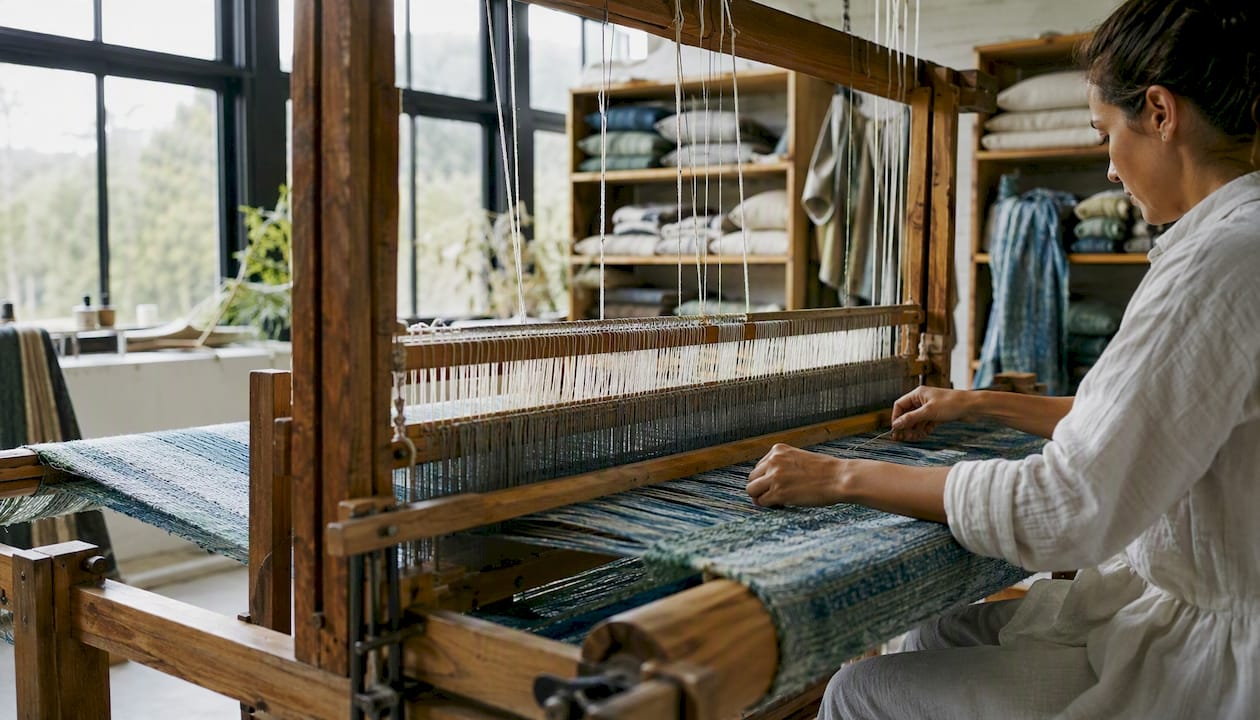
Ethical sourcing also means paying attention to labor practices behind handmade work. Verify that artisan partners and commissioned artists are compensated fairly and that any textile or craft component in the program comes from documented, traceable workshops rather than unverified supply chains. Ask vendors directly about sourcing transparency during the same procurement conversation where you request condition reports and insurance documentation; treat it as a standard line item, not a special request.
Building sustainability into the brief from the start, rather than retrofitting it after pieces are chosen, keeps the program coherent and gives ownership a genuine story to tell guests, not a marketing gloss layered on afterward.
A designer’s take on art-forward hospitality
Centering guest experience in every art decision changes what “good” looks like. A painting can be technically brilliant and still fail a hospitality brief if it does nothing for the guest standing in front of it at 11 p.m. after a long flight. I’ve come to believe the strongest hospitality art programs are the ones that treat a signature rug, a custom wallpaper, and a commissioned canvas as one continuous material language rather than three separate procurement lines fighting for the same wall. When a property gets that right, guests can’t always articulate why the space feels considered, but they feel it the moment they walk in, and they remember it long after checkout.
Bring a Signature Textile Into Your Art Program
Kevin Francis Design gives hospitality designers a faster path to a signature anchor piece than a full custom art commission timeline allows, without sacrificing the artisan quality a brand-defining space demands. Our hand-knotted and hand-tufted rugs, wallpapers, and textiles are built from the same narrative-first process described throughout this guide: material spec, pattern story, and color ties worked out before production begins.
If you’re assembling a curatorial brief right now, the Lotto Hand-Knotted Wool Area Rug is a practical example of the kind of repeatable, artisan-grade anchor piece that can carry a brand identity across a lobby, a signature suite, and a flagship restaurant. Request a project brief review or a sample board from our team, and we’ll work directly with your consultant or design lead to align timeline, palette, and durability specs with the rest of your art program before you’re locked into a construction schedule.
Sources
- Maksim Godovykh. Hospitality Art Experience Model: The Effects of Visual Art on Guests’ Attitudes and Behavior. Tourism and Hospitality. 2024
- Decorating hotels with art pieces: mixed-method study showing art’s engagement effects. International Journal of Tourism Research. 2026
- Sustainability study: the mediating role of hotel lobby interior design and artworks on green customers and loyalty. MDPI Sustainability. 2022
- Hotel Art Collections: How to run artist commissions and partnerships professionally. The Art Fair Guy
- Hotel wall art procurement timeline: brief to installation. MontCarta blog
FAQ
Where do hotels typically buy their artwork?
Hotels source art through regional galleries, direct artist commissions, online art platforms for scale purchasing, and rental programs for flexible or rotating installations, with the choice depending on zone and budget.
What are the “three C’s” relevant to hospitality art programs?
Definitions of the “three C’s” in hospitality vary by source and context, but in an art-planning context they most usefully map to curation, commissioning, and conservation: choosing the right pieces, sourcing them properly, and protecting the investment afterward.
What type of art is in high demand for hospitality spaces right now?
Locally sourced, narrative-driven commissions and handcrafted textile pieces, including hand-knotted rugs, are in strong demand because they support both brand storytelling and the sustainability priorities that increasingly influence guest loyalty.
Where do interior designers typically source artwork for commercial projects?
Interior designers generally split sourcing between direct artist relationships for signature commissions, established galleries for vetted purchases, and specialized platforms or consultants for scaling art across multiple rooms efficiently.
How long should you budget for a custom art or textile commission?
Custom commissions, including signature rugs and wall art, typically require three to nine months lead time, so they should be locked into the project brief well before construction nears completion.


