


Tibetan knotting is defined as a hand-knotting method where yarn wraps continuously around a rod laid across two warp threads, then a knife slides along the rod to cut the loops into individual pile tufts. This process, known formally as the slit-loop or Tibetan rod technique, produces the dense, textured pile that makes Tibetan rugs instantly recognizable. Understanding Tibetan knotting rug techniques means grasping both the physical mechanics and the centuries of artisan knowledge behind each row. At Kevin Francis Design, we see this craft not just as a weaving method but as a living art form that connects the maker to a tradition of extraordinary beauty and resilience.
What materials and tools are essential for Tibetan knotting rug making?
The right materials define the outcome before a single knot is tied. Tibetan highland wool is naturally durable, fire-resistant, and stain-resistant compared to typical wool fibers. That combination of properties is why Tibetan rugs have survived centuries of hard use in high-altitude homes and monasteries.
The loom and warp foundation
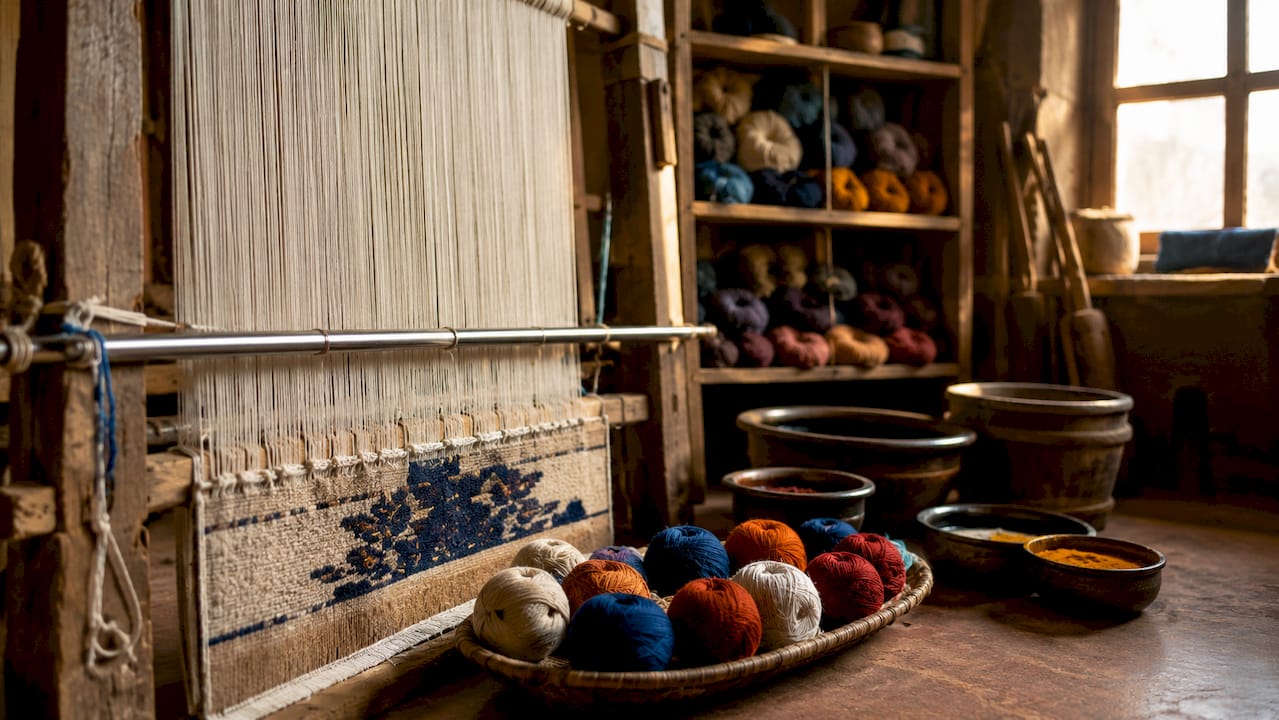
Vertical wooden looms use cotton warp and weft threads as the structural foundation for hand-knotted Tibetan rugs. Cotton warp threads hold tension well and resist stretching, which keeps the rug flat and dimensionally stable over time. The vertical orientation of the loom gives the weaver clear sightlines across each row and makes it easier to maintain consistent knot placement.
The rod: the most important tool in Tibetan knotting
The metal or wooden rod is the defining tool of this technique. It sits horizontally across two warp threads and acts as a physical gauge that controls pile height. Every loop of yarn wraps around this rod before being cut, so the rod’s diameter directly determines how tall the finished pile will be. Thicker rods produce a plush, high pile; thinner rods create a tighter, lower surface.
Materials overview
| Tool or Material | Role in Tibetan Knotting |
|---|---|
| Tibetan highland wool | Primary pile yarn; durable, naturally stain-resistant |
| Silk blend yarn | Optional accent yarn for sheen and fine detail |
| Cotton warp thread | Structural foundation of the rug |
| Cotton weft thread | Locks knot rows in place between passes |
| Vertical wooden loom | Holds warp threads under consistent tension |
| Metal or wooden rod | Gauges pile height; guides the cutting knife |
| Cutting knife | Slides along the rod to slit loops into pile tufts |
Silk blends are worth considering for decorative panels or borders where light reflection adds visual depth. For a first project, however, pure highland wool is forgiving and easier to tension consistently.
Pro Tip: Choose a rod diameter that matches your target pile height before you begin. Switching rods mid-rug creates a visible seam in the pile surface that is nearly impossible to correct after the fact.
How do you execute the Tibetan knotting technique step by step?
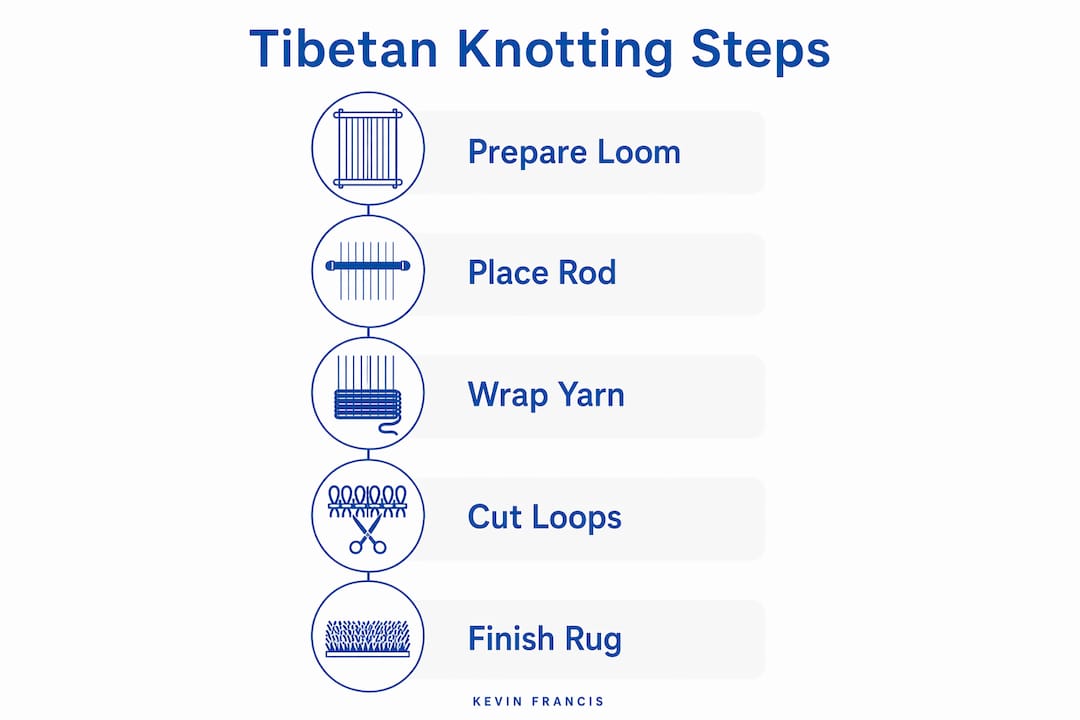
The slit-loop technique involves wrapping yarn around a rod placed over two warp threads, then cutting those loops to form the pile. That single sentence describes the motion, but the rhythm and precision behind it take practice to internalize. Here is the full sequence broken into clear steps.
- Set up the loom. Stretch cotton warp threads vertically on the loom at even intervals. Consistent spacing between warp threads prevents gaps in the finished pile.
- Position the rod. Lay the rod horizontally across the face of the loom, resting it over two adjacent warp threads at the row where you intend to begin.
- Wrap the yarn. Take your pile yarn and wrap it continuously around the rod, passing it behind the two warp threads with each wrap. Each wrap creates one loop that will become one pile tuft.
- Secure with a weft pass. After completing a full row of wraps, pass a weft thread horizontally through the warp threads to lock the loops in place before cutting.
- Cut the loops. Slide the cutting knife along the groove or flat surface of the rod, slitting every loop in a single smooth motion. This releases the pile tufts and frees the rod for the next row.
- Advance the rod. Move the rod up to the next row position and repeat the wrapping process. Each completed row builds the rug upward from the base.
- Beat down the weft. Use a comb or beater to press each weft row firmly downward. This compacts the structure and keeps the knot density even.
- Trim the pile. Once a section is complete, use scissors or a pile trimmer to even the surface. This step reveals the pattern and gives the rug its finished, velvety appearance.
Maintaining consistent pile height and tension
Tension is the variable that separates a professional result from a beginner’s attempt. Wrap each loop with the same hand pressure throughout the row. Inconsistent tension causes the pile to look wavy or patchy after trimming.
Pro Tip: Mark your rod with a small piece of tape at each end to track its position across the loom. This prevents the rod from drifting sideways during wrapping, which skews the knot alignment.
Common errors to watch for:
- Uneven loop size. Caused by varying wrap tension. Practice wrapping on a spare piece of warp before starting the rug.
- Loose weft rows. A weft that is not beaten down firmly allows knot rows to shift. Beat each row twice.
- Skipped warp threads. Missing a warp thread during wrapping creates a visible gap. Count warp threads at the start of each row.
- Ragged cuts. A dull knife tears loops rather than slicing them cleanly. Keep the blade sharp and replace it regularly.
How does Tibetan knotting compare to other traditional rug knotting methods?
Tibetan knotting differs from Persian and Turkish knots by using a slit-loop technique involving a rod, rather than symmetrical or asymmetrical knots tied directly around warp threads. That structural difference produces a distinctly different pile texture and opens up design possibilities that other traditions cannot easily replicate.
Persian rugs use the asymmetrical Senneh knot, tied individually around one warp thread and looped behind the adjacent one. Turkish rugs use the symmetrical Ghiordes knot, wrapped around two warp threads and pulled through the center. Both methods require the weaver to tie and cut each knot separately, which is slower but allows extremely fine detail at high knot densities.
| Feature | Tibetan knotting | Persian knotting | Turkish knotting |
|---|---|---|---|
| Knot structure | Slit-loop via rod | Asymmetrical (Senneh) | Symmetrical (Ghiordes) |
| Tool required | Rod and knife | Fingers and hook | Fingers and hook |
| Typical knot density | 15–100 knots per sq. in. | 100–500+ knots per sq. in. | 80–300 knots per sq. in. |
| Pile character | Dense, textured, plush | Fine, detailed, flat | Firm, structured |
| Primary fiber | Highland wool or silk blend | Wool, cotton, or silk | Wool or cotton |
Tibetan rugs favor medium knot density combined with superior wool to achieve durability and aesthetic richness. Typical commercial qualities include 45, 60, 80, and 100 knots per square inch, with high-end pieces reaching 150–200 knots per square inch. Knot density alone does not determine quality. A Tibetan rug at 60 knots per square inch, woven from thick highland wool, often outlasts a finely knotted rug made from thinner fiber.
The rod technique also gives Tibetan weavers a speed advantage over individual-knot methods. Because an entire row of loops is wrapped and cut in one pass, production moves more quickly without sacrificing pile depth or consistency. For crafters interested in hand-knotted versus hand-tufted construction, understanding this distinction clarifies why Tibetan knotting occupies a unique middle ground between the two approaches.
Common challenges in Tibetan knotting and expert tips for beginners
Uneven pile height is the most common frustration for new Tibetan knotters. The rod controls height mechanically, but the weaver controls tension manually. Any variation in how firmly you wrap the yarn around the rod translates directly into visible inconsistency after trimming.
“The rod is your best teacher. When the pile looks uneven after cutting, the rod is telling you that your hands were not consistent. Go back to the rod, not to the scissors.”
- Rod handling. Hold the rod steady with your non-dominant hand while wrapping with your dominant hand. Let the rod bear the tension of the loops rather than the warp threads.
- Cutting technique. Draw the knife in one smooth, continuous stroke from one end of the rod to the other. Stopping mid-cut leaves a ragged edge on the pile tuft.
- Loom stability. Brace the loom against a wall or secure it to a frame. A loom that rocks during weaving introduces tension variation with every row.
- Yarn preparation. Wind yarn into small working butterflies before you begin. Pulling yarn directly from a large skein creates drag that tightens your wraps unevenly.
- Warp thread selection. Use a tightly spun, mercerized cotton warp. Loosely spun warp threads compress under tension and cause the finished rug to pucker.
Pro Tip: After every five rows, step back and view the pile surface from a low angle with raking light. This reveals height inconsistencies that are invisible when you are working close to the loom.
Recognizing quality Tibetan knotting visually is straightforward once you know what to look for. The pile surface should feel uniformly dense when pressed with an open palm. The back of the rug should show neat, even rows of loops with no loose ends or gaps. Traditional Tibetan motifs like snow lions and lotuses appear crisp at the edges, not blurred, when the knot rows are properly aligned.
Key takeaways
The Tibetan rod technique produces a uniquely dense, textured pile by wrapping yarn around a gauge rod and cutting loops in a single pass, a method no other major knotting tradition replicates.
| Point | Details |
|---|---|
| Rod controls pile height | Choose your rod diameter before starting; switching mid-project creates visible inconsistency. |
| Highland wool is the foundation | Tibetan wool is naturally durable and stain-resistant, making it the best choice for pile yarn. |
| Knot density is not everything | Medium-density Tibetan rugs with quality wool outperform high-density rugs made from inferior fiber. |
| Tension is the key variable | Consistent hand pressure during wrapping determines whether the finished pile looks even or patchy. |
| Tibetan knotting is structurally unique | The slit-loop rod method differs fundamentally from Persian and Turkish knot structures. |
What I have learned from years with Tibetan knotting
I came to Tibetan knotting through a fascination with texture rather than pattern. Most rug traditions seduce you with color and motif first. Tibetan knotting seduced me with the way the pile catches light, that almost painterly depth that no printed or tufted surface can replicate.
What surprised me most was how democratic the technique actually is. The rod does the precision work for you. A beginner who maintains consistent tension can produce a pile surface that rivals work from far more experienced hands. The learning curve is not about dexterity. It is about patience and attention to the small physical habits that accumulate across hundreds of rows.
Tibetan rugs produced since the 1959 diaspora largely come from Nepalese Tibetan refugee communities, and those artisans have kept the technique alive with remarkable fidelity. When you learn this method, you are not just making a rug. You are connecting to a lineage of makers who carried their craft across the Himalayas and rebuilt it in a new country.
My honest advice for anyone starting out: do not rush the weft rows. New weavers almost always under-beat the weft, and the result is a rug that shifts and distorts over time. Beat firmly, check your tension, and let the rod do its job. The craft rewards those who slow down.
— Kevin O’Gara
Handcrafted luxury rugs at Kevin Francis Design
At Kevin Francis Design, the same reverence for hand-knotting that defines traditional Tibetan rug making shapes every piece in our collection.

Our luxury hand-knotted wool rug collection reflects the depth of craftsmanship you have been reading about, translated into original patterns that work beautifully in contemporary interiors. Each rug is made by skilled artisans using quality wool and time-honored construction methods. If you are drawn to the artistry of Tibetan rug interior applications and want to bring that quality into your home, our collection offers a curated range of hand-knotted and hand-tufted pieces worth exploring.
FAQ
What is the Tibetan knotting technique?
The Tibetan knotting technique wraps yarn continuously around a rod placed across two warp threads, then cuts the loops with a knife to form the pile. This slit-loop method is unique to Tibetan rug making and produces a distinctly dense, textured surface.
How does Tibetan knotting differ from Persian knotting?
Tibetan knotting uses a rod and knife to create and cut loops in a single pass, while Persian knotting ties each knot individually around warp threads without a rod. The result is a different pile texture and a faster production rhythm in Tibetan weaving.
What knot density is typical for Tibetan rugs?
Tibetan rugs commonly range from 45 to 100 knots per square inch in commercial production, with high-end pieces reaching 150–200 knots per square inch. Lower density combined with thick highland wool still produces a highly durable and visually rich rug.
What wool is best for Tibetan rug making?
Tibetan highland wool is the traditional and most effective choice because it is naturally durable, fire-resistant, and stain-resistant. Silk blends work well as accent yarns for decorative detail but are harder for beginners to tension consistently.
Can beginners learn Tibetan knotting at home?
Yes. The rod controls pile height mechanically, which makes the technique more accessible than individual-knot methods. Consistent hand tension and a stable loom are the two variables beginners need to master first.
Recommended
- Hand-Knotted vs Hand-Tufted Rugs: A Maker’s Comparison – Kevin Francis Design
- Tibetan Knot Rug Interior Applications: Designer Guide – Kevin Francis Design
- Buying Hand-Tufted Area Rugs: A Rug Maker’s Complete Guide – Kevin Francis Design
- Hand-Knotted vs Hand-Tufted vs Machine-Made Rugs Compared – Kevin Francis Design


