


Layering rugs in a master bedroom is the practice of placing a smaller, decorative rug on top of a larger base rug to create depth, warmth, and visual personality. Interior designers call this technique “rug layering,” and it draws on the same compositional logic as layering textiles in fashion: each piece contributes something distinct while the whole reads as intentional. The 60–70% proportion rule governs how much of the base rug the top rug should cover, and texture contrast between the two layers determines whether the result feels curated or cluttered. Done well, layering rugs transforms a bedroom from a functional space into a sanctuary.
How to choose the right base rug for layering rugs in a master bedroom
The base rug is the foundation of the entire composition, and its size, material, and placement determine whether the layered look succeeds or falls apart.
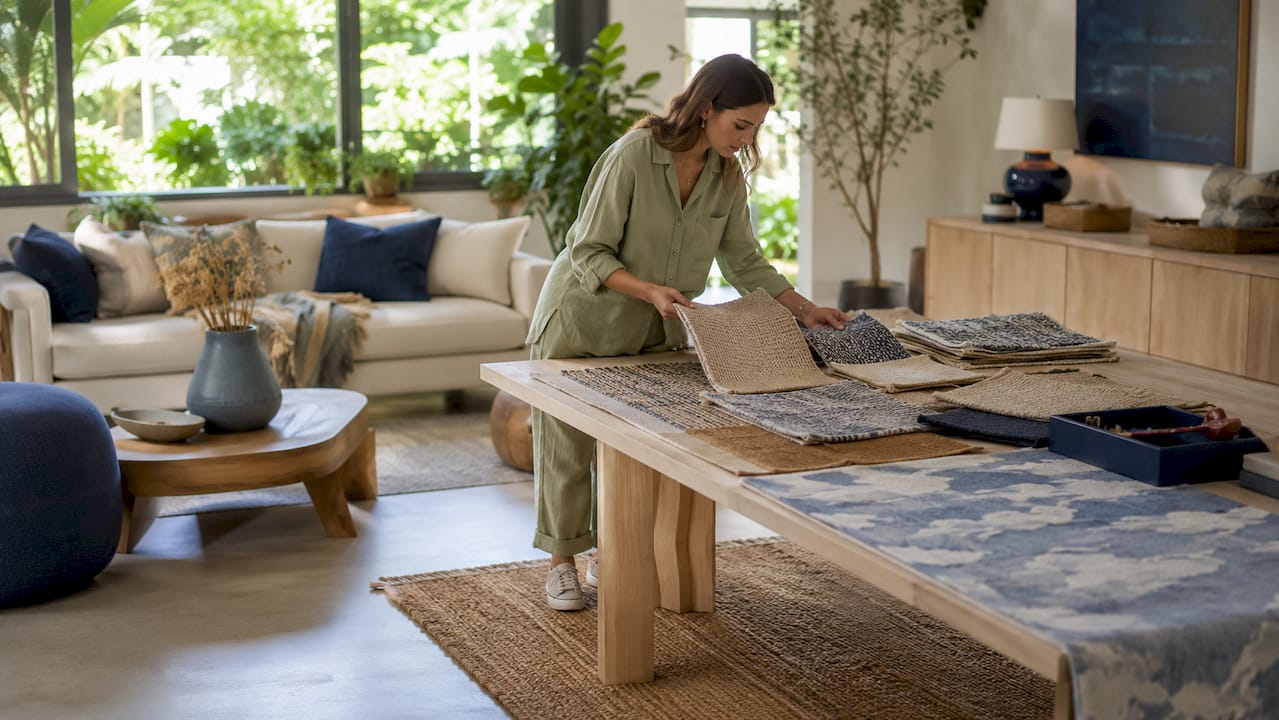
Getting the size right
A base rug should extend 18–24 inches beyond all sides of a Queen or King bed. That extension anchors the bed visually and gives you comfortable footing when you step out in the morning. For a Queen bed, an 8x10 foot rug is the standard starting point. A King bed typically calls for a 9x12. Your bedroom rug placement should also position bedside tables fully on the base rug, which ties the furniture grouping together and prevents the rug from looking like a floating island.
Choosing the right material
Flat-weave natural fiber rugs, particularly jute and sisal, make the best base layers. Their low profile creates a stable platform for the top rug, and their neutral texture provides a quiet visual backdrop that lets the decorative layer take center stage. A chunky wool or high-pile shag as a base sounds appealing in theory, but the surface instability it creates is a persistent problem. Natural fiber bases also tend to age gracefully, developing a warm patina that suits the bedroom’s intimate character.
| Base rug size | Recommended bed size | Ideal top rug size |
|---|---|---|
| 8x10 ft | Queen | 5x7 or 5x8 ft |
| 9x12 ft | King | 6x9 ft |
| 6x9 ft | Full/Double | 4x6 ft |
Pro Tip: Place a quality rug pad under your base rug before you do anything else. A non-slip pad protects your flooring and keeps the entire layered stack from migrating across the room over weeks of use.
What makes a great top rug for a layered bedroom look?
The top rug carries the personality of the composition. It is where pattern, color, and tactile richness live.
The most effective bedroom rug combinations pair a neutral, textural base with a patterned or richly colored top layer. A quiet base allows the top rug to function as the hero piece, the way a plain linen shirt makes a printed scarf pop. Vintage Persian and Oushak-inspired designs work particularly well in master bedrooms because their organic, hand-drawn patterns feel warm rather than graphic. The Kevin Francis Design Cumulus Cloud Tibetan hand-knotted wool rug exemplifies this beautifully: its soft, impressionistic patterning reads as art against a flat jute base.
Texture contrast is the other critical variable. Pairing two high-pile rugs creates bunching and an unstable surface that shifts underfoot. The correct pairing is always a low-profile base with a plush or patterned top. A sheepskin accent placed at the foot of the bed or beside a nightstand adds a third layer of tactile warmth without the structural problems of stacking two thick rugs.
- Pattern: Choose vintage Persian, Oushak-inspired, or geometric designs for the top layer.
- Texture: Pair a flat-weave or low-pile base with a plush, hand-knotted, or hand-tufted top.
- Color: A top rug in a warm tone or muted jewel color reads as intentional against a neutral base.
- Scale: Keep the top rug’s pattern scale proportional to the room. Large rooms can carry bold repeats; smaller rooms need quieter motifs.
Pro Tip: A small sheepskin or accent rug placed at a single nightstand adds comfort exactly where bare feet land first. It also introduces a third texture without disrupting the main layered composition.
Step-by-step guide to layering area rugs safely and stylishly
Follow these steps in order. Skipping the measuring stage is the most common reason a layered bedroom looks accidental rather than designed.
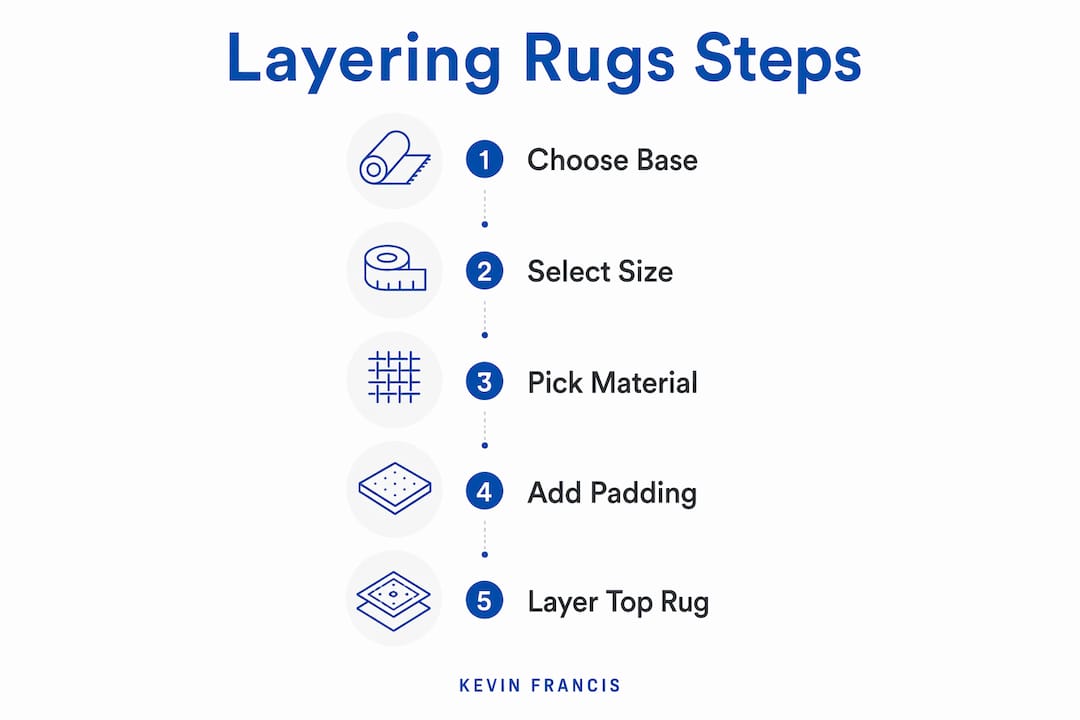
- Measure your room and bed. Record the bed’s footprint and the room’s usable floor area. This tells you the minimum base rug size before you shop.
- Select and position the base rug. Center it under the bed with 18–24 inches of exposure on each side. Confirm bedside tables sit fully on the rug.
- Apply the 60–70% rule to the top rug. The top rug should cover roughly 60–70% of the visible base area, leaving 12–18 inches of base exposed around its perimeter. On an 8x10 base, that means a 5x7 or 5x8 top rug.
- Lay a gripper pad between the two rugs. Layered rugs without padding shift quickly and lose their intended placement. A thin gripper pad between the base and top layers solves this permanently.
- Position the top rug. Centered placement is the safest choice. For a more editorial feel, angle the top rug between 30 and 45 degrees. Intentional offsets read as polished; random shifts look sloppy.
- Check the total pile height. The combined pile height of both rugs should not exceed 2.5 cm. Beyond that threshold, furniture legs become unstable and trip hazards appear.
Common mistakes to avoid:
- Choosing a top rug that is too large, which eliminates the base rug’s visual frame.
- Using two high-pile rugs together, which creates an unstable, bunching surface.
- Skipping the gripper pad between layers, which causes the top rug to migrate.
- Selecting clashing patterns at similar scales, which creates visual noise rather than depth.
Pro Tip: For smaller master bedrooms, asymmetric placements with a compact accent rug work better than a full two-rug stack. Texture depth reads even at a smaller scale.
Why layering rugs improves more than just the look of your bedroom
The benefits of layered rugs extend well beyond aesthetics, and the less obvious advantages are often the most persuasive.
Layering rugs in a bedroom improves thermal comfort by creating a floor-level barrier against cold and enhances acoustic comfort by dampening ambient noise. Together, these effects contribute to a quieter, warmer sanctuary that genuinely supports rest. Interior designers consistently cite this dual function as the reason layered floors feel so different from single-rug rooms.
Thermal and acoustic comfort are the functional arguments for layering, but the visual argument is equally strong. Two rugs at different scales create a sense of depth that a single rug, no matter how beautiful, cannot replicate. The base rug grounds the room; the top rug draws the eye inward. That layered quality of attention is what gives a well-designed master suite its sanctuary-like atmosphere. Understanding how area rugs shape spatial design helps you see why the floor is the most underused design surface in most bedrooms.
Key Takeaways
Layering rugs in a master bedroom requires the right proportions, material pairings, and padding to create a look that is both beautiful and stable.
| Point | Details |
|---|---|
| Use the 60–70% rule | The top rug should cover 60–70% of the visible base rug, leaving 12–18 inches of base exposed. |
| Choose a flat-weave base | Jute or sisal base rugs provide a stable, low-profile foundation that prevents bunching. |
| Pad both layers | A non-slip pad under the base and a gripper pad between layers keep the composition in place. |
| Keep pile height under 2.5 cm | Combined pile height above 2.5 cm creates trip hazards and furniture instability. |
| Let the top rug be the hero | A neutral base allows a patterned or textured top rug to carry the room’s visual personality. |
What I’ve learned from years of layering rugs in bedrooms
The single biggest mistake I see homeowners make is treating the top rug as an afterthought. They find a beautiful base rug, place it correctly, and then drop a smaller rug on top without thinking about proportion, texture contrast, or padding. The result looks like a rug that slipped rather than a composition that was designed.
The rooms that genuinely stop people in their tracks share one quality: intentionality. Every choice, from the jute base to the hand-knotted top layer to the precise angle of the offset, was made deliberately. I have found that the 30-to-45-degree angled placement is the most underused technique in residential bedrooms. People assume it will look messy. When it is measured and committed to, it reads as confident and editorial, the difference between a room that was styled and a room that was decorated.
My honest advice is to resist the urge to match. A Persian-inspired top rug on a plain sisal base creates far more interest than two coordinating rugs in the same color family. The contrast is the point. Texture pairing, not color matching, is the skill that separates a good layered bedroom from a great one. Give yourself permission to experiment within the proportional guidelines, and the room will reward you.
— Kevin O’Gara
Artisan rugs worth layering, from Kevin Francis Design
The rugs that layer most beautifully are the ones made with enough character to hold their own as the focal point of a composition.
Kevin Francis Design offers two pieces that exemplify this quality. The Cumulus Cloud Tibetan hand-knotted wool rug brings a soft, painterly depth to any bedroom floor, its hand-knotted construction giving it the kind of surface variation that photographs beautifully against a flat natural fiber base. The Anatolia hand-tufted maze rug offers a bolder, more architectural presence, its geometric patterning drawing the eye with quiet authority. Both pieces are crafted to the standard that makes layering feel like a considered design decision rather than a styling trick. Browse the full collection at Kevin Francis Design to find the piece that anchors your bedroom’s next chapter.
FAQ
What size top rug works best over an 8x10 base rug?
A 5x7 or 5x8 foot top rug fits the 60–70% proportion rule on an 8x10 base, leaving 12–18 inches of base rug visible around the perimeter.
Can you layer rugs in a small master bedroom?
Yes. Smaller bedrooms benefit from asymmetric placements or compact accent rugs rather than a full two-rug stack, which preserves texture depth without overwhelming the space.
What is the best material for a base rug when layering?
Flat-weave natural fiber rugs, particularly jute and sisal, provide the most stable and visually neutral base for layering because their low profile prevents bunching and slipping.
Do you need a rug pad between layered rugs?
A gripper pad between the base and top rugs is necessary. Without it, the top rug shifts quickly and loses its intended placement, undermining the entire composition.
How do you angle a top rug without it looking messy?
Rotate the top rug between 30 and 45 degrees from the base rug’s axis and measure the offset precisely. A committed, measured angle reads as intentional; a slight, unconsidered shift looks accidental.


